
Biography of Canaletto
Discover the life and works of the renowned 18th-century Venetian painter Canaletto.
Article Index
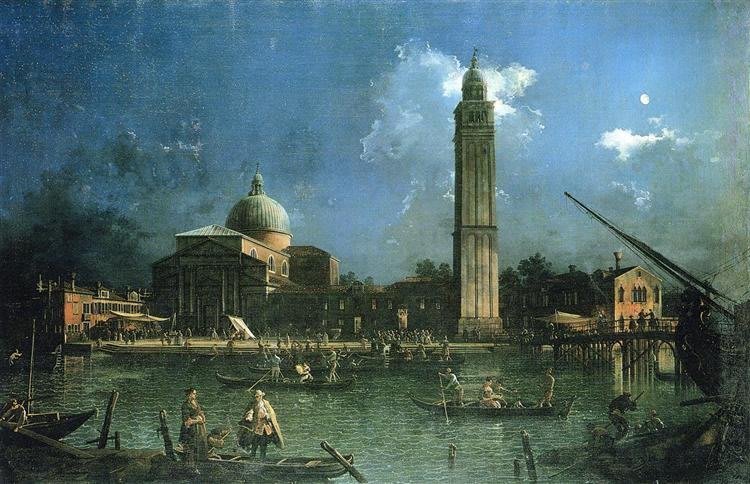
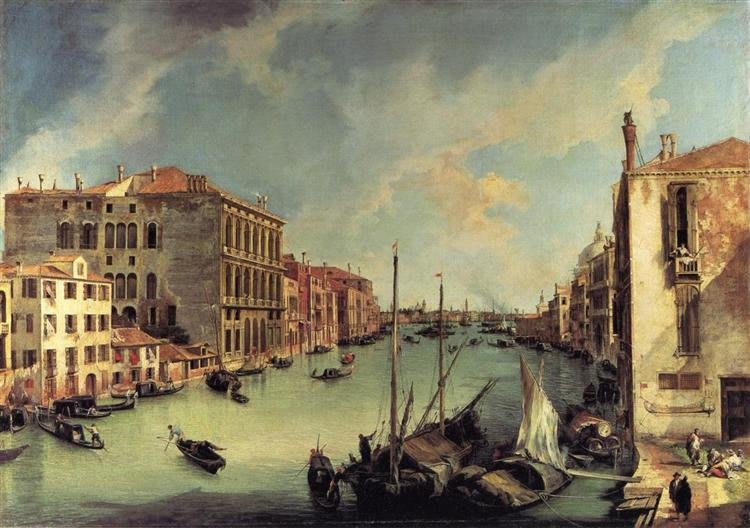
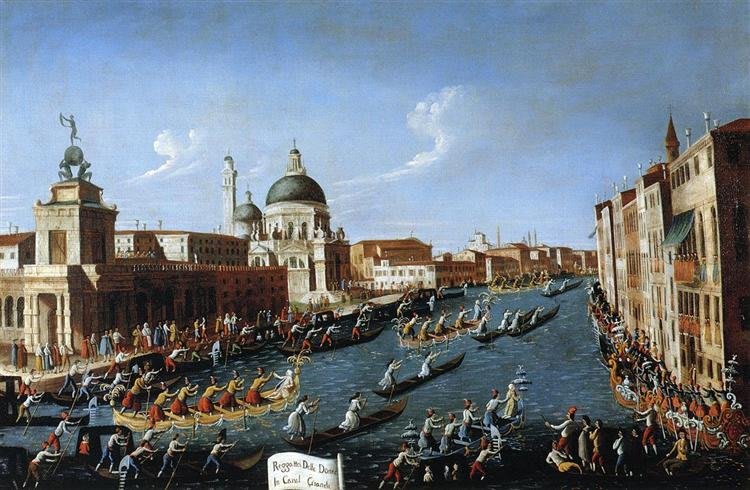
Canaletto was a renowned 18th-century Venetian painter and printmaker, master of urban landscape and director of the Venetian school. His atmospheric images of Venice and London influenced generations of landscape painters.
Giovanni Antonio Canal was born in Venice, Italy, on October 28, 1697. Son of the painter Bernardo Canal, he became known as Canaletto, meaning 'little Canal'. He began his career as a painter of theatrical scenes, following in his father's footsteps.
Bernardo Canal was a respected painter of theatrical scenes, and it was only natural that Canaletto and his older brother, Christoforo, joined their father as apprentices. They had already helped design and create sets for operas by Antonio Vivaldi and other composers of the time.
In 1718, he traveled with his father to Rome to work on the scenery for a series of operas by Alessandro Scarlatti. This trip marked a turning point in Canaletto's life, as he decided to abandon theatrical design altogether.
BIOGRAPHY
In 1719, he returned to Venice and began studying with a painter of urban landscapes, Luca Carlevaris. He soon surpassed his master's modest talent, producing his first signed work, a Capriccio Arquitetônico.
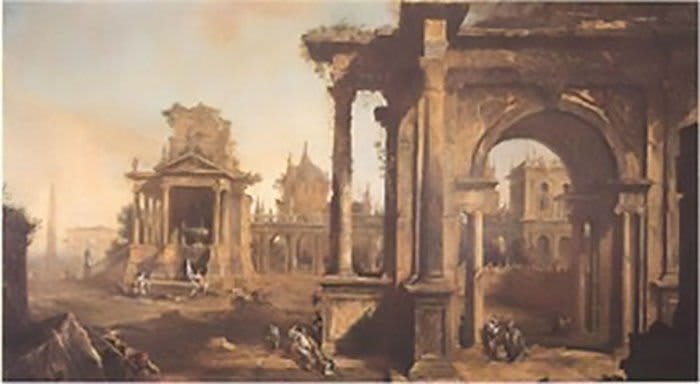
His early works were often painted on location, a departure from the conventional practice of completing paintings in the studio. While some details were added later, his tendency to depict distant figures as mere color patches became a hallmark of his style. His paintings were admired for their scientific precision, earning him the title of master vedutista (landscape painter) in his own right. As his reputation grew, Canaletto attracted the attention of three influential agents who helped promote and develop his artistic talent across Europe.
During the 1730s, another agent, Anton Maria Zanetti, the Younger, described Canaletto as 'a painter of views so distinct that few among the artists of old, and none among the favorites, come near him in intelligence, taste, and truth.'
Long before the advent of postcards or photographs, Canaletto's ability to capture the essence and image of Venice made him popular among tourists, many of whom bought his paintings as souvenirs of their travels. He had already perfected this skill using a camera obscura to prepare his paintings and etchings. The camera obscura, which allowed light to enter through a small aperture in a mirrored box, created an exact reflected image on a surface that could be traced. According to the historian Roberto Longhi, the use of this device made his art 'almost miraculously poetic'.
Canaletto's career, however, was marred by controversy. He trained his nephew, Bernardo Bellotto, who became his assistant for many years before becoming an artist in his own right. In 1742, the two traveled together to Dolo and Padua, where they drew inspiration from nature for future paintings. However, the influence of his uncle was so great that it was often difficult to distinguish between their works. After Bellotto began working independently, he attempted to capitalize on his uncle's name, often giving the impression that he was the actual Canaletto. Bellotto even signed his own work with his uncle's name and was particularly successful in doing so in countries like Poland and Germany, where Canaletto was not active.
In 1746, he arrived in London, where a new, eclectic architecture was emerging. Culturally, Britain was rediscovering and falling in love with William Shakespeare, and Canaletto, an observant artist, saw how vibrant and exciting Britain was and virtually everything he painted was new or about to be new.
Canaletto spent the next nine years in Britain. In this period, he returned to Venice in 1750 to settle some business matters. Unfortunately, the controversy surrounding the authenticity of his paintings followed him, and rumors began to circulate that paintings sold in his name might not be genuine. To refute the allegations, Canaletto published two notices in a London newspaper inviting the public to join him in his studio, where they could witness firsthand that he was living and working in England and creating genuine works.
In 1755, he returned definitively to Venice. In 1763, he was elected a member of the Academia Veneziana di Pittura e Scultura and appointed prior of the College of Painting.
Proud to have been able to continue painting in his final years, he produced over 1,000 works, including paintings and drawings. Nevertheless, Canaletto suffered financially in his later years, living almost in poverty.
Canaletto died at the age of 71 from a bladder inflammation on April 19, 1768, in his hometown of Venice, over whose magnificent festivals, magnificent canals, and broad squares flooded with light he wrote about his entire life. The most complete collections of paintings and drawings are found in the collections of His Majesty the King in Windsor, in Buckingham Palace and in the main museums of the world.
The Artist and His Work
In his work, Canaletto combined the freedom and subtlety of drawing with a dramatic, figurative interpretation of Venetian architecture.
With an eye for compositional balance and a sensitivity to dramatic effects, Canaletto typically composed images of recognizable landmarks that he reorganized in subtle new relationships. His images could also be composed, in part, by imaginary architectural and scenic elements.
As the heir to the legacy of the great masters of the Renaissance, Canaletto was admired for his subtle blend of sunlight, shadow, and cloud effects, and for his play of light on architectural structures. Much of his preparatory work was done by observing the location, not in the studio, which was unusual for the time.
The fine details in his representations of his paintings are attributed to the use of a camera obscura, which allowed him to create traceable plans on which to build his architectural structures and topographically detailed landscapes.