
Biography of Joaquín Sorolla: Consolidation of Style and National Recognition
Biography of Joaquín Sorolla: Consolidation of Style and National Recognition
In September 1888, Sorolla returns to Spain to marry Clotilde García del Castillo, daughter of the photographer Antonio García.
The couple returns to Italy, where they stay in Assis until 1889, the year in which he ends his scholarship.
Upon returning to Spain, he begins a new period of consolidation as an artist, in search of his own style.
This style, although recognizing similarities with impressionism, has some differences, including long brushstrokes, and not short as the impressionists.
Sorolla also uses black, considered a 'non-color' by the impressionists.
For him, costumbrismo - an artistic movement and a trend that aims for all works of art to be an exhibition of customs and characteristics - and light are fundamental, while the only important theme for the impressionists is light.
At the end of the 19th century, Sorolla is a painter more linked to naturalism and who values light and color to present reality.
Together with his wife Clotilde, Sorolla moves to Madrid in search of better artistic opportunities.
In 1895, the youngest daughter of the couple, Elena, is born in Valencia, which awakens the artist's interest in the theme of children, which he will use continuously with great success from then on.
During this period, it is also decisive the involvement of Sorolla's friend, Aureliano Beruete.
He suggests to the artist that he work as a portrait painter because he will have great success, and that is what happens.
At this time, he is already a highly respected artist and is sought after to paint portraits of public figures from the world of finance, the arts, politics, etc.
In addition to the portraits requested by specific clients, those for the Hispanic Society must be added, at the same time, he becomes a cosmopolitan artist.
He travels throughout Europe, getting to know and making friends with the great painters of the time, including the avant-garde artists.
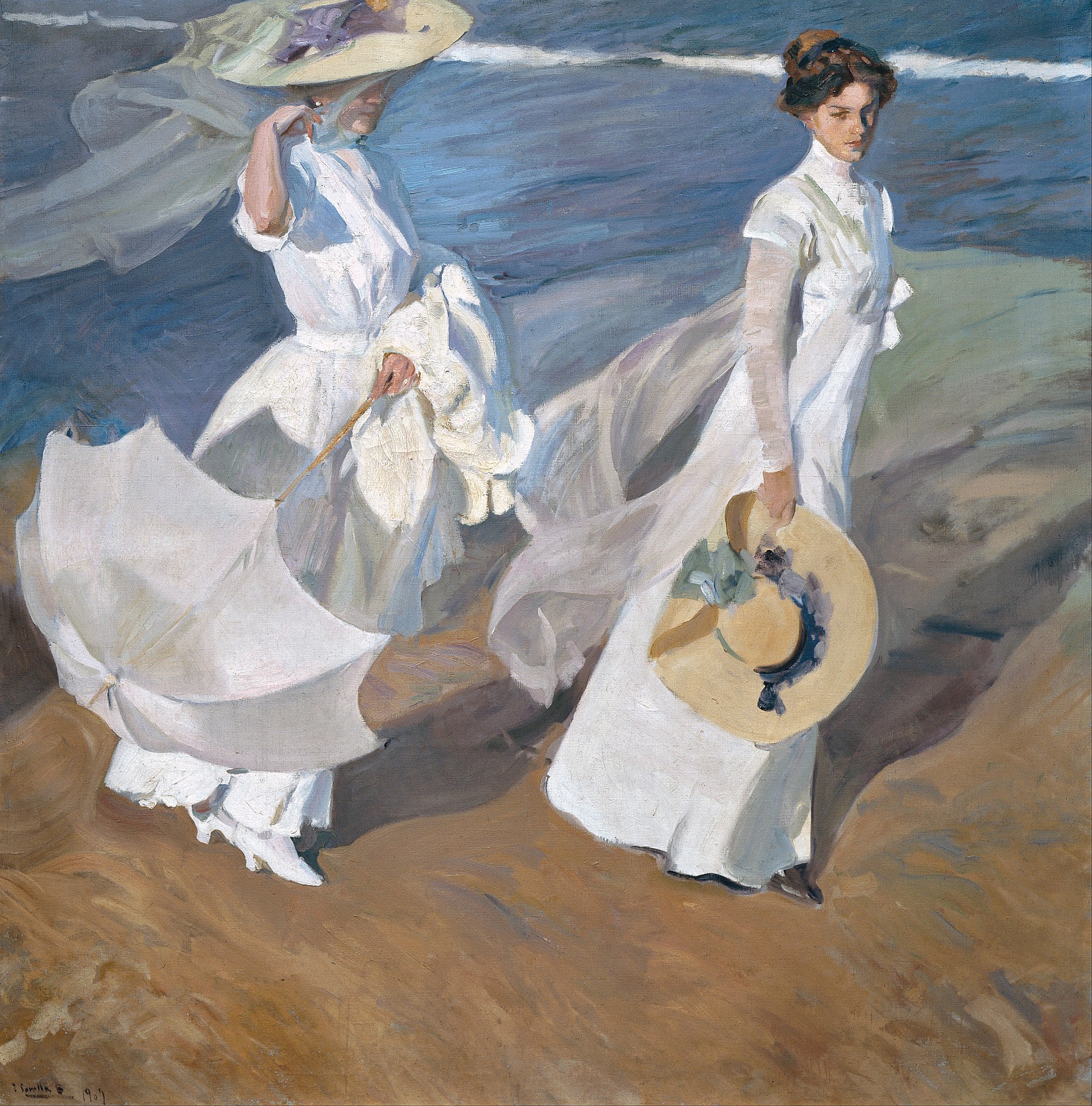
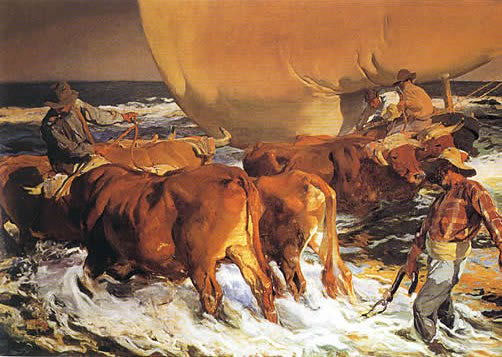
Sorolla's desire not to be tied to a single theme leads him to also travel through Spain in search of new shades of light and distinct colors on the beach of Valencia - which he does in the following years - making sketches of a great variety of people and landscapes.
From 1903 onwards, color and power are observed in his works.
The colors depict strong contrasts of yellows, ultramarine blues, and emeralds, and create a sense of great reality.
Sorolla portrays shadows in tones of blue and violet, like the impressionists.
However, he does not adopt short brushstrokes, nor does he stop mixing colors on the palette as can be seen in Sunday Afternoon, and others.
In 1906, during just five months, he paints seventeen portraits.
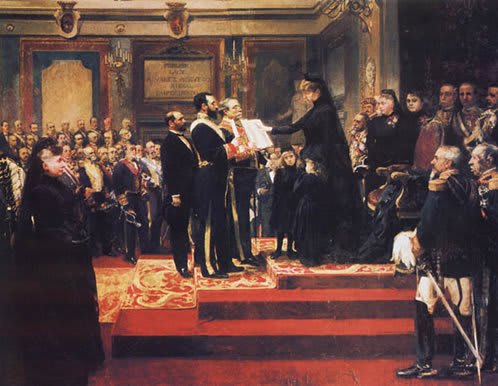
Among those who pose for him is the Royal Family, proving his popularity.
To understand the rest of this journey, continue to our next article: Biography of Joaquín Sorolla: Legacy, Great Commissions, and Gallery of Works.


