Biography of Pieter Bruegel the Elder: Life, Career and Initial Legacy
Biography of Pieter Bruegel the Elder: Life, Career and Initial Legacy
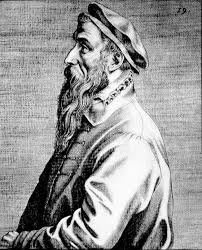
Pieter Bruegel, was an important Flemish painter and engraver of the high Renaissance whose paintings present a great contrast with the religious art that dominated much of the production of the previous century.
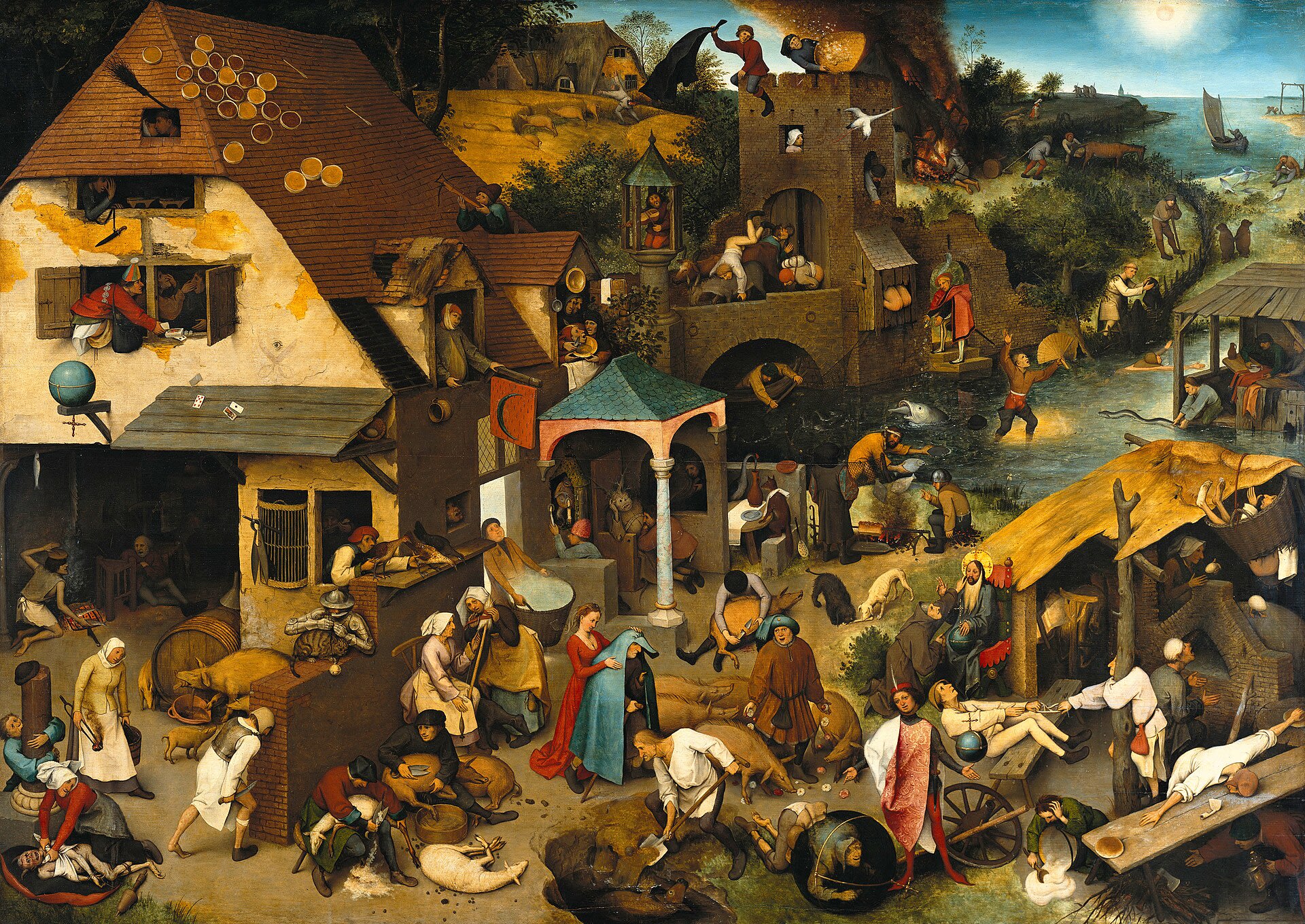
His works dealt with themes such as rural professional life, religion, superstition, and the political and social intrigues of his time.
These themes were addressed with an unmistakable humor, entertaining and often grotesque, an interest in the collective rather than the individual, and a healthy skepticism towards the great deeds narratives.
Biography
There are few information about his childhood.
Everything that is known for certain is that he was born Peeter Brueghel, in what many believe to be the son of a peasant family; born in or near Breda, in the Netherlands, between 1525 and 1530.
His initial artistic training, consisted of an apprenticeship with the Flemish artist Pieter Coecke van Aelst.
With the death of Van Aelst in 1550, Bruegel moved to Antwerp, where he received his first commission, to help create a triptych altar for the guild of glove makers.
The guild system was important for promoting artistic careers, and Bruegel's own professional life began effectively in 1551, when he was elected to the Guild of Saint Luke, an association of painters.
In 1552, Bruegel left Antwerp for a long journey through Italy, with the aim of conducting research to improve his knowledge of painting.
Although he was not strongly influenced by the Italian Renaissance style, the field he visited had a great impact on the young artist, who would become known for his landscape works.
Of particular importance were the Swiss Alps, which Bruegel ventured during his journey on his return.
His first biographer, Karel van Mander, observed that the artist "swallowed all the mountains and stones and spat them out again as panels to paint, so close he tried to approach nature in this and other aspects".
Legacy
During his lifetime, Pieter Bruegel the Elder was seen as having made a significant break with the popular style of the Italian Renaissance, creating works that focused on landscape and contemporary life, rather than the great narratives favored by the Mediterranean masters of the previous century.
In doing so, he helped ensure that Renaissance art in northern Europe developed in its own unique direction, contributing to a northern European style that inspired subsequent artists, such as Peter Paul Rubens and Rembrandt.
Bruegel's paintings influenced a series of developments in modern art, including the work of Gustave Coubet and Jean-Francois Millet.
In the 20th century, poets such as the North American William Carlos Williams were equally inspired by Bruegel's egalitarian vision.
This dedicated a cycle of ten poems to the artist in his last edition of 1962 "Brueghel's Paintings and other poems".
Biography of Pieter Bruegel the Elder: Masterpieces and Artistic Impact.