Biography of Pieter Bruegel the Elder: Masterpieces and Artistic Impact
Discover the life and works of Pieter Bruegel the Elder, a renowned Flemish painter known for his landscapes and genre scenes.
Galeria - Arte Comentada
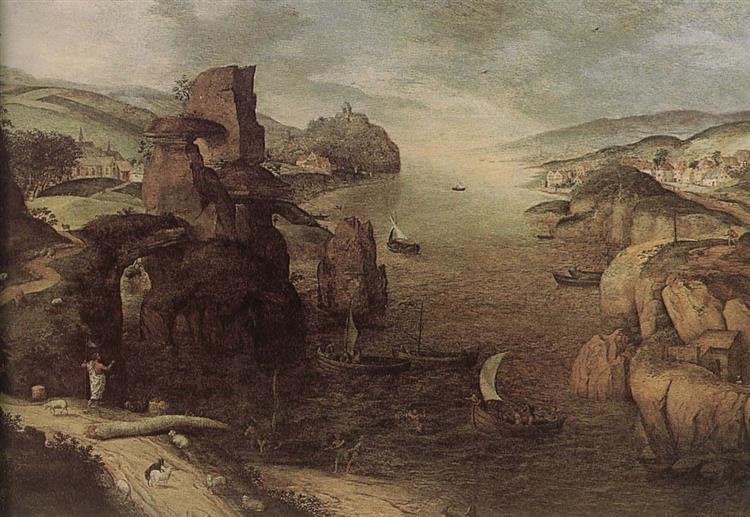
Paisagem com Cristo Aparecendo aos Apóstolos no Mar de Tiberíades - This is one of his first paintings resulting from his experience during his trip to Italy, which was guided by Maarten de Vos, a painter from Antwerp who was working in Italy at that time.
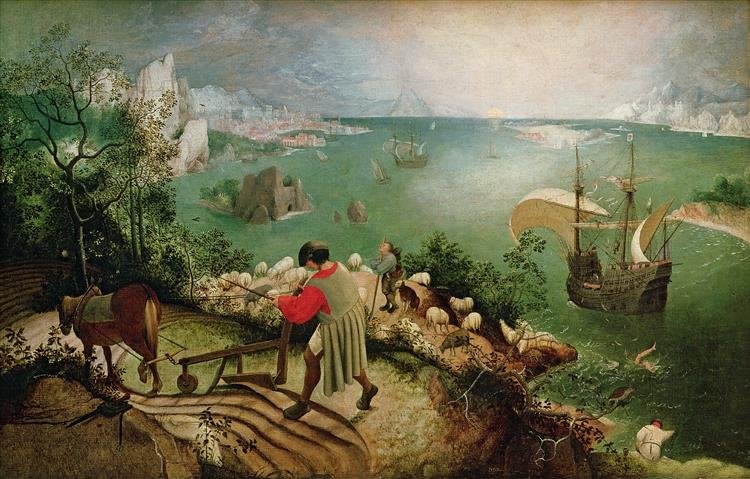
Paisagem com a Queda de Ícaro - This work tells the story of Ícaro around his death, of a boy who wanted to fly so much that he built wings made of wax and feathers. Leaving aside his father's warning not to fly too close to the sun, his wings melted and he fell into the sea. We might expect that this tragic ending would be the focal point of Bruegel's painting, but instead, it became a comprehensive representation of common rural life, the hero's death was transformed into a comical representation by the artist. The composition is irreverent, expressing a clear skepticism towards the bombastic mythological painting that dominated the previous century of Renaissance art.
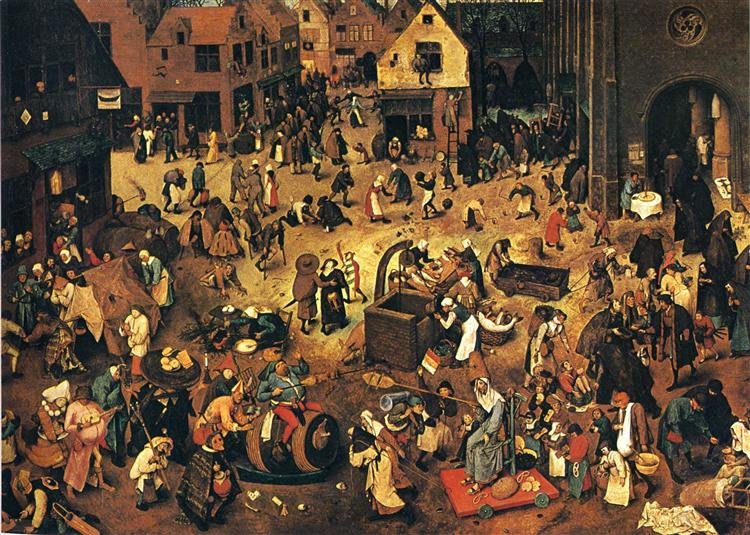
A Batalha entre Carnaval e Quaresma is considered one of the most important works of his career and one of the most polemical of the Renaissance. Click here to learn more
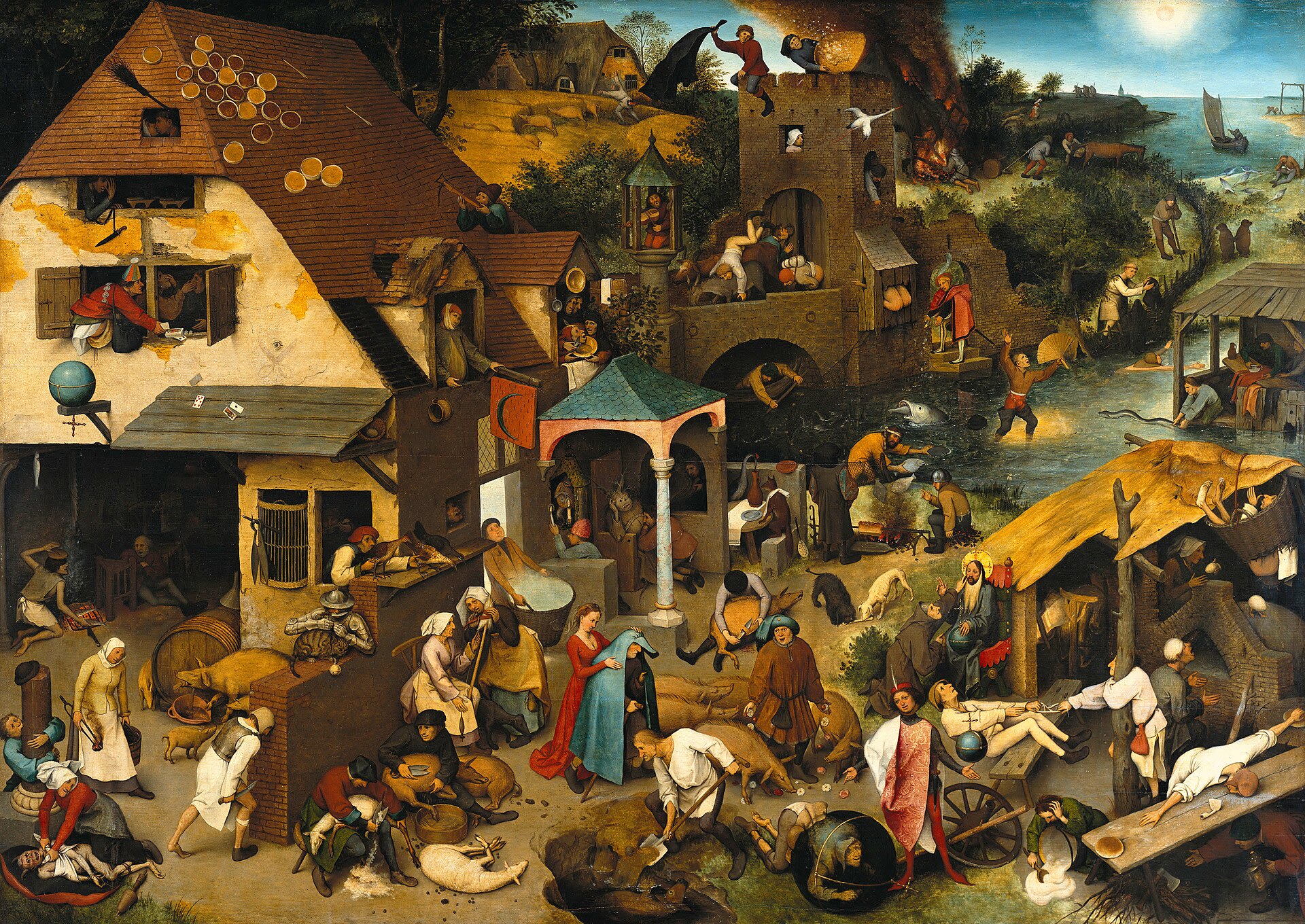
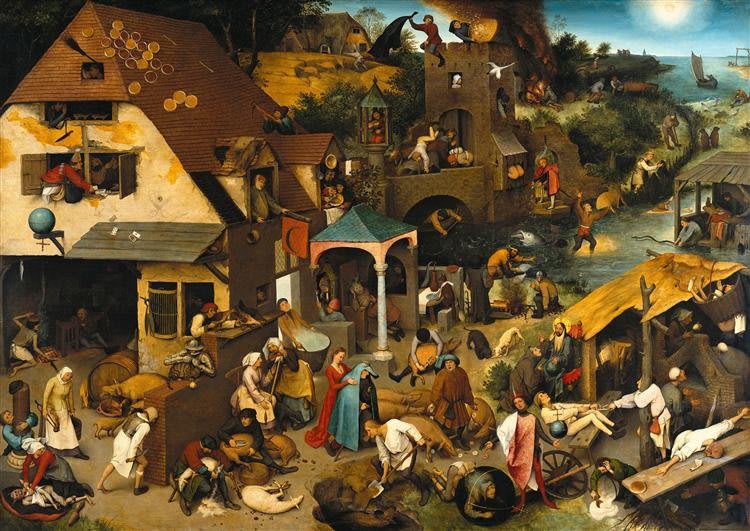
Os Provérbios Holandeses - Bruegel is known for his occupied compositions, involving many groups of figures engaged in small interactions. These individual compositions, in turn, establish a general theme, often satirical or didactic, a compositional approach that had a profound impact on the history of art.
In this painting, the actions performed by the residents represent approximately 120 different Dutch proverbs, all related to the quirks of human behavior. We have, for example, in the foreground to the left, a man hitting his head against a brick wall, representing the tendency of a fool to continue trying the impossible; to the right, a figure bends over, disturbed by a spilled porridge, reminding the observer that completed actions cannot be undone. By depicting the weaknesses of everyday human life, the artist expanded the range of available themes for the Renaissance painter with characteristic sagacity and irreverence.
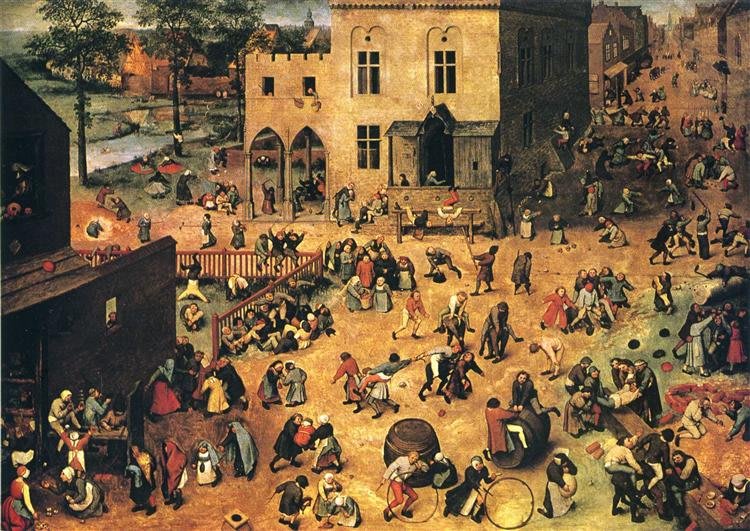
Jogos Infantis - We have in this painting more than two hundred children playing in many games that refer to our childhood.
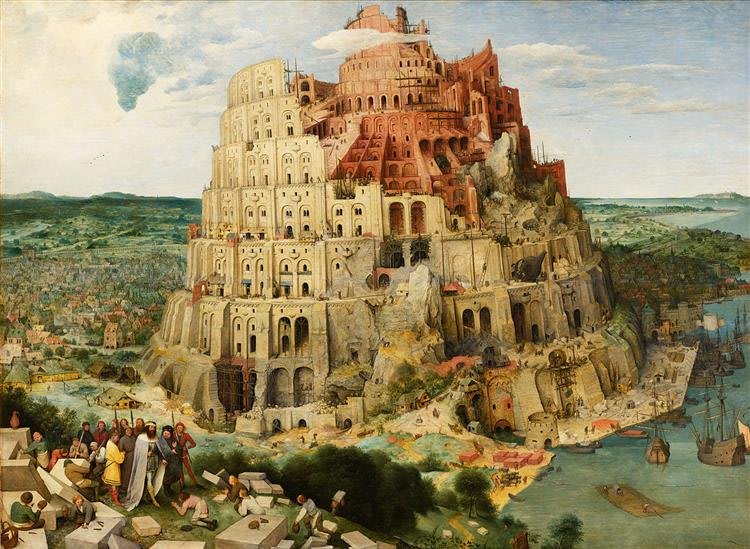
A Torre de Babel - click here to learn more about Bruegel's masterpiece
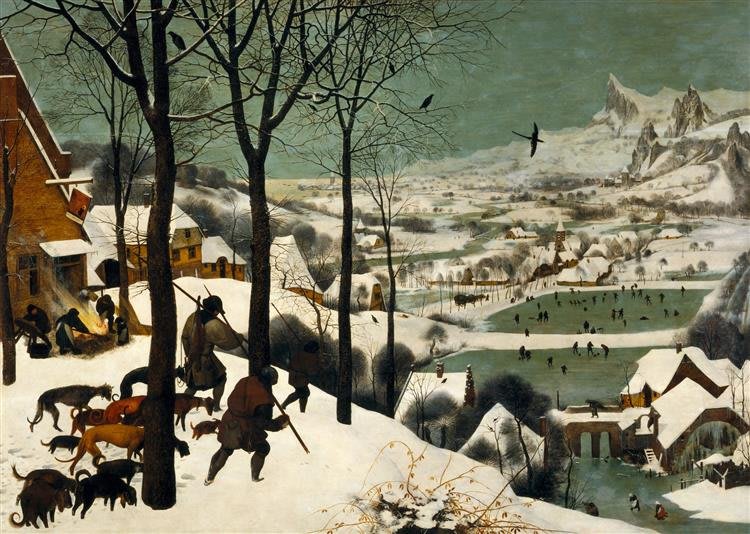
Os Caçadores na Neve - This is one of Bruegel's most beloved works and also one of the most famous winter landscapes in Western art. Never before had a painter managed to create a convincing image of the cold, the silence typical of winter landscapes. Bruegel's approach goes far beyond the landscape painting techniques characteristic of his time, offering complex compositions that convey the mood of the scene and the season through harmonies of colors. We observe that the composition is dominated by two cold colors, the white of the snow and the light green of the sky and the ice. All living beings are dark, which is in contrast with the usual color associations and increases the impressions of misery and privation. However, the number of people in the painting suggests vitality and community in the midst of the frozen landscape, indicating a community not dominated by its surroundings.
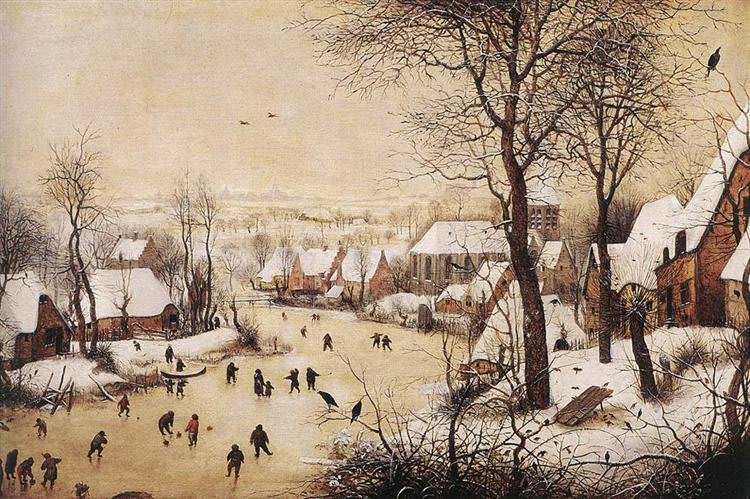
Paisagem de Inverno com patinadores - Painting that depicts a village in Brabant, a province in the Netherlands, whose inhabitants are having fun sliding on the ice, passing unnoticed next to a bird trap, details always common in his work.
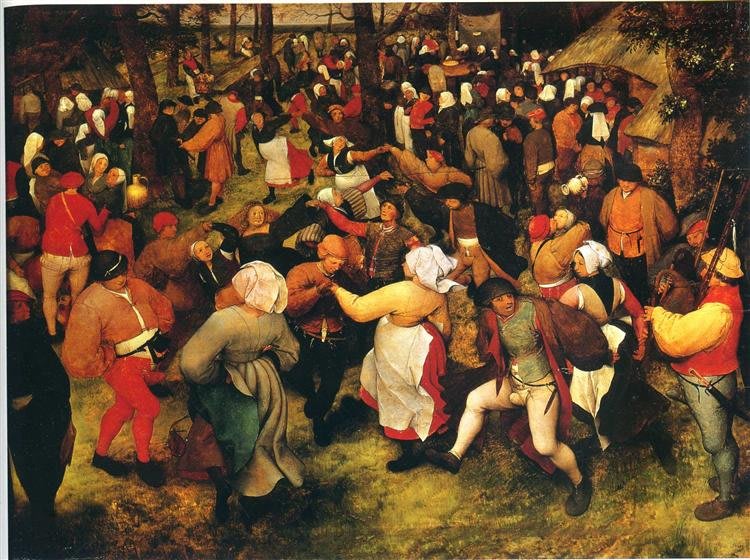
A Dança do Casamento - Bruegel presents in this painting, the peasants in scenes of leisure and celebration. The prevailing thought among the artists of the Renaissance was that only religion, mythology, and the lives of great men were suitable themes for painting. The scene of the peasant wedding that affirms Bruegel's life is full of happy revelers celebrating the event.
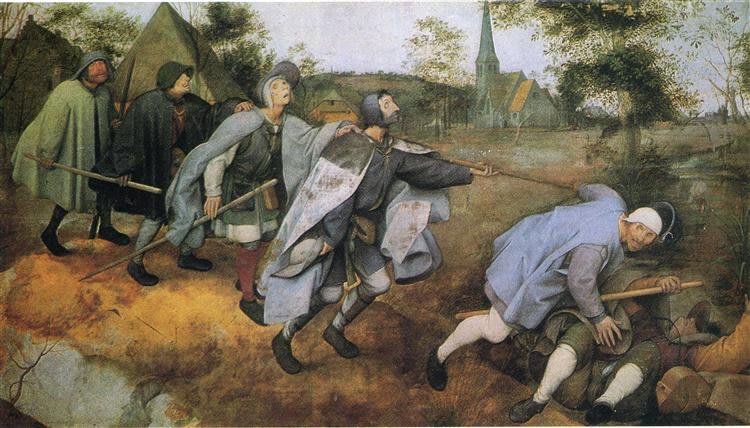
A Parábola dos Cegos - This is one of Bruegel's last paintings, which was based on the Gospel (Matthew 15:14): 'Let them alone, they are blind leading the blind, but if a blind man leads another blind man, both will fall into a ditch.' Bruegel wanted to present through this work, spiritual blindness in relation to religion: six blind men walk in desperation, as testified by the expression of their faces. The fall of the first blind man who is guiding, shows that he is the first victim of this spiritual blindness.
In 1567, the council ordered mass arrests and executions to reinforce Spanish rule and suppress Protestantism. This occurrence explains the bitter and sad tone represented in this painting, which is probably related to the establishment of the Council of Troubles that occurred during this period, probably related to the establishment of the Council of Troubles by the Spanish government of the Netherlands. The presence of a Church in the background suggests interpretations pro and anti-Catholic.