
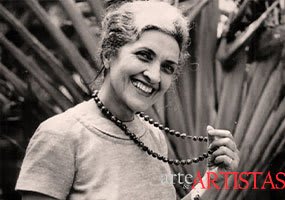
Cecília Meireles
Cecília Meireles
Article Index
Cecília Meireles was one of the most important Brazilian writers and poets of the 20th century; she was also a journalist, painter, and teacher.
Beyond poetry, Cecília Meireles also penned short stories, chronicles, and essays.
Her poetic work is characterized by lyrical and symbolic language, exploring themes such as childhood, death, nature, and spirituality.
BIOGRAPHY
Cecília Benevides de Carvalho Meireles was born on November 7, 1901, in Rio de Janeiro.
At birth, she was already fatherless; Carlos Alberto de Carvalho Meireles had passed away three months before her birth.
At the age of three, she lost her mother, Matilde Benevides, and was subsequently raised by her maternal grandmother, Jacinta Garcia Benevides.
In 1910, she received a gold medal from Olavo Bilac for her outstanding performance in her primary studies at Escola Estácio de Sá.
In 1917, she graduated from the Institute of Education of Rio de Janeiro and, at just 16 years old, dedicated herself to teaching.
Cecília began writing in her adolescence, showing great interest in literature and poetry from a young age.
In 1919, at just 18 years old, she published her first book of poems, titled Espectros, written in a style that falls between Parnassianism and Symbolism.
From then on, she dedicated herself to literature and education, working as a literature and foreign languages teacher in schools across Rio de Janeiro.
In 1921, Cecília married Portuguese plastic artist Fernando Correia Dias, one of the founders of the Lisbon literary magazine A Águia, which counted Fernando Pessoa among its contributors.
With him, Cecília had three daughters: Maria Elvira, Maria Matilde, and Maria Fernanda ((1928-2022)), who became a renowned actress.
Between 1923 and 1925, she published Nunca Mais (Never Again) and Poema dos Poemas (Poem of Poems), approaching modernist aesthetics without entirely abandoning the metrical tradition of verse and the attachment to classical Portuguese.
The 1930s were both highly productive and turbulent for her.
Early in the decade, she paused her poetic creation to dedicate herself to a teaching career, writing children's books, and advocating for the "Escola Nova" (New School) project during Getúlio Vargas's government, penning a daily column on the subject for Diário de Notícias.
In 1934, she founded the "Centro Infantil do Pavilhão Mourisco" in Rio, the country's first children's library.
During this period, she delivered several lectures on Brazilian literature in Lisbon and Coimbra.
In 1935, her husband, Correia Dias, who suffered from bouts of depression, committed suicide on November 19, at just 43 years old.
In 1936, Cecília was invited to take a professorship at the newly founded Federal University of Rio de Janeiro (UFRJ).
She published her childhood memoirs, Olhinhos de Gato (Cat's Eyes), in Portuguese periodicals.
In 1939, after fourteen years without publishing poetry, she returned to the literary scene with one of her most famous works, Viagem (Journey), considered a landmark in integrating her personal aesthetic with Modernism, and for which she received the poetry prize from the Brazilian Academy of Letters.
In 1940, she married professor and engineer Heitor Vinícius da Silveira.
At the invitation of the American government, she taught Brazilian Literature and Culture at the University of Texas.
In 1942, she wrote texts on children's folklore for Jornal A Manhã and published Vaga Música (Vague Music).
Three years later, Mar Absoluto e Outros Poemas (Absolute Sea and Other Poems) were published.
In 1951, she served as secretary for the first National Folklore Congress, and in 1952, she edited Doze Noturnos da Holanda (Twelve Nocturnes from Holland) and O Aeronauta (The Aeronaut).
In 1955, she published Pequeno Oratório de Santa Clara (Little Oratory of Saint Clare) and Pistóia, Cemitério Militar Brasileiro (Pistoia, Brazilian Military Cemetery).
A year later, Giroflê, Giroflá, followed by A Rosa, Metal Rosicler, Amor em Leonoreta, and Solombra were published.
In 1964, Escolha seus Sonhos (Choose Your Dreams) and the children's classic Ou isto ou Aquilo (Either This or That) were published.
She passed away on November 9, 1964, two days before her 63rd birthday, a victim of cancer.
Posthumously, she received the Machado de Assis Prize from the Brazilian Academy of Letters for her complete body of work.
Her posthumous works, Inéditos (Unpublished Works) and Cânticos (Canticles), were published in 1968 and 1981, respectively.
In 1989, she was honored with the impression of her likeness on a banknote issued by the Banco do Brasil, specifically the hundred-cruzados novos note, the currency in circulation during Fernando Collor's government.
SELECTED POEMS
Music
"Lost night, I do not mourn you: I set forth life in thought, I seek the dawn of an untethered dream, pure and bare, — a crimson rose, untouched, by the wind. Lost night, found night, dead, lived, and reborn... (Moon's wing, almost still, show me your hidden shadow, that carries on my life in a profound earth! — a root bound to another world.) Crimson rose of the untethered dream, silent dawn that thought entrusts to slow time... My leaving, my arrival, it's all wind... Oh, for the dawn! Lost night, found night..."
"Viagem" (Journey), 1939
From the book
"Here is my life. This sand, so clear, with walking patterns dedicated to the wind. Here is my voice, this hollow shell, a shadow of sound savoring its own lament. Here is my pain, this fractured coral, surviving its pathetic moment. Here is my legacy, this solitary sea that on one side was love and, on the other, forgetfulness."
"Retrato Natural" (Natural Portrait), 1949
Song of Perfect Love
"I saw the sunbeam kiss the autumn. I saw in the hand of goodbyes the golden ring. I don't wish to name the day. I cannot name the master. I saw banners unfurled over the wide sea and heard the mermaids sing. Far off, in a boat, I left my joyful eyes, brought back my bitter smile. Deep in the moon's embrace, I suffer no more. Oh, be as you desire, Amor-Perfeito, I wish you would stay, but if you depart, I will not forget you."
I learned from springs to let myself be cut and to always return whole.
(from the poem "Desenho" (Drawing), in the book "Mar absoluto" (Absolute Sea))


