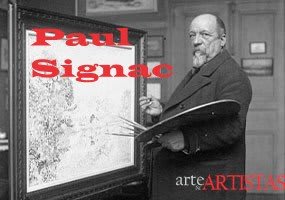
Complete Biography of Paul Signac
Complete Biography of Paul Signac
Alongside Georges Seurat, the French painter Paul Signac was one of the main artists of the Neo-Impressionism, an artistic movement at the end of the 19th century, whose objective presented a decidedly more scientific approach to impressionism, the movement that originated it.
Biography
Signac was born on November 11, 1863, the son of a middle-class family, which moved during his childhood to the area of Montmartre of the city, a place of a thriving artistic environment. The move had a tremendous impact on the young Signac's engagement with the visual arts and, more generally, with the avant-garde culture of the time.
Initially, the young Signac, then 18 years old, began his studies in architecture before dedicating himself to painting. The impressionism movement of the innovative artistic style of the time, and the works of the main artists such as Claude Monet, Édouard Manet, and Edgar Degas, clearly had an impact on the developing artist. Encouraged by his very liberal parents, he attended exhibitions and absorbed the aesthetic of this movement.
In 1880, his father Jules died of tuberculosis. With this, his mother decided to sell the family business and move to the new Parisian suburb of Asnières. Unsatisfied with the new location, Signac, despite being a good student, left school and returned to Montmartre, where he rented a room and divided his time between Asnières and Paris.
In 1881, Montmartre established connections with artists, writers, musicians, and other cultural and agitating agents through Paris's nightlife and more specialized channels, such as avant-garde literary circles that led him to associate with creative people, as he himself was a writer with some talent. In 1882, he wrote some satirical pieces about his idol, following his style; it is the French writer Émile Zola.
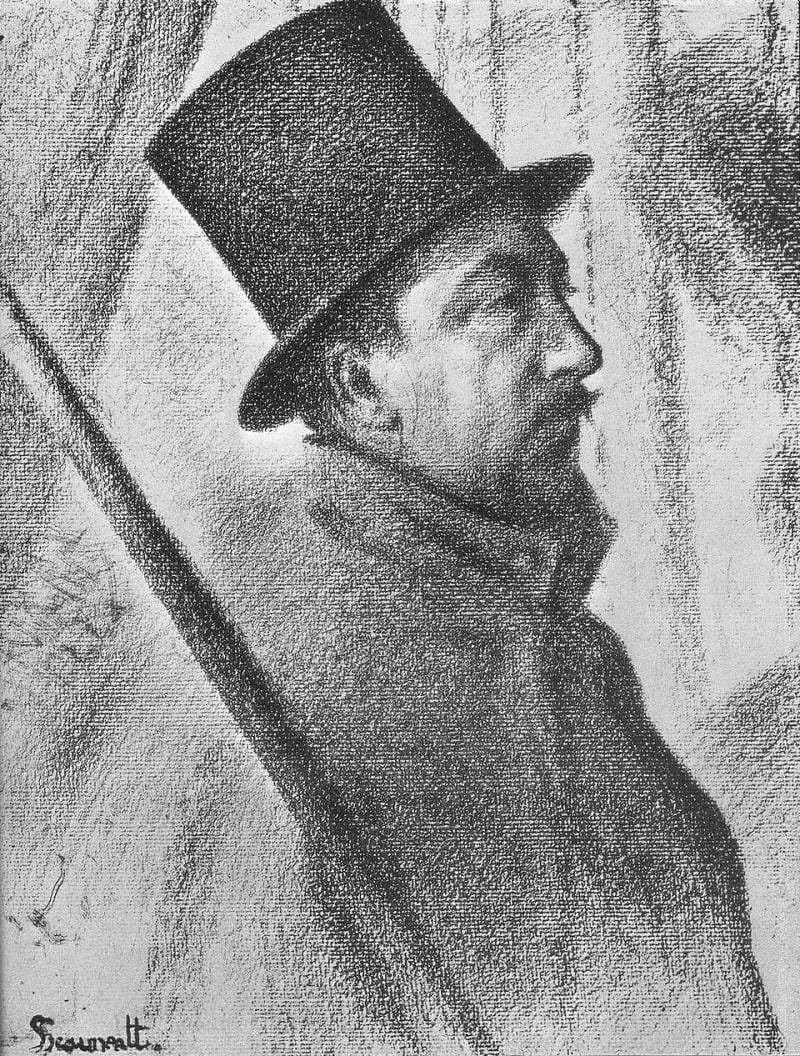
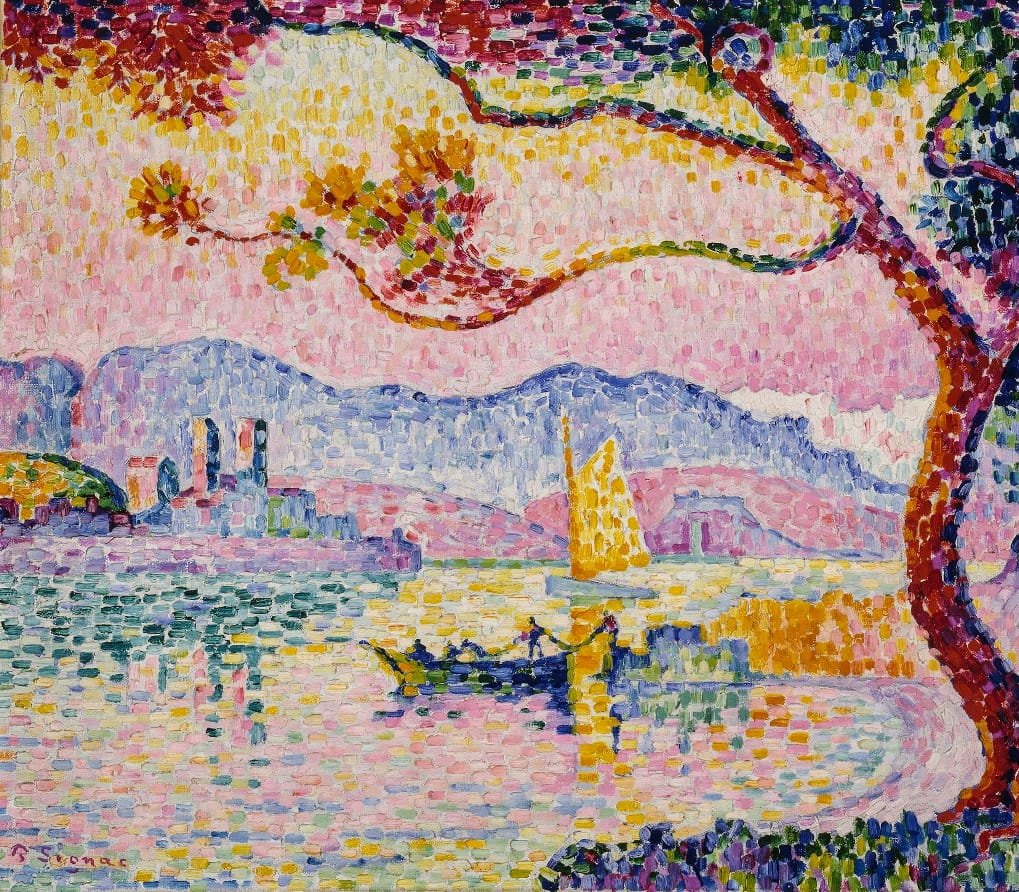
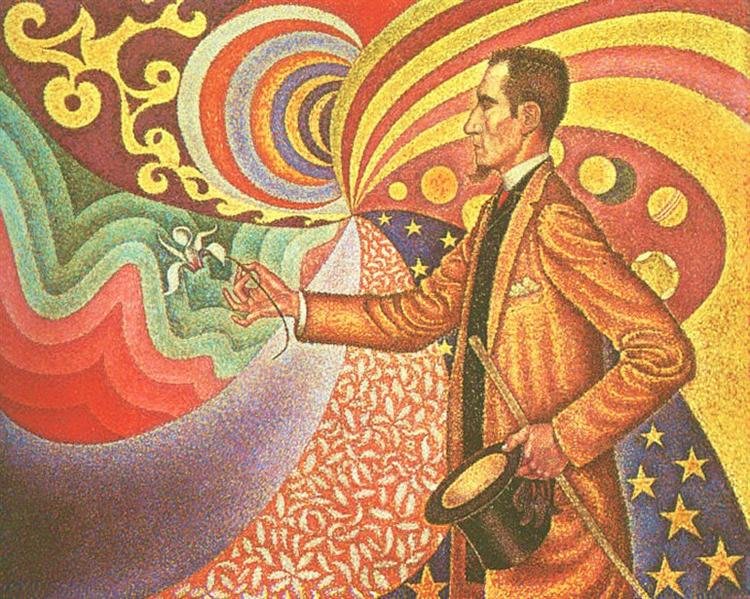
In 1884, Signac helped found the Salon of Independents, an annual exhibition for artists dissatisfied with the Official Paris Salon. It was during this period that he met and became friends with Georges Seurat; together, they would break away from the impressionist group and develop the painting style known as Pontilhismo or Divisionismo (a technique in which the paint is applied in small individual points or strokes that blend optically when viewed from a distance), which would eventually become part of the base of the Neo-Impressionism. The method was much more precise and methodical than intuitive, but Signac still exhibited his work in several other exhibitions at the Salon of Independents alongside the impressionists.
In October 1885, Seurat began to refine the method of optical mixing, placing small points of pure pigment side by side directly on the surface of the canvas. The ideal viewing point was at a small distance from the image. Seurat had already begun working on his famous painting A Sunday Afternoon on the Island of La Grande Jatte, but after he and Signac established their neo-impressionist style, he extensively reworked the large canvas to use the new approach.
In December 1885, Signac and Seurat were invited to exhibit their work at the eighth and final impressionist exhibition, all made in this new style, although there were objections to their inclusion by Eugène Manet, brother of Édouard Manet and husband of Berthe Morisot. Despite this resistance, the two exhibited their work to a positive critical response. At the same time, they had cemented not only a successful working relationship but also a close friendship.
In 1888, he plunged into anarchism, along with his devotion to the development of painting, Signac also had a very political mindset. Many scholars have interpreted pending references to his own political ideologies in his work, particularly after his public endorsement of anarchism.
In 1891, with Seurat's death, he ended his almost decade-long involvement with the artist. However, Signac continued to paint in the neo-impressionist style, his brushwork becoming looser and more expressive and colorful.
Paul Signac, along with other painters such as Camille Pissarro, made regular donations to the Journal Os Novos Tempos, a pro-anarchist and communist publication. In 1893, however, he boldly titled a work, In the Time of Anarchy, but, as the authorities were beginning to persecute the movement's followers, he changed it to In the Time of Harmony.
In November 1892, Signac married his long-time companion, Berthe Roblès in Montmartre. Camille Pissarro and his wife Julie née Vellay, were witnesses to the wedding. In the same year, he also bought a house in the south of France, in Saint-Tropez, where the artist built a large studio. It was there that he produced some of his most colorful and celebrated works, such as his famous landscapes of boats, beaches, and marinas.
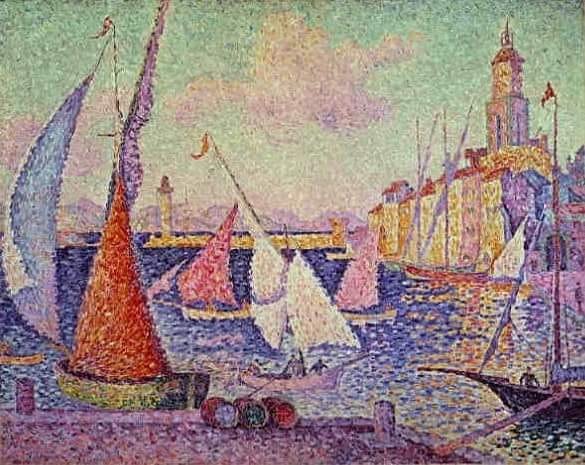
At the beginning of the 20th century, he was still painting a lot, whether watercolors, oil paintings, or drawings. The pace of his artistic production did not slow down as he aged.
In 1902, he exhibited over 100 watercolors at the Siegfried Bing Gallery in Paris. At that time, watercolor had become his preferred medium, and he again exhibited a large series called The Bridges of Paris.
In 1915, he moved to Antibes, where he was appointed official naval painter of the area. For Signac, living was painting and painting was living; he never stopped producing art, and in 1929, he began another series of paintings of the French ports.
Paul Signac died on August 15, 1935, at the age of 71, of septicemia, in his beloved Paris. Along with a massive body of work, his legacy remains a pillar of modern art.
Legacy
In terms of artistic production and radical innovation, Signac had a huge influence on Henri Matisse and André Derain, the leading artists of the fauvism that modified their technique and emulated the use of bright and extremely expressive colors. His technique, which pushed forms close to abstraction, dividing them into areas of solid and juxtaposed colors, paved the way for new abstractions, including the flattening and fragmentation of forms of the cubist style.
GALLERY
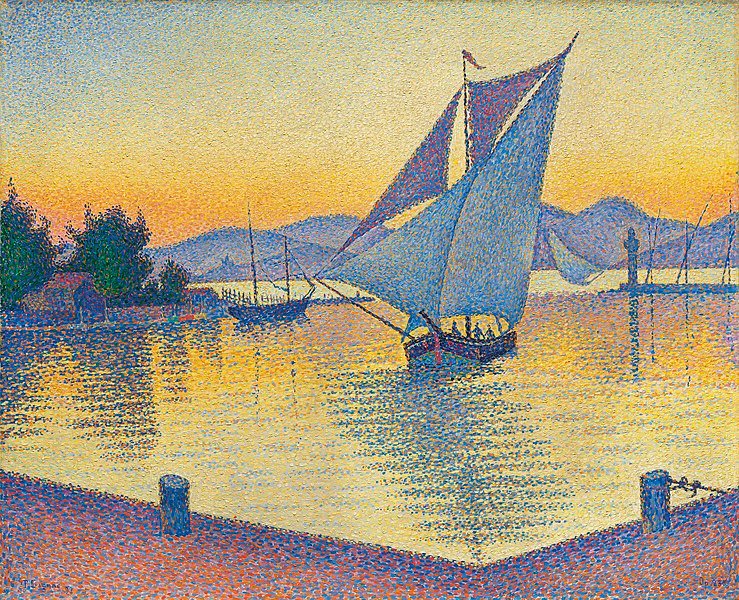
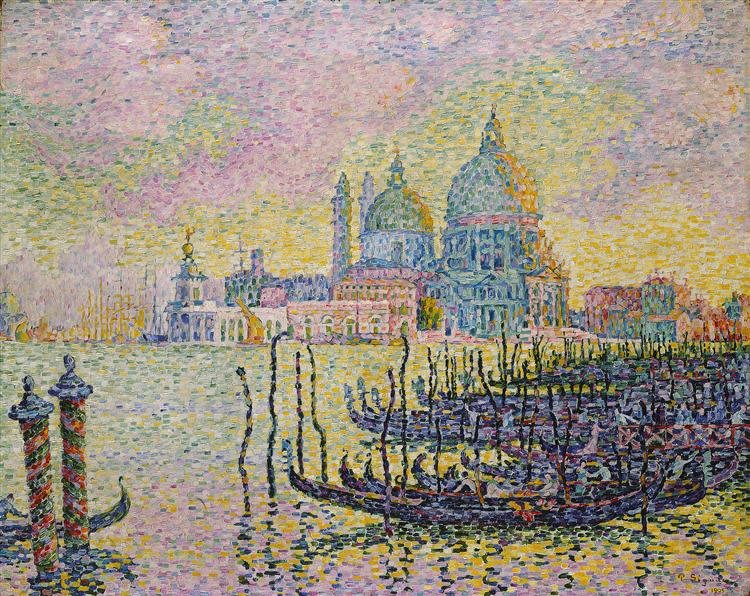
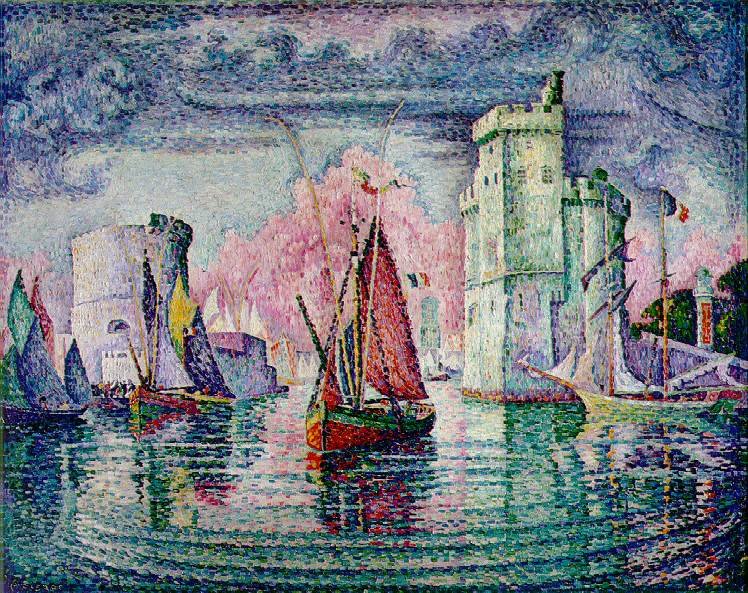
The theme of Signac's work focuses primarily on the landscape of ports, where one can observe the elements of marine life: lighthouses, ropes, sailboats, and sailors.
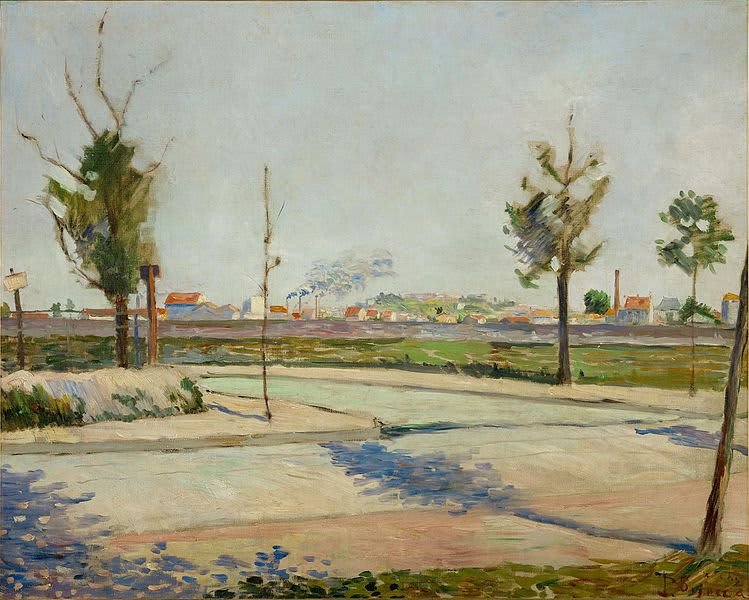
Setting Sun in Saint-Tropez - In 1892, Paul Signac bought a house in Saint-Tropez, a village of fishermen at the time. This painting was created there in the same year. The complementary colors violet and orange applied in points make the image vibrate. Light is no longer conceived as an atmosphere that surrounds the object, but as stimulating particles.