Goya's Famous Majas
Goya's Majas are two of the most famous paintings by the Spanish artist Francisco de Goya, created between 1800 and 1807.
These two paintings of Majas, are undoubtedly the most famous of the Spanish artist Francisco de Goya that were painted between 1800 and 1807.
Little is known about the origin of the model who posed for Goya and the stories that circulate around it.
Among them, we highlight here as an introduction, the most curious, yet uncertain:
"Due to the Spanish Inquisition and current times, painting a naked woman was not as common, but Goya, despite this, decided to paint The Nude Maja. Presumably, the young body and face of the model belonged to Dona María del Pilar Teresa Cayetana de Silva and Álvarez de Toledo, the important Duchess of Alba, to whom it is also said that she was the artist's lover.
It is said that someone informed her husband, the Duke of Alba, that Goya was painting the portrait of his wife without clothes and, as a noble Spanish man, he demanded to go to the artist's studio to verify and defend his honor.
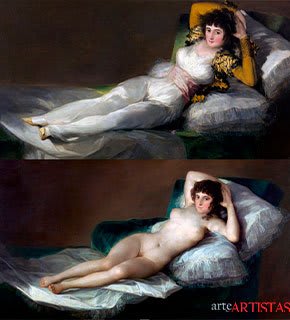
The next day, when he appeared at the studio door, he saw the portrait of his wife completely dressed, which was the one superimposed on the first, The Clothed Maja. There are rumors that Goya painted this second canvas only that night to cover up the case"
The Nude Maja and The Clothed Maja are sensual works and show the image of a daring woman.
Although it has been confirmed that the canvas depicting The Nude Maja was hidden by the dressed version, it caused many problems for the artist and, in fact, in 1808 they were confiscated.
The problem was not the nudity, but the fact that there were no allegorical or mythological pretexts to justify the portrait of a completely naked woman, and in Spain, the representation of the nude was only tolerated if linked to mythological themes and that transmitted a moral lesson.
The Nude Maja...
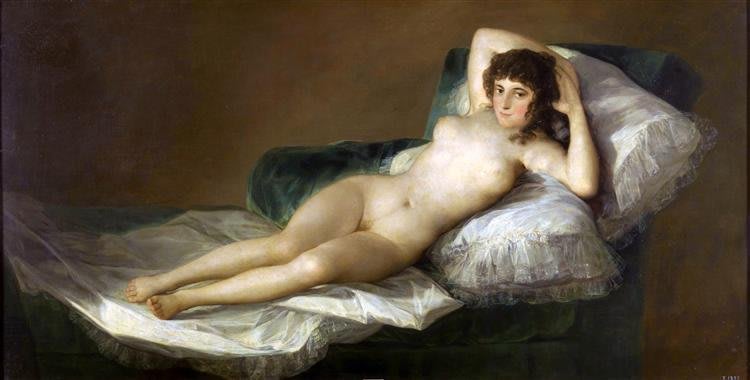
The Nude Maja is the first female figure in the history of painting to present public hair, evidencing its originality.
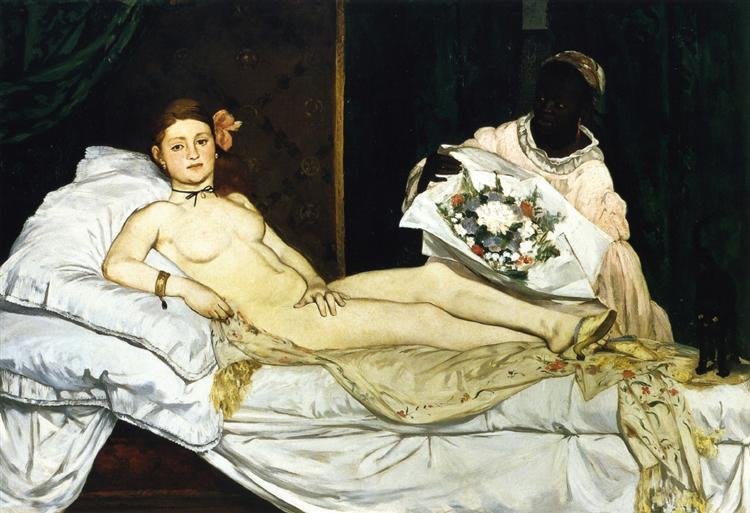
Moreover, it is not a mythological image, but a woman of flesh and blood, a modern image like Édouard Manet would do later in his important painting Olympia.
For this reason, The Nude Maja is so successful among the many visitors to the Museo del Prado, along with its companion, The Clothed Maja.
Many speculations surrounding the unknown of its creation.
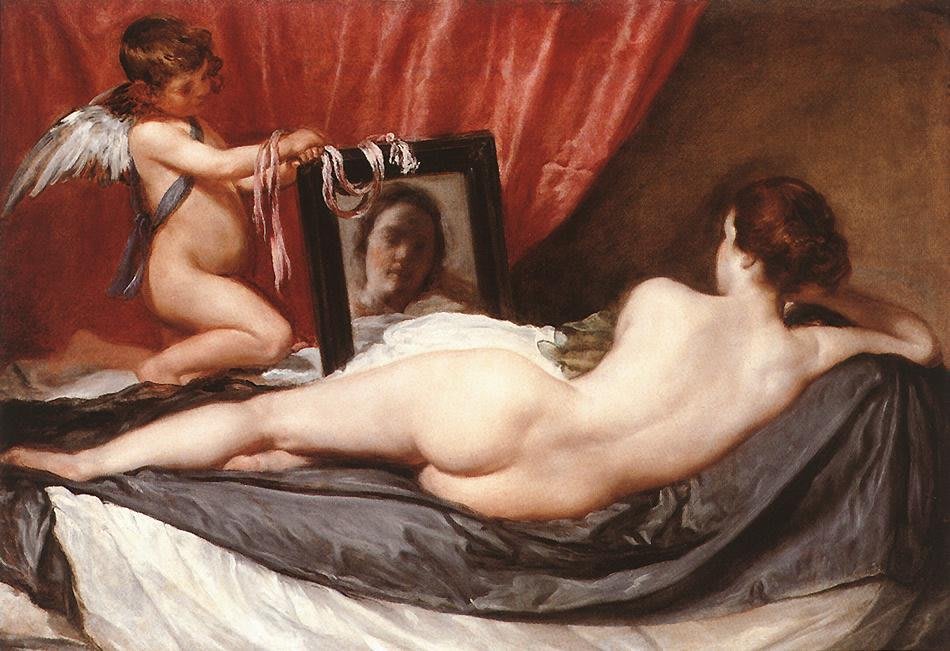
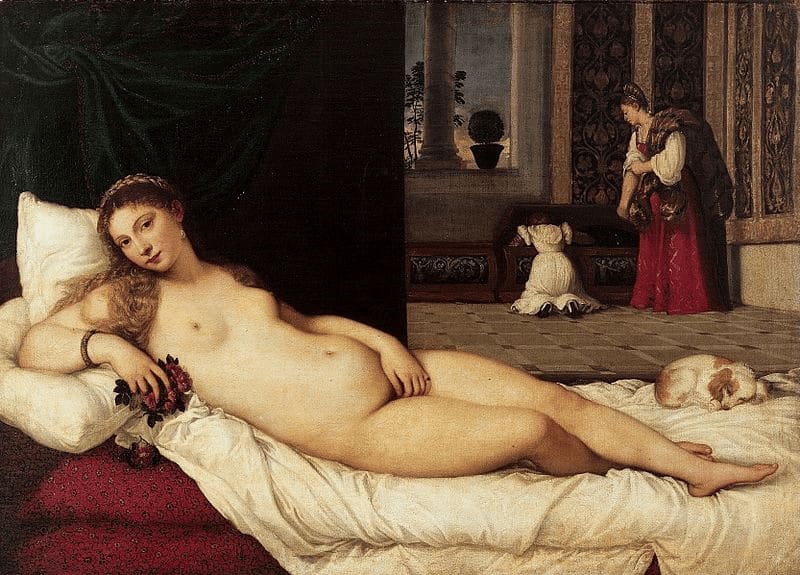
Everything points to the fact that both Majas were commissioned by the influential first minister Manuel de Godoy during the reign of Charles IV to decorate his office along with Venus at the Mirror by Diego Velázquez and Venus of Urbino of the 16th-century Venetian School, by Titian.
Having possession of these paintings of female nudes, it was said, asserted his power, due to the persecution that these works caused, but Godoy had nothing to fear; he was the most powerful man in the country.
It is also noted that the legendary possibility that the model is the Duchess of Alba, to whom Goya was intimately linked since she became a widow and moved to Sanlúcar de Barrameda together.
It is true that her face does not correspond to the Majas, but it is evident that the faces are stereotyped, as he already did in his drawings destined for tapestry, precisely so that the models were not recognized.
The Inquisition ordered Goya to appear before its tribunals for having painted the Majas and the series of etchings The Caprichos, but curiously the matter was closed thanks to the intervention of a powerful character, supposedly the Cardinal Don Luis de Borbón or, in the end, the same King Ferdinand VII.
Pictorially, it is a work in which the green tones stand out, in contrast to white and pink.
The brushstroke is not as long as the artist's usual style, except for the ruffles on the pillows, while the figure, placed in the foreground, would be made with greater detail, in a huge desire to satisfy the enigmatic client who commissioned it.
The Clothed Maja...
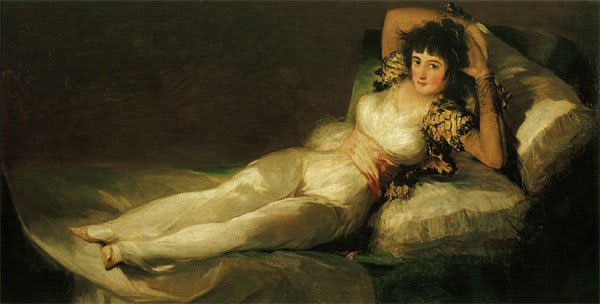
The Majas can be considered the masterpieces of Goya, both by the legend that surrounds them and by the images themselves.
The Clothed Maja is less famous, but very beautiful than The Nude Maja.
For many admirers of the two paintings, The Clothed Maja is more attractive due to its provocative posture and the beautiful dress that marks her entire body, it is known that it is often more erotic to insinuate being dressed.
Goya represents the same model, wearing a fine dress that suggests it is a woman from the aristocracy, due to the high-waisted dress, lying on a sofa on pillows, in a clearly sensual posture because she brings her arms behind her neck.
The brushstrokes used by Goya are more loose, more long than in his companion.
The horizontal format of the two canvases allows Goya to portray the woman from a close point of view.
The light spreads harmoniously over the dressed body, illuminating the fabrics and making the pale skin of the woman stand out.
In 1803 the two paintings became part of the art collection of the first minister of Spain Manuel de Godoy.
It is said that Godoy used them to decorate his office, installed with a spring mechanism that allowed the exchange of the two canvases, depending on the visit he received, he would change to be appreciated by his visitors.
Works cited...