Henri de Toulouse-Lautrec: Commented Works and the Artistic Revolution of Post-Impressionism
Discover the iconic works of Henri de Toulouse-Lautrec, a French painter who revolutionized the art world with his unique style and technique.
Henri de Toulouse-Lautrec: COMMENTED WORKS
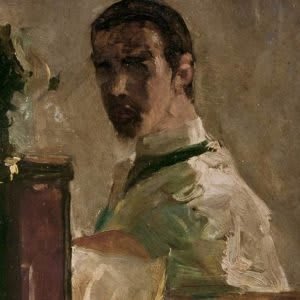
In this self-portrait, the painter gives no indication of his stunted growth or disfigured features since puberty. His congenital condition, resulting from accidents, had severely impaired his growth. His upper body developed normally, while his legs remained thin and fragile.
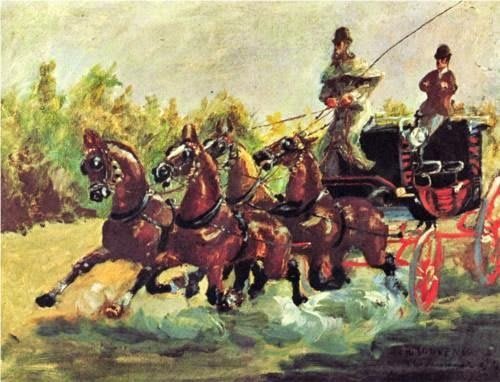
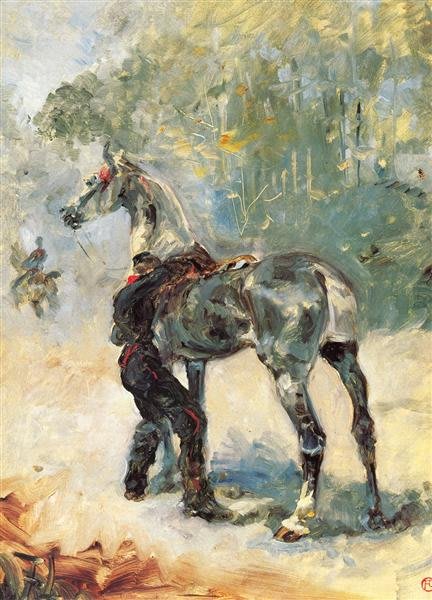
This painting was created by Henri at the age of sixteen, where he portrays his father. At that time, he was studying with his art teacher, René Princeteau, who specialized in painting horses.
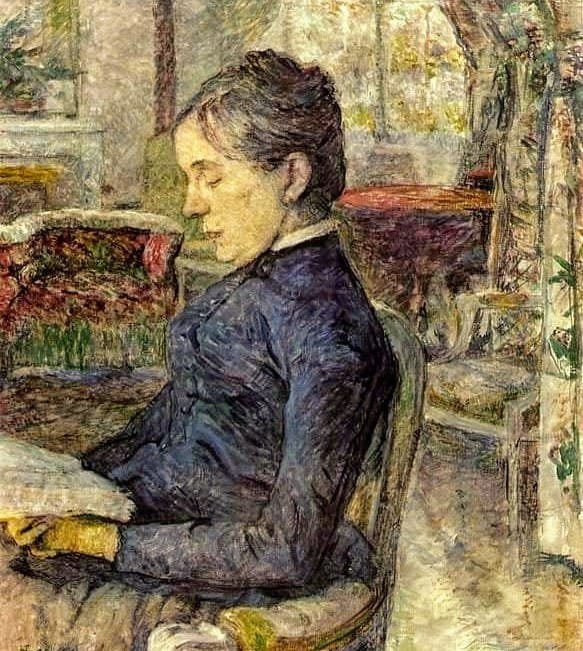
This is one of the portraits made by the artist at a moment of calmness of his mother, absorbed in reading. The painter's veneration is evident in the work.
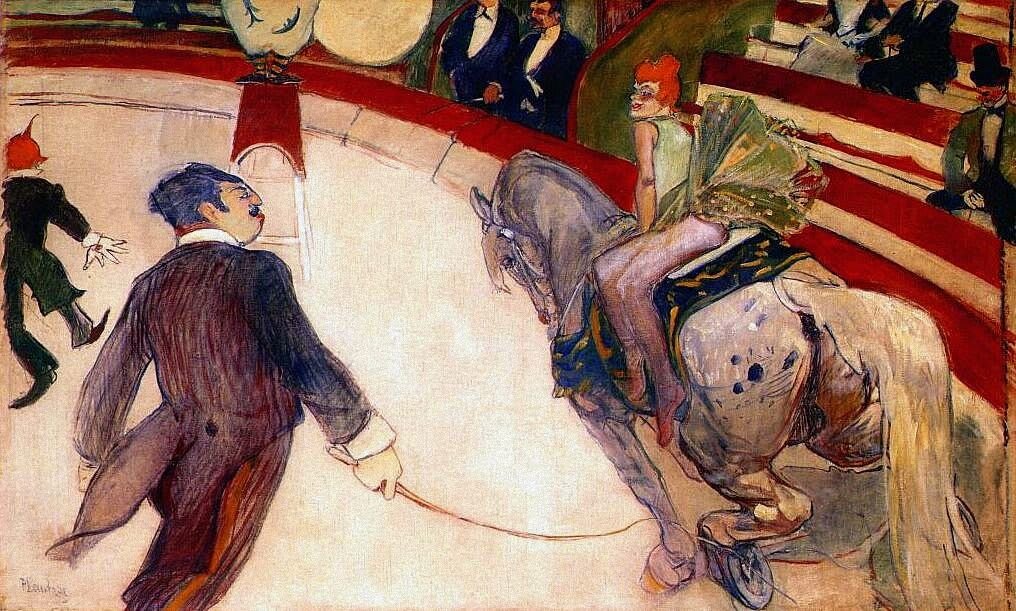
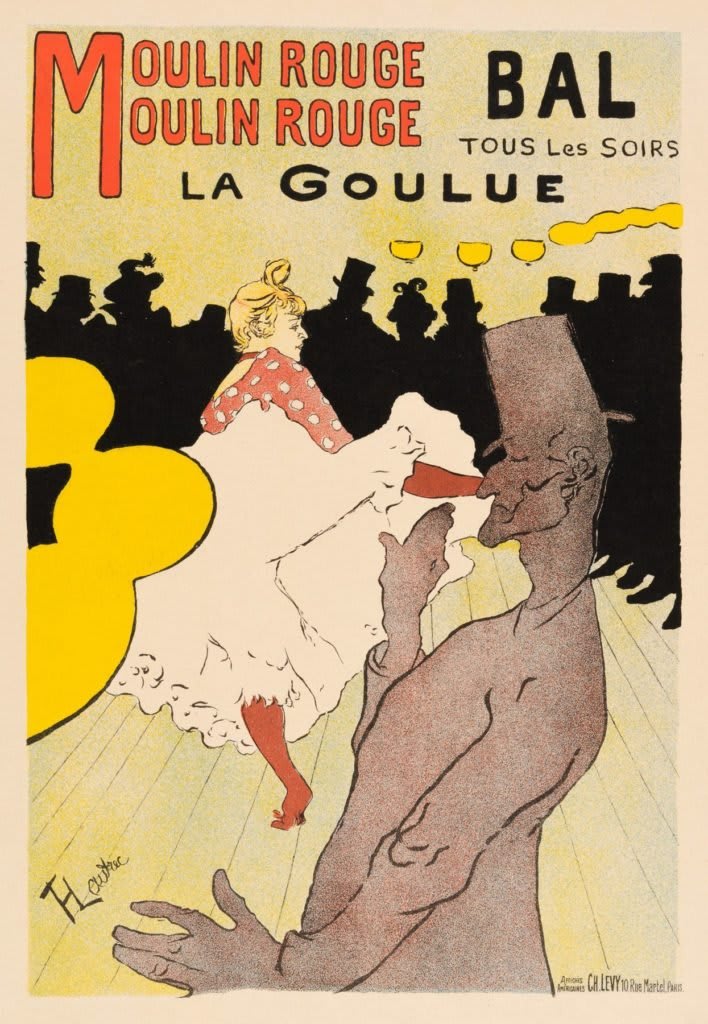
His use of expressive flowing lines, often becoming pure arabesque, resulted in highly rhythmic compositions, as we can see in this painting. The extreme simplification of contours and movement, and the use of large areas of color, make his posters some of his most powerful works.
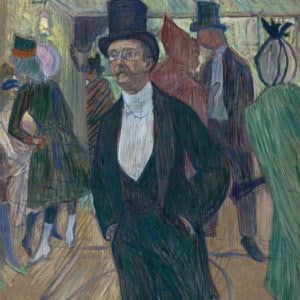
This is an iconic work by the French artist, exhibited in 1899 at the Salon des Indépendants. In the painting, the painter portrays, in the foreground, the banker Henri Fourcade, dressed in a gala outfit at a masked ball. His black figure in the center of the image, walking with his hands in his pockets towards the viewer, is framed by a background punctuated by several colorful characters with striking features that give a surprising dynamism to the composition.
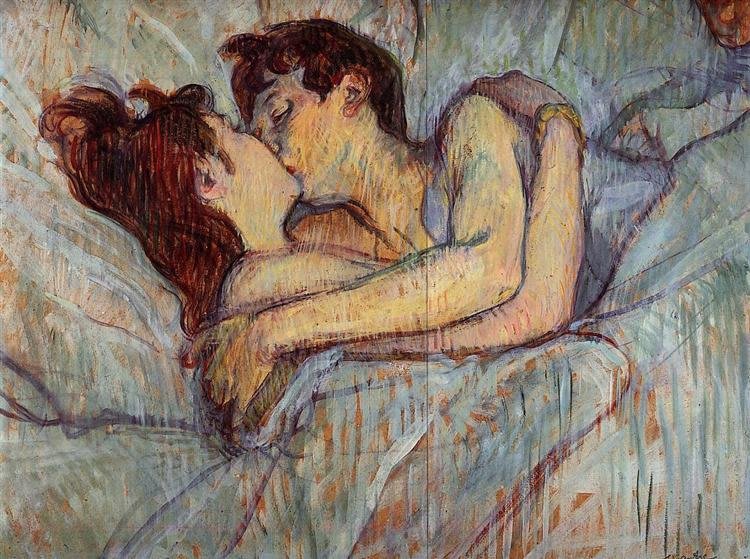
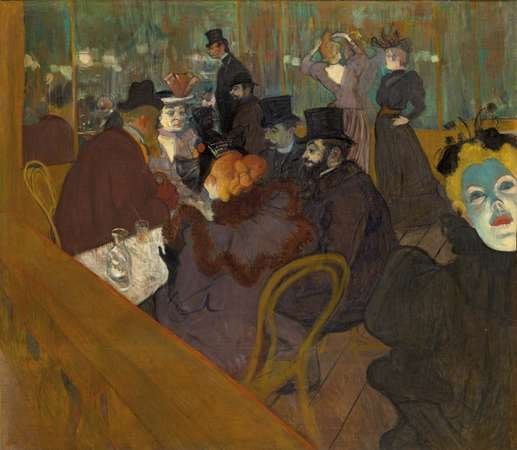
The naturalistic influence of Edgar Degas is dominant in this important work. The framing of the scene and the elevated point of view remind us of the masterful pastels of the impressionist that Lautrec admired deeply. Like his older brother, Henri showed women 'without freshness' as if he were 'peeping through the keyhole'. However, he differs from Degas in the humanity with which he observed and painted them.
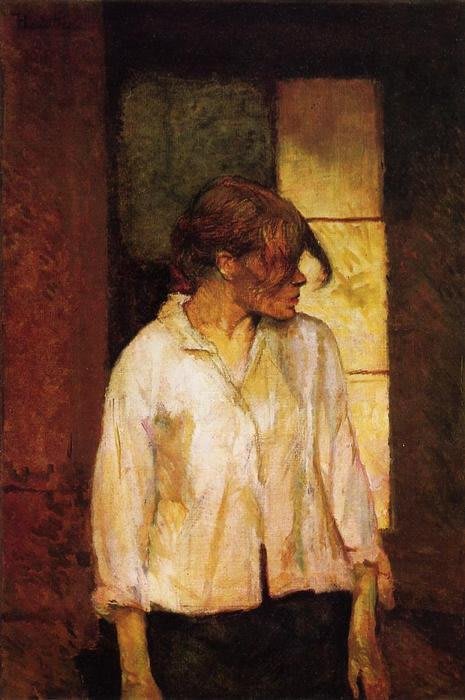
The painting was exhibited with the name of "Rousse" in an Exhibition in Brussels in 1890. This title, chosen by the artist himself, recalls his preference for red-haired models that he painted throughout his life.
Miss Dolly
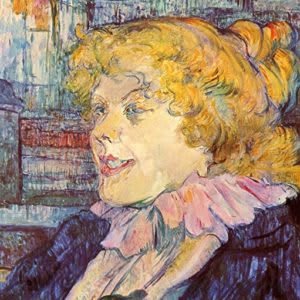
In the late 1890s, Lautrec went to Normandy and began to recover his appetite for life. He stayed in Le Havre and visited the Star, a modest café-concert that functioned as a bar for sailors. Dolly was a young English waitress whose splendor encouraged him to paint again, resulting in this beautiful portrait.
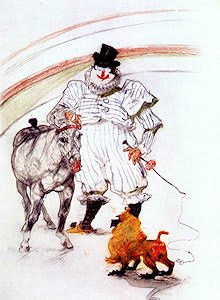
The Circus
Henri de Toulouse-Lautrec: GALLERY