
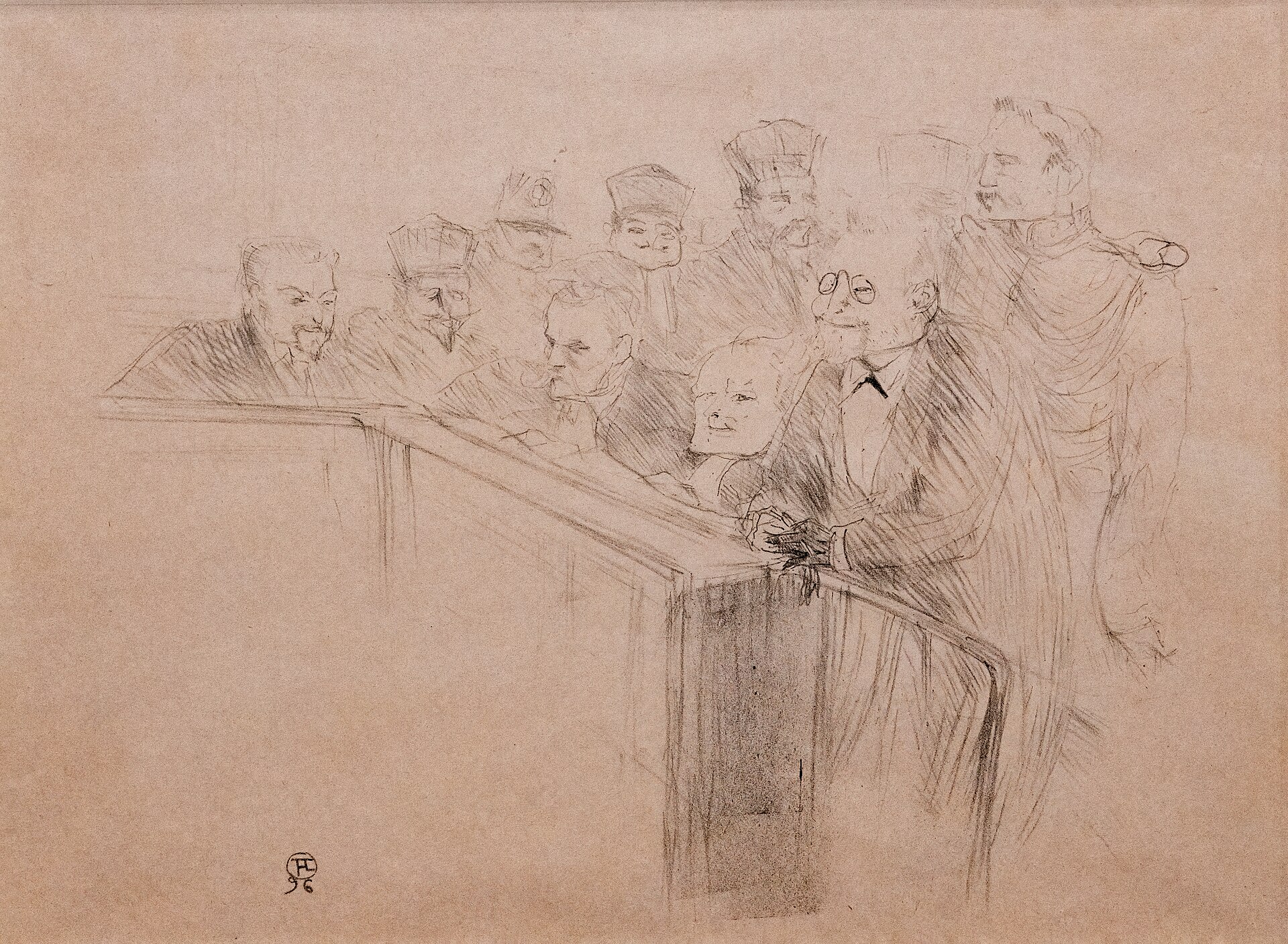
Henri de Toulouse-Lautrec: Essential Biography and the Birth of an Artistic Genius
Discover the fascinating biography of Henri de Toulouse-Lautrec, from his challenging childhood and artistic formation to his consecration as a chronicler of Montmartre's bohemian life and precursor of modern art. Part 1 of 'Henri de Toulouse-Lautrec: Biography and Works'.
Henri de Toulouse-Lautrec was a French artist whose work stood out for its representation of bohemian life and the nocturnal environments of late 19th-century Paris.
Born in 1864, in Albi, France, Toulouse-Lautrec became known for his paintings, posters, and illustrations that captured the energy and essence of Parisian nightlife, particularly in cabarets and theaters.
His work is marked by the expressiveness of colors, the vivid representation of characters, and innovation in graphic design.
Toulouse-Lautrec was an influential figure in the post-impressionist movement, and his works continue to be admired for their originality and impact on modern art.
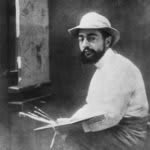
Henri de Toulouse-Lautrec was an important artist who directly influenced 20th-century art.
He observed and documented with great psychological insight the personalities and facets of Parisian nightlife and the French entertainment world in the 1890s.
Throughout his brief life, Lautrec was drawn to the energy and individuality.
He focused intensely on illustrating dancers and singers, capturing their unique personalities and gently exaggerating their characteristics.
Like many impressionist artists and his friend Vincent van Gogh, Lautrec was influenced by Japanese prints– their simplified forms, decorative lines, and use of cutouts.
By this unique and personal style, Toulouse-Lautrec belonged to the post-impressionist movement.
His influence on advertising and book illustration continues to be strong to this day.
Henri de Toulouse - Lautrec: BIOGRAPHY
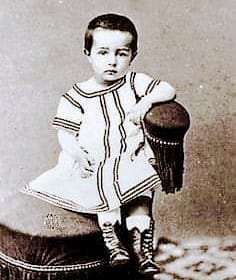
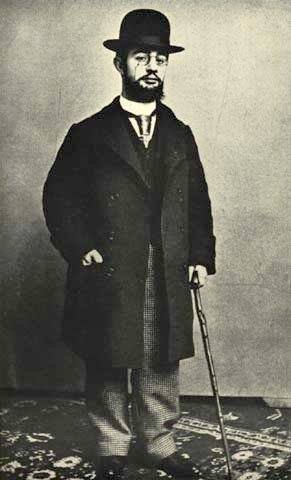
Henri Marie Raymond de Toulouse-Lautrec Monfa was born on November 24, 1864, in Albi, an ancient city located in southwestern France.
Toulouse-Lautrec's family was very wealthy and had a lineage that extended uninterrupted to the time of Charlemagne.
He grew up in the typically aristocratic love of his family for sports and art.
He spent most of his time at the Château du Bosc, one of the family's properties located near Albi.
His grandfather, father, and uncle were all talented draftsmen, so it's no surprise that he began drawing at 10 years old.
The first visit of Toulouse-Lautrec to Paris took place in 1872, when he enrolled in the Lycée Fontanes (currently Lycée Condorcet)
Toulouse-Lautrec suffered from an unknown disease at the time, possibly a hypophysis deficiency.
In 1878, he suffered two accidents, fracturing his left femur at 12 years old and his right at 14.
The poorly healed bones stopped growing, making Henri not exceed 1.52 m in height, becoming a man with an adult body but childlike legs.
However, the young man did not let this misfortune get him down.
During his long periods of bed rest, he made drawings and painted watercolors, opening up space for his incredible talent that would still unfold.
At that time, he gradually passed on to private teachers, and it was only after passing his baccalaureate exams in 1881 that he decided to become an artist.
His work received a more positive reaction from 1883, when he joined Fernand Cormon's studio.
At the beginning of this decade, Cormon enjoyed a moment of celebrity, and his studio attracted artists like Vincent van Gogh and the symbolic painter Émile Bernard.
Fernand Cormon gave Toulouse-Lautrec a lot of freedom in developing a personal style.
Soon, Lautrec's presence in Cormon's studio became less frequent.
He then rented his own studio in Montmartre, a district of Paris, and worked there for the most part, making portraits of his friends.
Thus, by the mid-1880s, Toulouse-Lautrec began his lifelong association with the bohemian life of Montmartre.
The cafes, cabarets, and artists of this Parisian area fascinated and drew him to his first taste of public recognition.
He focused his attention on representing popular artists like Aristide Bruant, Jane Avril, Loie Fuller, May Belfort, May Milton, Valentin le Désossé, Louise Weber, known as La Goulueand clowns like Cha-U-Kao and Chocolat.
Lautrec lived and worked in Montmartre, which was then a rural village on a hill near Paris but is now a neighborhood within the city.
He loved dance halls and cabarets where workers, artists, and rich aristocrats mingled.
Lautrec drew and painted this world as he saw it, seated at a reserved table for him every night at the Moulin Rouge.
Other entertainment also drew Lautrec and became subjects of his art: bicycles, races, skating rinks, the circus, masked balls, and theater.
Henri de Toulouse sought to capture the effect of figure movement by entirely original means.
His contemporary Edgar Degas, whose works, along with Japanese prints, were the main influence on him, expressed movement by carefully rendering the anatomical structure of several figures grouped together, trying to represent only one figure captured in successive moments in time.
On the other hand, Lautrec employed free-hand lines and colors that, by themselves, transmitted the idea of movement.
The lines were no longer linked to what was anatomically correct; colors were intense and in their juxtaposition generated a pulsating rhythm; the laws of perspective were violated to place figures in an active and unstable relationship with the environment.
A common device of Toulouse-Lautrec was to compose figures so that their legs were not visible.
Although this characteristic has been interpreted as the artist's reaction to his own stunted and almost useless legs, in fact, the treatment eliminated specific movements, which could then be replaced by the essence of movement.
The result was a vibrant and energetic art that, in its abstract formalism and general two-dimensionality, foreshadowed the return to the schools of Fauvism and Cubism, movements that occurred in the first decade of the 20th century.
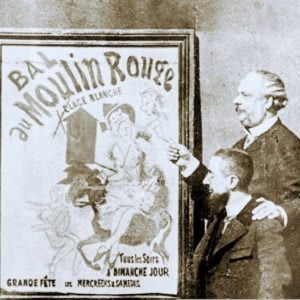
In 1891, Henri de Toulouse created his first poster, titled Moulin Rouge - La Goulue (Paris).
This poster gained growing fame even by rejecting the notion of high art made in the traditional medium of oil on canvas.
“My poster is stuck today on the walls of Paris”- declared the artist proudly.
It was one of over thirty he created in the decade before his death.
From 1892 onwards, he began producing lithographs.
In this phase, he went beyond a superficial representation of reality to a deep understanding of the psychological composition of his subjects.
Unfortunately, Lautrec became an alcoholic and suffered a mental breakdown and was hospitalized.
In March 1899, Lautrec woke up and found himself in an unfamiliar room.
The door was locked with a padlock, and a nurse was watching him.
He was at the Folie-Saint-James, a beautiful 18th-century mansion, located in the middle of a large park, transformed into a refuge for the mentally ill.
He decided to prepare an album of works on the theme of the circus, which his friend Joyant would publish.
This plan had a great tactical advantage: one of the symptoms of Lautrec's disease was memory loss.
If Lautrec could remember the details of the most famous circus attractions over the past twenty years, the psychiatrists would certainly have to admit they were wrong in their diagnosis.
He recovered briefly but then began drinking again.
With audacity, he declared at 24 years old: “I hope to exhaust myself at 40 years old”.
He died before his prediction - at 36 years old, due to the combined effects of alcoholism and syphilis, which contributed to a stroke.
He died in France, in the city of Saint-André-du-Bois, on September 9, 1901.
LEGACY
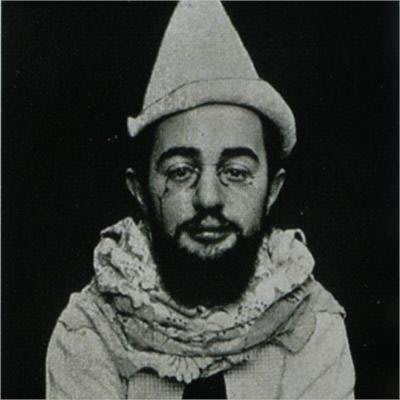
Toulouse-Lautrec greatly influenced 19th- and early 20th-century art, through the use of new types of subjects, his ability to capture the essence of an individual with means, and his stylistic innovations.
Despite his deformity and the effects of alcoholism and mental collapse that he suffered later in life, he helped define the course of avant-garde art far beyond his premature and tragic death at 36 years old.
He left behind a set of works that included 737 paintings, 275 watercolors, posters, 363 prints (over 300 lithographs in his last decade of life), 5,084 drawings, works in ceramics, stained glass, and an immeasurable number of lost works.
These, and the spirit of the Belle Époque, of Paris that he immortalized, are his legacy that resonates to this day.


