
Honoré Daumier: Social Criticism, Legacy and Art Gallery (Part 2)
Honoré Daumier: Social Criticism, Legacy and Art Gallery (Part 2)
Article Index
Honoré Daumier was a French artist who lived in the 19th century, known for his political and social caricatures.
He was one of the main illustrators of newspapers and magazines of the time, creating works that often were biting and critical of the French government and society.
Art Gallery - Commented
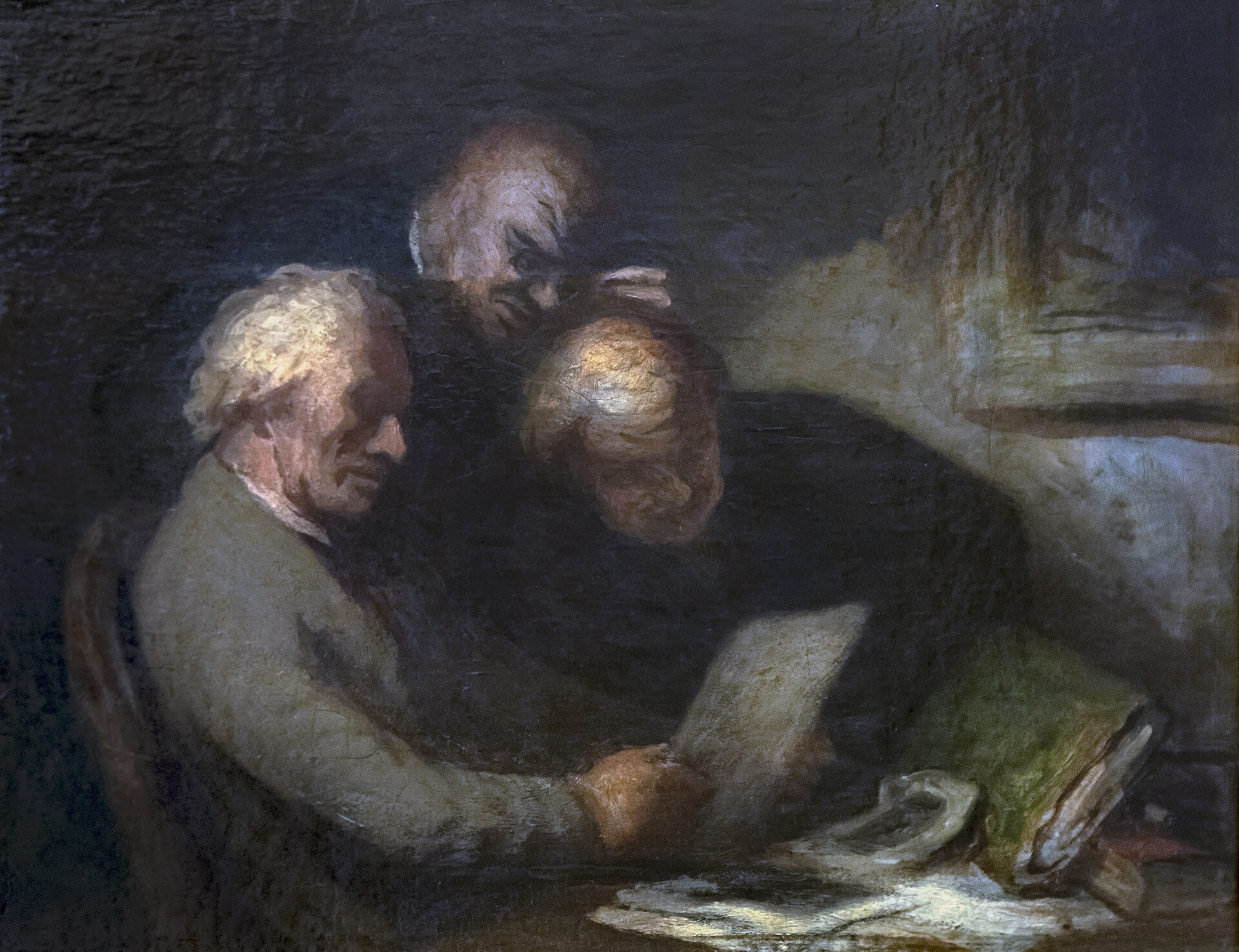
Daumier worked mainly as a newspaper and magazine illustrator, creating political and social caricatures that often were biting and critical of the French government and society of the time.
He also produced a series of paintings, many of which depict the daily life of Parisians and workers.
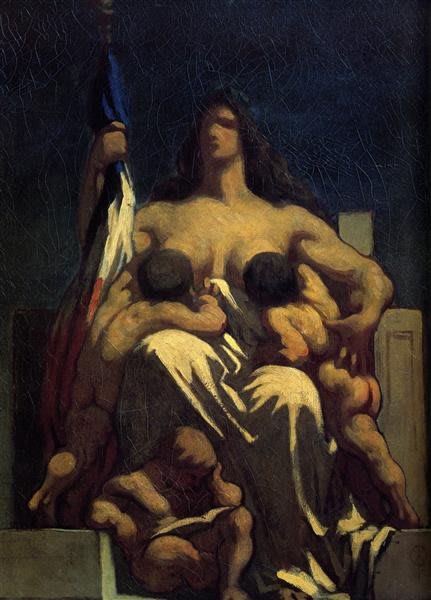
Mother - Very ahead of its time, the maternity represented here is pure expressionism 50 years before the official appearance of this movement
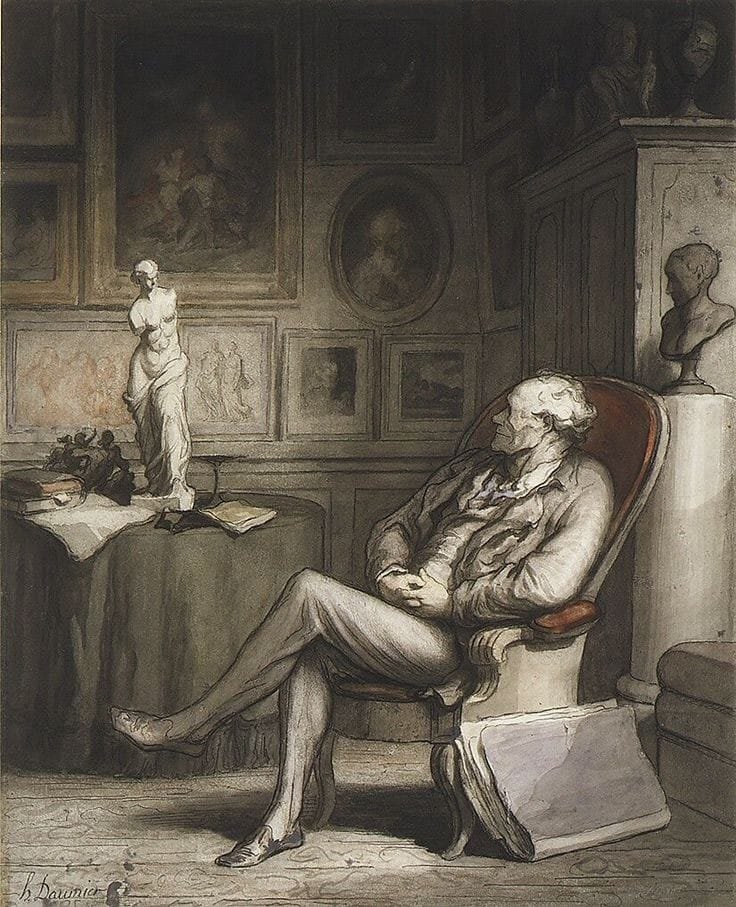
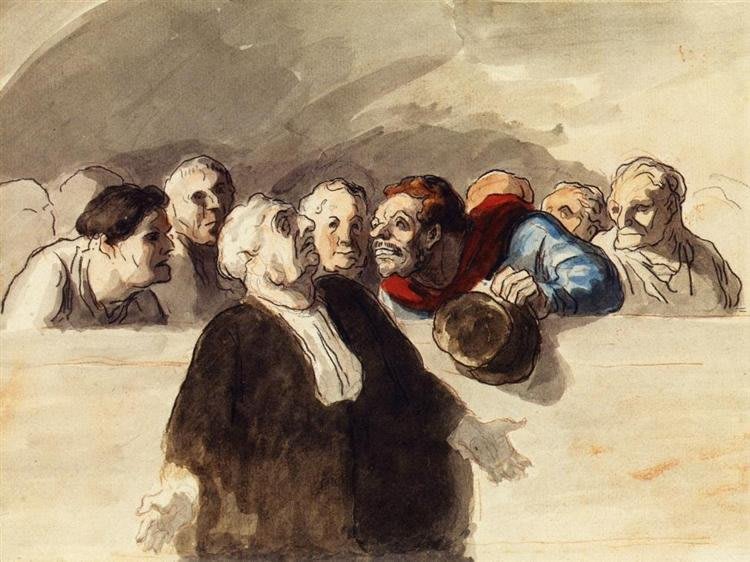
The Collector - Daumier produced high-finish watercolors like this one to attract a growing market of bourgeois collectors.
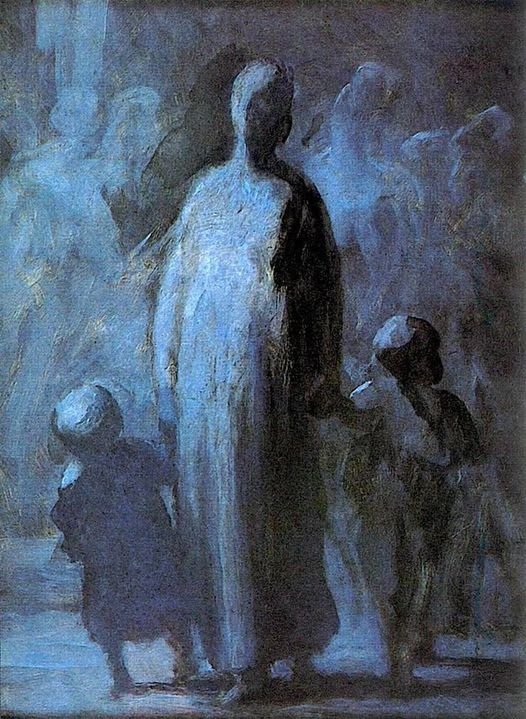
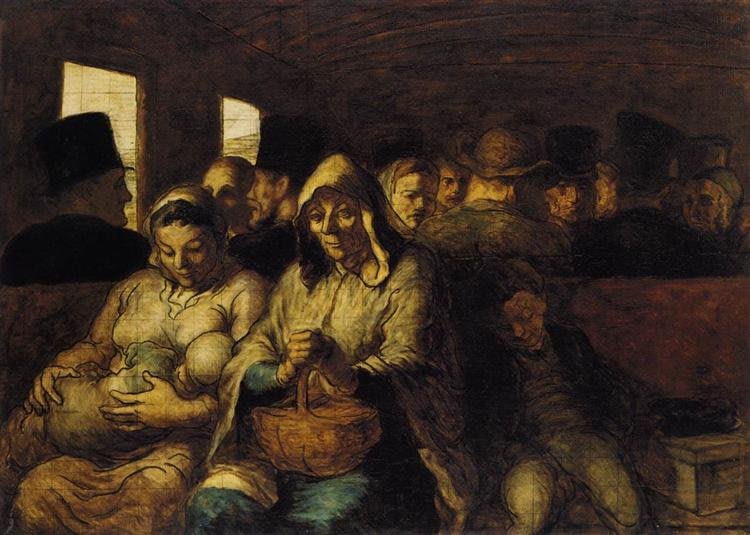
Third-Class Carriage - The industrialization and urbanization over the working class of Paris had a great impact on the artist, becoming a recurring theme in his work.
Don Quixote and Sancho Panza. Honoré Daumier. 1865-1870
A Painter (Self-Portrait). Honoré Daumier. 1875
Daumier was a prolific artist, and his legacy continues to be relevant for those seeking to understand the cultural and political history of France.
After the coup and the accession of Louis Napoleon as emperor, censorship again limited his artistic production.
He returned to creating less volatile social commentary through caricatures in Le Charivari and also began to spend more time outside the city of Barbizon with Millet and Henri Rousseau.
In 1853, he stopped exhibiting at the annual Salon, although he continued to paint.
In 1860, he lost his job at Le Charivari, as his work seemed no longer to generate public favor. To make a living, he began to produce watercolors with contemporary themes, as these works were highly sought after in the art market. His oil paintings had a touch of caricature as he once again merged styles from one medium to another.
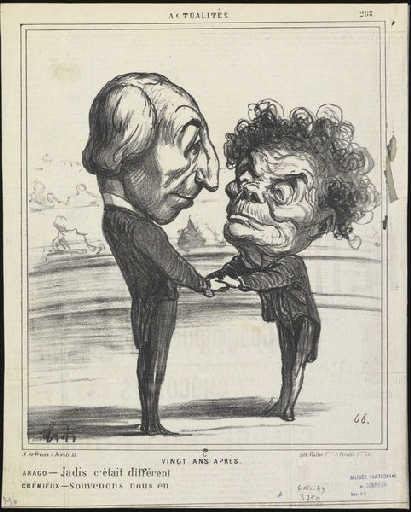
In 1864, he signed a new contract with Le Charivari with the proposal to continue creating social and political satire in which he was so masterful. However, upon resuming his work, he realized that his vision was failing.
In 1870, the French government offered him the Legion of Honor medal, although discreetly and not publicly. He refused the offer.
From 1870 to 1871, with the outbreak of the Franco-Prussian War, Daumier, having been elected a member of the commission to oversee the protection of artworks in the Louvre Museum, actively opposed the efforts of Gustave Courbet to demolish the Vendôme Column.
In 1874, Camille Corot, who became a close friend, helped him buy a house in Valmondois.
On February 10, 1879, Daumier died after suffering a paralytic stroke, leaving many unfinished paintings.
His works are found in collections of museums around the world, and his legacy continues to be relevant for those seeking to understand the cultural and political history of France.


