
Honoré Daumier: Social Engagement and Artistic Resistance (Part 2)
Honoré Daumier: Social Engagement and Artistic Resistance (Part 2)
Honoré Daumier was one of the most influential artists in French art history.
He was born in 1808 in Marseille and began working as a engraver and caricaturist in Paris.
After the fall of the monarchy of Louis-Philippe, the rules of the artistic establishment were relaxed, and artists previously marginalized, such as himself, who were largely self-taught or literally trained on the job, were allowed to submit works for potential selection at the Annual Paris Salon.
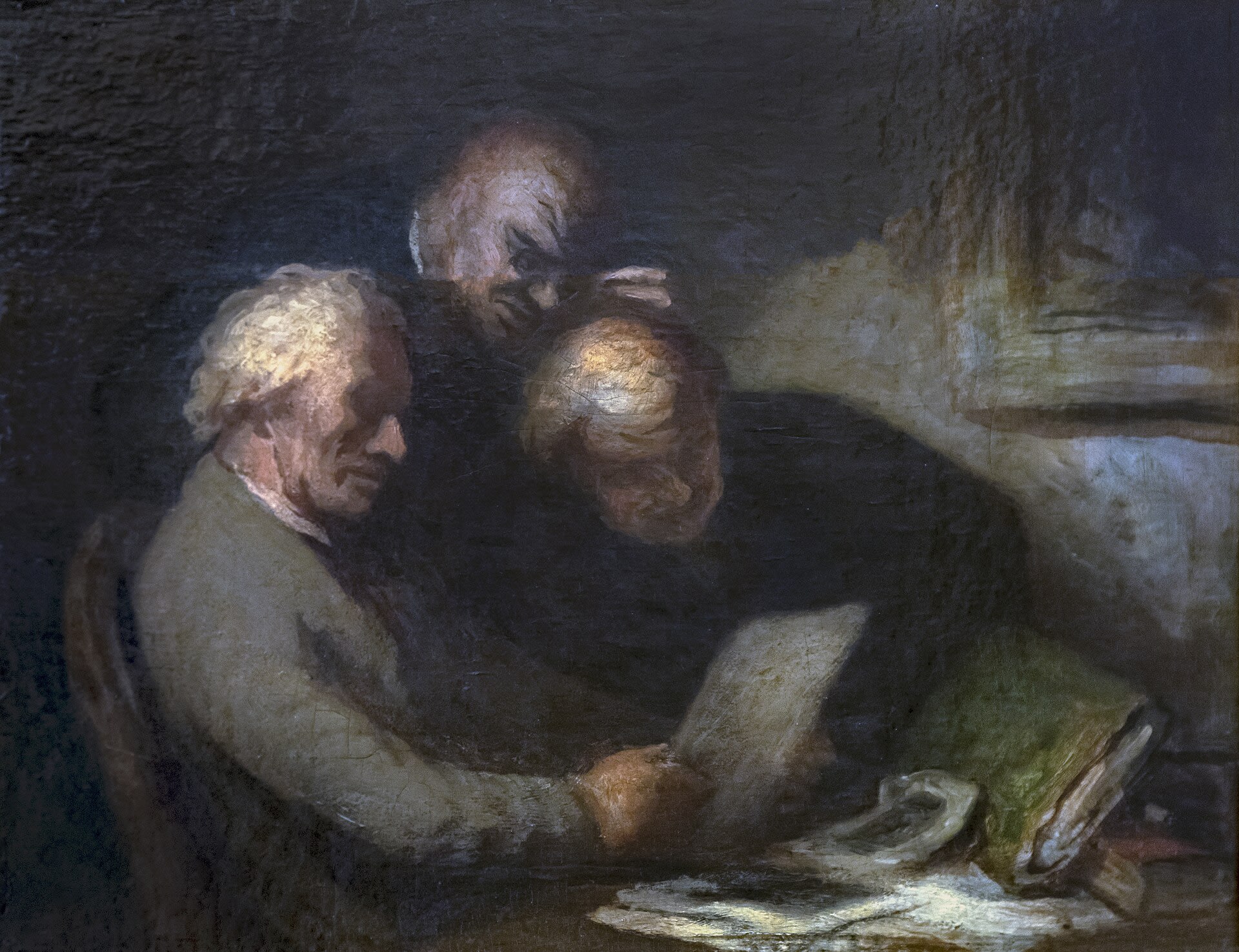
Of the twenty paintings submitted, Daumier came in 11th place. Encouraged by the jury of the competition, he began to dedicate himself more seriously to oil painting and subsequently produced numerous paintings with literary and classical themes.
His painting was still somewhat awkward and, therefore, widely ignored by critics.
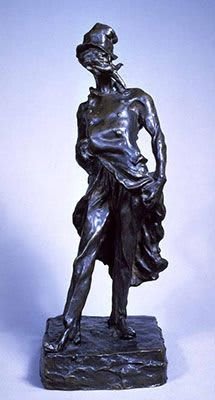
In 1851, during the tumultuous period that led to the end of the brief French Republic, Daumier turned back to the visual expression mode for which he was best known: he drew a series of fierce and polemical political cartoons and also created one of his most successful sculptural caricatures, Ratapoil .
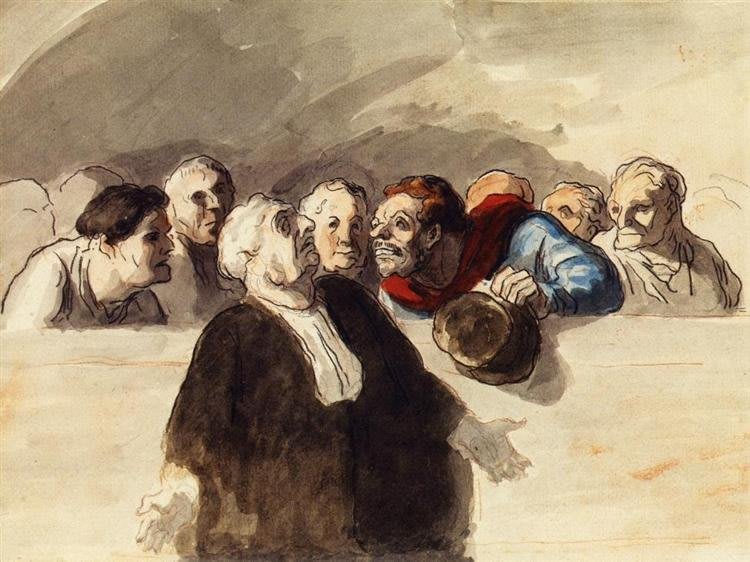
After the coup and the accession of Louis Napoleon as emperor, censorship once again limited his artistic production.
He returned to creating less volatile social comments through caricatures in Le Charivari and also began to spend more time outside the city of Barbizon in the company of Millet and Henri Rousseau.
In 1853, he stopped exhibiting at the annual salon, although he continued to paint.
In 1860, he lost his job at Le Charivari , as his work seemed to no longer generate public favor.
To make a living, he began producing watercolors with contemporary themes, as these works were highly sought after in the art market.
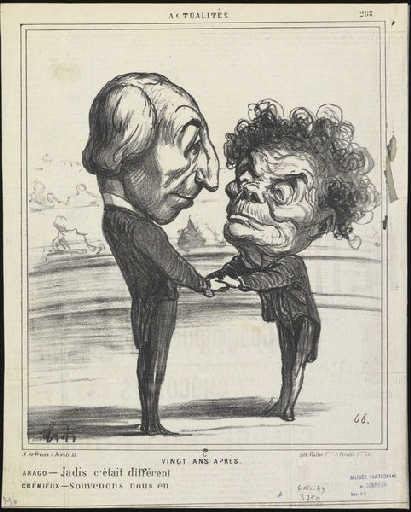
In 1864, he signed a new contract with Le Charivari with the proposal to continue creating social and political satire in which he was so masterful.
However, upon resuming his work, he realized that his vision was failing.
Yearning for the peaceful life of the countryside, he began to spend longer periods in Valmondois, where he rented a modest house that eventually became his permanent refuge.
In 1870, the French government offered him the Legion of Honor cross, although discreetly and not publicly.
He refused the offer.
He continued to create lithographs and paint, but always had financial difficulties.
From 1870 to 1871, with the outbreak of the Franco-Prussian War , Daumier, having been elected a member of the commission to oversee the protection of artworks at the Louvre Museum , actively opposed the efforts of Gustave Courbet to demolish the Coluna Vendôme.
It was during this tumultuous period in French history that he produced some of his most powerful works, lithographs related to the war, civil unrest, and the subsequent privation of the siege, and so on.
To understand the rest of this journey, continue to our next article: Honoré Daumier: Legacy, Last Years, and Commented Works (Part 3).


