
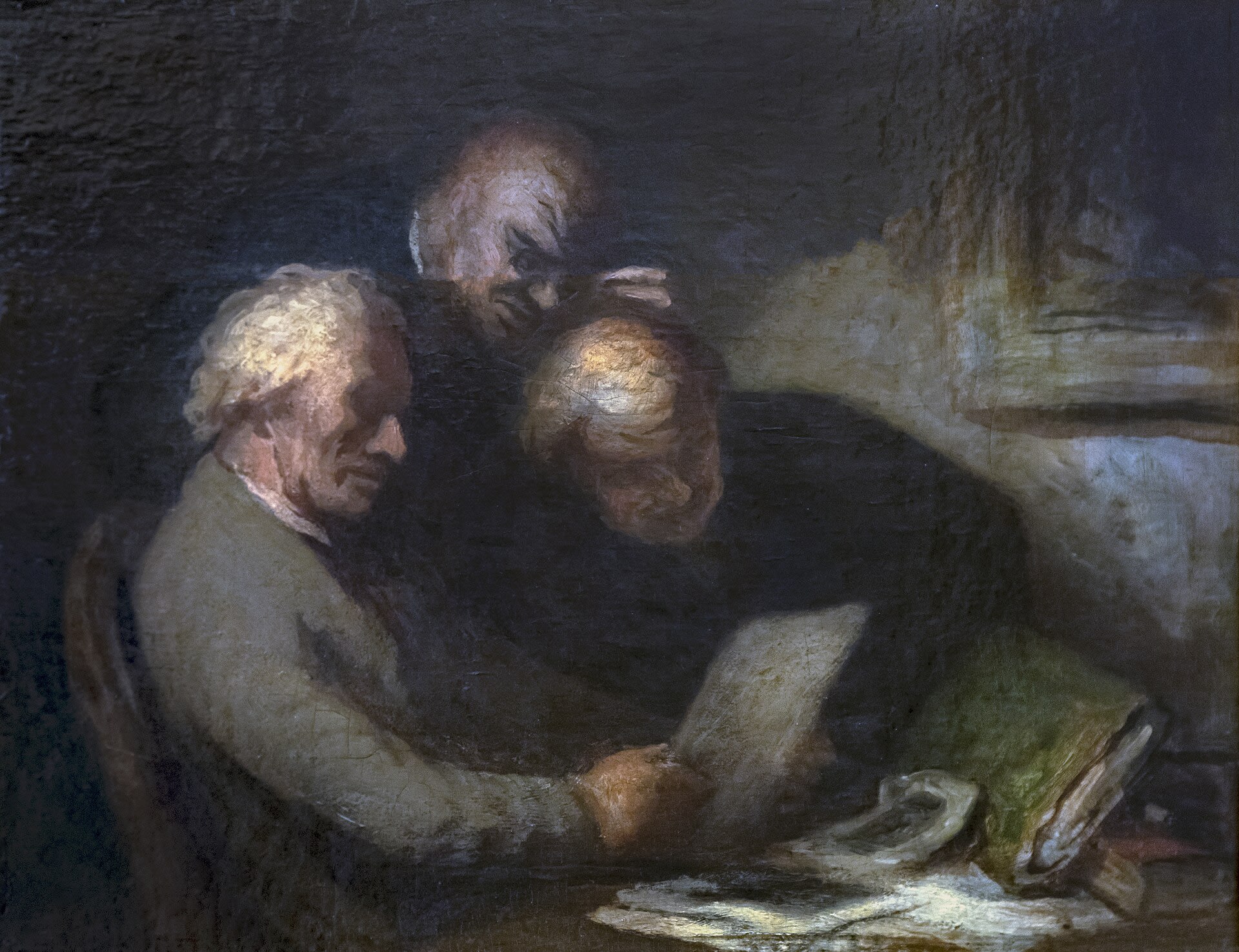
Honoré Daumier: The Genius of Satire and His Artistic Rise (Part 1)
Honoré Daumier: The Genius of Satire and His Artistic Rise (Part 1)
Article Index
Honoré Daumier was a prominent French artist of the 19th century, known mainly for his satirical caricatures and socially engaged artworks.
He was one of the leading artists of the French Realist school and is considered one of the most important political cartoonists in the history of art.
BIOGRAPHY
Honoré-Victorien Daumier was born on February 26, 1808, in Marseille, France.
He was the son of Jean-Baptiste Louis Daumier and Cecile Catherine Philippe.
In 1814, they moved to Paris and lived there.
His father was a glazier by profession, and he aspired to be a future poet, so he was drawn to the French capital, where he had more chances of being recognized for his literary abilities.
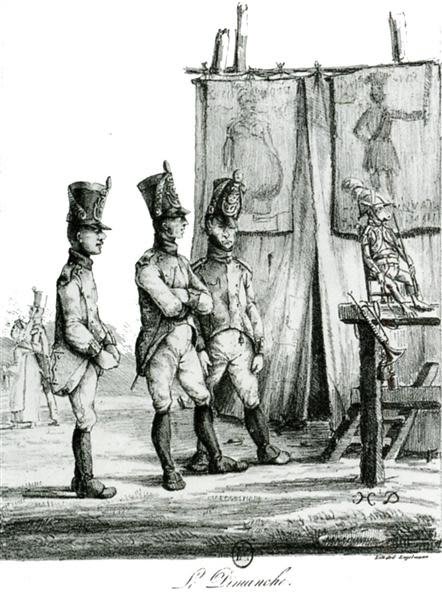
Daumier showed artistic talent from a very young age.
At twelve, he began working, first as a messenger for a law firm and then as an assistant to a bookseller.
In 1822, he started having informal art lessons with the artist and antiquarian Alexandre Lenoir, a friend of his father.
Many times, he would go alone to the Louvre to make sketches in the sculpture galleries.
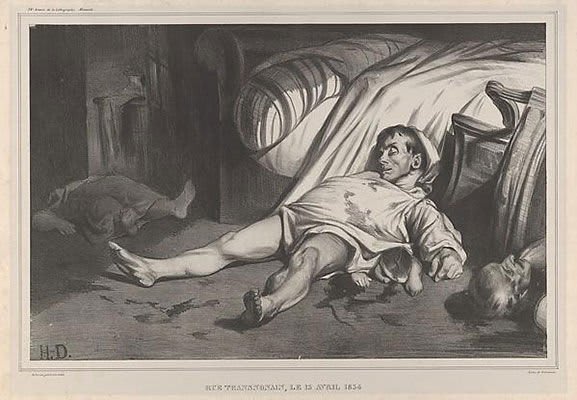
In 1823, he began studying at the well-known Académie Suisse, an art studio run by Charles Suisse.
In 1829, he was already creating lithographic caricatures, copying the styles of other artists.
After the 1830 Revolution in France, censorship was freed from great persecutions, and he could begin to express his political opinions more openly through illustrated pamphlets.
By the mid-1830s, he began to stand out in the genre of political and social cartoons.
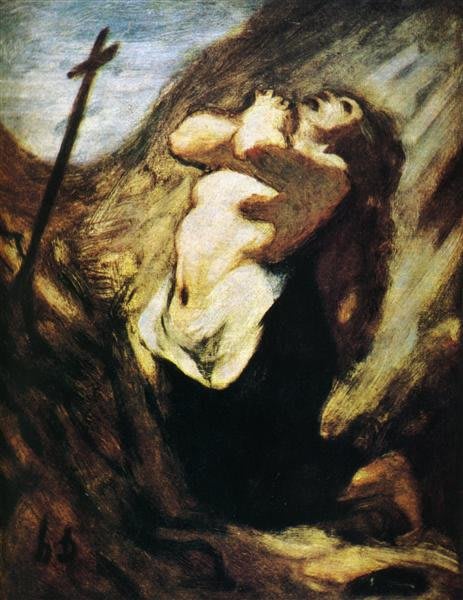
Some of his most famous works include the series of lithographs "Les Gens de Justice" (The People of Justice), which depicts judges and lawyers in comedic situations.
In 1835, censorship was reinforced, La Caricature was silenced, and Daumier turned his attention back to social satire.
In 1840, Daumier married Marie-Alexandrine Dassy, a seamstress, and they lived on the Ile Saint-Louis, near the Hotel Pimodan.
In 1846, Daumier and Marie had a child, and shortly after the child's birth, they got married.
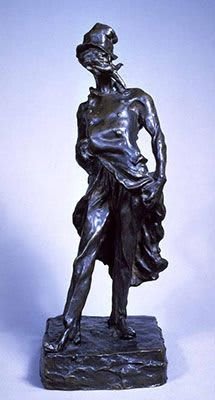
In 1851, during the tumultuous period that led to the end of the short-lived French Republic, Daumier turned again to the visual expression for which he was best known: he drew a series of fierce and polemical political cartoons.
To understand the rest of this journey, continue to our next article: Honoré Daumier: Social Criticism, Legacy, and Gallery of Works (Part 2).


