
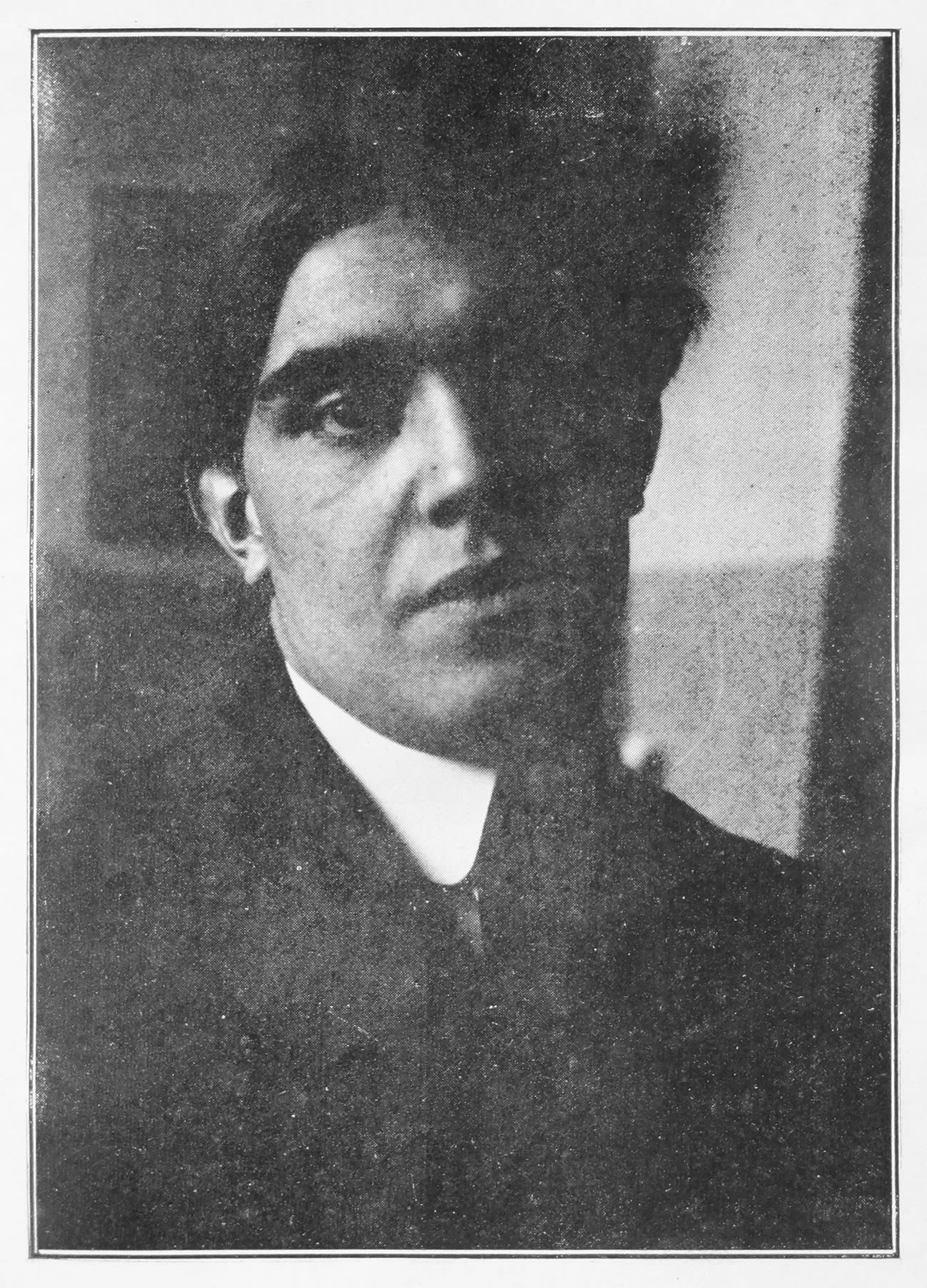
Juan Gris: The Young Visionary of Cubism and His Artistic Roots
Discover the early career of Juan Gris, from his formation in Madrid to his arrival in Paris, and how he became a key figure in defining cubism.
Important Spanish artist, Juan Gris developed a fundamental work in the creation of cubism, and his mathematical and rational approach to composition influenced later generations of abstract artists. He built on the foundations of initial cubism and led the movement in new directions.
Although sometimes overshadowed by figures like Pablo Picasso and Georges Braque, Gris is considered a key innovator in the evolution of modern painting.
Gris' paintings are immediately distinguishable from those of his contemporaries, informed by his training as an illustrator, with an elegant, almost commercial appearance, and clear design elements throughout.
BIOGRAPHY
José Victoriano Carmelo Carlos González-Pérez was born in Madrid on March 23, 1887; he would later become Juan Gris, one of the leading figures of cubist painting.
He was the thirteenth of fourteen children.
From 1902 to 1904, he attended the Madrid School of Arts and Industry, where he studied mathematics, physics, and mechanical drawing.
Both were strong students, but the rigidity of academic life did not appeal to him, and his natural talent for drawing encouraged him to shift his focus to the study of art.
In 1905, he studied painting under the tutelage of José Moreno Carbonero, a respected and successful artist in Madrid who had taught Salvador Dalí and Pablo Picasso.
While working with Carbonero, who González-Pérez changed his name to Juan Gris.
In 1906, he sold all his belongings and moved to Paris after his father's death, and he would remain in the city for most of his life.
However, as he had evaded the obligatory military service in Spain, he did not have a passport and could not leave France or return to Spain.
During his early years in Paris, he worked as an illustrator and satirical cartoonist for a variety of magazines and periodicals.
He established himself in the artistic community of Montmartre, Bateau Lavoir, where he met Picasso, Braque, Matisse and American writer Gertrude Stein, who would become a lifelong admirer and collector of his work.
As he developed relationships with other artists, he began to devote more energy to his own painting.
Following the steps of Picasso and Braque, he initially worked in the style that would later be defined as cubism analytical, characterized by its monochromatic color, use of linear grids, and breaking down of a subject into geometric planes.
Although he clearly had immense respect for Picasso, the older man may have felt threatened by the younger man's talents, or simply been annoyed by his flattery, leading Stein to note that
"Juan Gris was the only person that Picasso wished to be gone".
In 1912, despite the unbalanced nature of their relationship, his portrait of his mentor attracted acclaim from fellow artists and critics when it was exhibited at the Salon of Independents .
In the same year, he signed a contract that gave the German art dealer Daniel-Henry Kahnweiler the exclusive right to sell his work.
From several years of financial difficulties in Paris, the agreement gave him greater stability and allowed his work to reach a wider and more influential audience.
At the beginning of the 1910s, although many recognized his talent in its own right, his work followed the austere, monochromatic style of cubism analytical and moved towards cubism synthetic - a subsequent phase, distinguished by a more extensive and daring use of color and a compositional approach similar to collage - from 1914 onwards.
Apart from Picasso and Braque, his work from the last period stands out for its departure from destructive abstraction and the use of bright, harmonious colors in bold combinations.
On cubism, he declared:
"Cubism is moving around an object to grasp various successive appearances that, fused into a single image, reconstitute it in time."
To understand the rest of this journey, continue to our next article: Juan Gris: Challenges, Triumphs, and the Legacy of a Master Cubist.


