
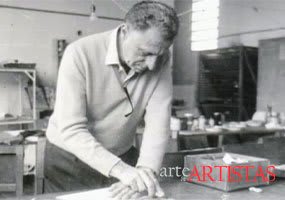
Lívio Abramo
Lívio Abramo
Lívio Abramo was a renowned Brazilian artist, known for his remarkable career in various fields, including engraving, drawing, painting, muralism, and teaching.
Interestingly, his career was marked by a wide range of styles and techniques, reflecting his curiosity and creativity.
In 1909, he moved to São Paulo with his family, where he studied at the Liceu Dante Alighieri, under the guidance of the artist and professor Enrico Vio, who recognized his talent and encouraged him to pursue a career in art.
From a young age, he demonstrated artistic abilities, and his family supported his journey.
During the 1920s, he created illustrations for small São Paulo newspapers. It was during this period that he discovered the work of Oswaldo Goeldi and German expressionism.
In 1926, with acquired experience, he created his first engravings.
During the 1930s, he became involved in artistic and political movements, actively participating in the Brazilian modernism and debates about art and society of the time.
His art was influenced by Tarsila do Amaral in her anthropophagic phase. Politically, he was a member of the Partido Comunista Brasileiro during the government of Getúlio Vargas.
His political convictions strongly influenced his subsequent works.
The 1940s were dedicated to engraving, particularly book illustrations. As a result of this work, he received a prize for a trip abroad for the series of illustrations presented at the Salão Nacional de Belas Artes.
In 1951, he traveled to Europe, heading to Paris, where he refined his metal engraving and xilogravure techniques.
In 1953, he returned to Brazil, participating in the 2nd Bienal de Arte de São Paulo, receiving the prize for the best national engraver.
Abramo produced works with social and political themes, depicting the life of the Brazilian worker, the struggle for social justice, and the inequalities of the time.
In addition to his artistic production, he was an important art teacher, having taught at the Escola de Artesanato do Museu de Arte Moderna de São Paulo and the Universidade de Brasília.
In 1962, he was invited by the Federal Government to join the Missão Cultural Brasil-Paraguai, to work, he moved to Paraguay, taking on the position of director of the Visual Arts and Plastic Arts Sector.
He founded the Instituto do Patrimônio Histórico e Artístico do Paraguai.
Lívio Abramo passed away on April 26, 1993, in the city of Assunção, Paraguay.
He left a significant legacy for Brazilian art, both through his work and his political and social engagement.
GALLERY - MAIN WORKS

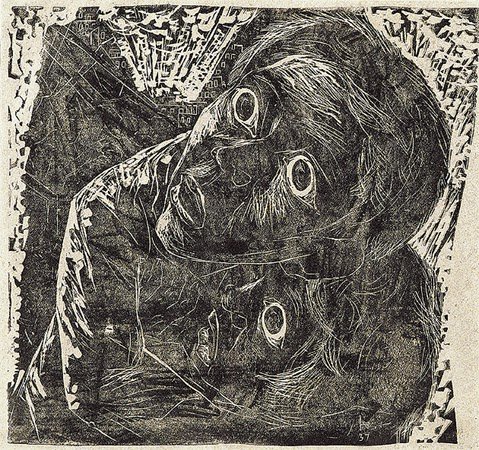
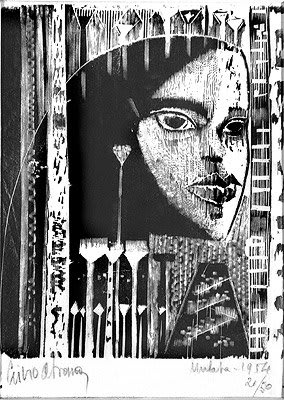
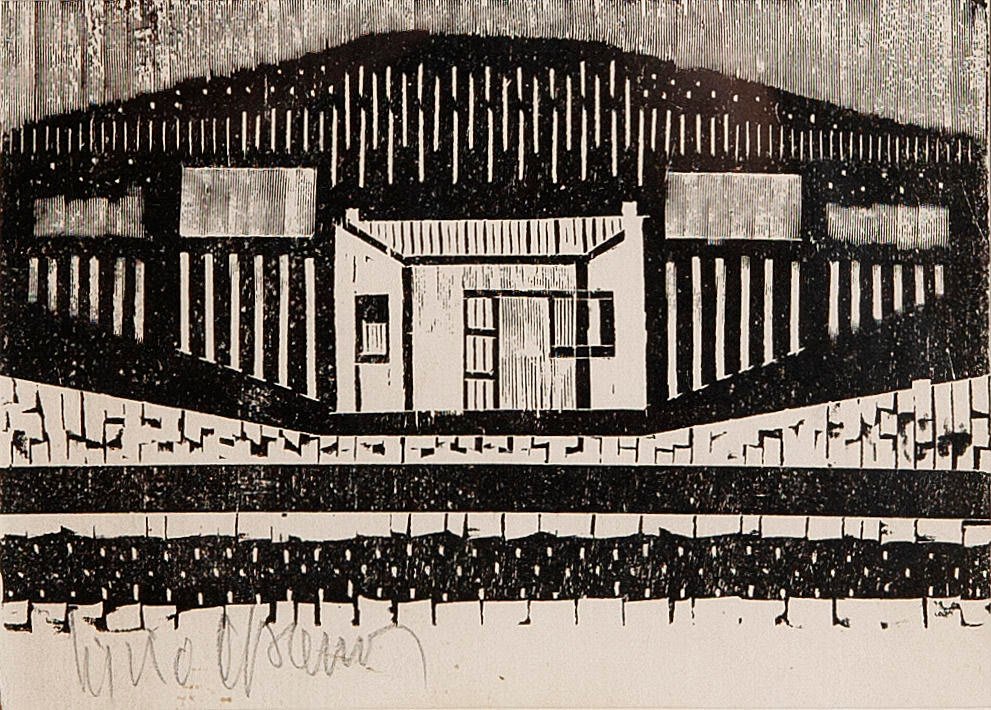
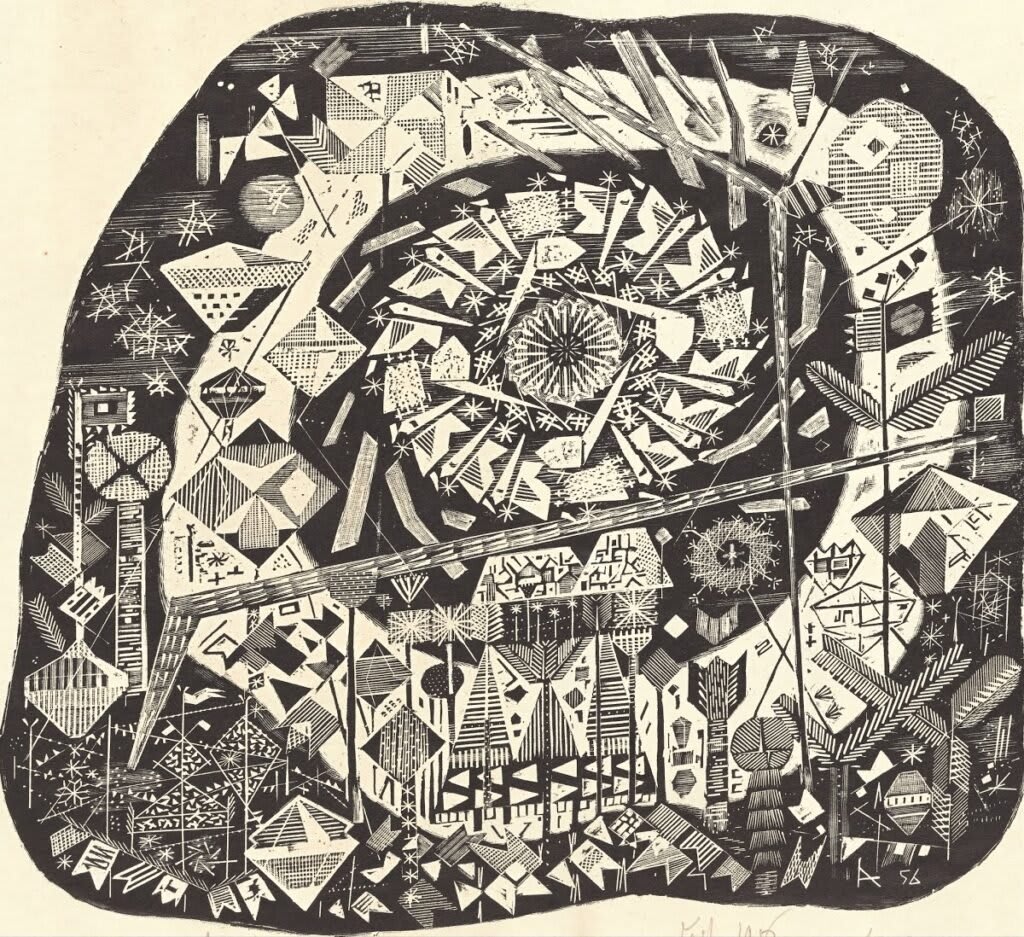
On Festa, the artist was inspired by the country's cultural manifestations, especially the June festivals, with their balloons, bonfires, and flags. The artist expresses this work, always concerned with social and political issues in Brazil, his interest in the common man, always present, directing the main theme of his work.


