
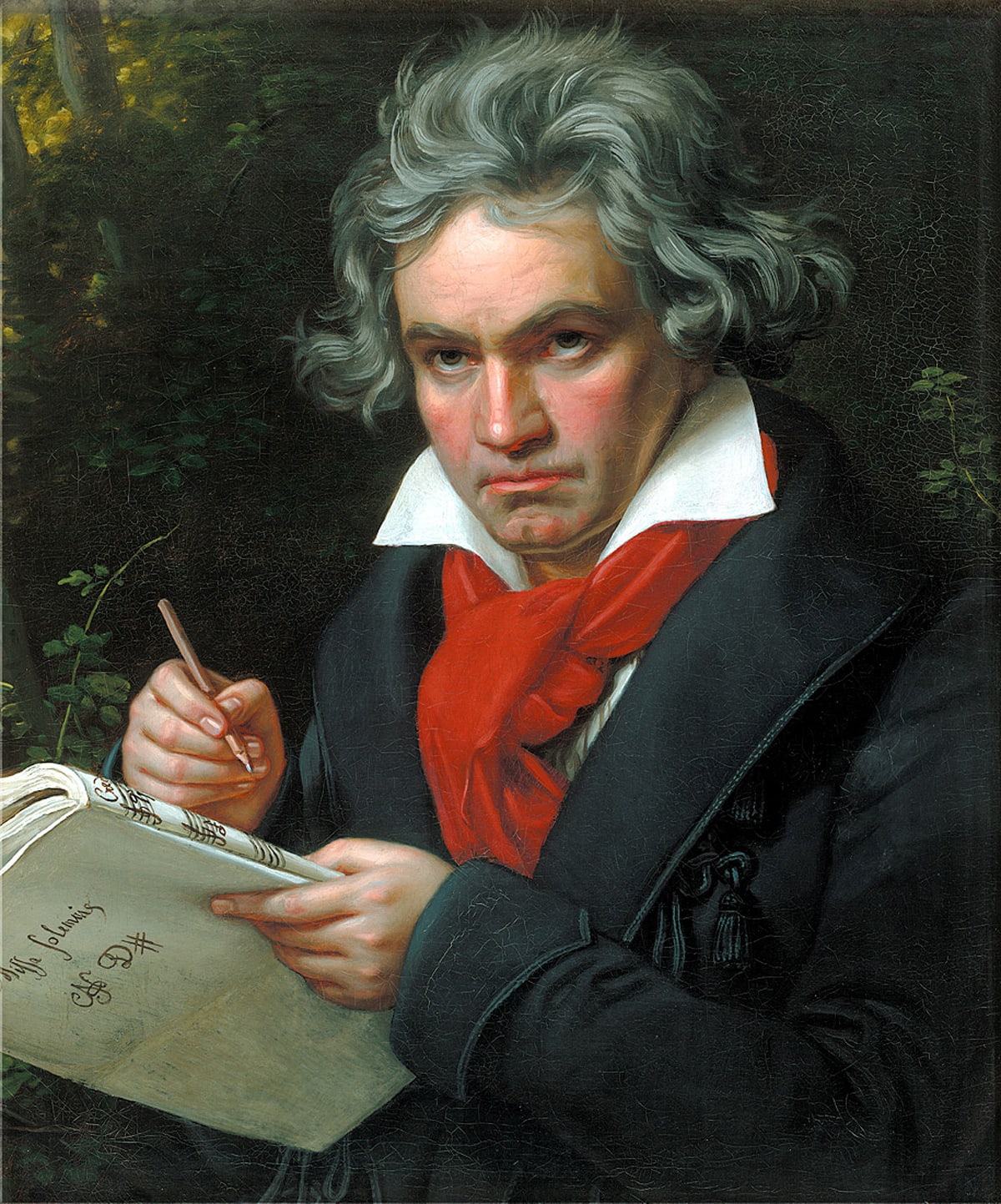
Ludwig van Beethoven: Early Years and Arrival in Vienna (Chapter 1)
A brief summary of Ludwig van Beethoven's early years and arrival in Vienna.
Article Index
Beethoven was a significant German composer, widely regarded as one of the greatest musical geniuses of all time, who lived during a period of transition between the Classical and Romantic eras of Western classical music. He wrote some of the most stimulating music that exists, posing a challenge to the future that is still felt whenever a composer sets out to write a new sonata, quartet, or symphony. Even his name has acquired a monumental stature in our culture. Beethoven's personal life was marked by the struggle against deafness, and some of his most important works were composed during the last ten years of his life, when he was unable to hear.
BIOGRAPHY
Ludwig van Beethoven was born on December 17, 1770, in the city of Bonn (Cologne), Germany. He was the eldest son of Johann and Maria Magdalena van Beethoven. The family was of Flemish origin. It was his grandfather who first settled in Bonn when he became a singer in the archbishop's choir in Cologne. His father Johann was also a singer in the church choir, like most musicians of the 18th century, Ludwig was born into the profession.
Having observed in his eldest son the signs of a talent for the piano, Johann tried to make Ludwig a child prodigy like the famous Austrian musician Wolfgang Amadeus Mozart, demanding human efforts, with severe punishments for a child.
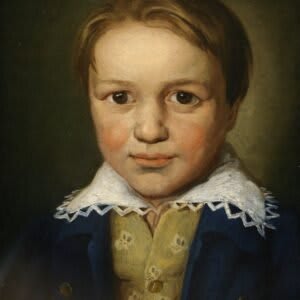
Although initially quite prosperous, the Beethoven family became increasingly poor with the death of his grandfather in 1773 and his father's decline into alcoholism. In adolescence, Ludwig took on the role of provider and head of the family. Fortunately, the child's talent was great enough for the teachers and members of the court circle to intervene. They were the ones who placed him in a more secure career.
In 1780, during a period of political renewal in Bonn, a sign of the new times, was the appointment of Christian Gottlob Neefe as the court organist, a Protestant from Saxony, who became Beethoven's teacher. Although somewhat limited as a musician, Neefe was a man of high ideals and broad culture, a composer of songs and light theatrical pieces.
In June 1782, Beethoven became Neefe's assistant as the court organist, it was through him that Beethoven, in 1783, would have his first known composition as 'Nine Variations on a March by Dressler' which was published in Mannheim.
In an effort to facilitate his musical development, in 1787 the court sent Beethoven to Vienna, the European capital of culture and music, where he hoped to study with Mozart. There are only speculations and inconclusive evidence that Beethoven ever met Mozart, let alone studied with him.
The tradition says that, upon hearing Beethoven, Mozart said: "Keep an eye on him; one day he will give the world something to talk about."
After only a few weeks in Vienna, Beethoven learned that his mother had fallen ill and he returned home to Bonn. Remaining there, he continued to shape his reputation as the young court musician most promising in the city.
In 1790, Beethoven received with immense honor, a commission to compose a musical memorial in honor of the Emperor Roman Joseph II who had died that year. For reasons that remain obscure, Beethoven's composition was never presented, and most assumed that the young musician had proven himself incapable of the task. However, over a century later, Johannes Brahms discovered that Beethoven had indeed composed a "beautiful and noble" musical piece titled Cantata on the Death of Emperor Joseph II. It is now considered his first masterpiece.
In 1792, with the revolutionary French forces sweeping the Rhineland for the Electorate of Cologne, Beethoven decided once again to leave his native city for Vienna. Mozart had died a year earlier, leaving Joseph Haydn as the greatest living composer unchallenged.
Haydn lived in Vienna at the time and was the one Beethoven intended to study with. As his friend and patron, the Count Waldstein wrote in a farewell letter, "The genius of Mozart laments and weeps for the death of his disciple. He found refuge, but not escape from the inexhaustible Haydn. Through him, now, he seeks to unite with another. Through hard work, you will receive the spirit of Mozart from the hands of Haydn."
In Vienna, Beethoven devoted himself wholeheartedly to musical study with the most eminent musicians of the time. He studied piano with Haydn, vocal composition with Antonio Salieri, and counterpoint with Johann Albrechtsberger. Still unknown as a composer, Beethoven quickly established a reputation as a virtuoso pianist, especially adept at improvisation.
In 1794, Beethoven gained many patrons among the leading citizens of Viennese aristocracy, who provided him with lodging and funds, allowing him to break ties with the Electorate of Cologne. Beethoven made his long-awaited public debut in Vienna on March 29, 1795.
Continue here


