Luncheon on the Grass, Masterpiece by Édouard Manet
Luncheon on the Grass, Masterpiece by Édouard Manet
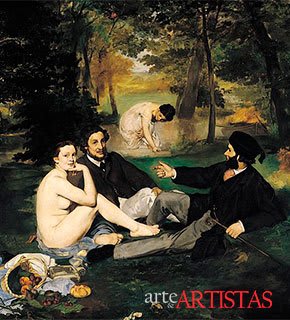
Luncheon on the Grass (Le Déjeuner sur l'herbe) is a masterpiece by the French painter Édouard Manet, completed in 1863.
This iconic painting is known for its bold and innovative composition, which shocked the public at the time.
The work depicts an outdoor picnic with two male figures dressed and a woman nude, calmly seated beside them, defying artistic and social conventions of the period.
Manet uses contrasts of light and shadow, as well as a rich color palette, to bring life to this controversial scene.
Luncheon on the Grass is considered a landmark in the transition from realism to modernism and a precursor to the impressionist movement, highlighting Manet's ability to challenge norms and expand the boundaries of art.
Considered the first masterpiece of Édouard Manet, this painting has surprised and intrigued since its first exhibition in Paris in 1863.
It was considered an affront to the time, not only because of the woman's blatant nudity in contrast to the men, but also because the painter used family models for the figures in the composition.
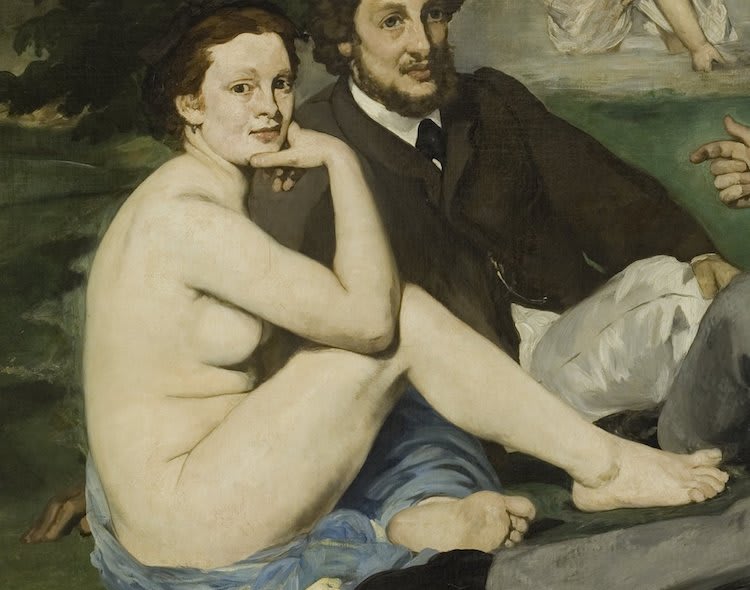
The nude woman is Victorine Meurent, one of his models.
The men, on the other hand, are his brother, Eugène Manet, and his cousin Ferdinand Leenhoff.
Since its inception, the work has been subject to adverse criticism.
It was rejected by the French Academy in its annual exhibition at the Paris Salon, but accepted in an exhibition known as the Salon of the Rejected titled 'The Bath' (Le Bain).
Like most impressionist works, the painting presents a common situation: two women and two men sharing a picnic, where the scene takes place in a forest.
However, what catches the viewer's attention is a particular detail: one of the women is nude.
Although female nudes were a subject that dominated the history of art until then, they always represented mythological or allegorical figures until Manet's work.
By placing a naked woman in a everyday setting, Manet recontextualized old values and redefined the subject, but with a touch of irony.
Although Manet did not embrace popular classical themes among his contemporaries and predecessors, he was inspired by them.
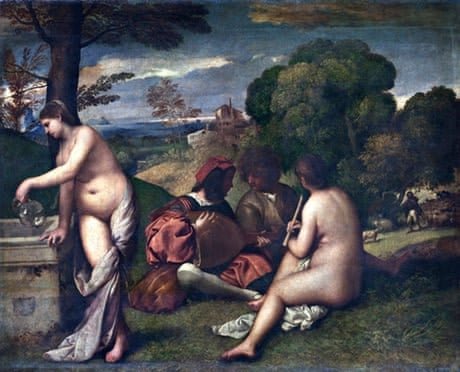
He claimed that his work was a legacy of the old masters he was inspired by, observing some works at the Louvre Museum, such as Titian in his painting 'The Concert Pastoral', and also a print titled The Judgment of Paris.
The work of Titian is a Renaissance painting that allegorically represents poetry and music.
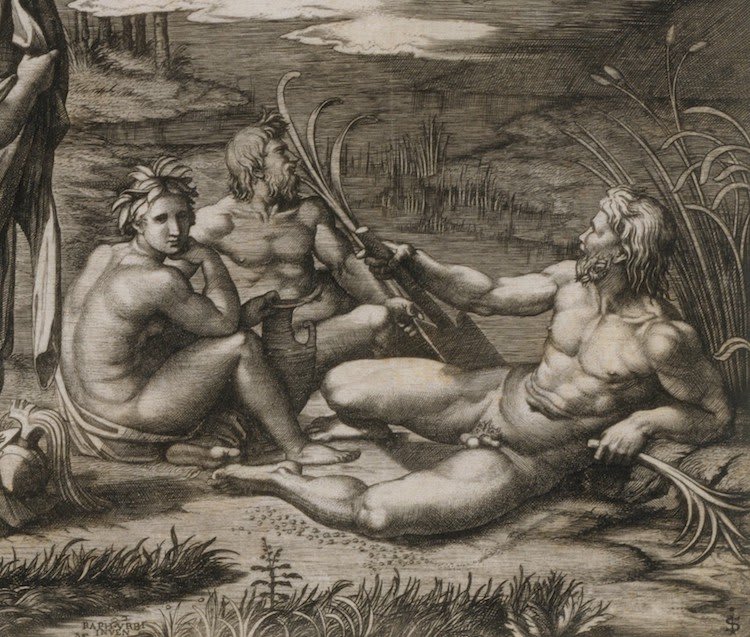
In it, Manet appropriates the dynamics of the two dressed men sitting outside with two nude women: one seated and one who seems to be bathing.
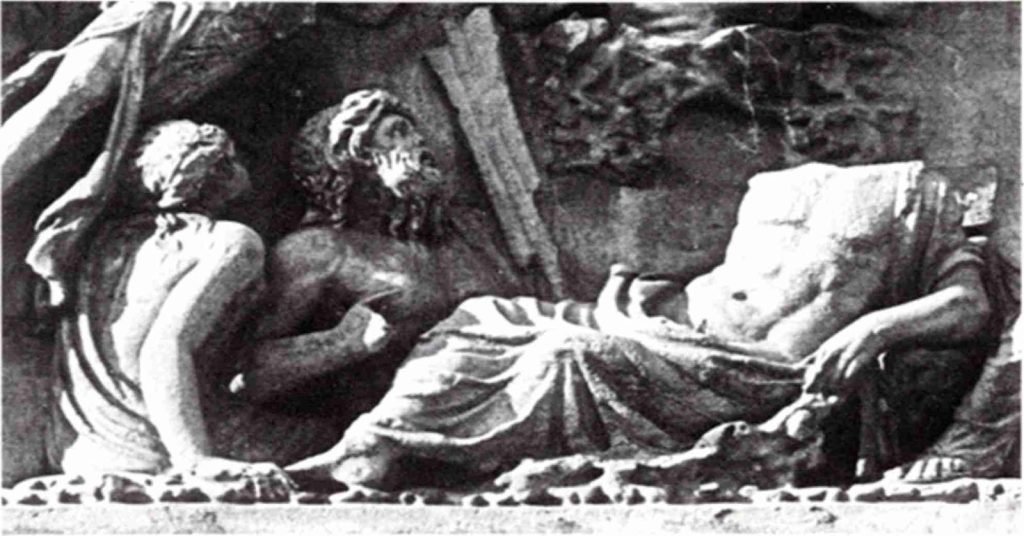
Regarding the print, it is a work by Raphael that was lost over time, in which Marcantonio Raimondi, copied to make the composition of this print.
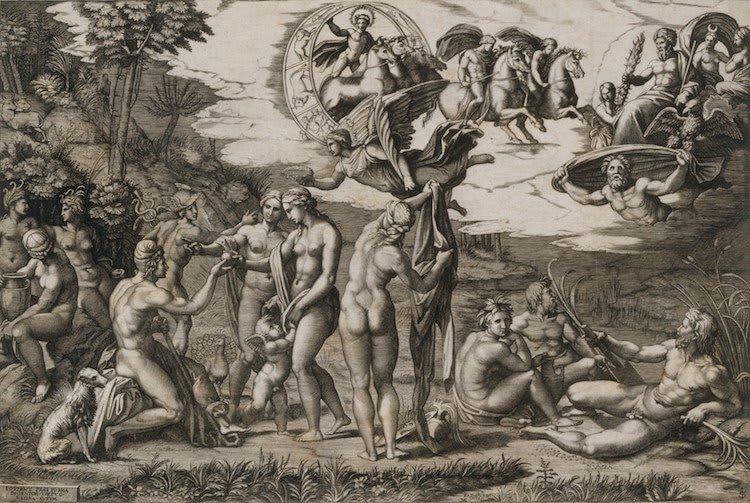
Luncheon on the Grass is undoubtedly too modern for its time.
Not only its innovative theme, but also the work is known for its human-scale dimensions. This large painting introduces a theme that the impressionists would later explore - a bourgeois picnic.
Manet deliberately evokes Renaissance paintings of sensual leisure, but updates the entertainment to show bohemian gentlemen of his own class accompanied by women who can be prostitutes.
The style and skill shocked almost as much as the subject.
Manet abandons the usual measures to produce brutal contrasts between shadow and light. The characters do not seem to be perfectly integrated into the composition with vegetation that seems more sketched than painted, where perspective is ignored and depth is absent.
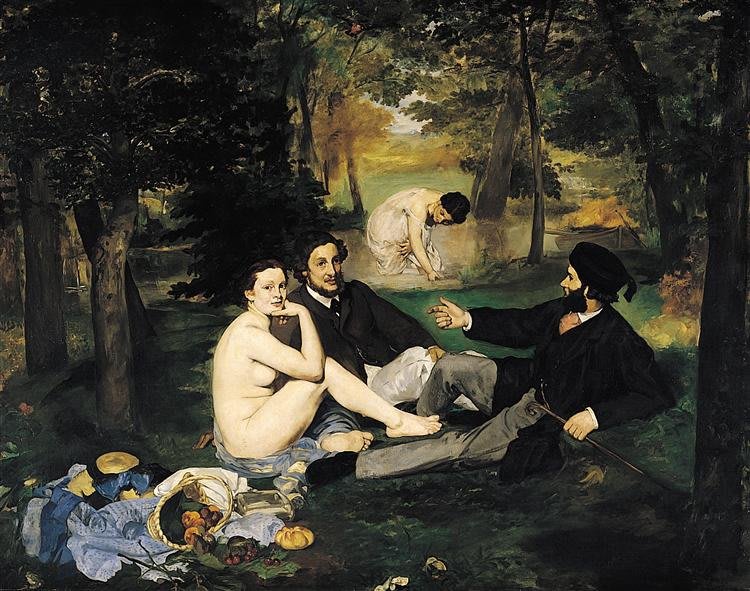
We can conclude that this is a scene created in the brilliant mind of Manet, where the studio and painting blend.
This is not just a supposition, because it addresses each of the visual problems that scholars have identified as problems:
- The lighting is contradictory.
We perceive this because the foreground is lit from behind us, suggesting it was lit by a studio window; the background seen from above is 'painted' sunlight.
Furthermore, the presence of the nude, over whom shines the light of the window, only makes sense in a studio, not outdoors.
- There is evidence that the two women represented are actually one.
They have the same body type.
The hair is identical, although Manet darkened the hair of the bather to disguise the similarity.
The earrings are the same color and size and are exactly the same distance from the earlobe.
Currently, this painting remains the most famous work by Manet and one of the main highlights of the Musée d'Orsay in Paris, for its importance and striking visual.
Its importance is considered in its historical context as being the starting point for impressionism and modern art.
Auguste Renoir declared: "Manet is as important to us as Cimabue and Giotto were to the Italian Renaissance."
Despite the originality of the artists, even the most surprising innovators like Manet, we can consider that all are deeply sensitive to tradition.
Although Manet painted the work in his own style, he also sought the idea from Renaissance masters.
As we mentioned in the text, three of his figures are based on part of a print by Marcantonio Raimondi, being that a copy of a composition now lost of Raphael Sanzio.
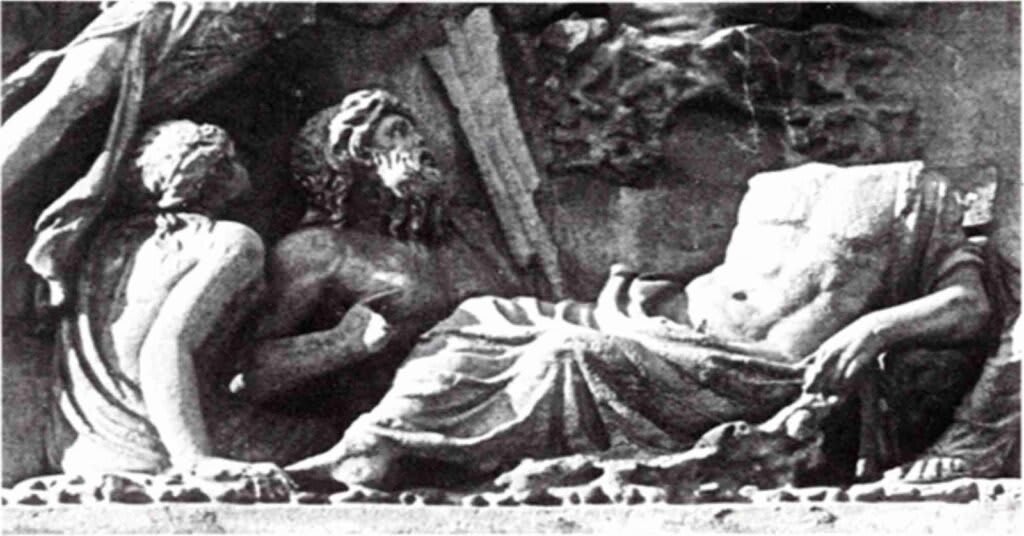
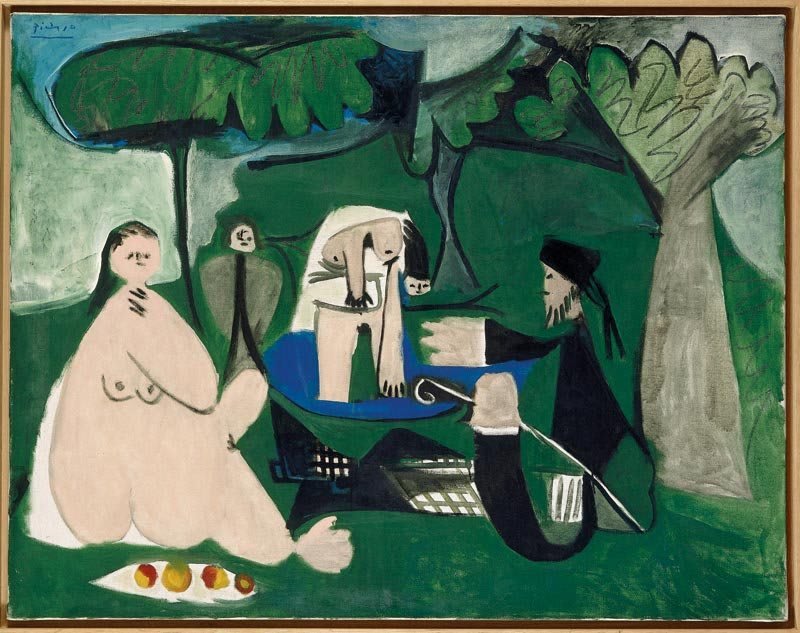
The brilliant Pablo Picasso, like all his fertile and original spirit, also sought to revitalize himself by seeking tradition.
In several reinterpretations of ancient masters by him, Picasso recreated from 1960, twenty-seven oils and over a hundred and fifty drawings inspired by the famous Luncheon on the Grass by Manet, concluding the series of works in 1963.
The first of 1960 is a reasonably direct copy of Manet's work, in terms of the number and location of the figures, although the style is, of course, notably different.
Contemplating a work of art does not mean it is essential to have a complete knowledge of all these traditions to delight in its appreciation.
What is worth it is to feel, and above all, to recognize the boldness of these artists.
Luncheon on the Grass: CURIOSITIES