
Paul Klee: Biography and Work: Legacy, Poetry, and Early Key Works
Discover the enduring impact of Paul Klee, his poems and diaries, and delve into the analysis of his notable early works, exploring the revolution of initial colors and forms.
Article Index
"Music, to me, is an enchanted love. Fame as a painter? Writer, modern poet? Bad joke. Then I don't have a call and bread." - Paul Klee, 1899
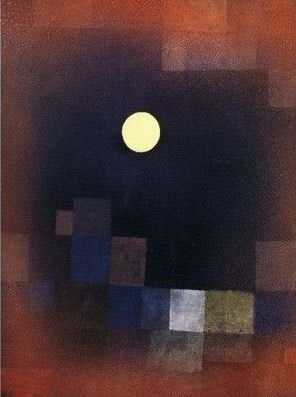
"The night is indescribable. And at the top of it all, the full moon appeared. Louis asked me to paint it. I said: it will be an exercise at best. Naturally, I'm not up to this type of nature. Still, I know a bit more than before. I know the disparity between my resources and inadequate nature. This is an internal matter to keep me occupied for the next few years. It doesn't bother me at all. No use hurrying when you want so much. The night is inside me forever. Many northern moons, like a silent reflection, remind me gently and remind me again and again. It will be my bride, my alter ego. An incentive to find myself. I am the lunar ascension of the south."
Commented Art
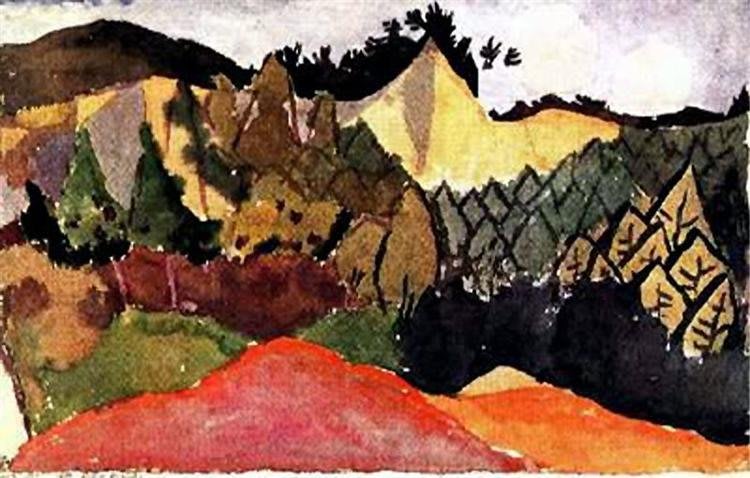
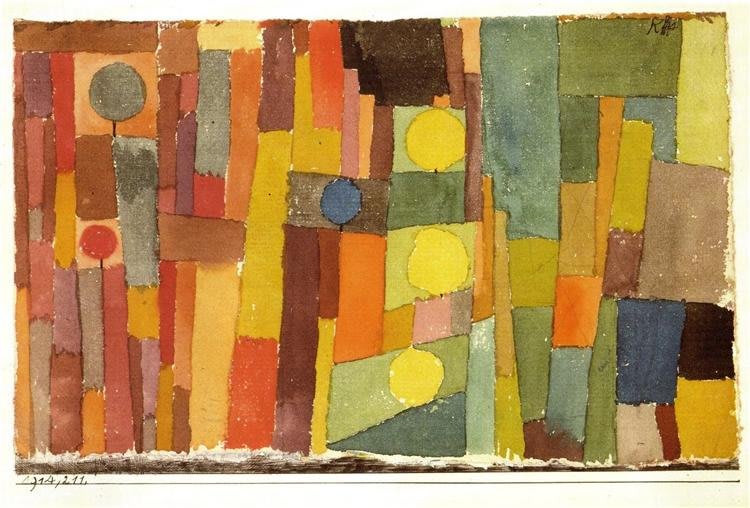
The use of strong colors by artists Robert Delaunay and Maurice de Vlaminck also inspired Paul Klee. Instead of copying these artists, Klee began to develop his own experiences with colors in clear watercolors, creating some primitive landscapes.
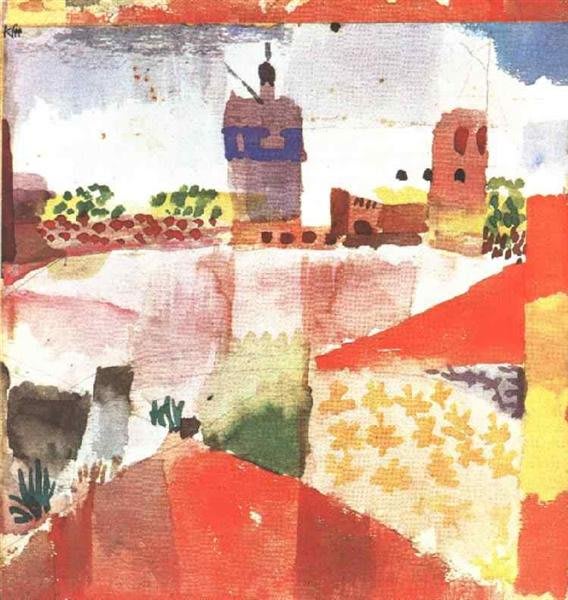
The artist declared: "Color possesses me. I no longer need to look for it, it possesses me forever, I know. This is the revelation of this blessed moment. Color and I are one - I am a painter." - Paul Klee
In the Style of Kairouan
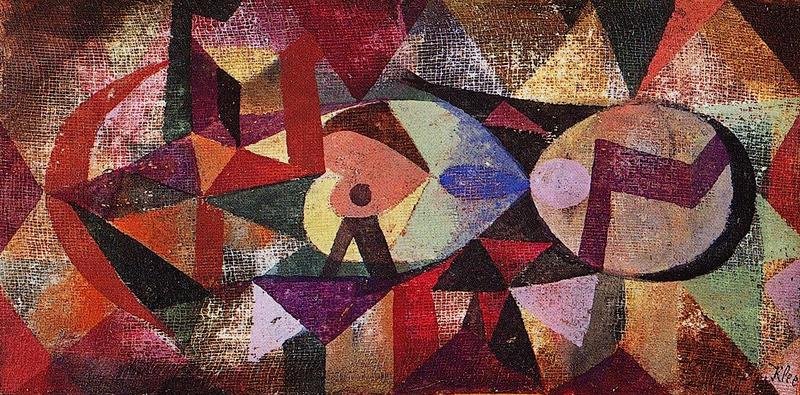
Ab ovo is particularly notable for presenting a sophisticated technique, where the artist uses watercolor on gauze and paper with a chalk base, producing a rich texture of triangular, circular, and crescent patterns.
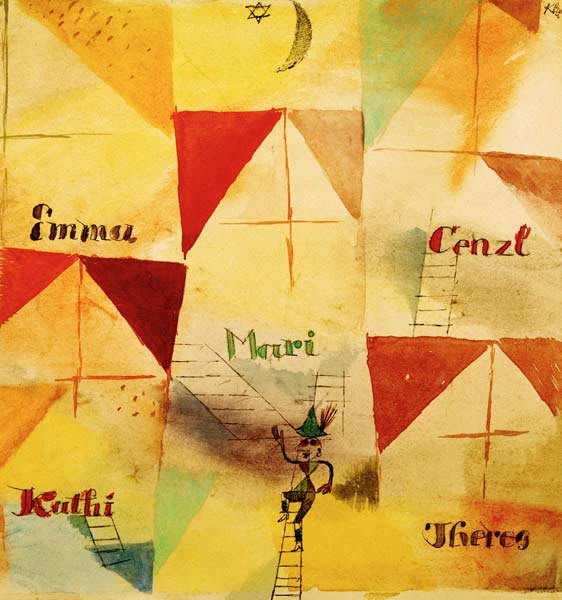
Perceiving the importance of color, Klee began to delve into a legitimate romantic abstraction. As he gained a second artistic vocabulary, he added color to his drawing skills, and in many works, he combined them successfully, as he did in a series he called operatic paintings. One of the most literal examples of this new synthesis is in The Bavarian Don Giovanni...
To understand the rest of this journey, continue to our next article: Paul Klee: Biography and Work: The Great Abstractions and the Final Vision.


