Piet Mondrian: Biography and Works: In-Depth Analysis of His Masterpieces
Discover the life and art of Piet Mondrian, a Dutch painter who played a key role in the development of modern art.
The genius dedicated his soul to painting the ceiling of the world's most famous chapel.

Surprisingly, he spent more than 4 years working in almost asphyxiating conditions.
The pursuit of self-expression through an evolving series of works is a journey shared by many iconic masters. Van Gogh's Self-Portraits
GALLERY - COMMENTED ART
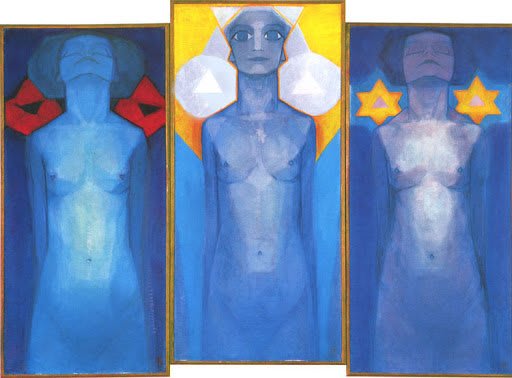
Evolution - Each panel of this painting presents a nude woman symbolically, where we can observe Star of David, mystical triangles, and hexagons. Theosophy directly influenced his representational style, expressed in flower paintings, and more specifically in this work that echoes the Buddhist and theosophical cycle of death and rebirth. Mondrian explained: "I am always led to the spiritual. Through Theosophy, I realized that art could provide a transition to the more subtle regions, which I will call the spiritual realm."
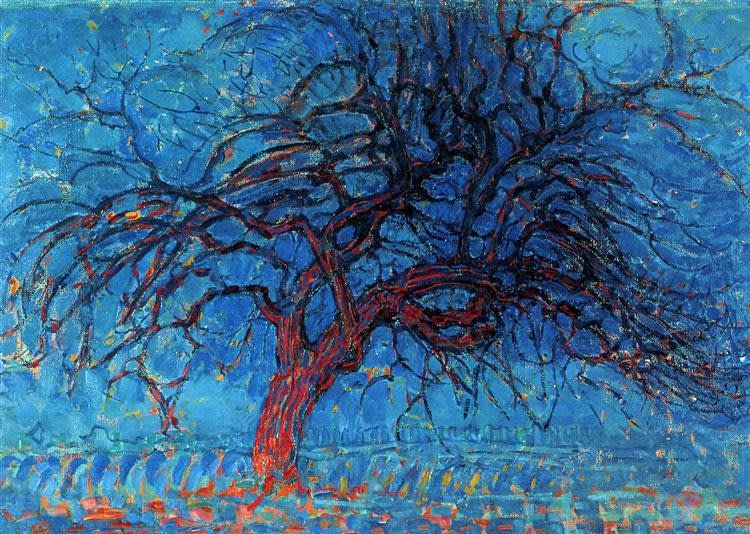
The Red Tree - This was the first painting in which Mondrian implemented his palette of red, blue, and yellow, the three primary colors. In the abstraction of the tree color and simple drawing, his aesthetic style is already present in this simple landscape. This post-impressionist work was only a stepping stone in the development of the artist in his ideal form of neoplasticism.
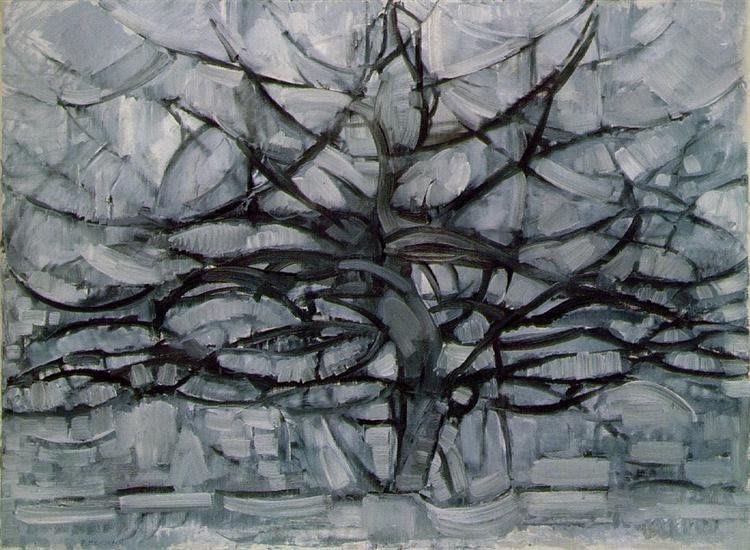
The Grey Tree - During his early years in Paris, Mondrian temporarily adopted the grey cubist palette, as we can see in this painting. However, unlike the cubists, he wanted to emphasize the plane of the painting surface, rather than alluding to the three-dimensional illusionistic depth, as the cubists depicted.
This move toward absolute abstraction would later influence the radical energy found in the works of mid-century American artists. Biography of Jackson Pollock: From Childhood to Artistic Legacy
Apple Blossom - This canvas exhausts the research of structure and composition that use the tree as a theme. The development of the branches and their relationship with the atmosphere are solved through an autonomous network of lines and colors.
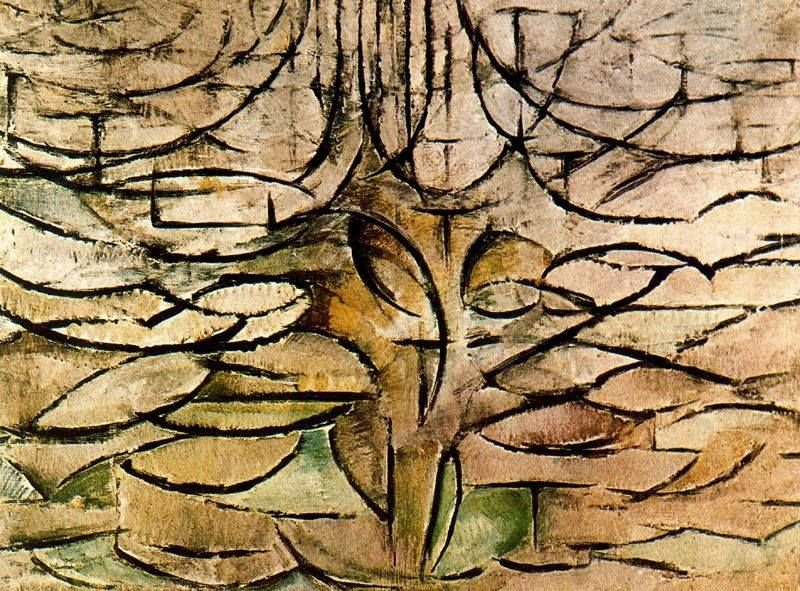
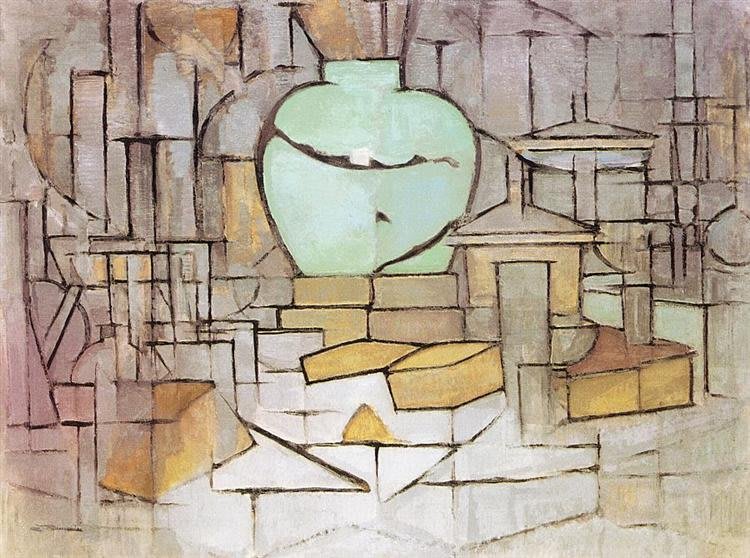
Tableau 1 - We can clearly see the influence of analytical cubism in this work. In it, an object or figure is dissected, broken down into fragments, and converted into a complex structure. The composition is built from the drawing of a tree, but this motif is almost unrecognizable, it disappears in the middle when its forms fade away at the ends of the painting.
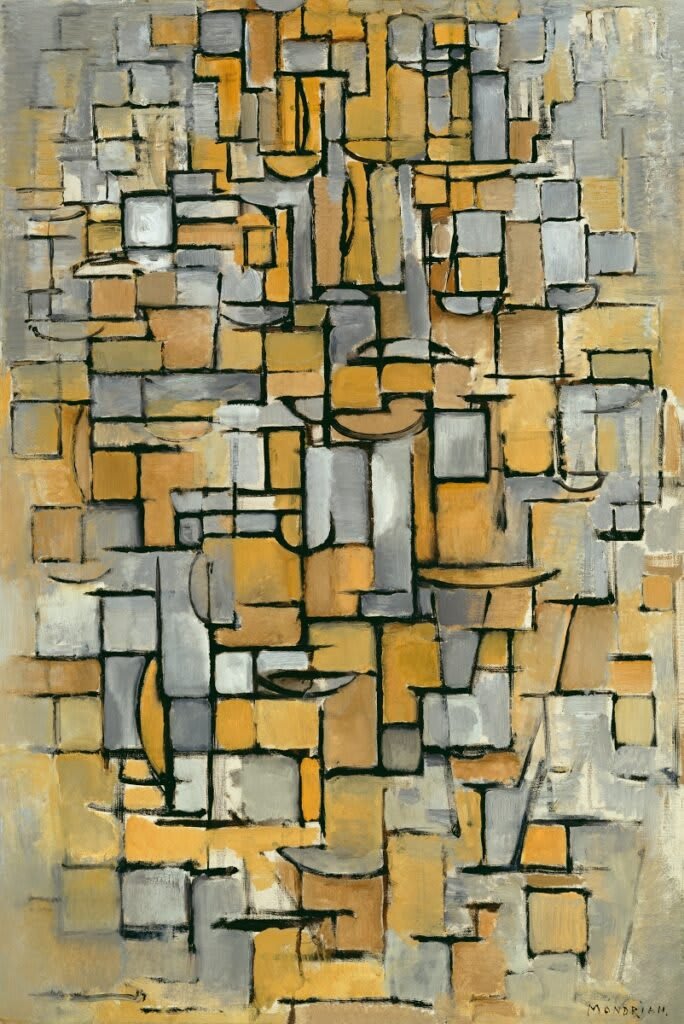
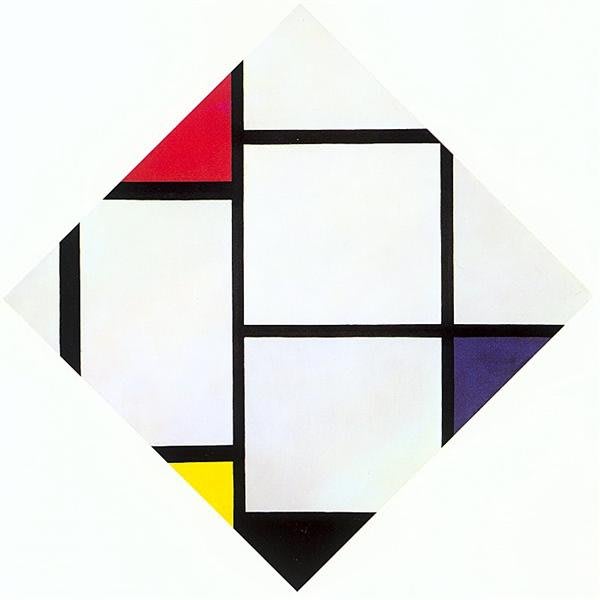
Composition with Red, Blue, and Yellow - Like Kandinsky, Piet Mondrian arrived at abstraction through his work in landscape. However, what emerged was completely different. After a cubist phase built entirely on the contrast between light and dark, in 1920 Mondrian found his own style, which he called "Neoplasticism." In the construction of the image, this process relied entirely on vertical and horizontal lines and the use of primary colors red, blue, and yellow. The aesthetic goal was to obtain a balanced arrangement of contrasts, seeking to give expression to the "universal" through the absolute harmony of the individual pictorial elements.

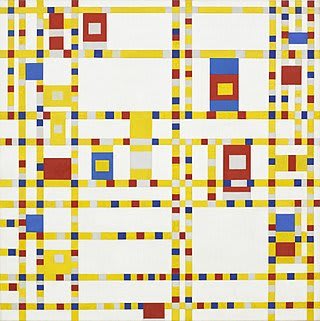
Broadway Boogie-Woogie - After establishing himself in New York, Mondrian introduced double lines, then colored lines, and finally, his black grid was replaced by pulsating lines of colored squares. Inspired by his new environment within the American metropolis, his latest works show a new energy and complexity of composition, as we can see in this painting.
The shift from representational landscapes to atmosphere and light was a revolution that began decades earlier with other pioneers. William Turner, the Precursor of Impressionism: Notable Works and Style Analysis (Part 2)
GALLERY OF SOME WORKS