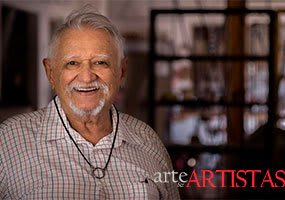
Servulo Esmeraldo was a prominent Brazilian visual artist known for his work in sculptures, prints, illustrations, drawings, and paintings.
He left a lasting impact on the art world due to his unique style and commitment to experimentation and innovation.
During his career, he traveled and worked in various countries, including France and the United States, which allowed him to enrich his perspective and develop his unique style.
He is considered the precursor of Kinetic Art in Brazil.
BIOGRAPHY
Servulo Esmeraldo was born on February 27, 1929, in Crato, a municipality in the state of Ceará, Brazil.
His interest in art began at an early age, where drawing was a part of his childhood, using line as the primary element of his artistic journey.
From 1947, already residing in Fortaleza, he attended the Sociedade Cearense de Artes Plásticas – SCAP, alongside Antônio Bandeira and Aldemir Martins.
In the 1950s, he moved to São Paulo to study architecture.
Experiencing the cultural effervescence of this city, the young artist became interested in knowing, in addition to drawing and painting, other art forms, and it was when he began to explore more deeply techniques of engraving.
During this period, Servulo had painting classes with Jean-Pierre Chabloz; met and worked with Marcelo Grassmann and Lívio Abramo; founded the Gravura Museum, in his hometown, Crato; held his first individual exhibition at the Modern Art Museum of São Paulo – MAM/SP.
received a French government scholarship and travels to Europe.
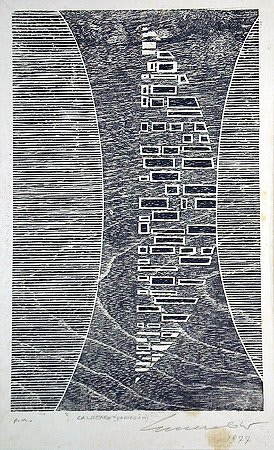
The period in which he lived in France, had an initiation in his studies in the techniques of metal engraving and xilogravura.
He studied Lithography at the National School of Fine Arts when he had the opportunity to have contact with rare works of the National Library of France, including engravings by Albrecht Dürer.
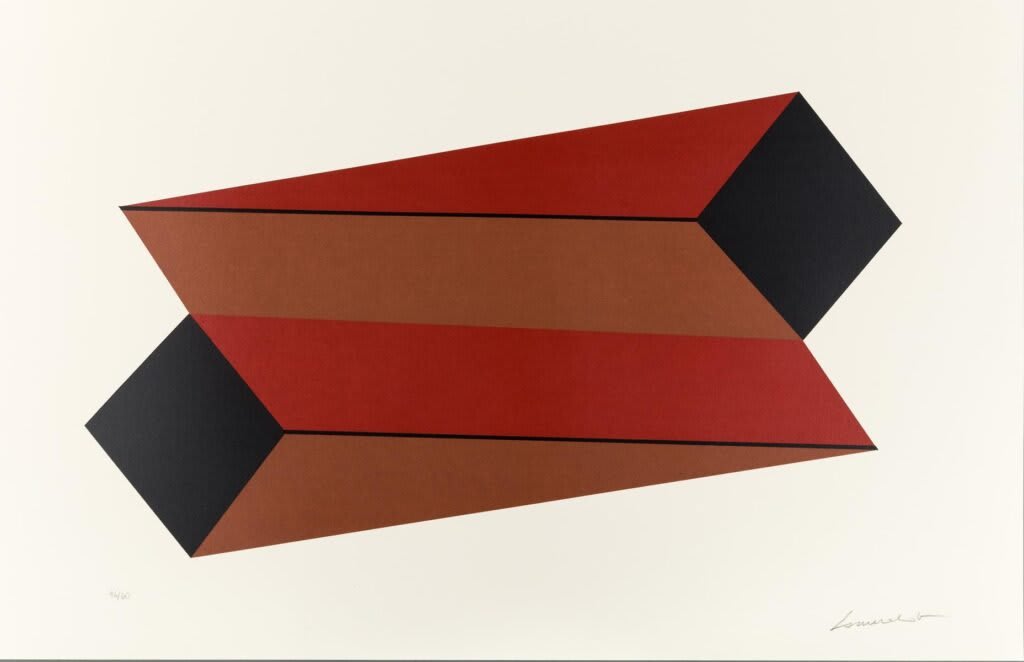
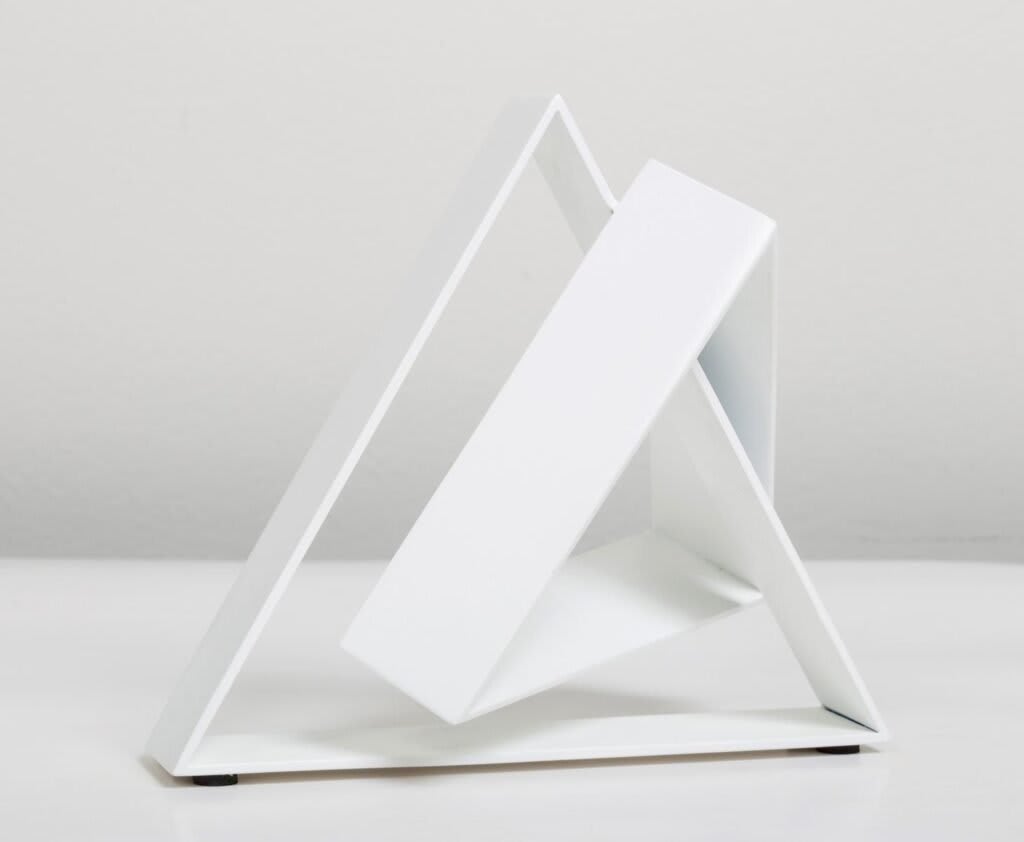
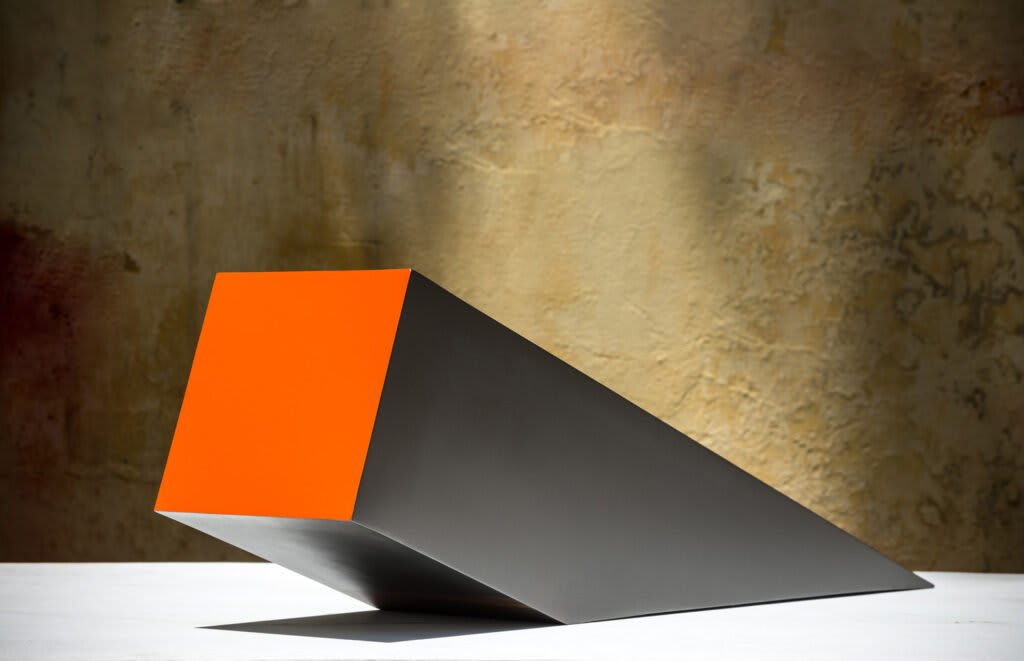
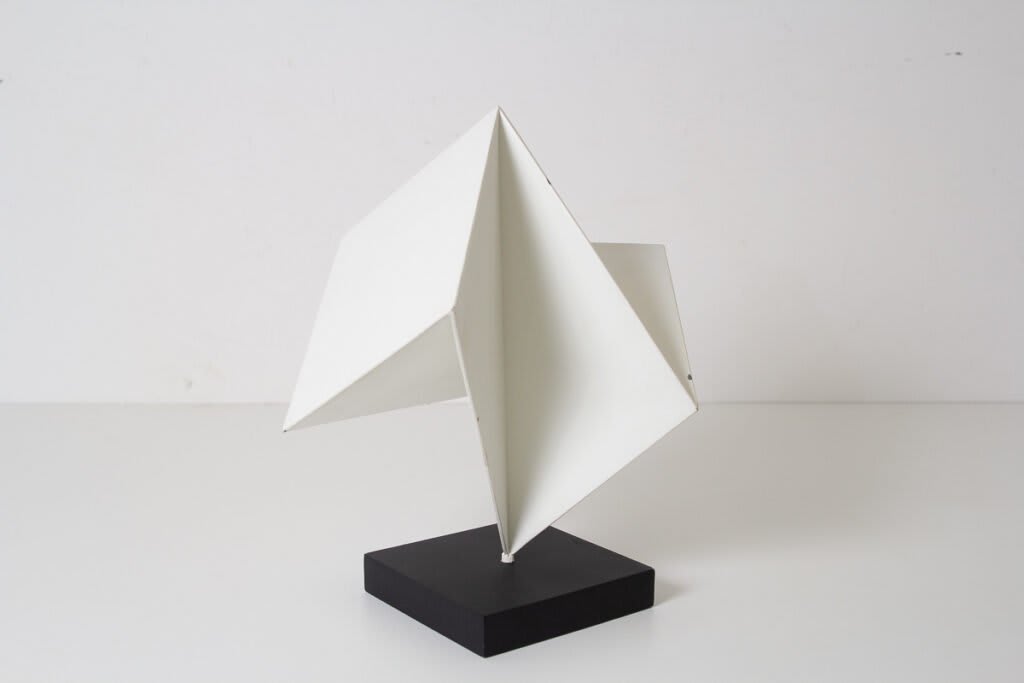
Servulo Esmeraldo stood out for his ability to combine abstract geometric forms with organic and poetic elements.
His works frequently combined clean lines and soft curves to create a sense of movement and balance.
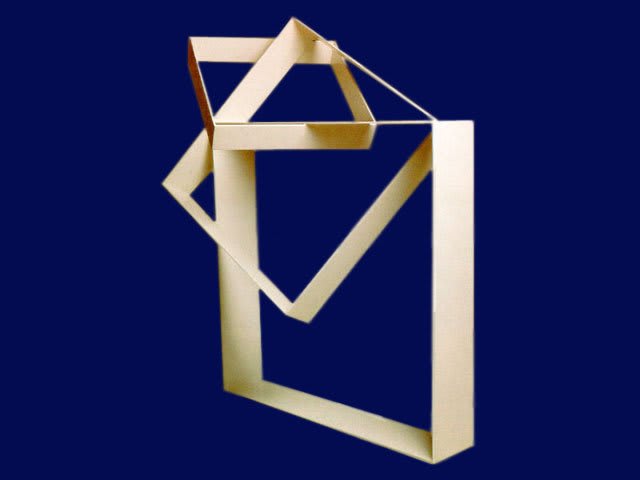
He worked with various materials, including wood, metal, and stone, and his focus on geometry and minimalism distinguished him in the Brazilian art scene.
In addition to working with sculpture, Esmeraldo also became interested in graphic design and illustration.
He collaborated with publications and designed posters for cultural events and exhibitions.
His focus on simplicity and elegance was reflected in his graphic design, as well as in his sculptural works.
In the mid-1960s, he joined the kinetic art movement, when he created stimulating works, creating paintings and movable objects by electricity and electrostatic.
In 1978, he returned to Brazil, carrying out public art projects, including several monumental sculptures in the urban landscape of Fortaleza, the city he chose to live and work at that time.
Throughout his career, Servulo Esmeraldo received numerous awards and recognitions for his contribution to Contemporary Art.
He was the founder and curator of the International Sculpture Exhibitions and participated in various exhibitions, standing out in different editions of the São Paulo International Biennial (1959, 1961, 1963, 1987).
His ability to create works that combine the abstract and the organic with the poetic, enchant all the public that knows his work, which is represented in the main museums of the world and in other public and private collections in Brazil and abroad.
In 2013, the Servulo Esmeraldo Institute was created in Fortaleza, Ceará.
He passed away on February 1, 2017, in Fortaleza, Ceará.
He left an indelible mark on the history of Brazilian art and continues to inspire artists and art lovers around the world.
In 2019, in honor of the 90th anniversary of the artist's birth, the Servulo Esmeraldo 90 Festival was held in Crato, which continues to be held annually in his hometown.
In 2021, the main house of the Bebida Nova Farm was tombed. now Cultural Heritage of the State of Ceará, which became known as the Servulo Esmeraldo House.
In 2022, the expansion of the Servulo Esmeraldo Institute was inaugurated in Fortaleza; the Centro Cultural do Cariri Servulo Esmeraldo was inaugurated in Crato.
In 2023, the Centro Cultural Banco do Brasil (CCBB), held the Servulo Esmeraldo - Line and Light exhibition, curated by Marcus de Lontra Costa and Dodora Guimarães Esmeraldo, the artist's widow.
The exhibition was the first posthumous retrospective of the Brazilian artist, which synthesized his extensive production in 110 works between drawings, paintings, xilogravures, and sculptures.
GALLERY
The artist stated:
“The sparkle of a thread of light on an object, suddenly, gains an unpredictable importance”
He justified: “When I was a child, I spent hours admiring the spectacle of the solar spectrum reflected on the wall…”
Test Your Knowledge
Did you pay attention to the article? Find out now!
1 / 3
Where was Servulo Esmeraldo born?
Related Topics
arte cinéticaservulo esmeraldoesculturaarte brasileira