Sunflowers of Vincent van Gogh: The Story Behind the Colors
Dive into the most creative period of Vincent van Gogh's life and discover the story behind his iconic Sunflowers series.
You're about to embark on a journey through one of the most creative periods of Vincent van Gogh's life, a renowned artist of the 20th century.
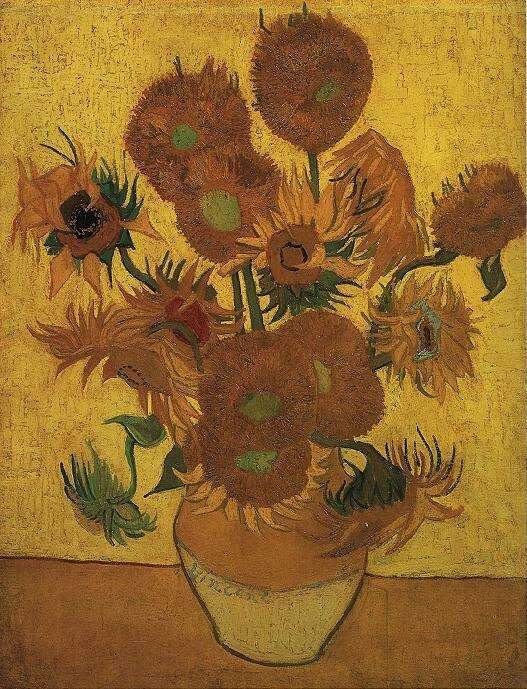
The Sunflowers paintings by the Dutch painter Vincent van Gogh are among his most famous works.
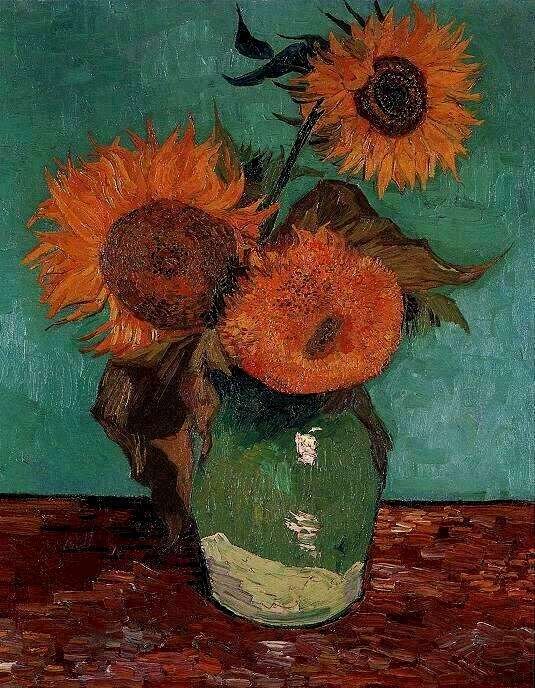
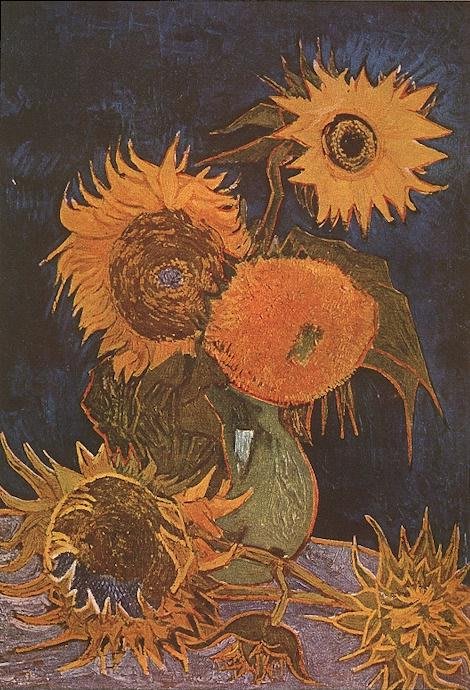
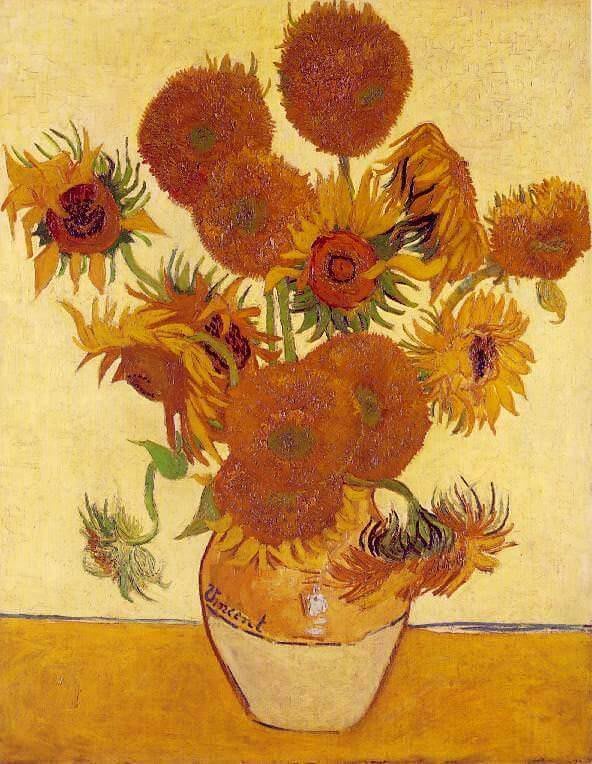
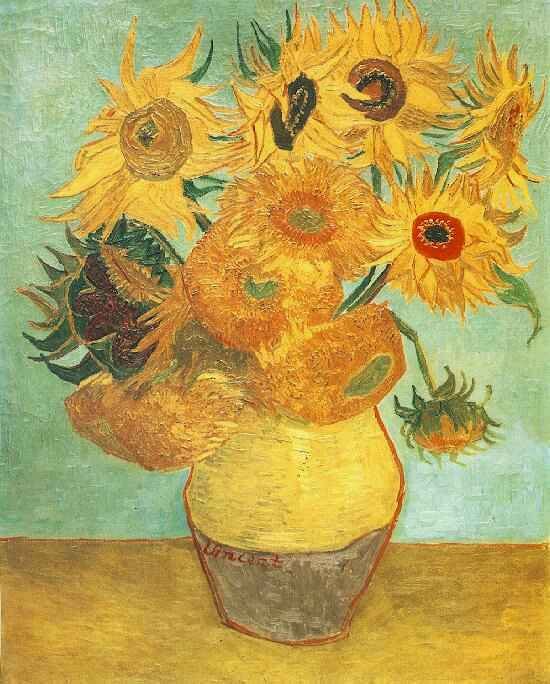
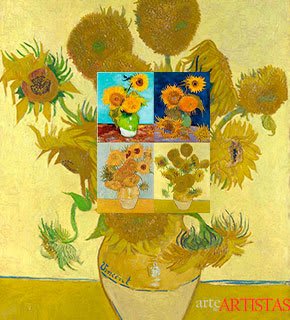
He produced a total of twelve of these canvases, with the most popular being the series of seven created while he was in Arles between 1888 and 1889.
The other five were painted earlier while he resided in Paris in 1887.
Van Gogh was so obsessed with the flower, perhaps because it symbolizes happiness and hope.
Yellow, for him, was a symbol of happiness - in Dutch literature, the sunflower is a symbol of devotion and loyalty.
The Encounter with Paul Gauguin
When the artists first met in Paris in 1887, Van Gogh and Paul Gauguin exchanged paintings.
Vincent gifted him one of his Sunflowers from the Paris series, which left Gauguin very pleased with what he saw and repeatedly praised his work.
Van Gogh settled in Arles in 1888 and decided to set up an Artist Colony, knowing that the French post-impressionist had accepted to join him in the yellow house he was renting as a studio.
Symbolism and Technique in Arles
Instinctively, while decorating his house in Arles with a series of sunflower paintings, Vincent wanted to prove to Gauguin that he remained a strong artist.
The bright yellow of the flowers that he could combine in brilliant contrasts, the shapes and lines of the petals and stems, were a great challenge for a painter, and he was at the peak of his powers that summer of 1888.
The artist wasn't trying to make an exact copy of reality in his paintings.
He didn't use color just to imitate nature, but to express emotions.
The sunflower, which Van Gogh once saw as decorative, became something almost sacred, a symbol that represented the very light, an ideal of a honest life lived in nature.
The Flower that Dies Quickly: Painting sunflowers was, for Van Gogh, a race against time.
Different from other still lifes, these flowers wilt and lose their petals with a cruel speed under the heat of Provence.
That's why Vincent worked with a feverish vigor, applying the paint directly to the canvas, often without sketches, to capture the energy of the plant before it turned into dry seeds.
Each brushstroke carries this urgency to eternalize the ephemeral.
Although the artist himself never declared why he liked sunflowers in particular, references to them are made in his many letters, which help us get an idea of this.
His paintings, he wrote to his sister in 1890, were "almost a cry of anguish while symbolizing gratitude in the rustic sunflower", an image that brought him comfort and familiarity and had a certain brilliance and vital form that could lift his spirits in difficult times.
A little before starting the series produced in Arles, he wrote to his brother Theo: "Instead of trying to reproduce exactly what I have in front of me, I use color more arbitrarily to express myself with force."
The Yellow that Changes Color: The vibrant yellow that defines this series hides a chemical secret: the pigment "chrome yellow," favorite of Van Gogh, is unstable to light.
With the passing of decades, oxidation transforms the original sunny tones into more opaque and reddish nuances.
What we see today in museums is a more autumnal version of the explosion of light that Vincent painted in 1888, turning the restoration work into a continuous effort to preserve the original brilliance of the master.

The Legacy and the Registered Mark
The Sunflowers of Van Gogh thrived in the 20th century, when reproductions of them spread around the world, thanks to their immediacy, clarity, and force.
This emotional and subjective use of color would have a huge influence on modern art and continues to speak directly to people today.
They functioned almost as his signature, making it his registered mark.
In January 1889, he told his brother Theo: "While other artists are known for painting specific flowers, such as peonies and roses, the sunflower is mine!"
Vincent van Gogh, his life and work continue to fascinate the public, partly explaining the popularity of sunflowers.
They are a kind of visual abbreviation for the artist, whose dramatic and difficult life culminated in his premature death by self-inflicted gunshot wound in 1890.
Sunflowers: GALLERY