
The Baroque Style: Sculpture, Architecture, and Legacy in Brazil
Discover the dramatic flair of Bernini's sculpture, the grandeur of Baroque architecture in Versailles, and the richness of the style's legacy in Brazil, with a focus on Aleijadinho.
Article Index
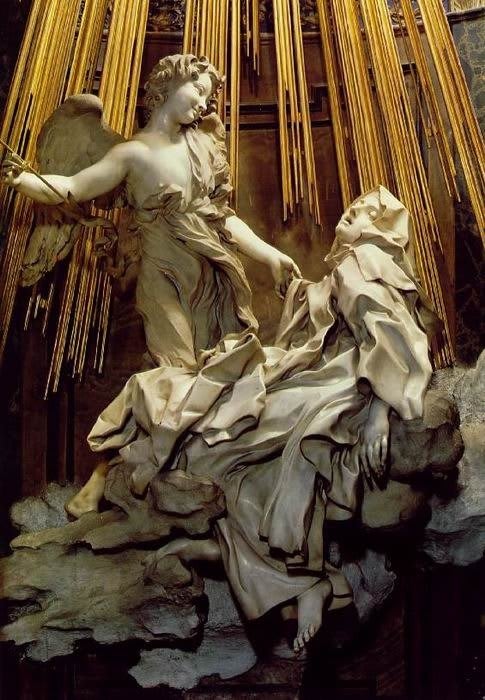
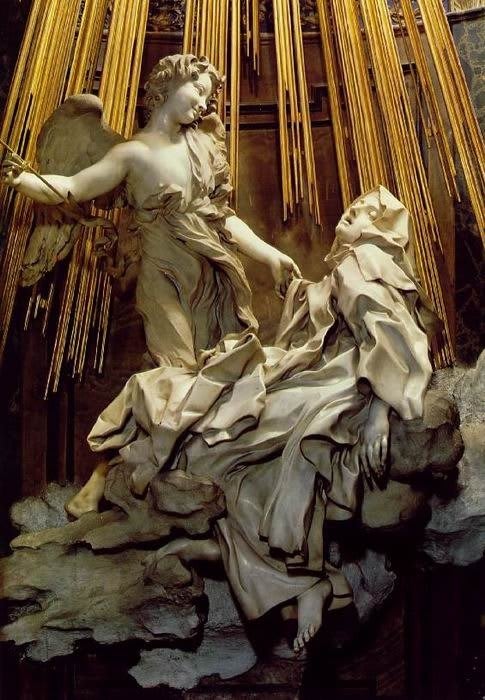
The sculptors who were in the spotlight, were employed with unprecedented intensity, as, despite the importance of architecture, sculpture was the most characteristic form of Christian art of the Baroque era and certainly the most widespread. It not only managed, unlike architecture and painting, to create a widely common artistic language throughout Europe, but also influenced the emergence of almost all artistic artifacts produced during that period. In short, the first recognizable characteristic of Baroque sculpture is its omnipresence.
Traditional Baroque sculpture typically had two distinctive features. Firstly, it was technically perfect. The skill of Baroque sculptors constituted a true virtuosity, for example, making the appearance of human skin look as if the character was a man or a woman, old or young. Locks, draping of fabrics, use of different fabrics, such as wool and silk, the texture of armor - everything was precisely and perfectly detailed. Such was the mastery of sculptors over their material that in marble statues it is impossible to deduce or imagine the original shape of the block. Once Michelangelo synthesized the ideals of Italian Renaissance sculpture, saying that a statue should give the impression of being able to roll down a hill without being hurt. Nothing like this could be said of Baroque sculptures. They had what could be called a photographic objective - to perpetuate movement and expression. This involved the use of free and loose drawing, and also of very slender human body structures than those considered desirable by Renaissance sculptors.
Principal sculptor: Gian Lorenzo Bernini
Baroque Style: Architecture
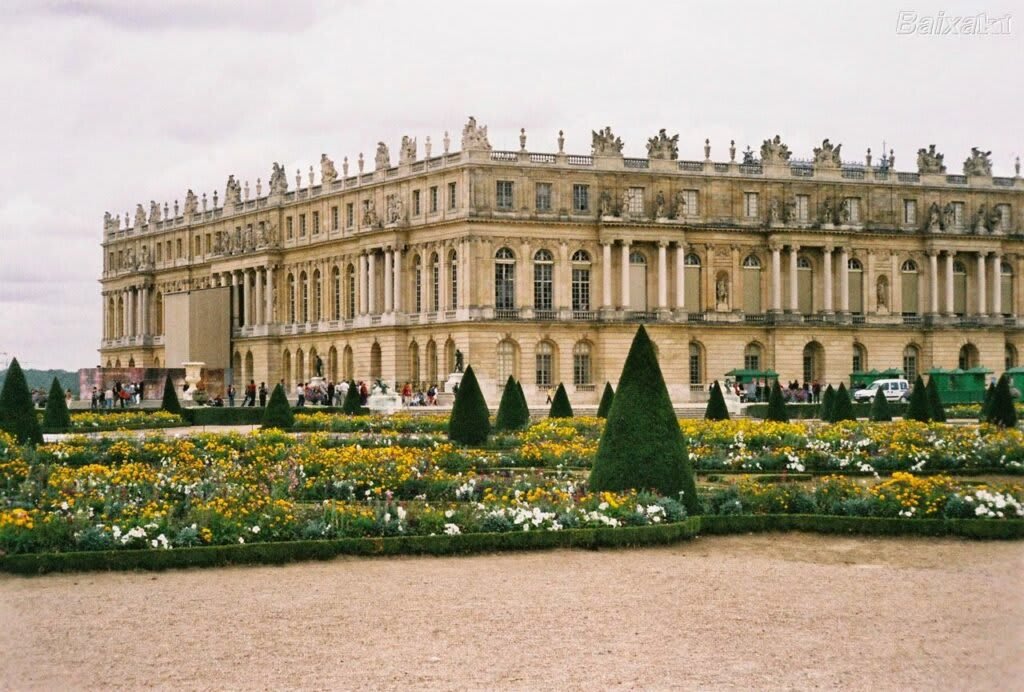
In Baroque architecture, the emphasis was on bold spaces, domes, and large masses. It made use of decorative sculpture in three typical forms. The first was in the form of a horizontal line of statues or other sculptures to complete the top of a building. Again, this was not a Baroque invention, but it was during the Baroque period that it became a conventional stylistic feature, a systematic method. It derives from the custom that became fashionable in the 17th century of surpassing a building with a 'attic'. In effect, it was a low parapet that hid the sloping sides of a roof, giving the building a horizontal appearance from below. This feature was almost always decorated with a row of statues regularly placed and standing out against the sky.
A notable example of Baroque architecture can be found in the Palace of Versailles:
BAROQUE IN BRAZIL
The Baroque style was introduced to Brazil in the early 17th century by Catholic missionaries, especially jesuits, who brought the new style as an instrument of Christian doctrine.
Baroque in Brazil was the dominant artistic style for most of the colonial period, finding a receptive terrain for a rich flourishing. During the entire period, there was an intimate association between the Church and the State, but, as in the colony, there was no court that served as a patron, since the elites did not bother to build palaces or sponsor the fine arts until the end of the period. As religion exercised enormous influence on everyday life, it follows that the vast majority of the Brazilian Baroque legacy is in sacred art: sculpture.
In Brazil, the most typical characteristics of Baroque, generally described as a dynamic, narrative, ornamental, dramatic, and cultivative style, which emphasizes contrasts and seductive plasticity, convey a programmatically articulated content with refinements of rhetoric and great pragmatism. Baroque art was an essentially functional art, going very well for its intended purposes: in addition to its purely decorative function, it facilitated the absorption of Catholic doctrine and traditional customs by neophytes, being an efficient pedagogical and catechetical instrument. Soon the most skilled indigenous people, and later the imported blacks, exposed massively to Portuguese culture, from mere spectators of their artistic expressions passed to productive agents, being responsible, mainly the blacks, for most of the Baroque produced in the country.
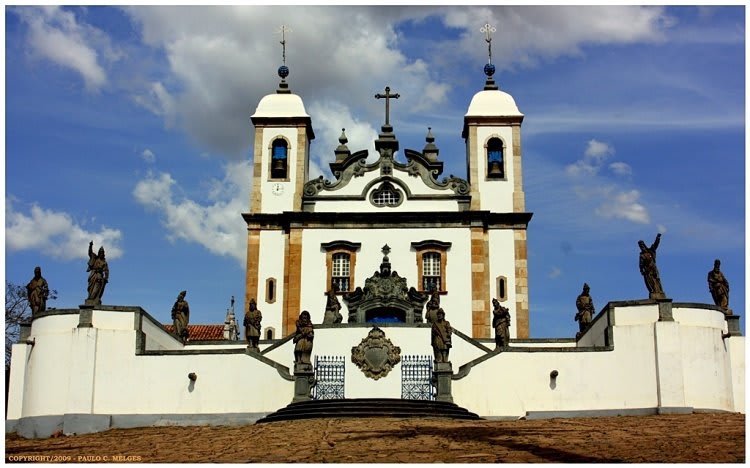
The main artists who stood out were Antônio Francisco Lisboa, the Aleijadinho, and Mestre Ataíde. Baroque architecture flourished notably in the states of Bahia, Minas Gerais, Goiás, and Rio de Janeiro.
A work that unites sculpture and architecture can be found in the city of Congonhas do Campo. Aleijadinho's work Os Doze Profetas receives visitors at the Santuário do Bom Jesus de Matosinhos, in Minas Gerais.
With the development of Academic Art from the first decades of the 18th century, the Baroque tradition, which had a strong history in Brazil and was considered the national style of excellence, gradually fell into disuse, but its vestiges were found in various forms of art until the early years of the 20th century.


