
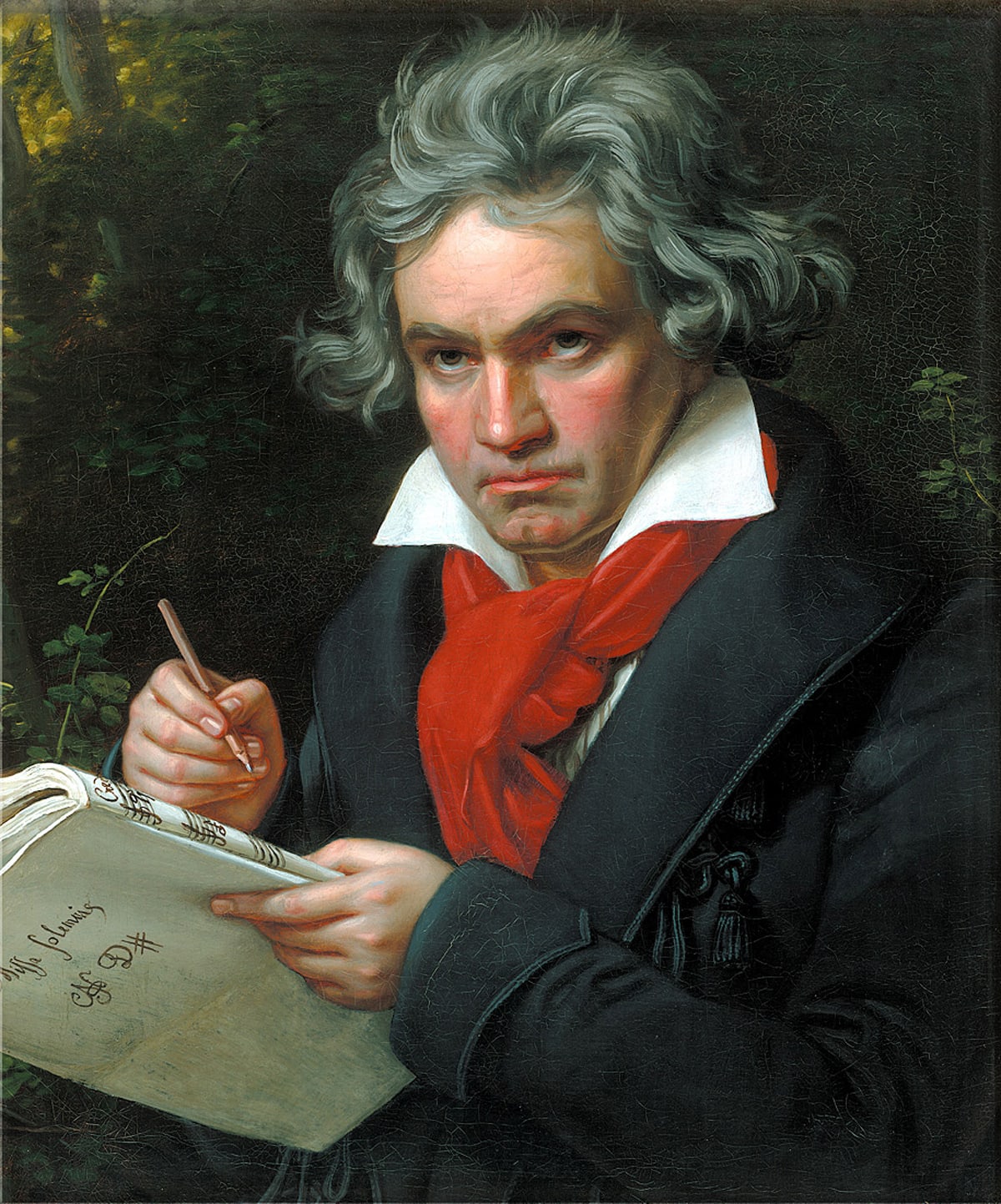
The Heroic Period and the Struggle Against Deafness: Beethoven's Life (Chapter 2)
A biography of Ludwig van Beethoven's life, focusing on his heroic period and the struggle against deafness.
Beethoven was an Austrian composer who lived in the 18th and early 19th centuries.
He is considered one of the greatest composers in the history of classical music.
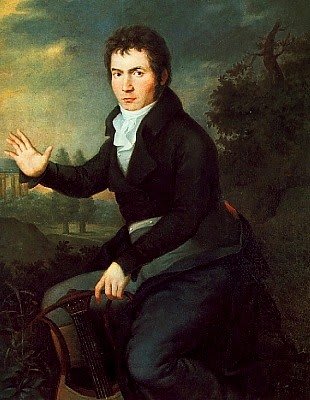
Although there is considerable debate about which of his first piano concertos he performed that night, most scholars believe that he played what is known as his 'first' piano concerto in D major.
A short time later, he decided to publish a series of three piano trios as his Opus 1, which were a huge critical and financial success.
In 1800, Beethoven premiered his Symphony No. 1 in C major at the Royal Imperial Theatre in Vienna.
Although Beethoven came to detest the piece - 'In those days I didn't know how to compose', he commented later -, the gracious and melodious symphony, however, established him as one of the most famous composers in Europe.
During this period, Beethoven composed piece after piece that marked him as a magisterial composer reaching his musical maturity.
His Six String Quartets, published in 1801, demonstrate complete mastery of the most difficult and esteemed of Viennese forms developed by Mozart and Haydn.
In 1801, Beethoven also composed The Creatures of Prometheus, a very popular ballet that received 27 performances at the Imperial Court Theatre.
It was roughly around the same time that he discovered that he was losing his hearing.
At the turn of the 19th century, Beethoven struggled to understand the words spoken to him in a conversation.
He revealed in a poignant letter of 1801 to his friend Francis Wegeler: 'I must confess that I lead a wretched life. For almost two years, I have stopped attending social events, simply because I find it impossible to say to people: I am deaf. If I had any other profession, I could cope with my illness, but being in my profession, it is a terrible disability.'
From 1803 to 1812, what is known as his heroic period, he composed an opera, six symphonies, four solo concerts, five string quartets, six string sonatas, seven piano sonatas, five piano variation sets, four overtures, four trios, two sextets, and 72 songs.
The most famous among them were the astonishing Moonlight Sonata, symphonies nos. 3-8, the Kreutzer violin sonata, and Fidelio, his only opera.
Despite his extraordinary production of beautiful music, Beethoven was solitary and frequently miserable during his adult life.
Of explosive temperament, distracted, greedy, and distrustful to the point of paranoia, he rivaled his brothers, editors, governesses, students, and patrons.
For a variety of reasons, including his shyness, Beethoven never married or had children.
He was, however, desperately in love with a married woman named Antonie Brentano.
During two days in July 1812, Beethoven wrote her a long and beautiful love letter that he never sent.
Directed 'To you, my Immortal Beloved', the letter said in part: 'My heart is full of so many things to say to you - ah - there are moments when I feel that the word is worth nothing - Cheer up - remain my true, my only love, my everything as I am yours.'
At the same time as he was composing some of his most important works, he struggled to accept a shocking and terrible fact that he desperately tried to hide: he was becoming deaf.
Almost miraculously, despite his rapidly progressing deafness, Beethoven continued to compose at a furious pace.
In terms of his astonishing production of superlatively complex, original, and beautiful music, this period of his life is unparalleled by any other composer in history.
Death and Legacy
To understand the rest of this journey, continue to our next article: Beethoven's Immortal Legacy and Great Works (Chapter Final).


