
The Life and Work of Henri Matisse: From Beginnings to Post-Fauvist Innovation
Discover the life and work of Henri Matisse, from his early beginnings to his innovative post-Fauvist period.
The French artist Henri Matisse, is considered the principal representative of Fauvism, an art movement that emerged in the early 20th century, one of the first avant-garde movements.
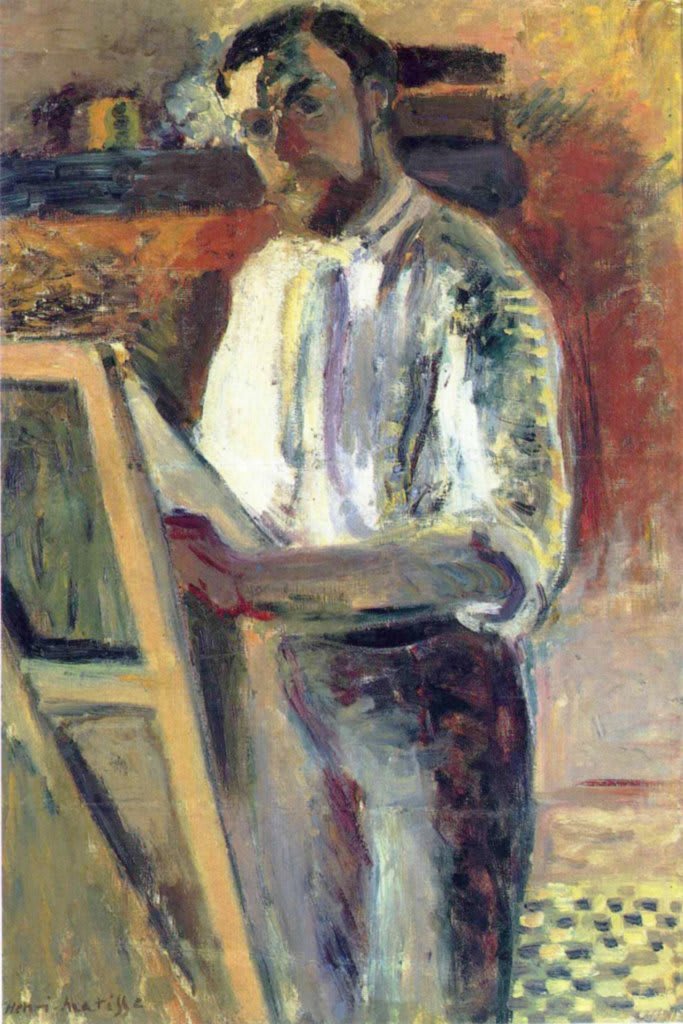
Henri-Émile Benoit Matisse, or simply Henri Matisse, was born on December 31, 1869. The son of a bourgeois family, he was the first child of Émile Hippolyte Matisse, his father, a grain merchant, and his mother, Anna Heloise Gerard, a porcelain painter. His youth developed far from any artistic activity and was oriented towards a law degree.
It was after a surgery recovery that the young man revised his career path. Motivated by his mother and readings on art and aesthetics, he developed an interest in becoming a painter. It was his mother who first advised her son not to adhere to the rules of art, but to listen to his own emotions. He painted his first still life and from then on, he decided to follow the new career path.
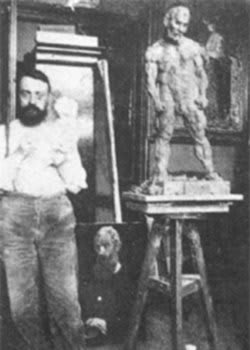
Matisse obtained his father's permission at the age of 22 to abandon his law studies, which he was dedicated to, to travel to Paris, and begin his artistic studies. It was a five-year learning period, one year at the Académie Julian and at the famous studio of Gustave Moreau, where he met and interacted with Georges Rouault and Albert Marquet, future fauvists.
From then on, Matisse exhibits his first work: The Reader.
In 1898, Matisse marries Amélie Parayre with whom he shares a career and becomes a great supporter of his work.
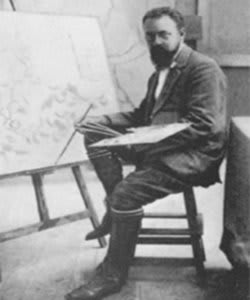
In 1904, Henri Matisse meets Paul Signac and becomes friends and partners in "pointillism", a painting technique already used by Signac and Georges Seurat.
In 1905, Matisse spends the summer in Collioure (southern France) and comes into contact with the latest works of Paul Gauguin, paintings that the artist had produced in Oceania and brought back to France.
In 1906, he participates in the Salon of Autumn (PARIS SALON), with works where color is the main element, defending that it creates the drawing, showing an atmosphere of luxury and sensuality, transmitting much joy in the forms of nature.
In 1912, Matisse travels to North Africa, leaving a Paris fascinated by the work of the Cubists, Picasso and Braque. In the new continent, he becomes fascinated with everything he sees, especially the arabesques and gradually moves away from Fauvism, but retains his taste for color and adopts a certain primitivism due to contact with African painting.
After the dispersion of the Fauvist movement, his painting gained influence from Cubism, where he begins to use straight lines and geometric forms in his works.
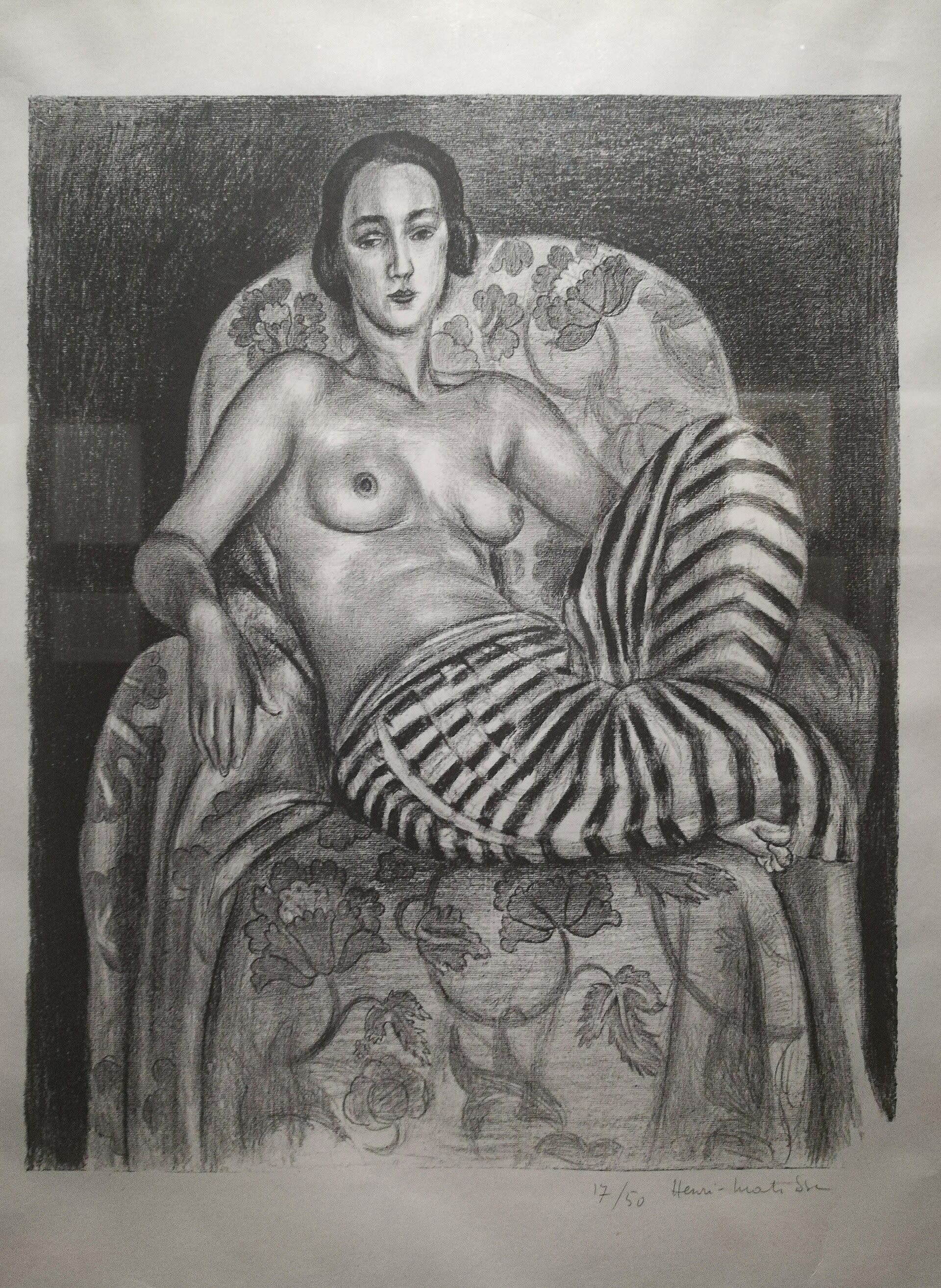
In 1914, he settles in Nice and begins to paint themes focused on beautiful and colorful odalisques, such as his Odalysque of the Armchair, a painting where red predominates and color becomes the main protagonist.
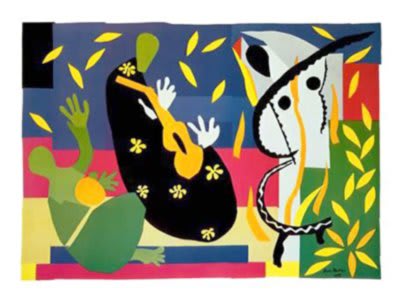
In The Sadness of the King, the artist used mixed technique (collage and gauche paint). Different forms are used, where eleven colors are applied. Yellow lozenges that can represent leaves or tears. A probable odalisque in green to the left, the king in the center, dressed in black with yellow flowers printed on his clothes, holding a violin, an instrument he played, and a black and white dancer to the right, make up his last biographical self-portrait - 'King Matisse'
To understand the rest of this journey, continue to our next article: The Life and Work of Henri Matisse and his Work: The Legacy of the Rosary Chapel and Essential Gallery.


