
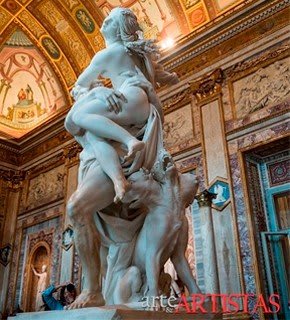
The Rape of Proserpina - Bernini
The Rape of Proserpina - Bernini
The Rape of Proserpina is a sculpture by Gian Lorenzo Bernini, completed in 1622.
The work depicts the moment when Pluto, the god of the underworld, abducts Proserpina, daughter of Ceres, the goddess of agriculture.
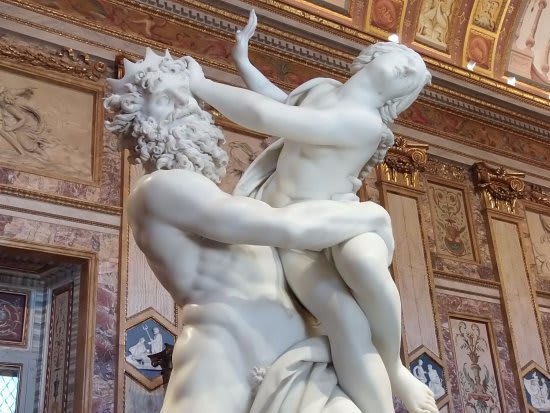
The Rape of Proserpina is a significant work attributed to the Italian artist Gian Lorenzo Bernini.
In this sculpture, Bernini depicts the abduction of Proserpina, or Persephone, as she is known in Greek mythology, by the god Pluto (or Hades).
When the masters of the Renaissance revived classical sculpture, they also held a fascination for Greek and Roman mythology. This fascination carried over into the Baroque. So, to understand Bernini's sculpture, we first need to grasp the mythology behind it.
The story goes that Pluto was overcome by Proserpina's beauty and abducted her to be queen of the underworld. Her mother, Ceres (goddess of agriculture and life), imposed a drought upon the earth until her daughter returned. Eventually, an agreement was reached, wherein Proserpina would spend half the year in the underworld and half with her mother. For the ancients, this explained the agricultural seasons.
In the sculpture, Bernini chose to capture the story at its climax, at the very moment Pluto abducts Proserpina and drags her into the underworld.
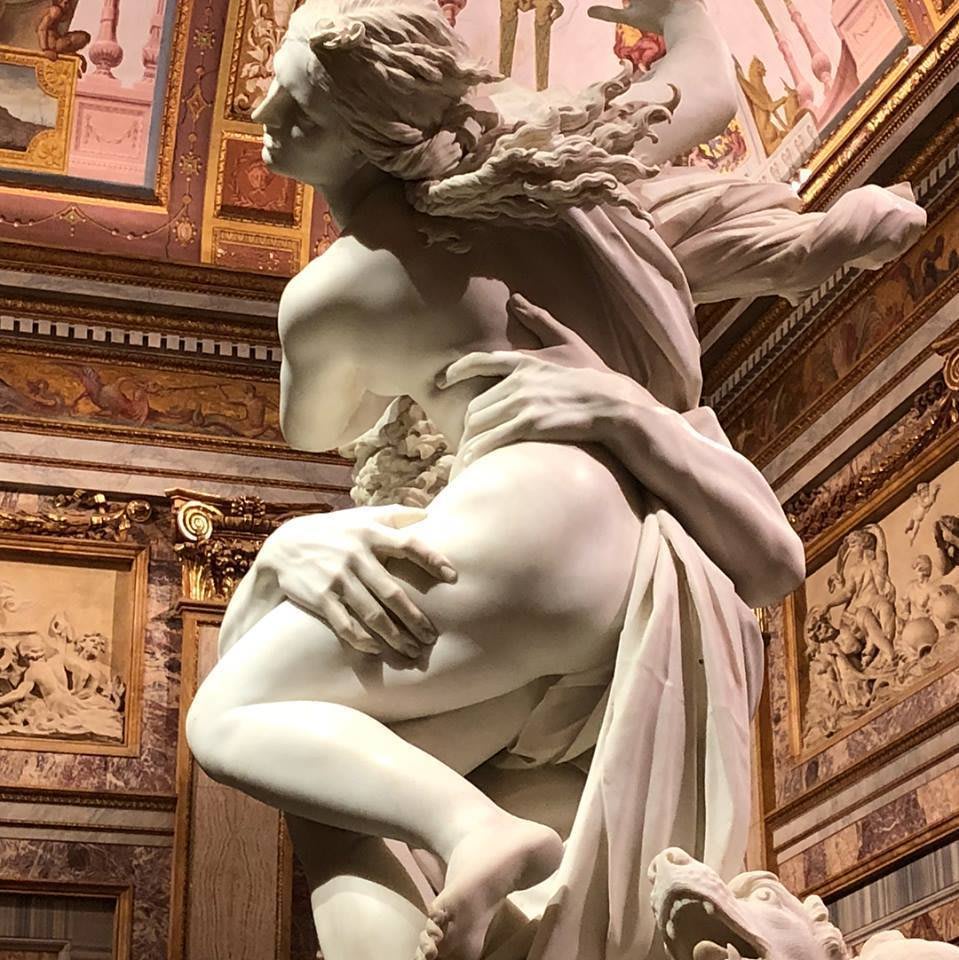
As is common in his works, Bernini's figures are not placed in a static position. They are caught in the midst of dramatic action, their bodies twisting and spiraling upwards. This captured moment in time contains a considerable amount of lifelike detail.
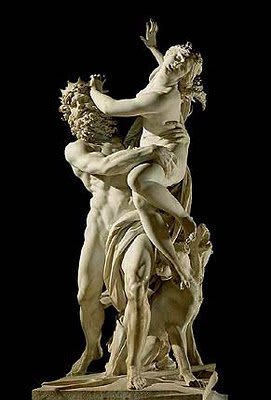
These details, such as the expression of fear on the goddess's face or the sensation of overwhelming force created by Pluto's muscular form, inform the viewer and narrate an entire story within a single moment in time.
The sheer realism present in the work deepens this narrative and provides an emotional depth that connects with the viewer. These details convey the unwanted advances, as well as the sexual nature of the scene, contributing to the sensuality of this moment. The story is told through a bodily representation that taps into the core passions of every human being. This emphasis on the visceral is a common expository technique in Baroque sculpture.
With works like this, Bernini sought to create movement, life, and warmth. His success is evident, and as a true master of realism and emotion, he earned not only respect but also a significant following.
His sculptures are renowned for their theatrical and engaging drama, dynamism, tension, texture, and naturalism. The latter two criteria are perhaps the most specific to him: no one has ever been able to make stone convey soft skin, curly hair, or crumpled fabrics in the same way Bernini achieved.
Bernini's Technique and Style
With his sculptures, Bernini sought to create movement, life, and warmth. His success is evident, and as a true master of realism and emotion, he earned not only respect but also a significant following.
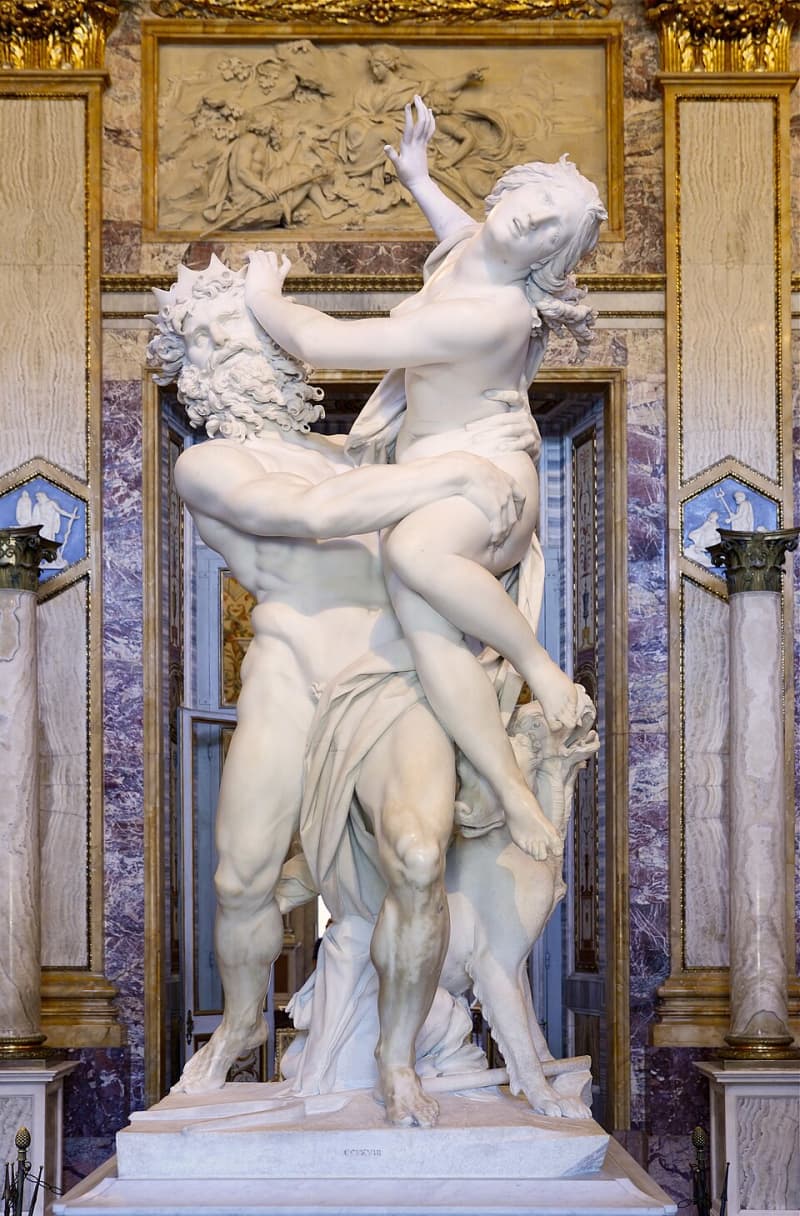
His style is characterized by a combination of realism and emotion, creating works that are both dramatic and engaging.
Bernini was a master of Baroque sculpture, and his work is a testament to the skill and creativity he possessed.
With his sculptures, Bernini sought to create an emotional connection with the viewer, and this is something that continues to inspire artists and admirers to this day.
Bernini's Influence
Bernini was one of the leading artists of Baroque sculpture, and his work profoundly influenced the art and culture of his time.
His style and technique were emulated by many other artists, and his work continues to be studied and admired to this day.
Furthermore, Bernini was also a significant patron of the arts, and his influence can be seen in many other areas of culture and society.
With his sculptures, Bernini forged a new art form that was both dramatic and engaging.
His style and technique were revolutionary for their time, and his work remains a source of inspiration for artists and admirers.
Conclusion
To sum up, Bernini was a great artist who left a lasting mark on art history.
His work continues to be admired and studied to this day, and his influence can be seen across many other areas of culture and society.
Bernini was a true master of Baroque sculpture, and his work is a testament to the skill and creativity he possessed.
References
Gian Lorenzo Bernini.
Renaissance
Baroque Art
Baroque Sculpture
Bernini
Renaissance
Baroque Art
Baroque Sculpture
Gian Lorenzo Bernini.
Renaissance
Baroque Art
Baroque Sculpture
Bernini
Renaissance
Baroque Art
Baroque Sculpture
Gian Lorenzo Bernini.
Renaissance
Baroque Art
Baroque Sculpture
Bernini
Renaissance
Baroque Art
Baroque Sculpture
Gian Lorenzo Bernini.
Renaissance
Baroque Art
Baroque Sculpture
Bernini
Renaissance
Baroque Art
Baroque Sculpture
Gian Lorenzo Bernini.
Renaissance
Baroque Art
Baroque Sculpture
Bernini
Renaissance
Baroque Art
Baroque Sculpture
Gian Lorenzo Bernini.
Renaissance
Baroque Art
Baroque Sculpture
Bernini
Renaissance
Baroque Art
Baroque Sculpture
Gian Lorenzo Bernini.
Renaissance
Baroque Art
Baroque Sculpture
Bernini
Renaissance
Baroque Art
Baroque Sculpture
Gian Lorenzo Bernini.
Renaissance
Baroque Art
Baroque Sculpture
Bernini
Renaissance
Baroque Art
Baroque Sculpture
Gian Lorenzo Bernini.
Renaissance
Baroque Art
Baroque Sculpture
Bernini
Renaissance
Baroque Art
Baroque Sculpture
Gian Lorenzo Bernini.
Renaissance
Baroque Art
Baroque Sculpture
Bernini
Renaissance
Baroque Art
Baroque Sculpture
Gian Lorenzo Bernini.
Renaissance
Baroque Art
Baroque Sculpture
Bernini
Renaissance
Baroque Art
Baroque Sculpture
Gian Lorenzo Bernini.
Renaissance
Baroque Art
Baroque Sculpture
Bernini
Renaissance
Baroque Art
Baroque Sculpture
Gian Lorenzo Bernini.
Renaissance
Baroque Art
Baroque Sculpture
Bernini
Renaissance
Baroque Art
Baroque Sculpture
Gian Lorenzo Bernini.
Renaissance
Baroque Art
Baroque Sculpture
Bernini
Renaissance
Baroque Art
Baroque Sculpture
Gian Lorenzo Bernini.
Renaissance
Baroque Art
Baroque Sculpture
Bernini
Renaissance
Baroque Art
Baroque Sculpture
Gian Lorenzo Bernini.
Renaissance
Baroque Art
Baroque Sculpture
Bernini
Renaissance
Baroque Art
Baroque Sculpture
Gian Lorenzo Bernini.
Renaissance
Baroque Art
Baroque Sculpture
Bernini
Renaissance
Baroque Art
Baroque Sculpture
Gian Lorenzo Bernini.
Renaissance
Baroque Art
Baroque Sculpture
Bernini


