
The Slave Ship, by William Turner
The Slave Ship, by William Turner
Article Index
This is one of William Turner's major works, considered a document depicting the tragic history of the slave ship Zong. It stands as an indictment of the horrors of slavery that occurred during the voyage of this ship, which in 1783 sailed from Africa to Jamaica.
A disease spread through the ship's hold, putting some enslaved people at risk of death. Insurance covered deaths at sea but not slaves who succumbed to illness. Fearing financial loss, the captain went below deck and selected all slaves with symptoms of the disease, throwing them overboard, chained at their wrists and feet. There were 132 slaves – men, women, and children.
But history holds a bizarre detail: when English society discovered what was happening, it was scandalized by the situation, sparking an uproar at the time.
Turner wished for the story of the slave ship Zong to move the entire world, just as it had shocked England. The work, therefore, carries a clear propagandistic intent.
Rejected by the critics of his time, the work was deemed chaotic and obscure. Turner was openly accused of insanity.
Today, 'The Slave Ship' is considered by many to be the most important English painting of the 19th Century.
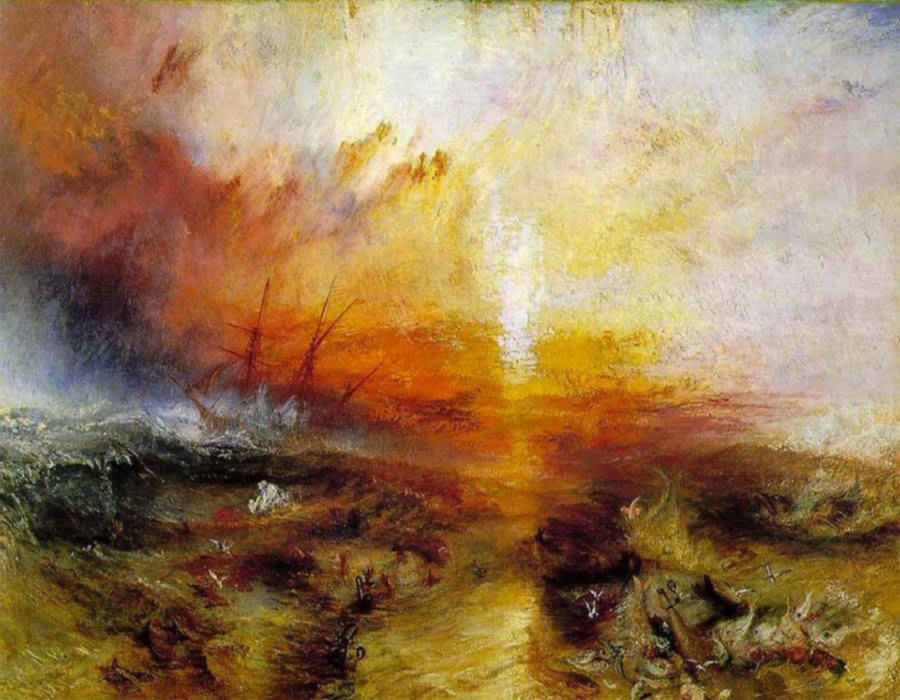
Here, Turner does not pursue realism or precision of line. On the contrary, forms merge, brushstrokes are expressive. The violence resides both in the depicted subject and in the manner of painting.
Colors blend to the point where it's impossible to discern where one shade begins and another ends. The color palette is varied, but warm tones prevail. The scene is painted with a feverish intensity, like a nightmare, dissolving contours and forms.
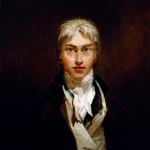
William Turner (1775-1851) was the most important British painter of the 19th century and one of the greatest landscape artists of all time in world art, whose style laid the foundations for Impressionism.
A Controversial Artist
Although Turner was a controversial figure in his era, he is considered the artist who elevated landscape painting, and by some, one of the precursors of modernity in painting, due to his studies of color and light.
William Turner bequeathed over 19,000 watercolors, drawings, and oils to the British nation. Most of these works are housed in the National Gallery and Tate Gallery in London.


