
The Tower of Babel - Pieter Bruegel the Elder
The Tower of Babel - Pieter Bruegel the Elder
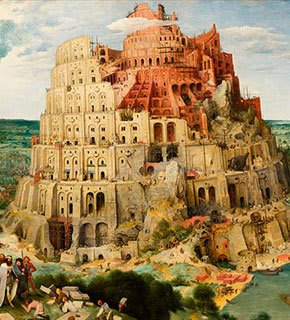
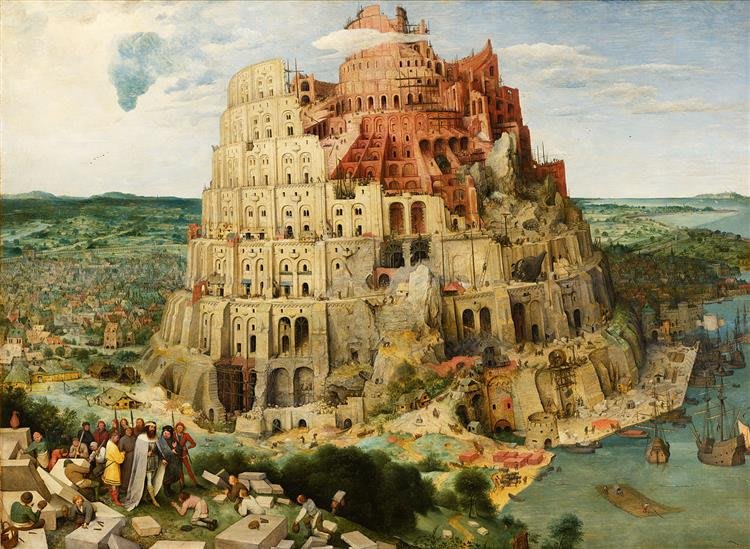
This is one of the masterpieces of the High Renaissance belonging to the Dutch artist Pieter Bruegel the Elder, considered one of the masters of the Flamboyant School.
Here we present two of the three paintings created by the artist around the biblical story of the Tower of Babel. The painting presents the biblical episode of the construction of the homonymous tower with the city of Antwerp as the background.
The Bible tells us that shortly after the flood, when all men spoke the same language, King Nimrod (or Nenrode) of Babylon wanted to build a tower that would reach the sky: "Come, let us build for ourselves a city, with a tower that reaches the heavens, so that we may make a name for ourselves; otherwise, we will be scattered all over the face of the earth." - Genesis 11: 4
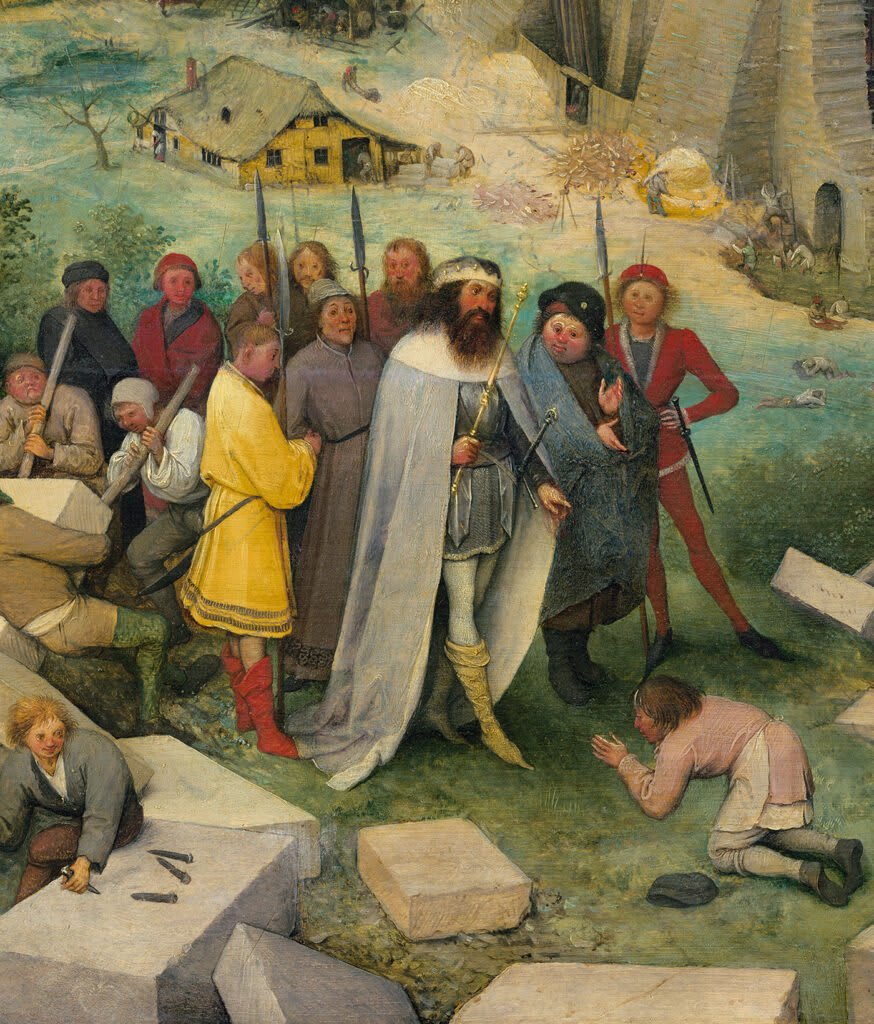
In the original narrative of the Book of Genesis, God prevents King Nimrod from building a tower designed to reach the heights of the sky, cursing the builders so that they are unable to communicate. Bruegel represents Nimrod in the foreground discussing his project with a retinue of flattering courtiers, while debilitated subjects crawl around his feet. They occupy an important place in the composition and play a role in the narrative.
The structure behind him is, in part, intended to be a reminder of a Roman amphitheater, with the Roman Empire being a symbol of the arrogance of human ambition of his time.
The King Nimrod dressed in Renaissance style is an evocation of King Philip II of Spain, who ruled the Netherlands at the time. In the lower left corner, King Nimrod is visiting the construction site. He is accompanied by his architect and guards while the masons pay homage to him.
The Flemish master represented this famous biblical legend. The tower is, of course, the central element of his painting, which we can see rising to the sky with a structure becoming increasingly unstable as it approaches the clouds. Around it, a city that seems tiny serves to give an idea of the size of the tower.
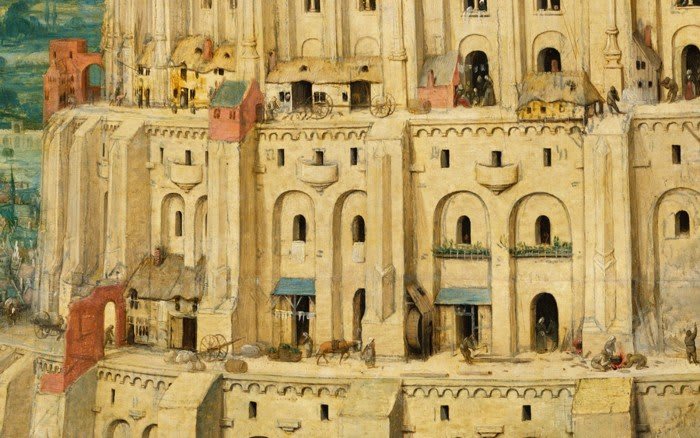
Around the structure, there is a dotted landscape of small figures, some of which march in procession around their curved stories, while others work on the scaffolding along their sides. To the right, ships are unloading construction materials; in all aspects of the detail, the painting is meticulous and naturally precise.
In the distance, nature stretches out as far as the eye can see: fields, valleys, forests, meadows, and watercourses provide a panorama of the wonders of our Earth and highlight the beauty of divine creation, in contrast to the giant but futile work of man.
Bruegel sympathized with the Protestant culture of his native country, and another version of the painting, The Small Tower of Babel, provides a direct criticism of the pompous ceremonial of the Catholic Church. In one of the ramps that extend the tower, a group of figures marches under a line of red awnings, generally understood as a veiled reference to the customs of the Catholic Church, in whose name the Duke of Alba was brutally subjugating the homeland of Bruegel during the period of 1550 to 1560.
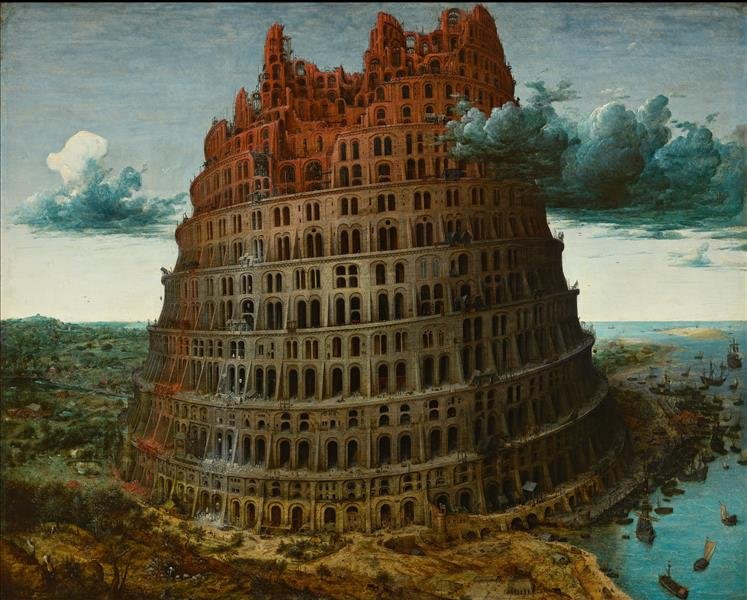
The architecture of the tower would be inspired by the Colosseum of Rome, which was already in ruins in the 16th century and may have served as a model for its construction. Bruegel visited Rome in 1552-1553. The views of the interior of the Colosseum show the same effect in layers of arches and counterforts. In the painting, we can find similar supporting arches that give the sensation of continuous elevation.
As with much of his work, the moral message also has a contemporary resonance. Living in an era when the European continent was being devastated by rival religious factions - on one side, the Catholic empires of the south, on the other the Protestant dissident cultures of the north - the story of a monolithic religious society, once morally united, in fracture into rival groups was relevant; particularly because one of the fundamental causes of Protestantism was the translation of the Bible into modern writing.
The artist brings the story of the Tower of Babel to life in the many details existing in both paintings. They are an invitation to consider not only the moral side of the story but also the human side. Through the painting, the enormous amount of civic energy that went into the construction becomes palpable, transplanting the biblical story of ancient Babylon to the contemporary Netherlands of Bruegel.


