Theodore Géricault: Legacy, Final Years and Essential Works
Theodore Géricault: Legacy, Final Years and Essential Works
Upon his return to Paris in late 1821, despite having achieved significant artistic success in London, Géricault's final years were tumultuous.
After returning from London, he invested in an industrial plan to create a factory that would produce artificially manufactured stone.
The plan failed, resulting in financial difficulties and economic instability.
He also suffered from health problems, including sciatica and pneumonia.
However, despite these afflictions, he fell into depression and began to exhibit destructive behavior.
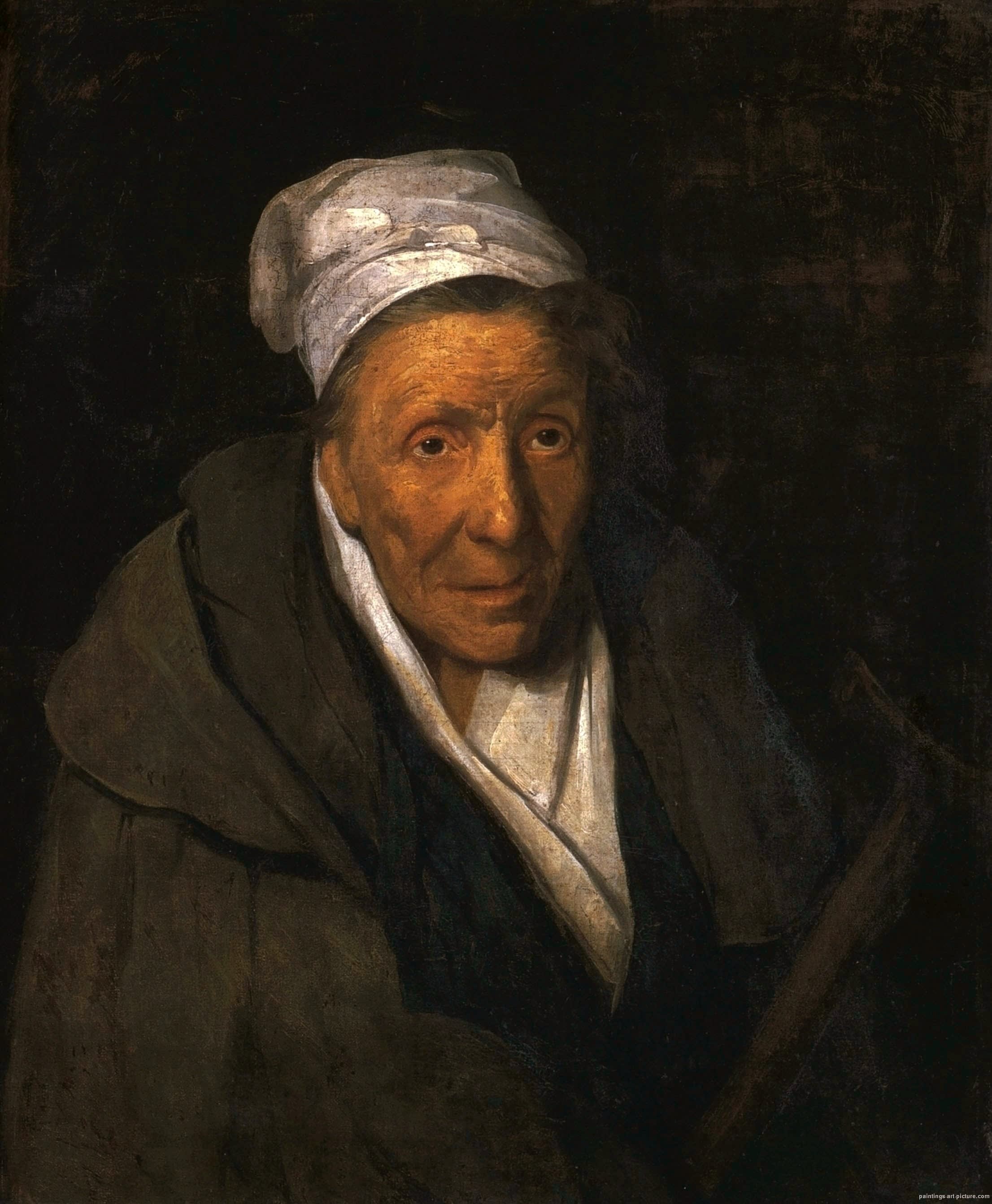
During this period, he created a series of unsettling paintings of mentally ill patients that were only discovered in the attic of a house after the artist's death.
Surprisingly, he took over 4 years to work under almost suffocating conditions.
In his final days, Géricault had to undergo surgery to remove a tumor from the lower part of his spine, resulting from three equestrian accidents he suffered in the spring of 1822.
Always fascinated by the human body as a source of artistic inspiration, he refused anesthesia so that he could see, with the help of a mirror, the elements of his body while the surgeon performed the surgery.
Géricault soon died of his numerous diseases.
He died on January 26, 1824, in Paris, France.
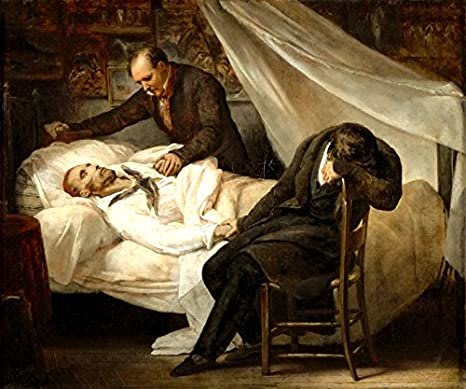
His friend and admirer Ary Schefffer recorded the scene in a painting titled The Death of Géricault.
LEGACY
In popular perception, Géricault came to embody the notion of the 'romantic' artist in a broader sense.
Known for his highly individualistic and courageous creative spirit, but also for the suffering and torment he endured, the sentimental legacy of his work, which is somewhat romanticized, can be seen in the tragic portraits of artists like Vincent van Gogh and Amedeo Modigliani.
Gallery - Commented Art
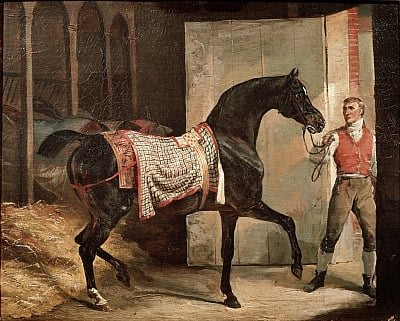
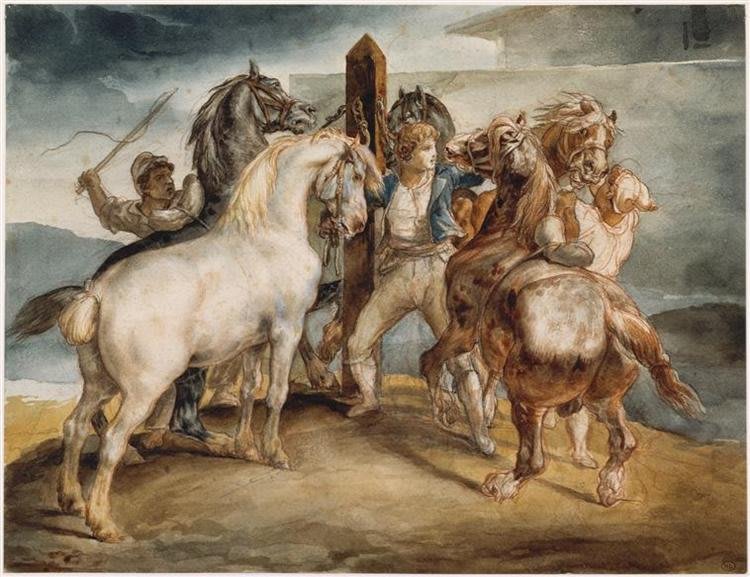
Géricault painted many horses, and later, he revealed to his teacher Vernet: 'one of my horses would have devoured six of yours'
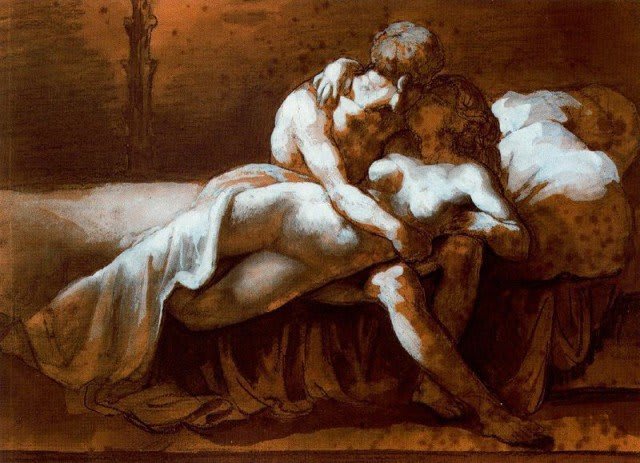
The Kiss - This is a drawing made in charcoal by the artist during a period when he traveled to Italy to improve his knowledge and skills in art.
We can see his influence in Michelangelo through the robust and muscular bodies, which we can relate to the style of the Renaissance artist.
This is a scene of love and surrender of a couple, where the artist depicts them lying in a bed with large pillows and curtains that fall in stripes on the floor.
The man sitting kisses and hugs a woman seen from the side, her body almost parallel to the pictorial plane.
The artist used charcoal to define the contours of the figures, emphasizing areas such as the man's neck, hand, and leg closest to the observer.
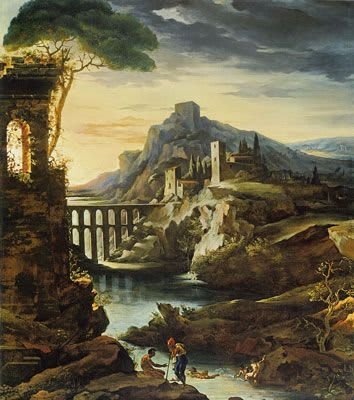
Sunset - This painting belongs to a series of Italian landscapes, each with an hour of the day.
They are perhaps a kind of visual declaration of Géricault's regret for leaving Italy to return to Paris.
They combine the classical influence of Claude Lorrain and Nicolas Poussin with the emotional and dramatic climate indicative of the emerging romantic style for the artist.
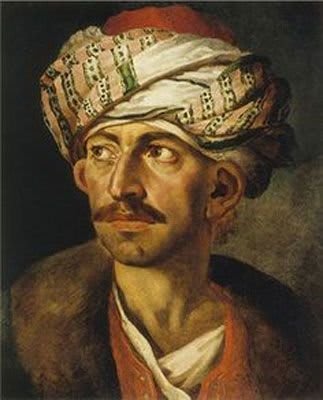
Portrait of Mustapha - An important aspect of romanticism was the full adoption of oriental themes in art.
This portrait is one of the most beautiful that Géricault created throughout his career.
The portrait was of a real Turk named Mustapha who lived in France.
The artist met him while walking through the streets of Paris and asked him to be his model.