
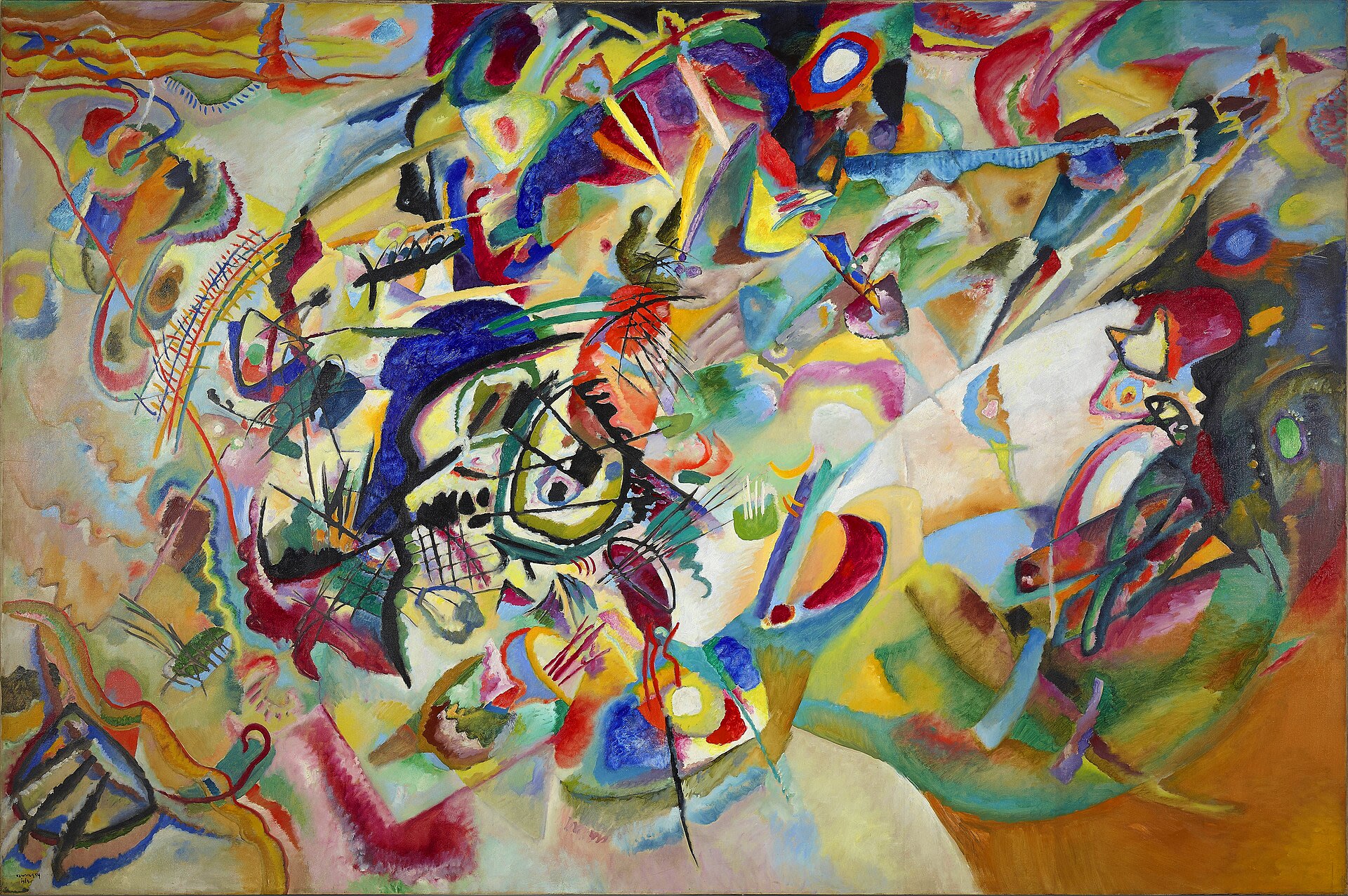
Wassily Kandinsky: Biography and Early Steps in Abstraction
Wassily Kandinsky: Biography and Early Steps in Abstraction
Wassily Kandinsky, one of the pioneers of abstract art, revolutionized the way we understand and experience painting.
Born in Russia in 1866, Kandinsky initially followed an academic career before dedicating himself to art in his adult life.
His work is characterized by vibrant colors, geometric forms, and a non-figurative approach that sought to express emotions and spiritual ideas.
Throughout his career, Kandinsky produced a series of influential works that challenged the artistic conventions of his time and continue to inspire artists and abstract art enthusiasts to this day.
Wassily Kandinsky, a Russian-born painter, is considered a leader in avant-garde art as one of the founders of pure abstraction in painting in the early 20th century.
Wassily Kandinsky: Biography
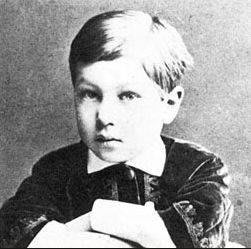
Wassily Kandinsky was born in the city of Moscow on December 16, 1866.
His parents were musicians, Lidia Ticheeva and Wassily Silvestrovich Kandinsky, a tea merchant.
When the young Kandinsky was about five years old, his parents divorced, and he moved to Odessa to live with an aunt, where he learned to play the piano and cello, as well as study drawing with a specialized teacher.
Even as a child, he had an intimate experience with art.
His early works reveal combinations of colors that are quite specific, infused with his perception that "each color lives by its mysterious life".
He followed his family's wishes to enter the University of Moscow, where he studied and taught law from 1886 to 1896.
Kandinsky married his cousin Anya Ticheewa in 1892.
In the same year, he took a position at the Law Faculty of Moscow, managing printing works.
In 1895, Kandinsky came into contact with the work of Claude Monet and was fascinated by the paintings of the Impressionist, especially one of the paintings Monte de Feno, which was his first experience of non-representational art.
In 1896, Wassily Kandinsky moved to the city of Munich, chose to abandon his career as a lawyer and move to Germany (he had learned German with his maternal grandmother as a child) to dedicate himself full-time to the study of art. In Munich, Kandinsky was accepted into a prestigious private art school, following the Academy of Arts.
At the time, the style "art nouveau" predominated.
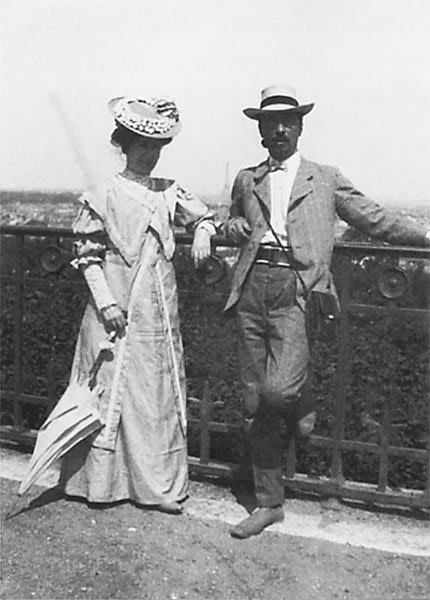
With the support and resources of his father, Kandinsky organized groups of artists and founded the group "Phalanx" in 1901. He formed friendships with painters of the time, such as Paul Klee. Frequently, he taught art classes and published his ideas on art theories.
In 1903, he met the art student Gabriele Münter and lived with her before her divorce from her husband was finalized in 1911.
Together, they traveled extensively throughout Europe, settling in the Bavarian countryside in Murnau.
The artist's style was already moving towards abstraction from Expressionism, and his work was the starting point for the type of abstraction that was much more concerned with emotion than with geometry and order. He had already formed the Association of New Artists in Munich, which Gabriele was a member of.
In 1910, he published his literary work From the Spiritual in Art, in which he argues that it is possible to communicate colors and forms without reference to the object.
The book was a huge success: it was translated into English and French and editions were published in the United States, Japan, and Spain; it influenced many artists, such as Piet Mondrian.
In 1911, he founded the group The Blue Rider (Der Blaue Reiter) with Franz Marc. In the movement "Der Blaue Reiter", Kandinsky found the essential principles he aspired to: extracting the creative spark from the forces of nature and instinct in his works.
In 1915, he separated from Gabriele Münter.
To understand the rest of this journey, continue to our next article: Wassily Kandinsky: The Journey of Abstraction to the Bauhaus.


