
Antoine Watteau and the Rococo
Antoine Watteau and the Rococo movement
Antoine Watteau was a influential French painter, known for his contribution to the artistic movement Rococo and his representation of gallant and festive scenes.
Throughout his career, Watteau developed a distinct style, characterized by his delicate treatment of light, his ability to capture atmosphere, and his focus on scenes of everyday life, particularly those related to the aristocracy and high society.
BIOGRAPHY
Jean-Antoine Watteau was born on October 10, 1684, in Valenciennes, a city in northern France. He was the son of Jean-Philippe Watteau and Michele Lordenois.
His father was a textile manufacturer, and his interest in art manifested itself from an early age.
In 1702, Watteau left Valenciennes for Paris to begin his true training in art.
During this period, the greatest painters of that generation, including Charles Lebrun and Pierre Mignard, were dead, and the only lucrative genre remaining was portraiture, which was never his preference.
He was a reserved young man, without formal education or social connections, but he was very intelligent, curious, observant, and had good taste.
He loved music, opera, and ballet, was an enthusiastic reader, and a Catholic, and most importantly, had no intention of returning to Valenciennes.
Around 1704, he became an apprentice to Claude Gillot, a painter and set designer, where he acquired skills in creating theatrical scenery, which influenced his artistic style.
This apprenticeship proved essential for the development of his style and theme.
Gillot, an innovative designer, with a brilliant sense of line, was more of a draftsman than a painter.
He was also a strange, socially awkward man, drawn to eccentric motives, but his sinuous arabesque drawings and especially his theatrical themes captivated the young artist.
Gillot gained fame with his acrobatic sense of line, delicate colorism, and spiritual motifs, but soon saw his pupil surpass him, and the two men parted ways.
By around 1708, Watteau entered the studio of Claude Audran III, one of the leading painters and decorators of the king.
Audran gave Watteau frequent access to study these works, and the king's turbulent color and energy deeply informed his imagination.
Similarly, as Watteau progressed as a decorative painter, he learned to work quickly, developing an apparently spontaneous sense of line and motif, which, in his later paintings on panel, evolved into his distinctive sparkling brushwork.
In 1709, he left Audran's studio and it is not known for how long he continued to produce decorative paintings.
It is believed that Watteau sold one of his paintings to finance a trip to his native land.
Upon his return to Valenciennes, he met and befriended Antoine de la Roque, the future director of the important literary review Mercure de France.
During his stay, he also reconciled with Jean-Baptiste Pater, who had been his pupil and whom Watteau had treated poorly.
When he returned to Paris in 1712, he brought Pater with him.
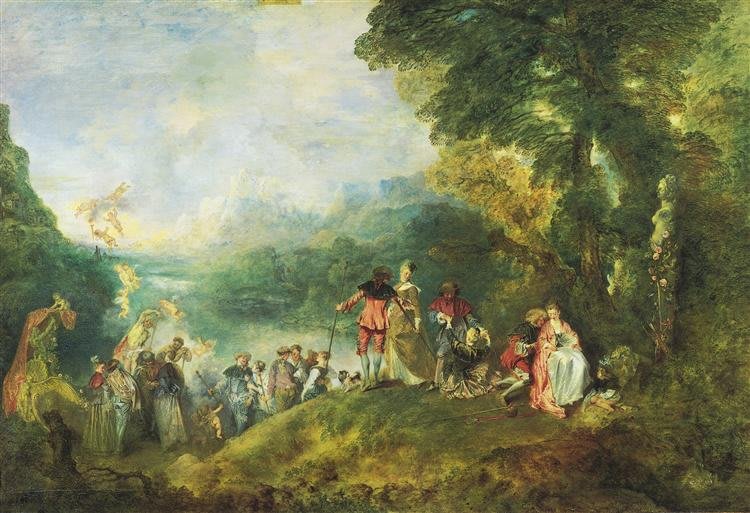
In 1717, he was admitted to the Royal Academy of Painting and Sculpture, became an academician with his painting Peregrination to the Island of Cythera, and presented works at the prestigious Paris Salon.
Watteau's career was meteoric in both popularity and artistic development.
In just fifteen years, he was remarkably productive, and his existing work includes around 200 oils, many of which are also preserved in engravings and copies.
In 1719, Watteau, who never had good health, was gravely ill with tuberculosis.
There are reports that he was infected in London, when he traveled there that year to paint two paintings for Richard Mead, doctor and collector.
Others claim that he traveled to London specifically to seek treatment from Mead.
In 1720, he returned to Paris, where he lived for several months with Gersaint, the dealer for whom he worked at the beginning of his career.
Ultimately, he hoped to recover enough to return to Valenciennes, perhaps feeling that he would soon die, but he never regained the strength to return to his native land.
In 1721, his health rapidly deteriorated due to tuberculosis, and he died on July 18 of the same year at the age of 36.
LEGACY
Watteau is considered one of the precursors of the Rococo movement, which was characterized by an emphasis on elegance, lightness, and sensuality.
His main works reflect these characteristics.
As a deeply sensual artist, he never married, had no known lovers, but his love scenes - even the most theatrical - are subtle and perceptive.
In Watteau's world, love is a true utopia: at the same time the best place to be and the place where he cannot be.
Watteau influenced several later artists, including Jean-Honoré Fragonard and François Boucher.
His focus on scenes of gallant life and the representation of ephemeral beauties made him a reference in Rococo art.
Antoine Watteau's work left a lasting mark on the history of art.
His ability to convey grace and elegance in his paintings, as well as his influence on the representation of aristocratic society at the time, make him one of the most outstanding painters of the 18th century.
GALLERY
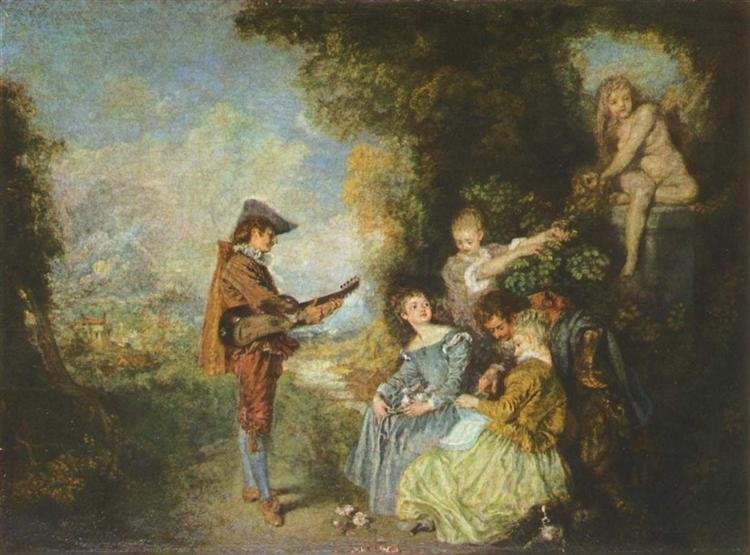
Oniric, idealized, and totally romantic, Watteau's allegories of courtly love are, however, free from the sentimentality and beauty usually associated with Rococo.
His sense of mystery and reticence is partly due to Watteau's technique, which employed light yellow or off-white backgrounds, shimmering brushstrokes, and multiple thin layers of varnish.
The Ladder of Love
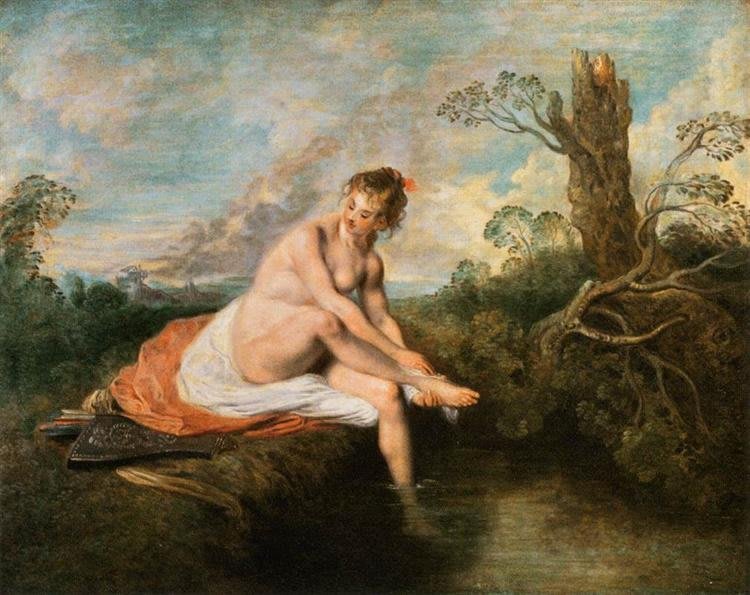
Diana at Her Bath. Antoine Watteau. 1716
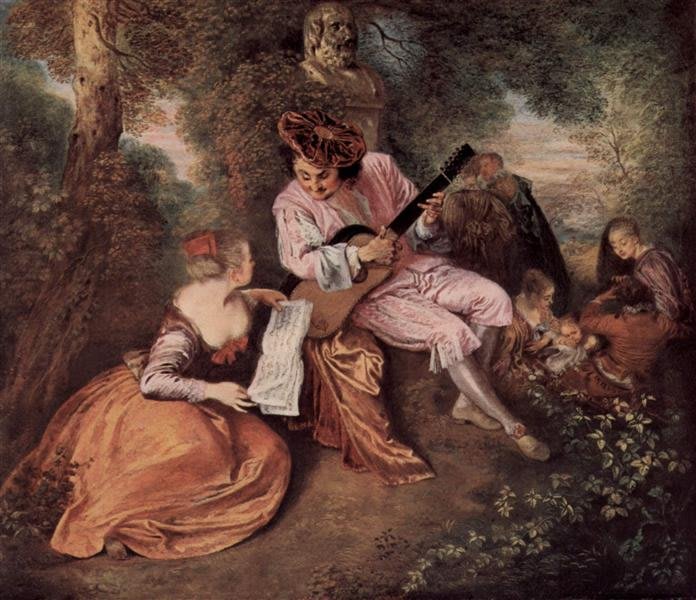
The Lesson of Love
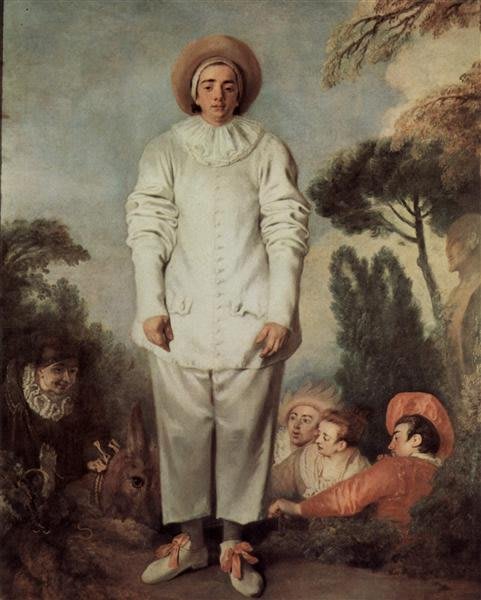
Gilles
It is unclear why and for whom Watteau painted this painting.
Several theories argue that it was commissioned by a client who simply loved the Commedia dell'arte and perhaps admired a specific actor.
The figure was represented almost life-size, wrapped in a brilliant white silk cloak.
His melancholic expression and monumental presence, seen from below, are entirely frontal, suggesting that the figure may have been painted from life, and not from the artist's imagination.
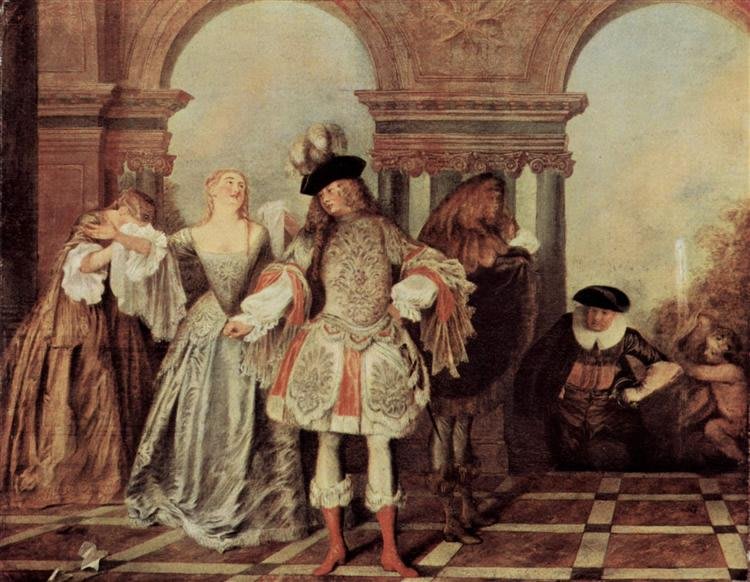
The French Comedians
Watteau was fascinated by theater, ballet, and opera during his first training in Paris with Claude Gillot, set designer, illustrator, and fervent fan of the commedia dell'arte.
The tensions between reality and illusion, psychology and artifice, which Watteau experienced as part of the audience, shaped his style and imagination more and more, and his theatrical themes, which always maintain a slight sense of melancholy or longing, inspired similar works by other Rococo painters.