
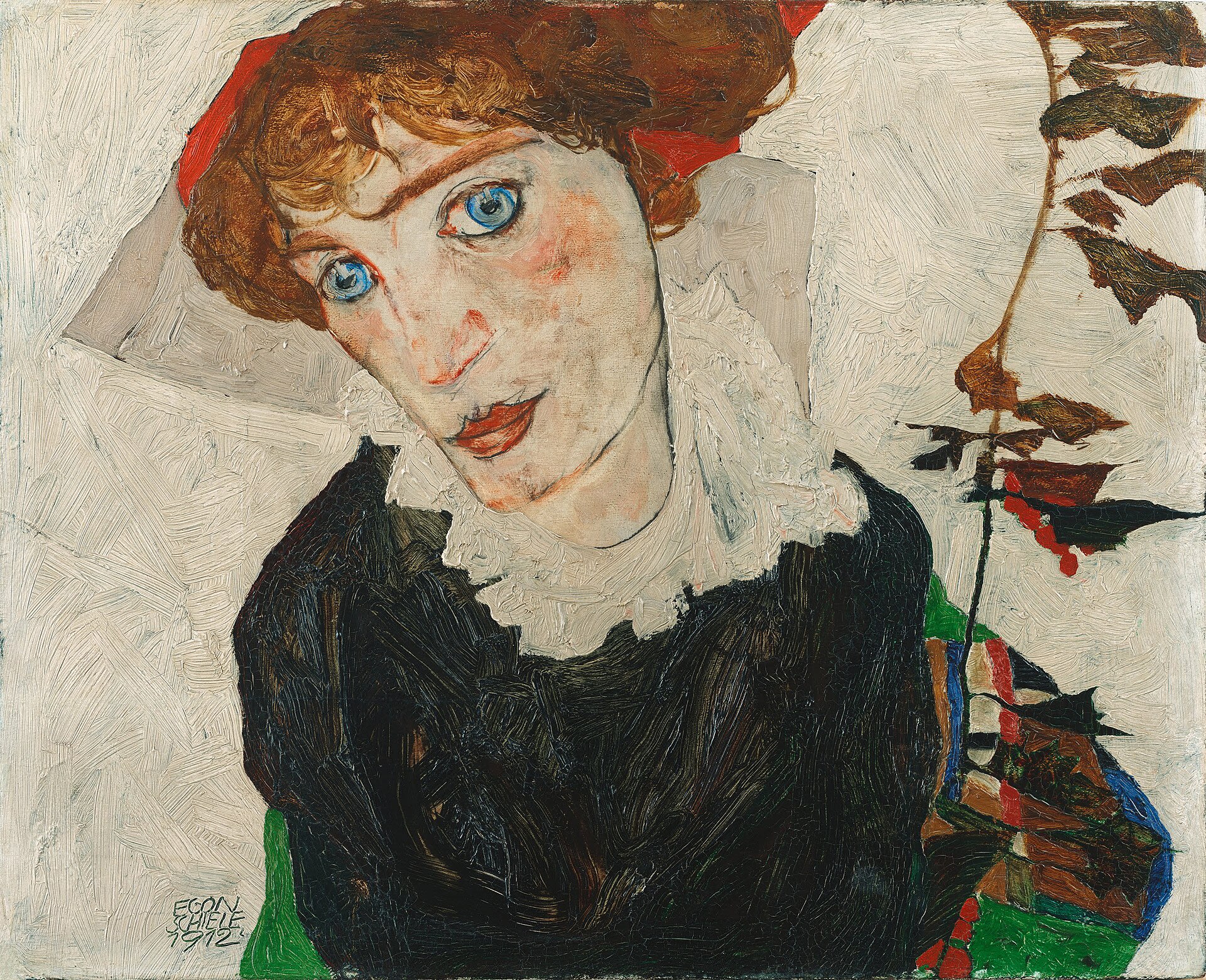
Biography of Egon Schiele: Restless Genius and the Early Signs of Expressionism
Biography of Egon Schiele: A Turbulent Life and the Emergence of Expressionism
Article Index
Egon Schiele was one of the leading figures of Austrian Expressionism. His portraits and self-portraits, scorching explorations of the psyche and sexuality of his models, are among the most notable of the 20th century.
With a unique style, Schiele challenged the conventions of the art of his time, creating works that were both intense and complex.
BIOGRAPHY
Egon Leo Adolf Ludwig Schiele was born on June 12, 1890, in Tulln an der Donau, a city near Vienna, Austria. He was the third child of Adolf Schiele, who worked as the chief station master for the Austrian state railways, and Marie Soukupova, who originally came from the city of Cesky Krumlov.
He had three sisters, Melanie, Elvira, and Gertrude, who would later serve as models for some of his portraits.
Although Schiele was never a diligent student, one of his art instructors at his primary school recognized a natural talent for drawing and encouraged him to seek formal training.
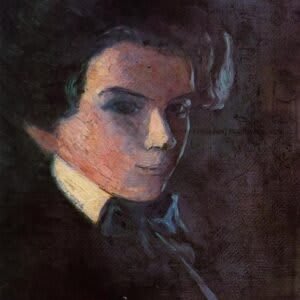
In 1906, after his father's death, Schiele enrolled in the Vienna Academy of Fine Arts, which Gustav Klimt also attended.
In 1907, Schiele sought out Klimt, whose work he had already admired greatly, and the two formed a mentorship that would have a profound impact on the young artist's development.
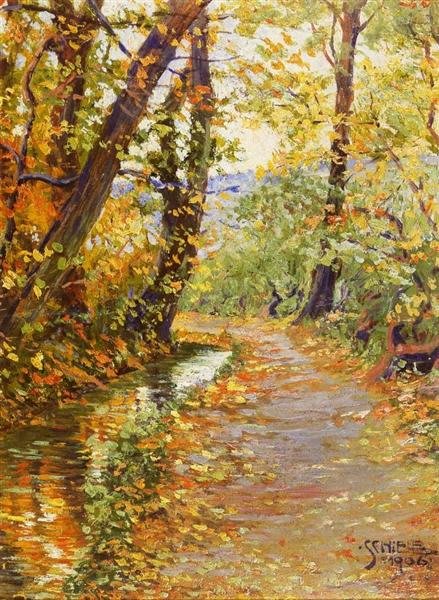
Through Klimt, Schiele was also introduced to the Wiener Werkstätte, the workshops of arts and crafts of the Vienna Secession, a movement closely tied to other modern art styles of the period.
In 1908, at the age of 18, Schiele participated in his first exhibition, as part of a group in Klosterneuburg, a small town north of Vienna.
The following year, Schiele and some of his colleagues left the Academy in protest, citing the conservative teaching methods and the failure to adopt more advanced artistic practices that were sweeping across Europe.
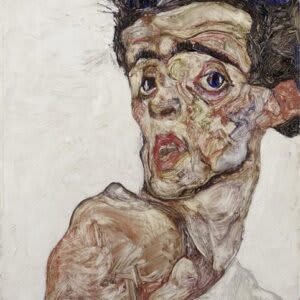
As part of this rebellion, Schiele founded the New Art Group, a group composed of young and dissatisfied artists who had deserted the Academy.
The new group did not waste time, holding several public exhibitions throughout Vienna, while Schiele explored new modes of pictorial expression, favoring distortions and irregular contours of form and a darker palette than the more decorative and ornate Art Nouveau style.
In 1911, he began to achieve modest success as a painter and draftsman, having his first solo exhibition at the Gallery Miethke in Vienna, where his growing propensity for self-portraits and portraits, along with studies of young women, were on display.
While his work scandalized Viennese society, he simultaneously marketed many of his provocative paintings to private collectors, as he wrote: “Making a lot of publicity with my forbidden drawings”, after five newspapers criticized his work.
His early studies were also controversial for their use of children as nude models and for depicting pubescent girls in implicitly erotic situations.
To understand the rest of this journey, continue to our next article: Biography of Egon Schiele: The Artistic Maturity, Conflicts, and Expressionist Legacy.


