Biography of Joaquín Sorolla: Legacy, Major Commissions and Gallery of Works
Biography of Joaquín Sorolla: Legacy, Major Commissions and Gallery of Works
The genius painted the ceiling of the most famous chapel in the world.

Surprisingly, he took over 4 years working in almost asphyxiating conditions.
In 1911, the North American Hispanist Milton Huntington entrusted Joaquín Sorolla with a very special commission that would occupy the last years of his life: the decoration of a large rectangular room of the Hispánica Society, founded at the beginning of the 20th century with the aim of teaching Spanish culture in the United States.
Sorolla would complete a series of panels illustrating the different provinces of Spain, depicting their particular character through landscapes and people.
The room, initially designed to be a library, was finally converted into the 'Sorolla Room' containing fourteen large oil paintings.
They would be mounted posthumously in 1926.
This series, which Sorolla began to sketch in 1911, would be completed in 1919 and its execution would take the artist on trips throughout Spain, painting and making sketches during the eight years it took to complete the project.
In 1913, although he did not stop using various types of paint, he began to paint the panels directly from nature.
In the following year, he painted five panels.
In 1915, he painted four more, and in 1917, only one panel.
Between November 1918 and January 1919, he completed another panel and finally, in that same year of 1919, he painted the last of the panels, A Capture of the Tuna (Ayamonte).
In total, this colossal work occupied the last years of his active life;
he himself considered it the 'work of his life', calling it exactly by that name in different writings that have been preserved.
On June 29, 1919, Sorolla sent a telegram from Ayamonte to his family informing them that he had finished the last painting.
Unfortunately, Sorolla could not travel to New York to mount the panels because, on June 17, 1920, he suffered a stroke.
The illness of Sorolla prevented him from delivering the work and collecting what had been agreed upon.
As a result of the stroke, Joaquín Sorolla died on August 10, 1923 in Cercedilla, province of Madrid.
After his death, the Hispanica Society of America liquidated the contract and the Sorolla Room was only inaugurated on January 16, 1926.
The Artist and His Work
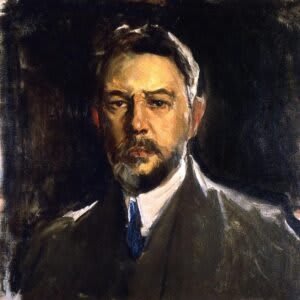
Sorolla declared:
'I hate the dark', Claude Monet once said that painting in general is not bright enough.
I agree with him.
But we painters can never reproduce the light of the sun as it really is, I can only approximate the truth.
Sorolla is the best example of Spanish Impressionism, with an interpretation based on the total importance of light and the movement of figures.
Changes in the intensity of light can modify colors and blur forms.
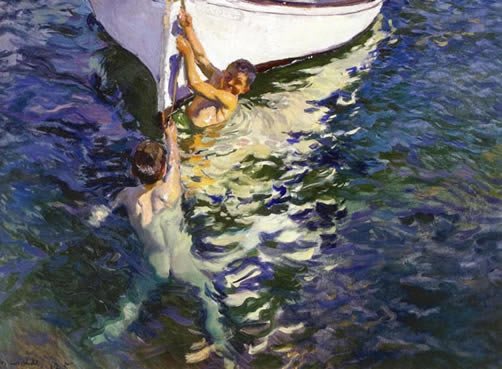
Sorolla's colors are pure – without mixing – with short, juxtaposed brushstrokes that increase the brightness.
His work surprises by its volume - almost three thousand paintings and over twenty thousand drawings and sketches.
Although we observe the Impressionist aesthetic in his work, there is no doubt that the study of Diego Velázquez and Francisco de Goya influences his design and themes.
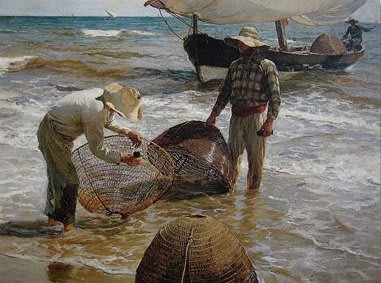
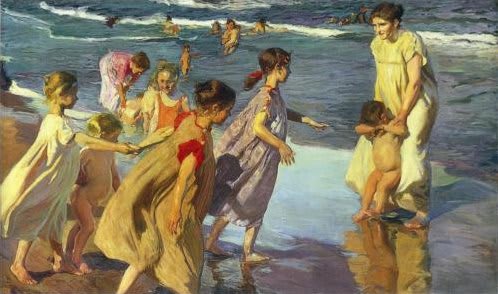
Sorolla demonstrates a new technique, thick painting that captures the luminous vibration of the Mediterranean sky, open candles, sand and, especially, wet bodies of children in his beach and fishing scenes from Valencia.
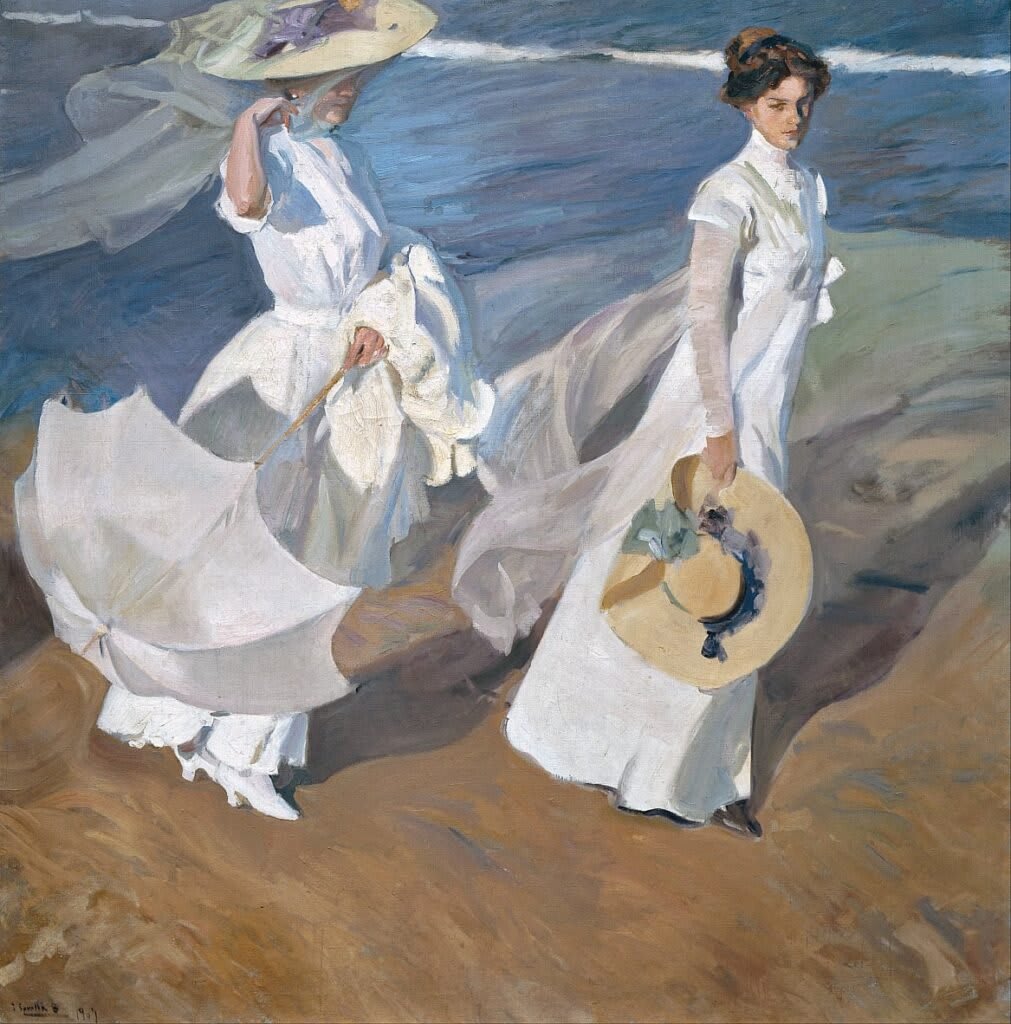
Gallery - Commented Art
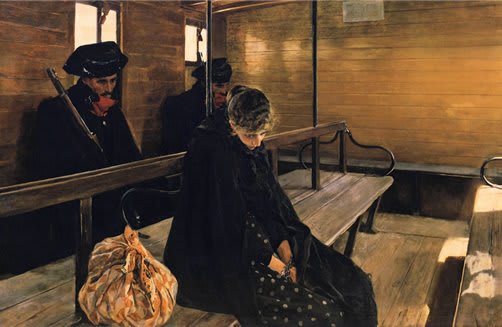
The Other Marguerite - This painting earned him the first prize at the National Exhibition of Fine Arts in 1892.
The work re-creates a scene that the artist saw on a trip: a mother who murdered her child being taken to prison in a train carriage by two military police officers.
The drama of the scene is highlighted by the expressions and gestures of the characters.
The light plays an important role in the composition.
To complete this painting, Sorolla rented a third-class train carriage for fifteen days.
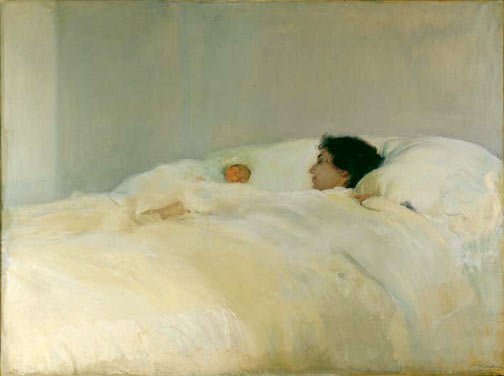
Mother - the painting that depicts Clotilde with her daughter Elena.
It is a very simple composition, but effective, which uses blue tones to depict Clotilde's tired face after childbirth.
The child has a pink tone, producing a radiant effect.
The brightness emanates from the bed, a fluffy white mass surrounded by a light gray wall.
A small range of grays dominates the painting, but the artist also used yellow and green tones to give the sensation of volume – a technique little used in his work, which is usually more colorful.
From this moment on, representations of his family will be frequent, in different stages of life.
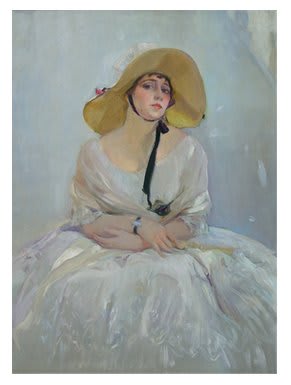
The defining characteristic of Sorolla's portraits is the familiarity with which the artist presents his models, as if the viewer knew the model.
He always tries to focus attention on the face, which usually remains more illuminated than the clothes and background.
There is an important trait in the base, but the brushstrokes are loose.
Gallery