Biography of Kazimir Malevich and Suprematism: Legacy, Works, and Rediscovery (Part 3)
Biography of Kazimir Malevich and Suprematism: Legacy, Works, and Rediscovery (Part 3)
Kazimir Malevich, one of the leading artists of Suprematism, was one of the most important Russian artists of the 20th century.
His artistic style was characterized by simple geometric forms and primary colors.
Malevich was forced to abandon his modernist style under pressure from Joseph Stalin in the 1930s.
He died in 1935 in Leningrad from cancer.
He was buried in a coffin of his own design, with a black square painted on its lid.
It was only under the government of Mikhail Gorbachev in 1988 that his works were presented and shown to the public.
LEGACY
The influence of Malevich is evident in the work of subsequent artists in Europe and particularly in the United States, whose work consists of completely abstract forms that represent technology, universality, or spirituality.
Through these means, Malevich paved the way for many generations of subsequent abstract artists - especially Ad Reinhardt and the minimalists - to free themselves from dependence on the real world.
GALLERY - ART COMMENTARY
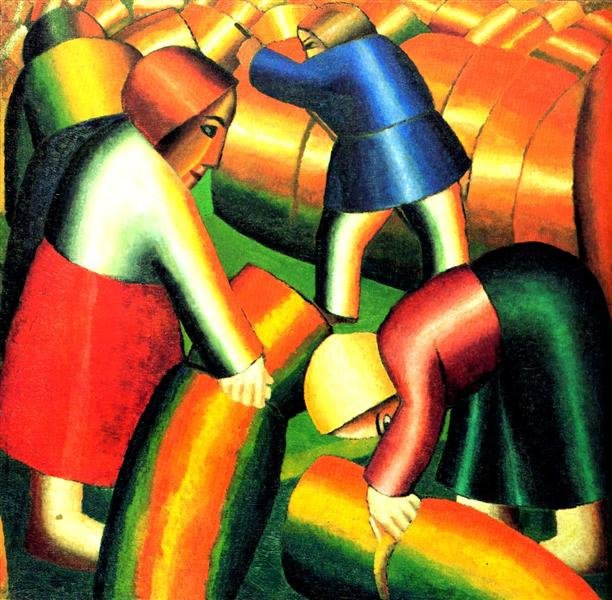
The Harvest - Malevich explored the human figure through a pictorial vocabulary that recalls the work of the French cubist artist Fernand Léger.
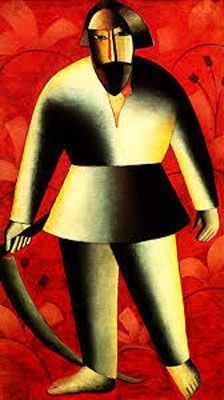
The Reaper - This composition anticipates his work in the direction of abstraction through the use of abbreviated and stylized forms.
Spring in the Village after the Snowstorm - This canvas was created by Malevich when his paintings were still representative and he had not yet clearly elaborated his theories of suprematism.
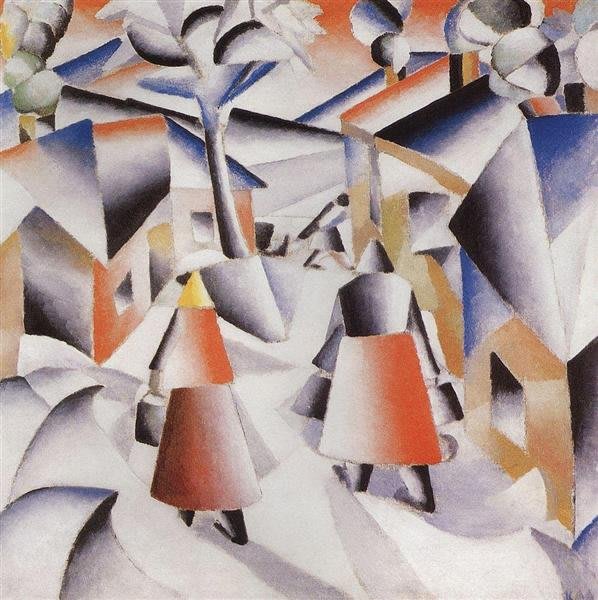
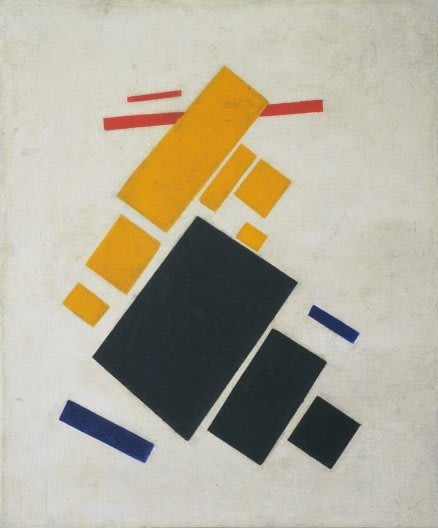
Aircraft in Flight - Malevich believed that it was necessary for the viewer to become emotionally involved to appreciate the composition, which constituted one of the key principles of his theory of suprematism.
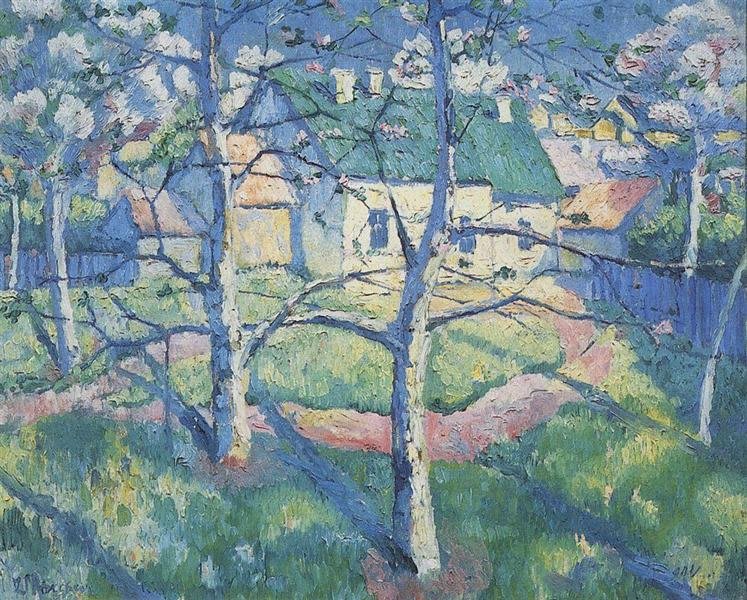
Apple Blossoms - What the artist so persistently sought, preaching the ideas of suprematism, escapes the lightness of this painting.
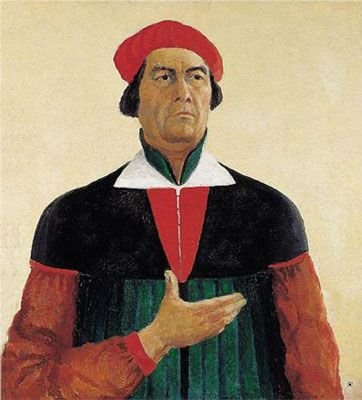
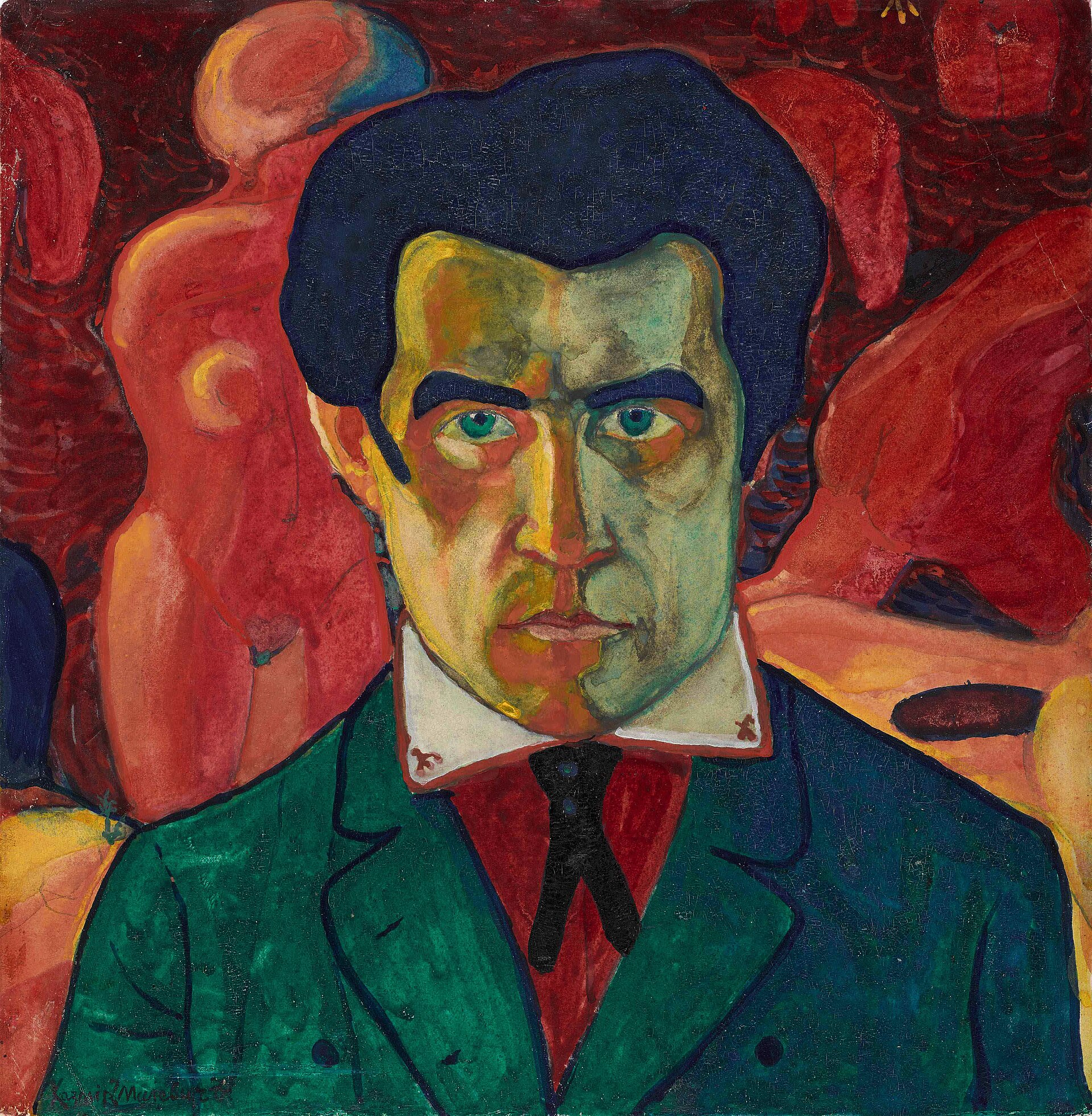
Self-Portrait - In this painting, Malevich self-portraits himself as a Renaissance artist, seriously posed in red and black on a neutral background, his gesture is a reflection of the artist Albrecht Dürer in his famous self-portrait made in 1500.