
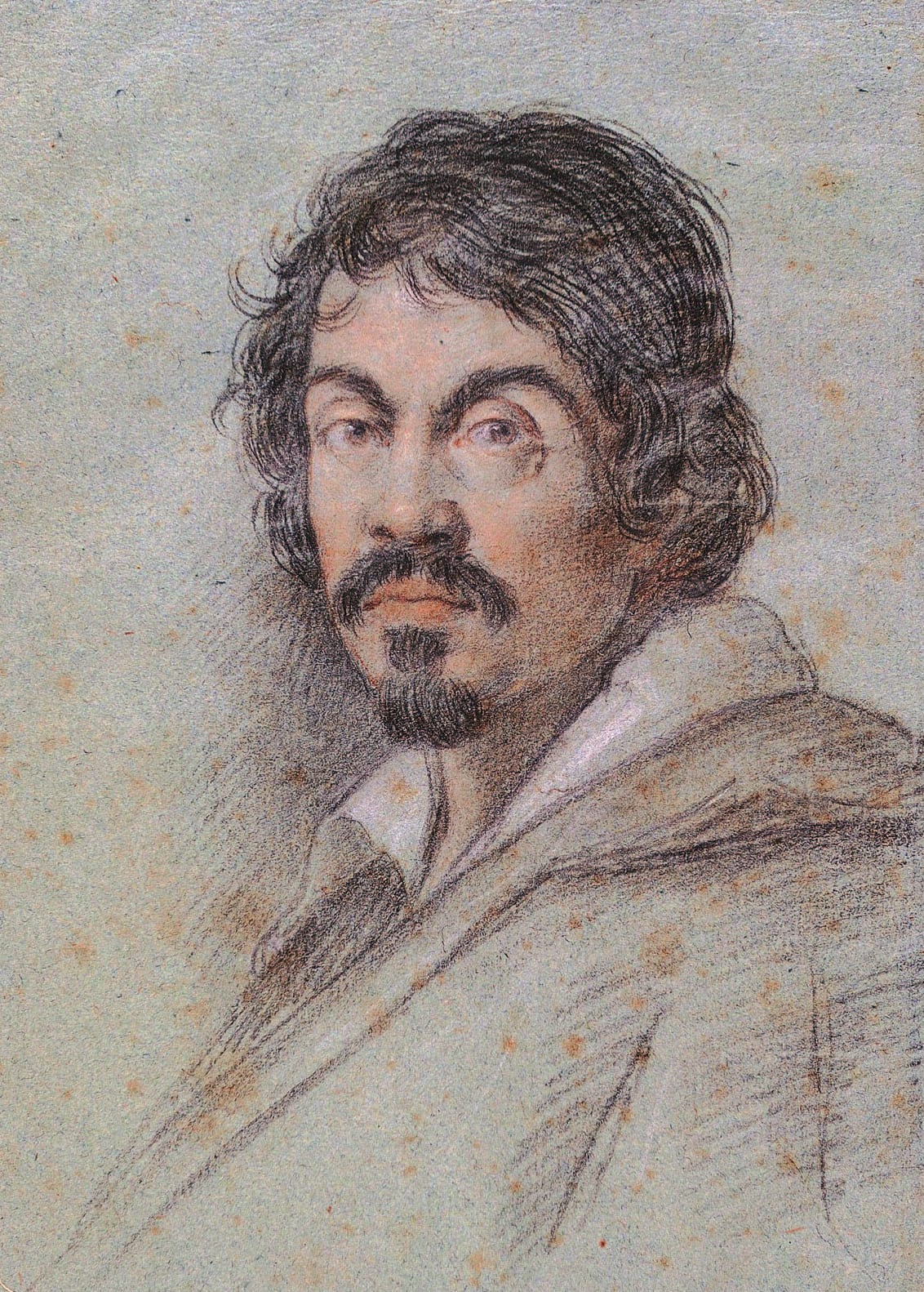
Caravaggio: Biography and Major Works: Origins, Turbulent Life and Artistic Rise
Discover the fascinating biography of Caravaggio, from his humble origins and tumultuous life to his rise as one of the greatest Baroque artists.
Caravaggio is a fascinating and intriguing figure in the history of art, known as much for his artistic genius as for his tumultuous life.
His realistic and dramatic paintings, marked by innovative use of light and shadow, transcend time and continue to captivate and inspire.
In this article, we will delve into the life and work of this Italian Baroque master, exploring his major works and their lasting impact on Western art.
Caravaggio was an Italian artist who worked in Rome, Naples, Malta, and Sicily between 1593 and 1610.
He was considered an enigmatic, fascinating, and perilous man.
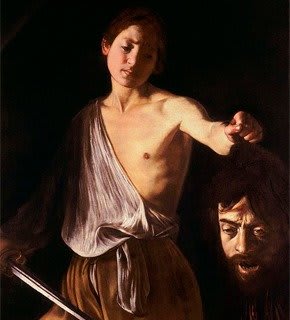
In the figures presented in his works, the artist used common men and women from the people as models, represented in their simplicity and in a natural environment, where light takes center stage and the obscurity of the scenes is revealed by the chiaroscuro technique.
Caravaggio took this aesthetic principle to its extremes, to the point of being accused of using the body of a prostitute found dead in the Tiber River to paint the Death of the Virgin.
The Caravaggism would come to refer to a painting of violent and strongly contrasted light, as well as to the inspiration in everyday life that some of his followers drew from.
BIOGRAPHY
Reliable biographical information about this artist is scarce.
What exists has been gathered from judicial and municipal records and other surviving documents.
We know that he was born on September 29, 1571.
As a child, he was known as Michelangelo Merisi, a reference to his birth on the feast day of the Archangel Michael.
The artist grew up between the quiet agricultural town of Caravaggio (hence his name), located in Lombardy, and the bustling city of Milan, where his father, a master stonemason, worked.
Although of lower social status, his family had elite connections.
His aunt served as a nanny for the children of the noble Família Sforza, notably the Marquês Francesco Sforza I and his wife, Costanza Colonna, who witnessed the marriage of Caravaggio's parents in 1571.
Costanza Colonna would later become a supporter of the artist, although she never personally acquired a painting.
In August 1576, when Caravaggio was five years old, the city of Milan suffered a plague outbreak.
Although the artist and his family had taken refuge in the countryside, in October 1577 his father, paternal grandparents, and uncle had died of the plague.
In 1592, at the age of 21, Caravaggio had also lost his mother and younger brother.
The family land was divided among the remaining brothers and sold, leaving him to reside permanently in Milan, where he supported himself through portrait painting.
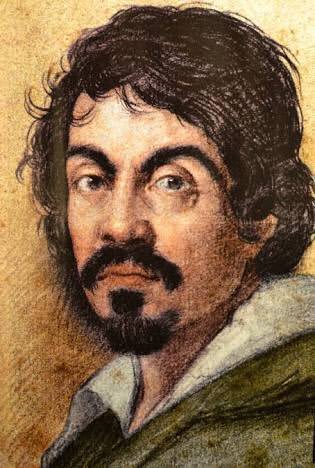
It is likely that Caravaggio began his artistic career after encountering works by Renaissance painters.
Art historian David M. Stone observed that Caravaggio was influenced by several Italian masters, including Giorgione, Palma Vecchi, Ticiano, and Leonardo da Vinci.
He certainly received some form of classical education and was aware of the leading artists and theories of his time.
He used the text of Giorgio Vasari as inspiration and motivation for some of his paintings.
At the end of the 16th century, Milan was a dangerous and violent place, and therefore a ready-made setting to seduce and provoke the young, rootless, traumatized, and possibly hot-headed artist.
After his involvement in a murder, the artist fled to Rome in 1592 and remained there until 1606.
During this period, Caravaggio spent several months as an assistant to the artist Giuseppe Cesari, a popular painter of frescoes.
In this job, he painted mainly flowers and fruits in the background.
From this experience, he took away an eye for details and an affection for the nuances of still-life paintings evident in the precise execution of fruits and flora in his later works.
After learning from Cesari, Caravaggio made contact with his future patron, the Cardinal Francesco Maria del Monte.
With him, the artist received lodging, food, and artistic commissions, as well as introducing him to circles of art collectors.
Like del Monte, other elite art collectors in Rome were drawn to the themes of Caravaggio's early works: celebrations of music, still-life paintings, and sensual portraits of androgynous young men such as Amor Vincit Omnia (1602), which depicts a cupido on top of symbols of war, science, music, and literature.
These genres and secular works were his entry into the prestigious Roman patronage and launched him to artistic fame.
In 1599, Cardinal Del Monte helped him secure his first major public commission, the decoration of the Contarelli Chapel in the San Luigi dei Francesci Church with scenes from the life of Saint Matthew.
With this commission, the artist embarked on a radical reinterpretation of divine figures that would become a hallmark of his career.
He humanized divine figures by making them common people.
In this way, Caravaggio criticized and subverted the idealized and immaculate figures of the Italian Renaissance and classical Roman traditions.
Examples of this approach can be seen in The Death of the Virgin and Judith and Holofernes, the latter of which had a profound effect on other artists, particularly Artemisia Gentileschi, who created a series of images of the same subject.
Caravaggio's religious paintings received highly varied criticism for their realism and juxtaposition of saintly figures with modern 17th-century interiors, inflaming some critics.
In fact, many of Caravaggio's works were rejected by commissioned institutions based on blasphemous or indecent portraits.
Caravaggio's time in Rome came to an end in a dramatic way.
Records of the court indicate that he was involved in an infinite number of violent incidents, and was frequently protected from prosecution by reluctant witnesses who feared reprisals from the artist's influential and prominent patrons.
One of these episodes occurred on April 24, 1604, when Caravaggio began a fight with a waiter in a restaurant and the artist smashed the man's face with a plate.
Another, more violent one, involving the law for violent acts reached its climax on May 28, 1606, when Caravaggio murdered his former friend Ranuccio Tomassoni, possibly in the context of a duel.
After this tragic event, Caravaggio fled Rome before formal charges of murder were made against him;
thus leading to an indefinite exile from the city, condemned as a murderer and subject to a death sentence that allowed any of the Papal States to receive a monetary reward for killing him.
In exile, the artist then spent nine months in the city of Naples, controlled by the Spanish, arriving there in September 1606.
During this period, Caravaggio began to experiment with more colors and contrasts, taking the lead of painters such as Ticiano.
In 1607, Caravaggio moved to Malta.
His works from this period are distinct - he began to paint with increasingly rapid brushstrokes and used maroon-brown tones with greater emphasis.
After spending a month in Malta, Caravaggio became involved in a violent armed fight in the house of the organist of the Conventual Church of Saint John.
This turn of events resulted in a criminal detention, his escape from prison, and his flight to Siracusa in the fall of 1608.
Later, the Knights of Malta revoked the honors of the artist on December 1, 1608.
Caravaggio moved from Siracusa to Messina, Palermo, and then back to Naples in 1609.
In Naples, armed men cut the artist's face for unknown reasons, leaving him with almost fatal wounds, he remained convalescing, very ill.
Between 1609 and 1610, he painted the self-portrait Davi with the Head of Goliath, and sent it as a kind of pardon to the Papal Court.
Actually, the pardon was granted, but it did not reach him, he died before it did.
He died on July 18, 1610, possibly due to malaria, at the age of 39.
LEGACY
Caravaggio was identified alternately as an example of late manierism or as a precursor to the Baroque era.
A painter of great artistic influence, both in his time and to this day.
By around 1605, other Roman artists had begun to imitate his style of signature, and soon afterwards artists outside Italy, such as Rembrandt and Diego Velázquez, incorporated the dramatic lighting effects of his works as a reference.
Caravaggio's style quickly gained devoted followers, who infused their compositions with the same qualities of the master.
His paintings also inspired important poets of his time, such as Giambattista Marino.
Despite being acclaimed in his lifetime, Caravaggio's legacy was almost forgotten in the 18th century, with some interest from Neoclassical painters such as Jacques-Louis David.
The modern and contemporary fascination with the artist is largely due to the efforts of Italian art historian Roberto Longhi, whose exhibition in Milan in 1951, with a monograph published in 1952, restored the artist's recognition to the public and cemented his current status.
The theatrical elements of his paintings, lighting, and drama, allow for an easy transfer to cinema. Directors such as David LaChapelle and Martin Scorsese cited him as an influence.
In doing so, they channeled the power and objectivity of the painter's images, using his representations of imperfect bodies and his ability to create a narrative from the climax point to immerse the viewers in his own narrative medium.
Today, Caravaggio is seen as one of the most impressive "Moderns" of the Great Masters.
To understand the rest of this journey, continue to our next article: Caravaggio: Biography and Major Works: The First Key Works and the Revolution of Light.


