
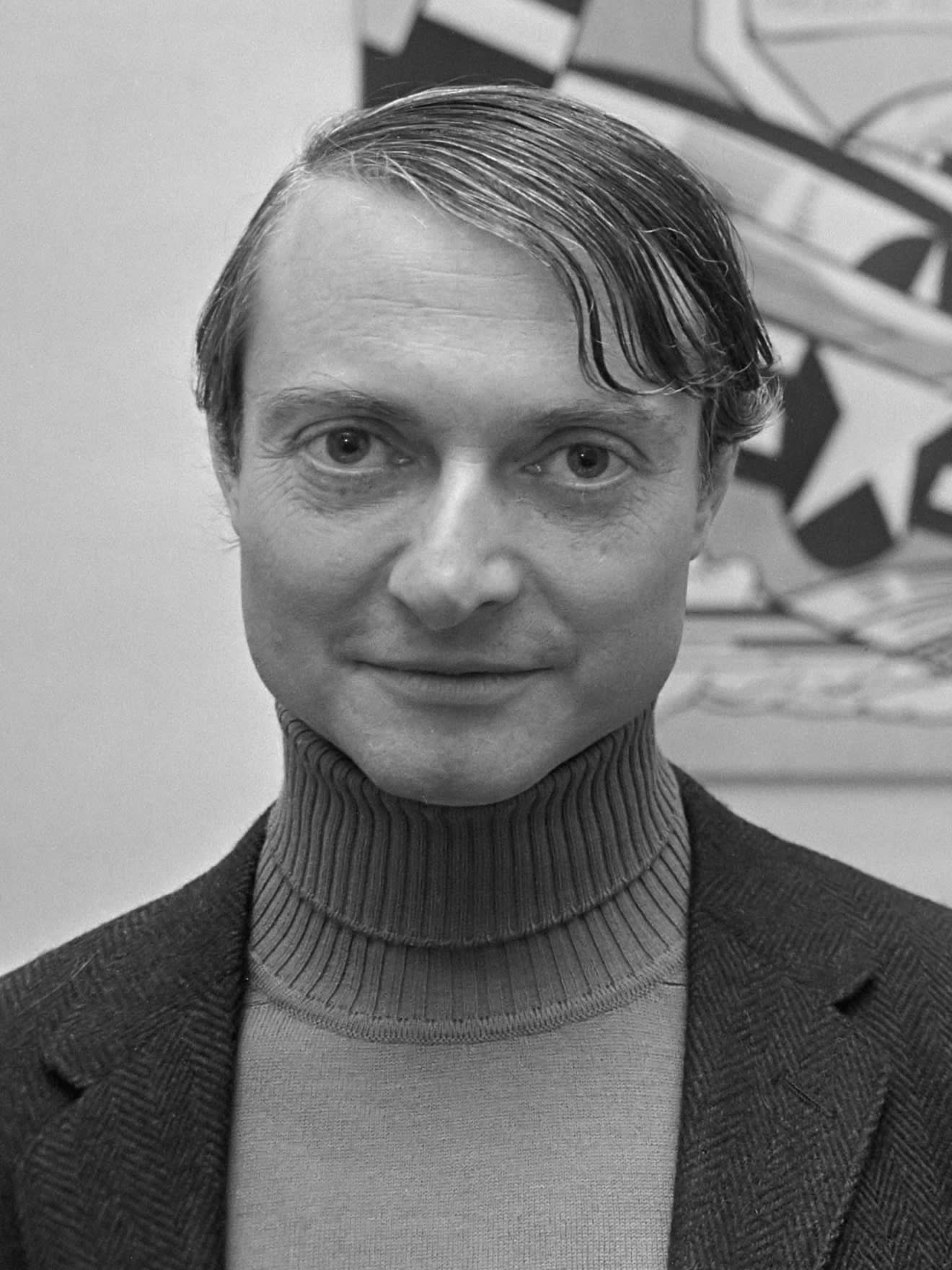
Complete Biography of Roy Lichtenstein: The Life of the Master of Pop Art
Read the complete biography of Roy Lichtenstein, a renowned American artist and a key figure in the Pop Art movement.
Roy Lichtenstein was an American artist, one of the first to gain widespread recognition in the Pop Art movement.
The popular culture of the 20th century brought strong references that influenced many artists. In Lichtenstein's works, his style, themes, and common reproduction techniques dominated the art entirely. This marked a significant change in Abstract Expressionism, whose often tragic themes emerged in the souls of contemporary artists.
BIOGRAPHY
Roy Fox Lichtenstein was born on October 27, 1923, in New York City to a family of German-Jewish descent. He was the son of Milton and Beatrice Lichtenstein; he had a sister, Renee. As a child, Roy enjoyed listening to radio programs, science fiction, visiting the American Museum of Natural History, drawing, and building model airplanes.
In 1937, as a teenager, he cultivated his artistic interests by taking watercolor classes at the Parsons School of Design. In 1940, he enrolled in the Art Students League after graduating from high school.
After serving in the army for three years, Lichtenstein returned home in 1946 and completed his studies, earning a bachelor's and master's degree in fine arts. He briefly attended Ohio State University before moving to Cleveland. His early artistic idols were Rembrandt, Daumier, and Picasso; he often said that Guernica was his favorite painting.
In the late 1940s, he began exhibiting his work in art galleries. His paintings featured themes of history, mythology, and American folklore.
In 1945, he traveled to Paris and enrolled in a language and civilization school, but soon learned that his father was seriously ill. He returned to New York in January 1946, several weeks before his father's death, Milton Lichtenstein.
In 1949, he married Isabel Wilson Sarisky, who worked in an art gallery where Lichtenstein exhibited his work. During this period, he also earned his master's degree.
In the 1950s, he began experimenting with popular culture as a theme in his art, breaking away from the tradition of abstract expressionism popular among leading artists of the time, such as Jackson Pollock. He started using materials from Comic Books and advertisements, with a precise method to create art that imitated a mass-produced printing process.
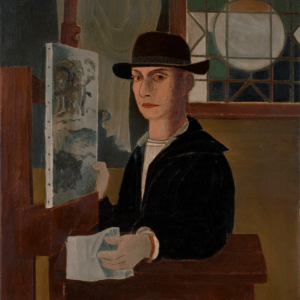
In 1951, Roy and Isabel moved to Cleveland. His wife became a modern interior designer. He had a series of jobs as a industrial designer, furniture designer, and display designer, including a university professor. In response to these experiences, he introduced motors, valves, and other mechanical elements that dominated his paintings and prints.
In the same year, he had his first solo exhibition at the Carlebach Gallery in New York, followed by representation at the John Heller Gallery until 1957.
In 1954, his first son, David, was born, and two years later, his second son, Mitchell. Despite the relative lack of interest in his work in Cleveland, Lichtenstein placed his work in New York galleries, which always had great importance for him.
In the early 1960s, long before finding his characteristic mode of expression, he drew attention to the artifice of conventions and taste that permeated art and society. What others considered trivial fascinated him as classic and idealized - in his words, "a purely American mythological theme." During this period, the artist incorporated comic book characters like Mickey Mouse and Donald Duck into expressionist abstract backgrounds, which became a hallmark forever associated with Lichtenstein and Pop Art.
In 1963, after separating from his wife, he moved from New Jersey to Manhattan. The following year, he resigned from his professorship to focus exclusively on his art.
In 1964, he participated in the exhibition American Supermarket at the Galeria Paul Bianchini, for which he designed a shopping bag, it was when he met Dorothy Herzka, a gallery employee, with whom he married in 1968.
By the late 1960s, however, he moved away from comics and began creating paintings inspired by masters like Pablo Picasso and Salvador Dali. One of his new styles was mirror painting, made on a spherical screen. He also focused on still-life paintings and often applied optical illusions to show a distorted version of reality. In 1969, he had his first retrospective in New York, at the Museu Solomon R. Guggenheim.
His work was exhibited at the Bienal de Veneza. Comic books became a constant in his work, and the artist began to gain popularity by exploring themes of passion, violence, and war. Lichtenstein became a leader of the Pop Art movement, which included artists like Andy Warhol and sculptor Claes Oldenburg.
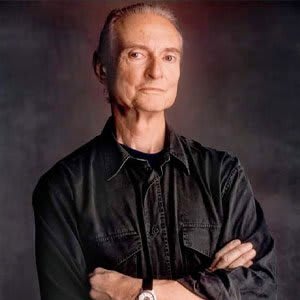
In 1970, the Lichtenstein couple bought a property in Southampton (New York) and made it their main residence. During this period, the artist investigated an aspect of perception that constantly concerned him: the ease with which the unreal is validated as real because viewers accepted so many visual conceptions without analyzing what they saw. As a result, we can observe in the Mirror Series, where he mainly dealt with light and shadow elements.
In the 1980s, he completed many commissions, such as a 25-meter-tall sculpture for the Port Columbus International Airport in Ohio, titled Brushstrokes in Flight, as well as a multi-story mural for the Torre Equitable lobby in New York. During this period, he was extracting a wide range of influences in his work, inspiring himself in surrealism, cubism, and expressionism, and using many different types of media. He reopened a studio in Manhattan and became more interested in Abstract Expressionism and geometric abstraction. This period coincided with the reopening of a studio in New York City, Lichtenstein was also at the peak of a busy career of murals. He had completed four murals; between 1983 and 1990, he created five murals. He also completed public sculptures in Miami Beach, Columbus, Minneapolis, Paris, Barcelona, and Singapore.
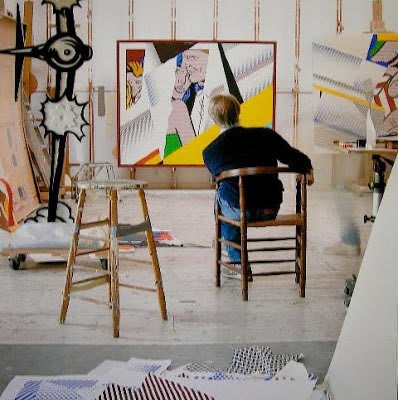
In the 1990s, he created a series of interiors based on yellow pages ads. He also continued to produce large paintings and sculptures for public spaces. In 1995, he received the National Medal of Arts. In 1996, he held an exhibition showcasing traditional Chinese landscapes, which received widespread acclaim, particularly in the media. The configurations of land, water, mountains, and air found in paintings and scrolls of the Song dynasty are simulated by soft fields of graduated points. None of Lichtenstein's usual black outlines define the monochromatic forms, which increases the contemplative and abstract quality of this series.
Throughout his long career, Lichtenstein was honored as one of America's greatest artists. He remained committed to his work until the end of his life, often spending ten hours or more working in his studio.
In 1997, after having suffered from pneumonia, he died unexpectedly on September 29 at the age of 73 due to complications from the disease. In 1999, the Roy Lichtenstein Foundation was established in New York.
His work comprises over 5,000 paintings, prints, drawings, sculptures, murals, and other objects celebrated for their intelligence and invention.
Read more
To understand the rest of this journey, continue to our next article: Biografia completa de Roy Lichtenstein: As Obras Icônicas da Pop Art.
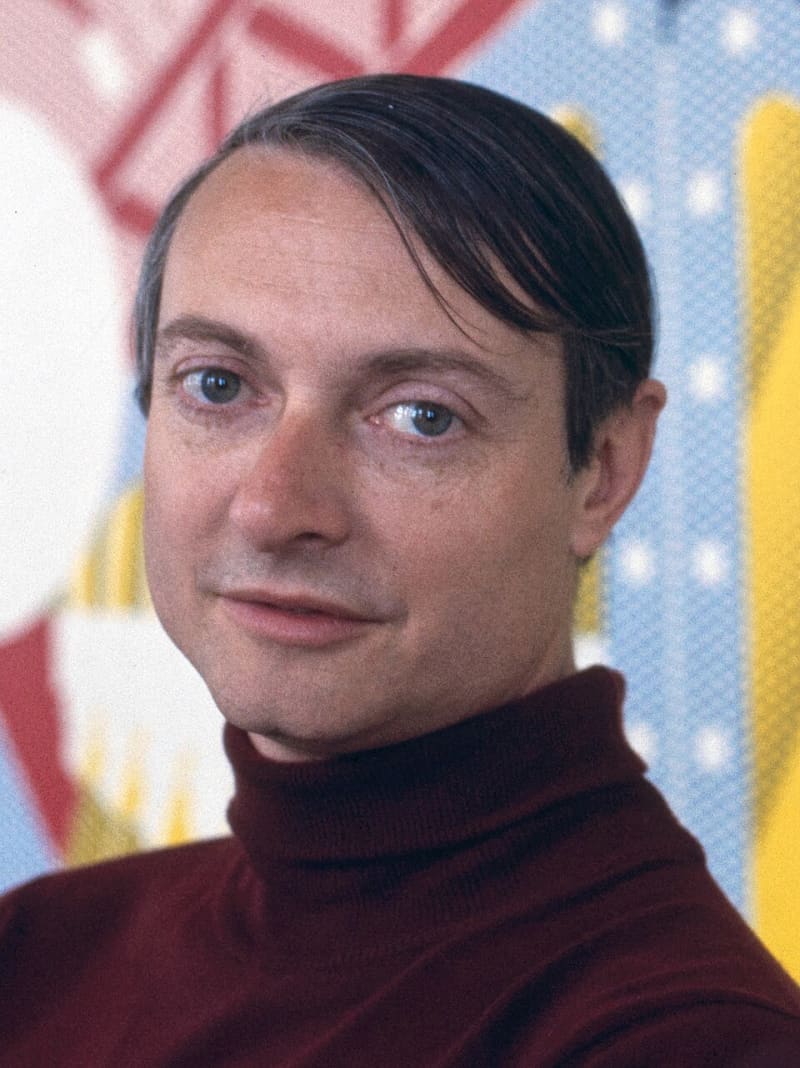
Image: Self-Portrait with Easel. 1951
Source: Self-Portrait with Easel. 1951


