Conceptual Art
A brief summary of Conceptual Art
Conceptual art is a modern art movement that emerged in the 1960s, prioritizing the idea or concept behind a work of art over its physical form or aesthetic appeal.
Unlike traditional art forms that focus on technical skill or visual beauty, conceptual artists concentrate on conveying a message, exploring an idea, or challenging conventional artistic norms.
Conceptual art pieces often take the form of texts, images, videos, or performances, and can assume unconventional formats.
This movement drastically altered the definition of art, questioning what constitutes art and the artist's role in society.
Conceptual art challenges the viewer to think more deeply about the presented issues, often resulting in an intellectually stimulating and emotionally engaging artistic experience.
Conceptual Art emerged in the 1960s as a challenge to the classifications imposed on art by museums and galleries.
Galleries would categorically tell the public: This is art.
Conceptual Art, on the other hand, sought to question the very nature of art by asking: What is art?
The common characteristic of all works called and viewed as conceptual is not to see the object, its plasticity, but rather its message, the discussion of a subject, the communication, passing the idea, the interaction between the artist and the viewer.
To lead discussions and reflections.
Marcel Duchamp is the precursor of Conceptual Art
The purpose of conceptual art lies in the idea or concept, making it the most important aspect of the work in question.
If an artist uses a conceptual form for their art, the entire process involving the idea is the most important, and the work in question may cause estrangement, which becomes secondary.
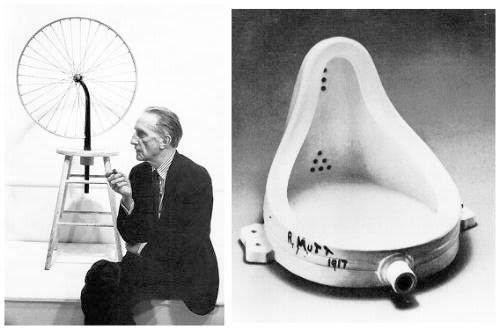
This artistic manifestation began in the mid-1960s, but we should consider the work of Marcel Duchamp, produced between 1910 and 1920, as the precursor to the conceptualist movement, by proposing various examples of works that would become the prototype of conceptual works, such as the ready mades, by challenging any type of categorization, even questioning whether they were art objects.
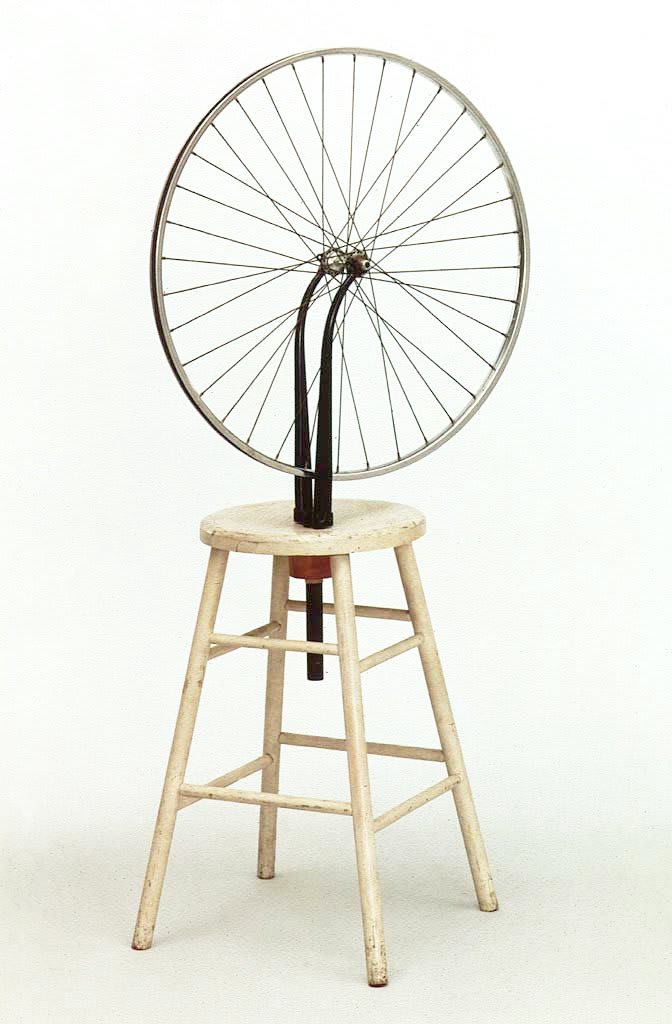
Duchamp with his Bicycle Wheel of 1913, gave rise to the "ready made", the most radical form of his artistic practice, baptized by him as "objet trouvé", the art found.
The urinal that Marcel Duchamp sent to the Salon of Independents, in New York (1917), has been over 100 years old and was elected the most important work of all that was produced in plastic arts in the 20th century.
In fact, the wall urinal, which Duchamp titled "Fonte" and signed as being from R. Mutt, produced by the J. L. Motta Iron Works Company, did not even reach the exhibition at that salon, because it was censored and the original piece, relegated, disappeared.
The work is considered the founder of contemporaneity, therefore, it did not exist, it was a simple idea and that remained "in absentia" until the 1940s, when Duchamp began to make replicas of it for various museums.
In 1990, the Tate Gallery paid a million pounds for one of these copies.