
Emiliano Di Cavalcanti: Legacy, Works, and His Muses
Discover the legacy, works, and muses of Emiliano Di Cavalcanti
In the 1960s, then-President João Goulart appointed Di Cavalcanti as the cultural attaché to France. He accepted the position and traveled to Paris, but did not assume the role due to the 1964 coup.
In 1966, Di Cavalcanti's works that had gone missing in the early 1940s were discovered in the basement of the Brazilian Embassy. His 50th anniversary as an artist was celebrated with numerous tributes dedicated to him.
Di Cavalcanti stated:
"I will continue to paint until my death because, in addition to the benefits I obtain from my imagination, I aspire to nothing more." (Di Cavalcanti)
He passed away on October 26, 1976, in Rio de Janeiro. His works significantly contributed to the formation of modernist and Brazilian art aesthetics.
The evolution of the Brazilian aesthetic was further shaped by other visionary artists who bridged the gap between tradition and innovation: Hélio Oiticica and His Main Works
The Artist and His Work: Emiliano Di Cavalcanti
When discussing Di Cavalcanti, we recognize his importance in Brazil and other countries. He innovated without limits in the art world, with his style being quintessentially Brazilian.
He was influenced by expressionism, cubism, and Mexican muralists, who addressed typically Brazilian themes, such as samba. Thus, in his works, we can see Brazilian popular festivals, workers, and other national segments.
Di Cavalcanti's ability to synthesize global movements into a local voice is a quality shared by many prominent European modernists: André Derain
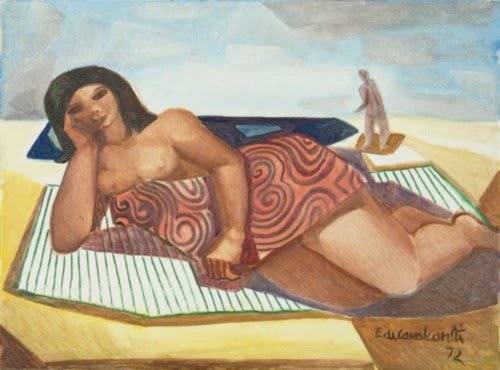
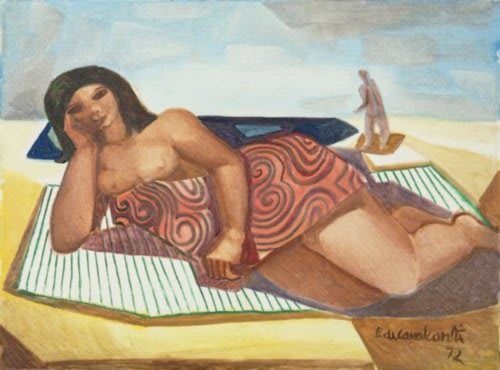
Passionate about the bohemian life in Rio, he painted women in various moments, offering new perspectives for the time, particularly mulatas.
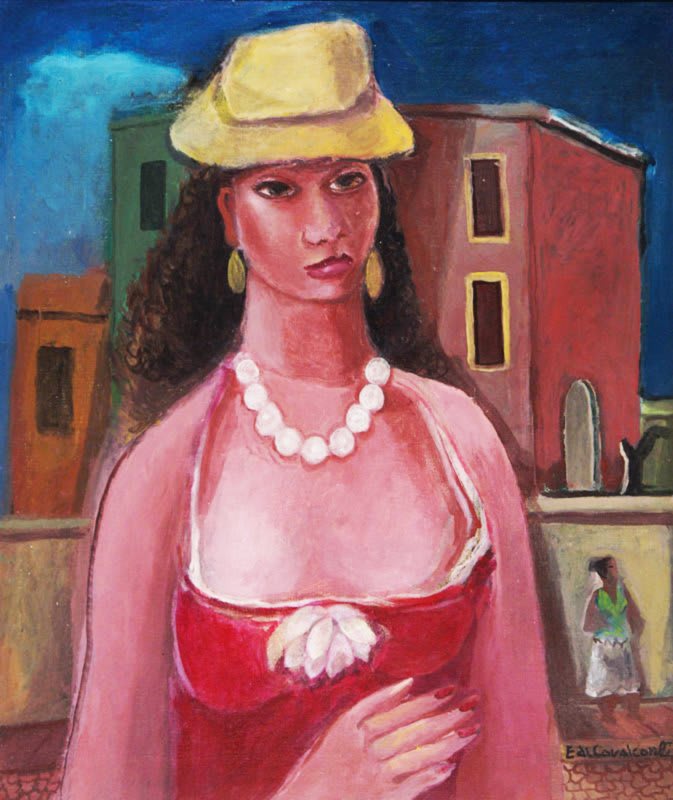
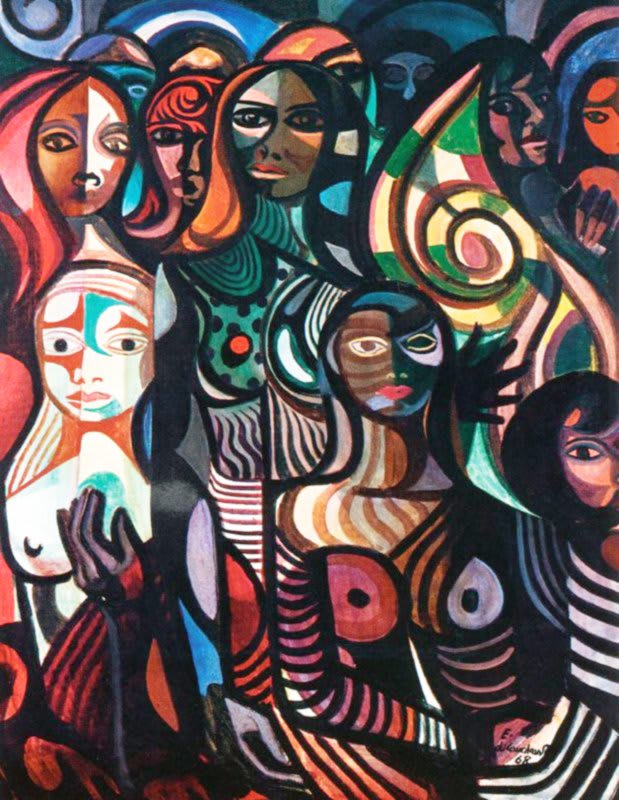
We find in Di Cavalcanti's work Brazilian social themes, such as popular festivals, workers, favelas, social protests, but the theme "Woman" was always one of the artist's favorite subjects in all aspects.
Focusing on a central theme allows for a deeper understanding of an artist's personal and technical progression over time: Van Gogh's Self-Portraits
The MAC (Museum of Contemporary Art) has in its collection, in addition to paintings, a series of over 500 drawings, covering the period from the 1920s to 1952: graffiti, watercolors, and nanquins, generously donated by the artist.
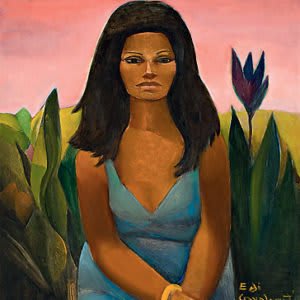
In many of his mulatas, we find Marina Montini, a Brazilian model and actress, his great muse and inspiration. She was known as the "mulata of Di Cavalcanti" for many years.
The model was discovered by the painter in a report from the Revista Manchete at the end of the 1960s. Her charm was immediate, and the painter convinced her to work with him. She posed for the painter almost daily between 1969 and 1976.
In an interview in the 1990s, Marina remembered that the painter could not pay much, but she posed anyway because she found him charming and intelligent. In the brushes of Di Cavalcanti, the model, who was the most famous mulata in the country in the 1970s, underwent changes. She was thin, but in his paintings, he depicted her with thick legs.
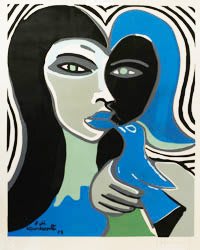
In the engraving Mulata com Pássaro we can clearly see that it is Marina Montini, his great muse and inspiration, with whom he shared years of complicity in art and personal life. Some say they were lovers, and after the artist's death, the model fell into a deep depression and began drinking. The connection between the muse and the painter accompanied the model throughout her life. When her career reached its peak, she faced health problems with complications from cirrhosis. With all this, she also faced financial problems and was forced to live in the Retiro dos Artistas, in Jacarepaguá (RJ), from 1976. She passed away in 2004, at the age of 58, isolated and forgotten.
The filmmaker Glauber Rocha, a great admirer of Di Cavalcanti, paid tribute to the painter during his funeral, despite the protests from his family. He played festive and carnival-like music, breaking the cultural taboo surrounding death. He showed aspects of the painter's life and his relationship with the painter, filming the death as a celebration of life.
Breaking the taboo of death was so impactful that the family still prohibits the screening of the film. The filmmaker explained: "Carnivalizing death and exalting the aspects of Di Cavalcanti's life is the most beautiful way I've seen to pay tribute. Disregarding the significance of death is a way to overcome it with the memories of life. Saying that the life and work of Di Cavalcanti were so good and constructive that death becomes a mere pretext for a celebration of life and the painter's legacy, which will endure."


