
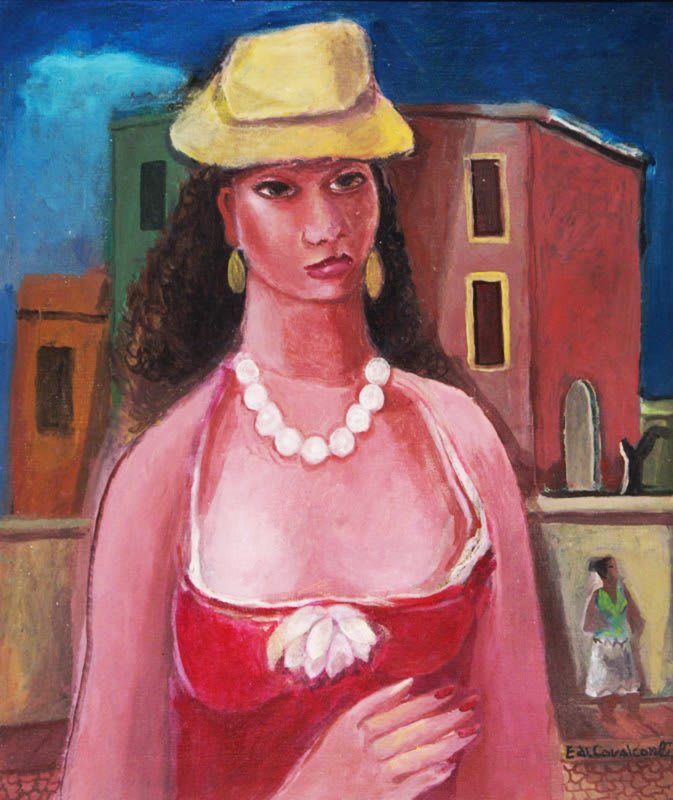
Emiliano Di Cavalcanti: Themes, Muses, and Legacy in Brazilian Art
Discover the significance of Emiliano Di Cavalcanti's works, his muses, and his lasting impact on Brazilian art.
The genius dedicated his soul to painting the ceiling of the world's most famous chapel.
THE ARTIST AND HIS WORK: Emiliano Di Cavalcanti
When we talk about Di Cavalcanti, we realize his importance in Brazil and other countries.
He innovated without limits in the world of art, with his style so Brazilian.
He received influences from expressionism, cubism, and Mexican muralists, where he addressed typically Brazilian themes, such as our samba.
Thus, in his works, it is possible to see Brazilian popular festivals, workers, and other national segments.
This focus on the everyday life and struggles of the people was a cornerstone of Brazilian Modernism, shared by other great painters of the era. Biography of Candido Portinari: Childhood, Art, and the Roots of Brodowski
Passionate about the bohemian life of Rio, he painted women in their various moments under new looks for the time in different styles, especially mulatas.
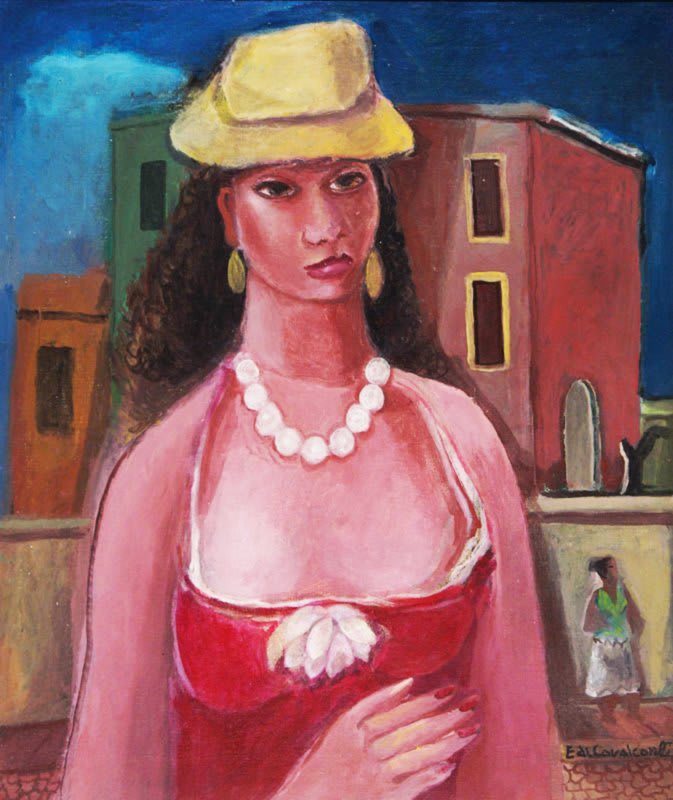
We find in Di Cavalcanti's work social themes from Brazil, such as popular festivals, workers, slums, social protests, but the theme 'Woman' has always been one of the artist's favorite subjects in all aspects.
The MAC (Museum of Contemporary Art) has in its collection, in addition to paintings, a series of over 500 drawings, covering the period from the 1920s to 1952: graffiti, watercolors, and nanquins, generously donated by the artist.
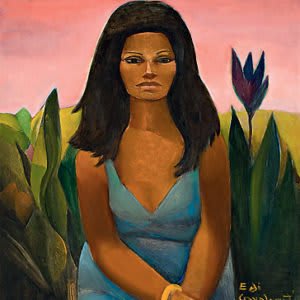
In many of his mulatas, we find Marina Montini, a Brazilian model and actress, his great muse and inspiration. She was known as the “mulata of Di Cavalcanti”, and thus was for many years.
The model was discovered by the painter in a report by Revista Manchete at the end of the 1960s.
Her charm was immediate, and the painter did not rest until he convinced the model to work for him.
They posed for the painter almost daily between 1969 and 1976.
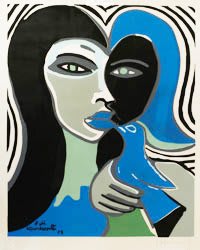
In the engraving Mulata with Bird we can clearly see that it is Marina Montini, his great muse and inspiration, with whom he shared years of complicity in art and personal life.
Some say they were lovers and that after the artist's death, the model fell into a deep depression and ended up entering the world of drinking.
The connection between the muse and the painter accompanied the model throughout her life.
When she ended her career, she faced health problems with complications from cirrhosis.
With all this, she also had financial problems and was forced to live in the Retiro dos Artistas in Jacarepaguá (RJ) from 1976.
She passed away in 2004, at the age of 58, isolated and forgotten.
Much like Di Cavalcanti, other legendary artists of the time dedicated their craft to capturing the vibrant essence of Brazilian culture and identity. Carybé: Biography and Work: A Detailed Look at His Main Creations
The filmmaker Glauber Rocha, a great admirer of Di Cavalcanti, paid homage to the painter during his funeral, under protest from the family.
He dared to put the painter's funeral under festive and carnival-like sounds, removing the cultural weight of death.
He broke the mood of sorrow and replaced it with a mood of joy.
By breaking the taboo of death, and showing aspects of his life, his relationship with the painter, Glauber Rocha ended up filming life instead of death.
Breaking the taboo of death was so impactful that even today the family prohibits the screening of the film.
The filmmaker justified: “Carnivalizing death, and exalting the aspects of Di Cavalcanti's life is the most beautiful way I saw to pay homage. Disregarding the meaning of death is to overcome it with the memories of life. Saying that Di Cavalcanti's life and work were so good and constructive that death becomes a mere pretext for a celebration of life and the legacy of the painter, which will survive.


