
Gustav Klimt: Biography and Works: The Golden Phase, Women, and Iconic Masterpieces
Dive into the golden phase of Gustav Klimt, his relationship with Emilie Flöge, and an in-depth analysis of his most famous works, such as The Kiss and Portrait of Adele Bloch-Bauer I, and his legacy in modern art.
Gustav Klimt, one of the most important painters in the history of art, immortalized many women in his paintings, with colors and golds making this chapter in his work a unique part of universal art history.
Although he was never officially married, he lived his passions without restrictions. It is said that after his death, 14 children emerged, all demanding their share of the inheritance, but only four were recognized.
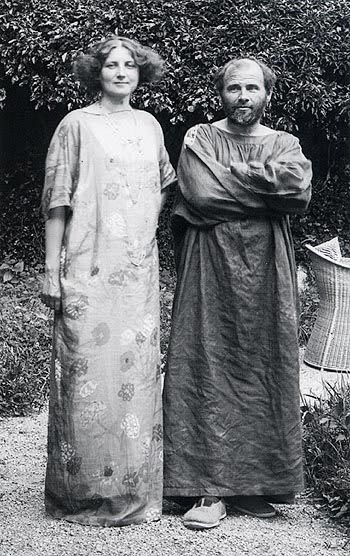
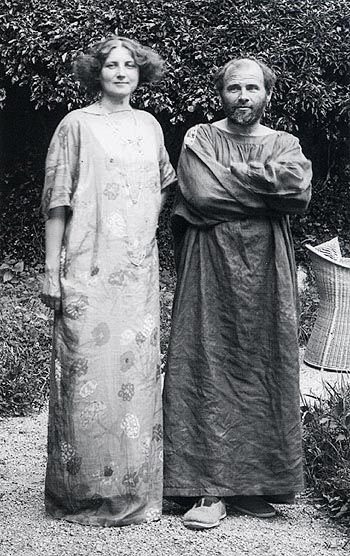
Emilie Flöge (1874-1952), born in Vienna in a bourgeois family in 1891, her sister Helene married Gustav Klimt's brother, Ernst. Between Emilie and the painter, who was 12 years older, a friendship was established as soon as they met.
It seems Klimt fell in love with her, but never asked her to marry him.
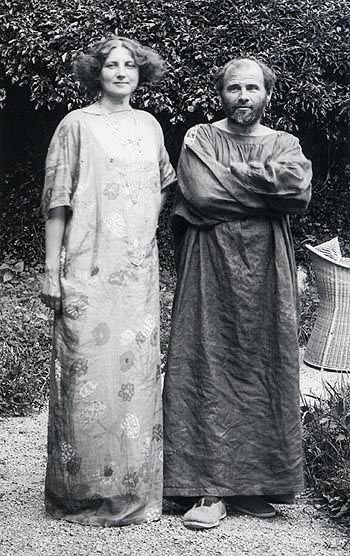
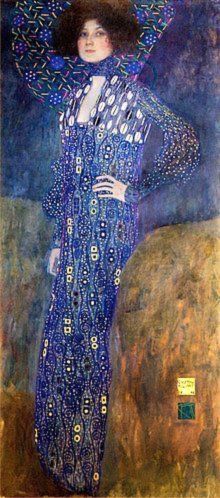
Portrait of Emilie Flögie - On a dark background, the painter enveloped Emilie's silhouette with bright light, drawing the eye to the dress.
The two forms on the margin of the figure, as undefined as the space of the scene, perform the same function.
From their warm friendship with Emilie, Klimt collaborated with her in establishing a boutique, whose clothing line had enormous success among Klimt's clients and in his called Vienna Workshop.
Gustav Klimt immortalized many women in his paintings, with colors and golds making this chapter in his work a unique part of universal art history.
Although he was never officially married, he lived his passions without restrictions.
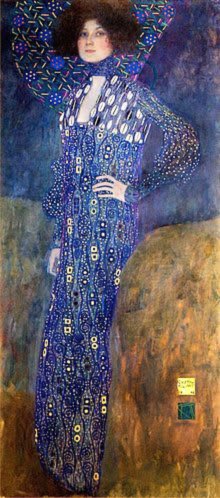
Emilie Flöge (1874-1952), born in Vienna in a bourgeois family in 1891, her sister Helene married Gustav Klimt's brother, Ernst.
Between Emilie and the painter, who was 12 years older, a friendship was established as soon as they met.
The GK LOGOTIPO
Like Japanese painters used seals to sign their works, Klimt created a stylized monogram with his initials.
The creation served as a model for the members of the Vienna Workshop's board of directors.
The inclusion of the seals in the works acquired the character of a compositional element.

His work was the basis for Art Nouveau
Square format, diagonal composition, symmetrical arrangement, geometric stylization, mosaics, gold and silver leaves, and strong erotic content.
These are the predominant characteristics in Gustav Klimt's art, accompanied by his very particular concepts about the essence of the Universe: life, love, and death.
Before him, Austrian painting was considered provincial.
The portraits of the bourgeoisie and their daily activities prevailed.
The valorization of the spirit, the pictorial and decorative style of Klimt, gave rise to Art Nouveau, whose focus came from the Secession.
Much like the Austrian Secession movement, other pivotal moments in art history were defined by masters who bridged different cultural worlds. Biography of El Greco: The Greek Origins and Journey to European Renaissance
JUDITH I
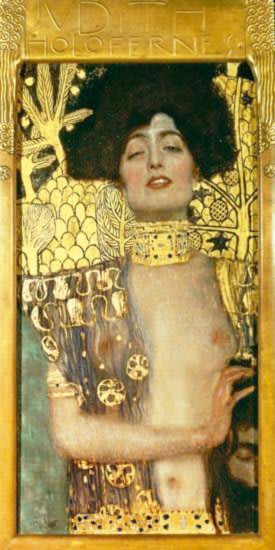
The eternal feminine was his greatest theme, the driving force behind portraits and allegories.
The sensuality and eroticization of his women provoked Austrian society, revealing the ambiguity of the time, causing attraction and repulsion at the same time.
His way of representing the nude led to a decade of confrontations with official authorities and the great art patrons of Vienna.
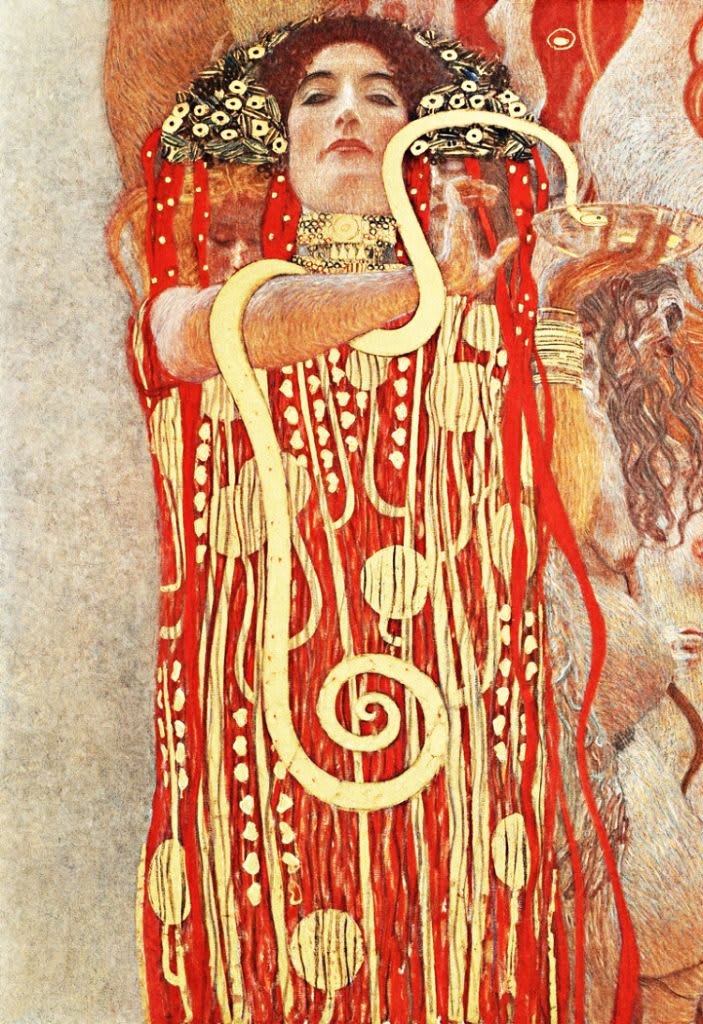
The allegories painted for the University of Vienna marked his career and reaffirmed Klimt's stance against the reaction of society.
Many of his works were based on these sources that disappeared, along with other paintings, in the 1945 fire at the Immendorf castle.
This shift toward a more expressive and often controversial representation of the human form was also taking place in the studios of other great masters of the time. Auguste Rodin: Birth, Struggle, and Early Notable Works (Chapter 1/3)
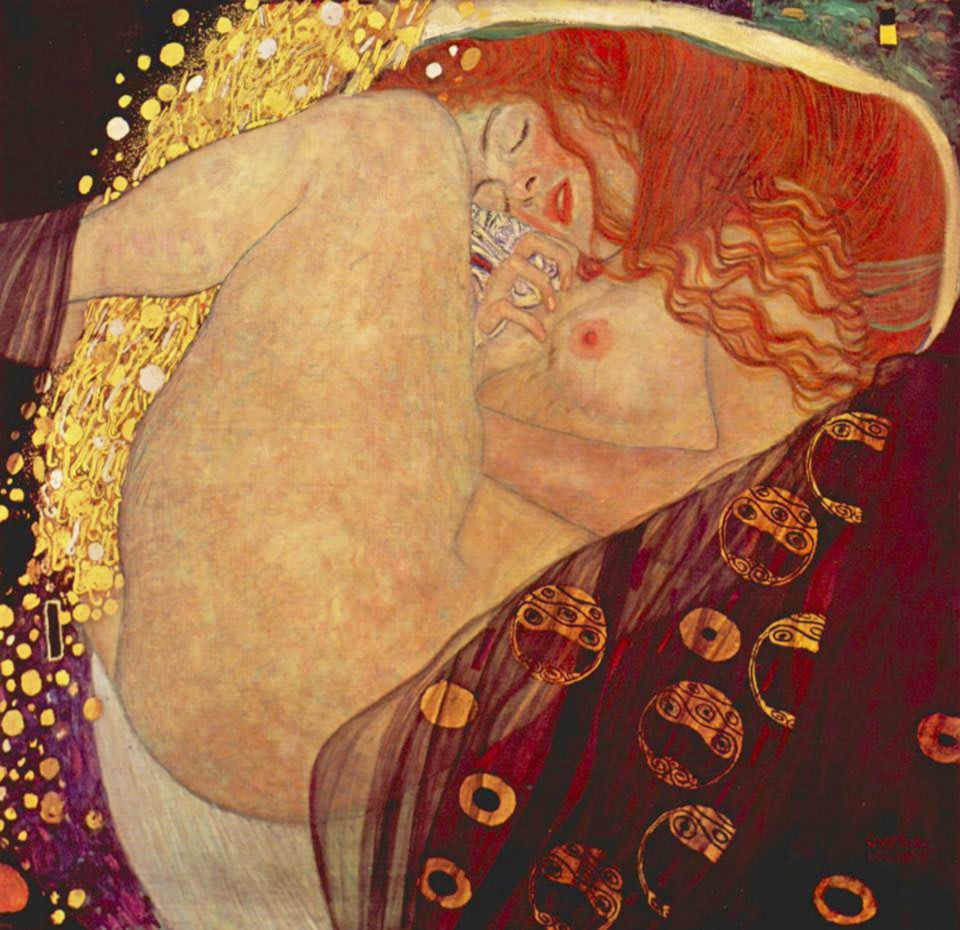
The myth of Danae, the young nymph whom Zeus - in the form of golden rain - fertilized - Klimt proposed a completely innovative composition of the mythological scene.
He eliminated the superfluous elements of the classical iconography and concentrated the action on the moment of fertilization, transforming it into the description of the moment of ecstasy.
The scene has a parodic point.
As Zeus disguised himself as golden rain to inseminate Danae, Klimt disguised the young woman's self-satisfaction with the torrent of divine semen.
The sensuality is noticeable in the veil that imprisons Danae's ankles and the golden rings of the veil that caress her body.
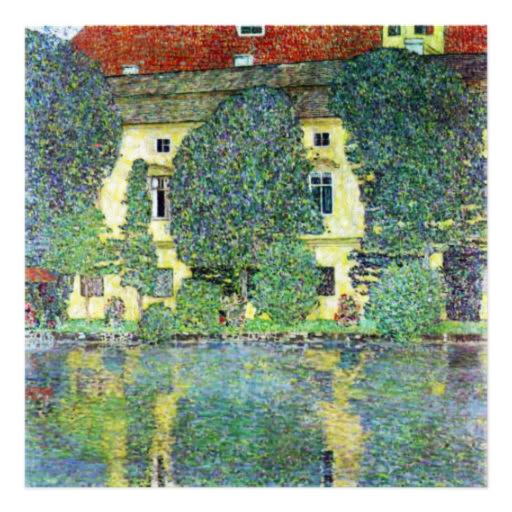
In the summer of 1908, after settling in Kammer; south of Lake Atter; with his friend Emilie Flöge, Klimt became fascinated by the local castle, whose walls were reflected in the alpine lake waters.
The painter dedicated three canvases to the theme.
The works were painted from the lake, with the easel mounted on a boat, an artifice already used by Monet and the impressionists.
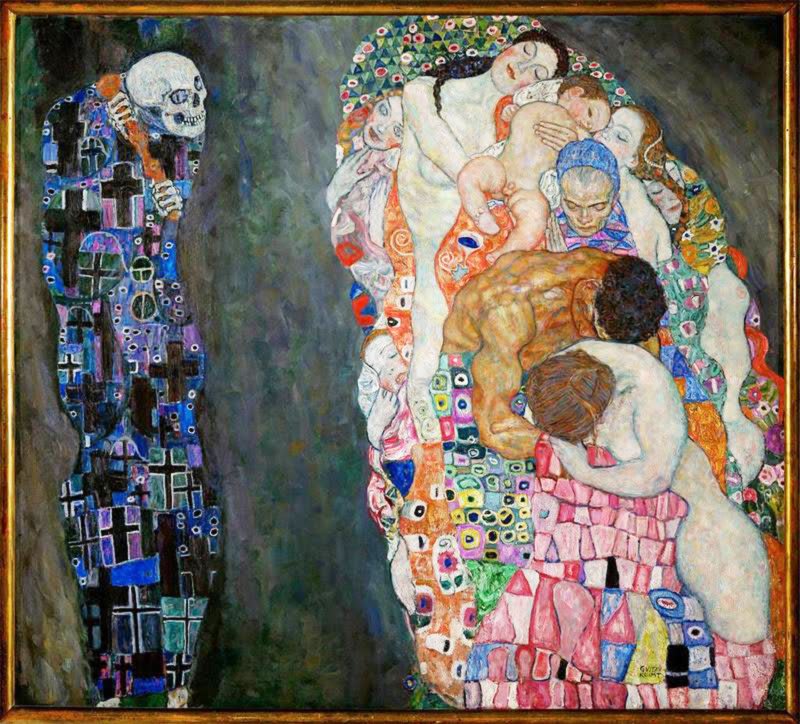
Life and Death
This canvas was first exhibited in Rome in 1911, when it won the gold medal at the International Art Exhibition.
After keeping it in his studio, the Viennese painter deeply retouched it, where it was exhibited at the Berlin Secession in 1916.
The originally golden color was replaced by a darker and bluer one; some figures were altered and added.
A conflict between life and death, the canvas has an ambiguous sense.
The sinuosities to the right of the Death's vestments complement those of the left contour of the Life's column, whose warm colors add drama to the scene.
This is not a confrontation, but an inevitable outcome, since the cycle of life only makes sense with the presence of death.
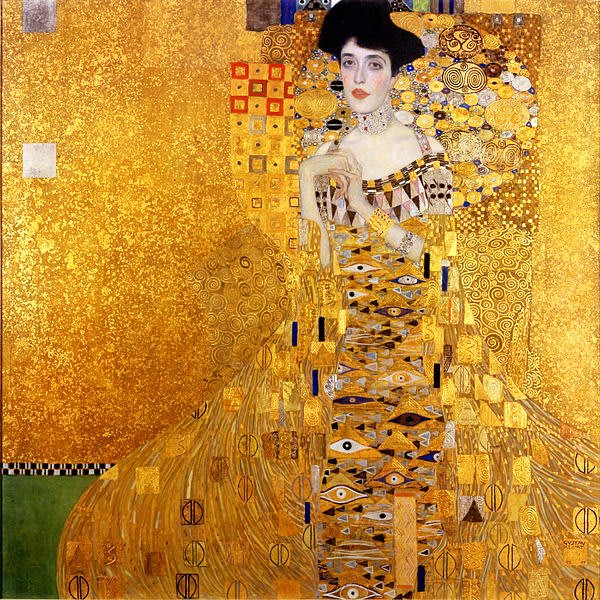
PORTAIT OF ADELE BLOCH-BAUER I
Considered the most famous portrait painted by Klimt and, along with The Kiss, represents the pinnacle of his golden phase.
We have the model Adele Blouch-Bauer who was the wife of Ferdinand Bloch, a prestigious Viennese banker of Jewish origin who commissioned the portrait from the painter.
Upon closer inspection of this work, we notice the presence of symbols such as the Egyptian eye and ornaments of Byzantine influence used frequently by Klimt.
The triangles and pieces with 'B' in capital letters were interpreted as the initials of the portrayed.
Beyond the golden mosaics and allegories, the history of portraiture offers a profound window into an artist's personal and emotional journey. Van Gogh's Self-Portraits
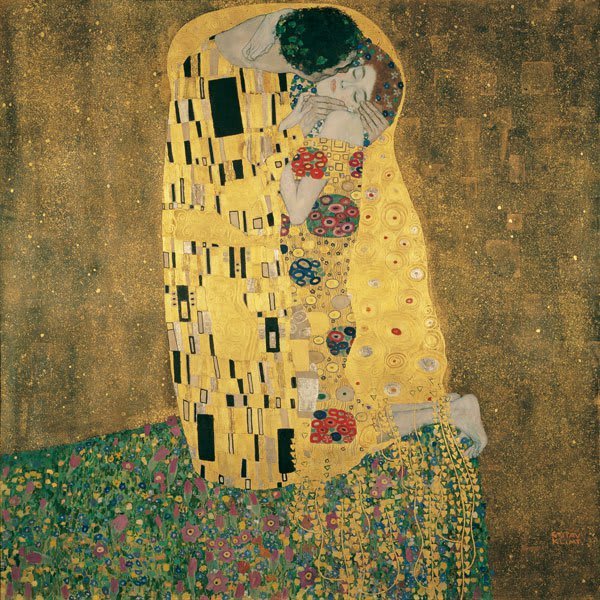
The Kiss is considered Klimt's most famous work.
To learn more about The Kiss, click here


