Independence or Death, Pedro Américo's Masterpiece
Discover the story behind Pedro Américo's iconic painting, Independence or Death.
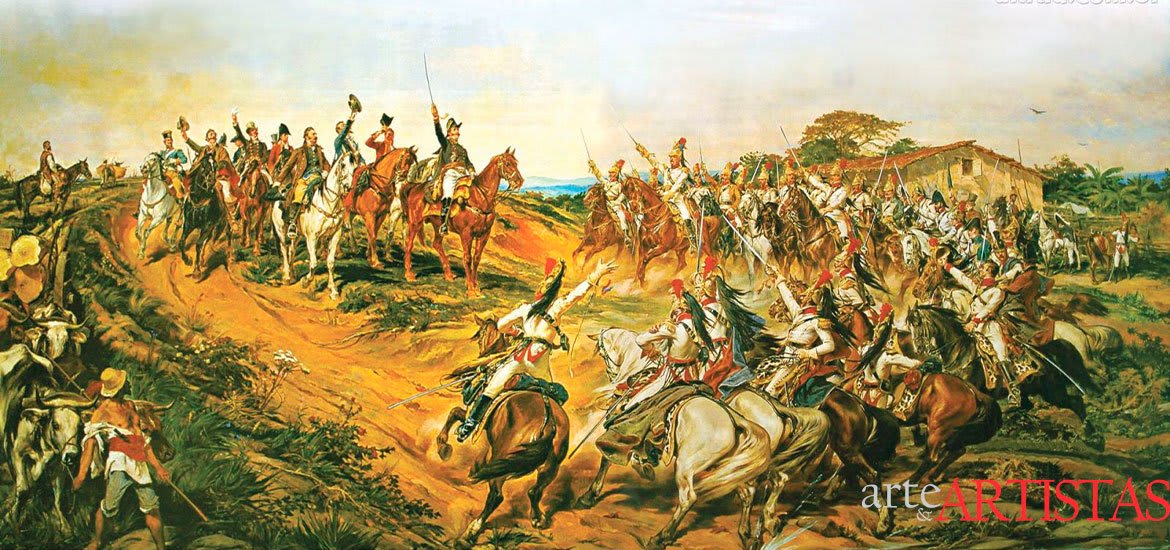
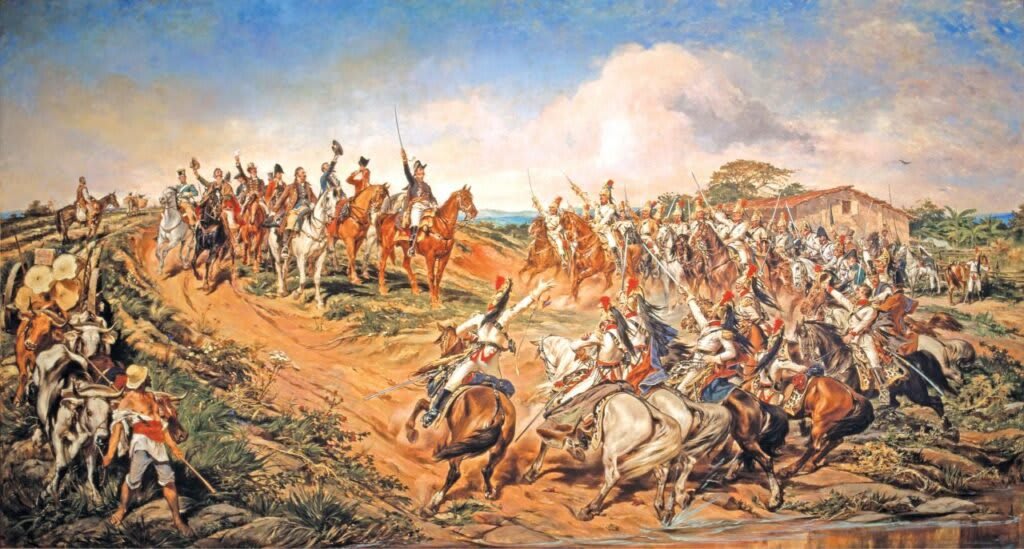
This historical painting by Pedro Américo, created in Florence, Italy, depicts Prince Dom Pedro with his troops at the decisive moment of the 'Grito do Ipiranga' with his honor guard promising their support.
Some of the soldiers remove the white and blue ribbons from their arms, which symbolized their loyalty to Portugal.
On December 1, 1822, Prince Heir Pedro of Portugal became Emperor Pedro I of Brazil.
The story goes that, on September 7, 1822, at Ipiranga, the prince heir received letters from the Cortes, which annulled all his measures and declared his ministers traitors.
With this, he broke with Portugal and definitively separated Brazil from Portugal with the cry 'Independence or Death!'
In 1885, according to records made by Imperial Counselor Joaquim Inácio Ramalho, Pedro Américo announced to the artifacts commission that he would be responsible for painting a historical commemorative painting of the glorious act of Prince Regent Pedro I, who declared Brazil's independence.
The artist's proposal was not accepted immediately due to lack of funds and the architecture of the building that would eventually become the Museu Paulista.
The contract was agreed upon on July 14, 1886, between Pedro Américo and Ramalho, president of the Commission for the Monument to Brazilian Independence, and according to the description of the documents, the artist was to paint a commemorative painting of the proclamation of independence by Prince Regent D. Pedro in the Ipiranga fields.
The process of creating the painting was very complex.
In his work, the artist creates a dialogue between art history and traditional war paintings that emphasize the hero.
The dialogue with historical painting was highly valued, in addition to being a technique used by many artists without being considered a copy by the Academia Imperial de Belas Artes.
He intended to develop an image that would recall past works according to the techniques used by artists.
His experience over ten years with his work Batalha do Avaí, which was not well received by the critics and classified as antiacademic, led him to deepen aesthetic questions and publish literary works, such as Discurso Sobre o Plágio na Literatura e na Arte, in 1879, years before Independence or Death.
Pedro Américo used some historical images as references to create his masterpiece.
For the realization of the composition, some paintings were used as sources of inspiration.
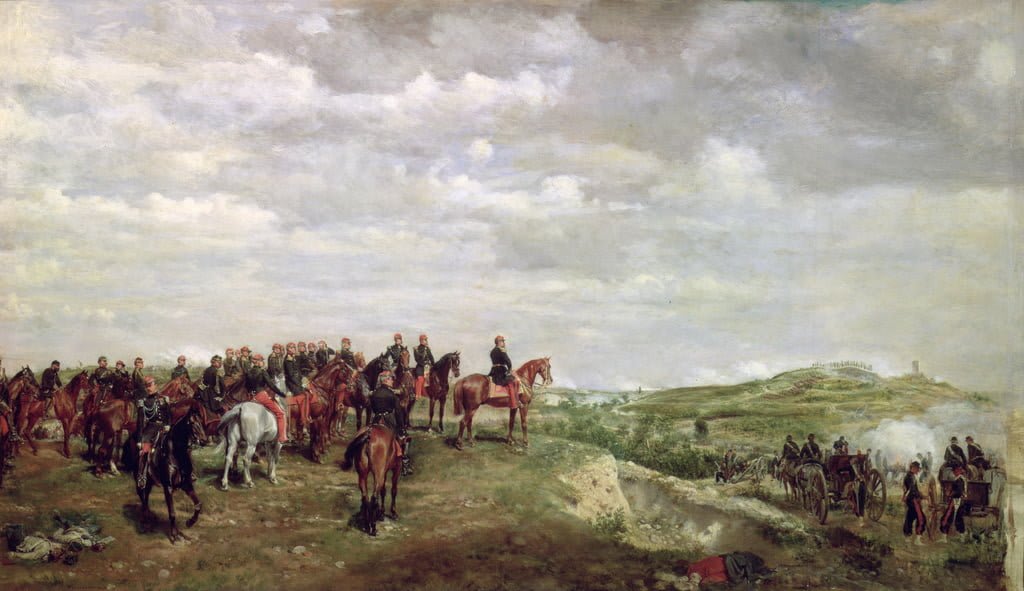
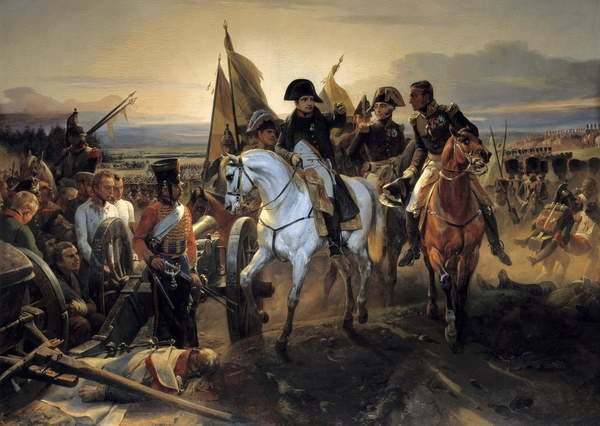
Américo studied the works Napoleão III na Batalha de Solferino by Jean-Louis Ernest Meissonier and Na Batalha de Friedland em 14 de junho by Horace Vernet .
Pedro Américo wanted to portray D. Pedro as a statesman, as can be seen by examining the figure of Napoleon in Meissonier's work.
Despite many similarities between the works, Américo creates a resource that combines them with the use of perspective to create all the characters within the scene.
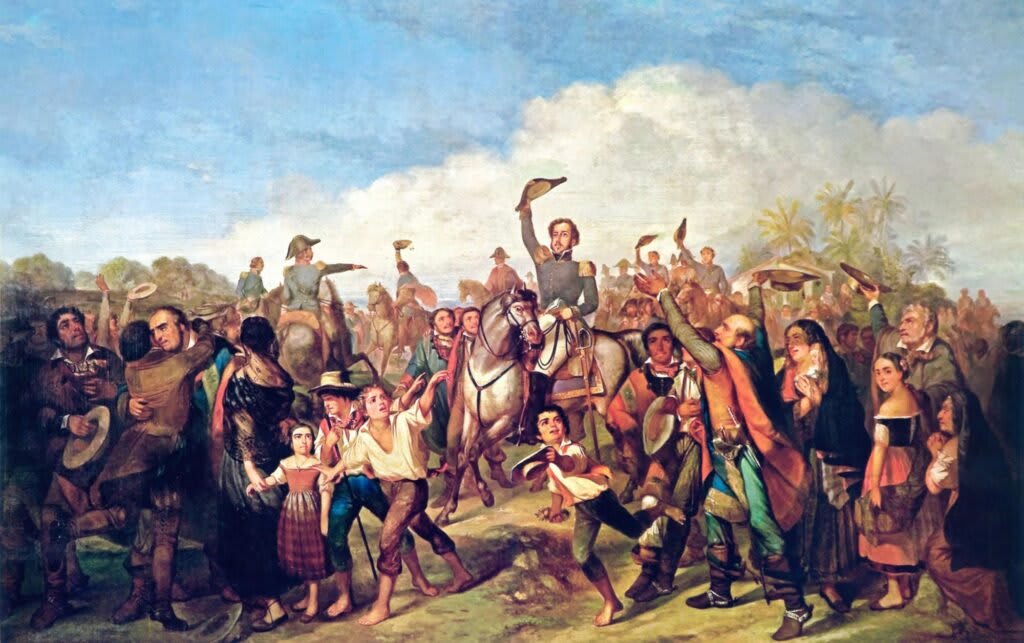
Comparing Pedro Américo's painting with that of François-René Moreaux, it can be seen that the latter contains many more civilians.
The characters in Moreaux's painting are looking up at the sky.
As a result, the emperor is portrayed not as someone with leadership and political capacity, like Pedro Américo, but as a figure who fulfills a divine will by declaring independence.
Pedro Américo's work became a reference for the representation of Brazil's independence, which sometimes needed to be rebuilt.
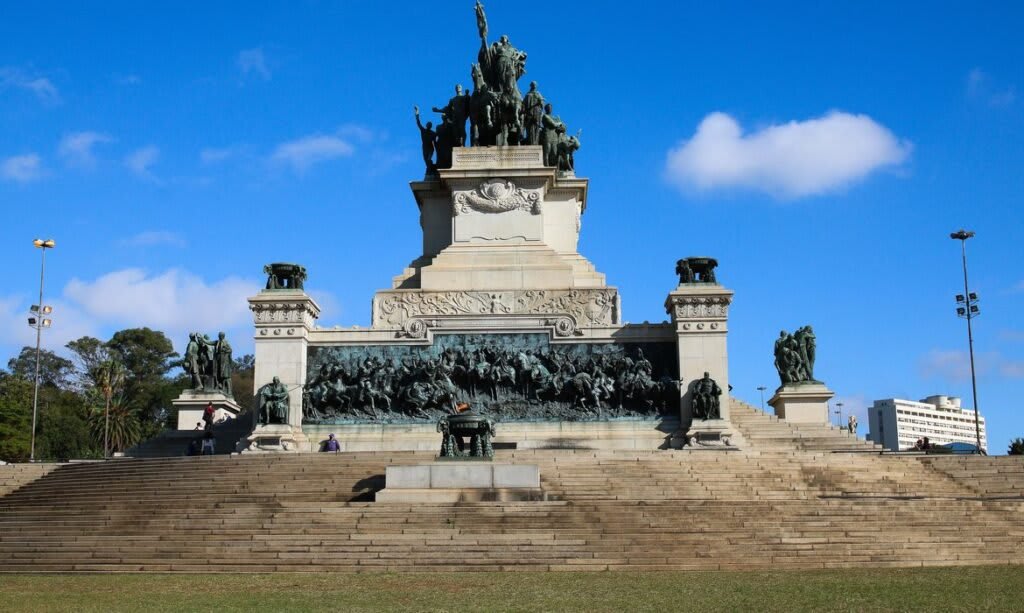
It is used as an official representation of independence, influencing other works, including the set of the Monumento da Independência do Brasil, which reinterprets the painting.
The works were created by Italian artists, the sculptor Ettore Ximenes and the architect Manfredo Manfredi, created in honor of the First Centenary of Independence.
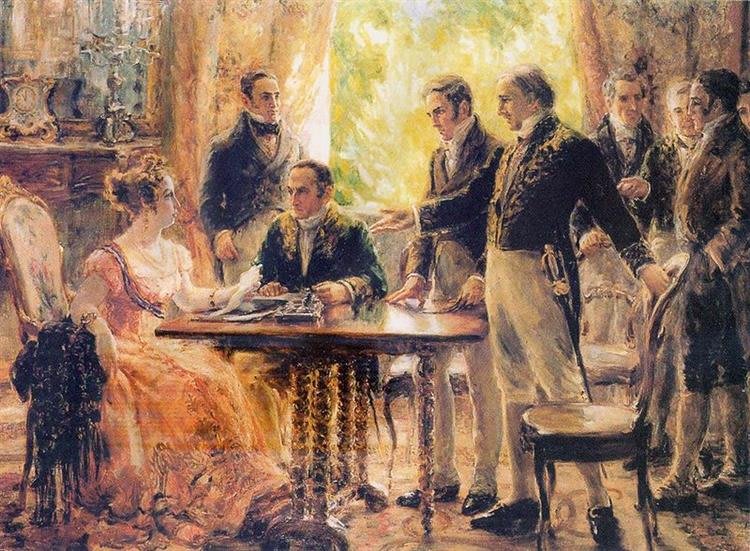
Another work that deserves attention is the painting Sessão do Conselho de Estado, by Georgina de Albuquerque, in which the figure of the 'hero' becomes a 'heroine', whose protagonist of the declaration of independence becomes the Princess Maria Leopoldina.
The scene presents the meeting of the Council of State, presided over by José Bonifácio, where important members discuss the need for Brazil to become independent from Portugal, in which the artist represented the historical scene that occurred on September 2, 1822, which decided Brazil's independence.
Napoleão III na Batalha de Solferino. Jean Louis Ernest Meissonier. 1859-1863
Na Batalha de Friedland em 14 de junho. Horace Vernet (c. 1870)
There was an accusation of plagiarism made in relation to Pedro Américo's painting, A Proclamação da Independência, by François-René Moreau.
The accusation was published in 1982 by journalist Elio Gaspari, in which he commented in the publication: 'Accusing Pedro Américo of plagiarism is a premise of art'
Independence or Death. Pedro Américo. 1888 - Oil on canvas (415 × 760 cm) - Location: Museu Paulista da Universidade de São Paulo (USP), São Paulo, Brazil
The Proclamation of Independence. François-René Moreaux. 1844 (2.44 m x 3.83 m). Location: Museu Imperial de Petrópolis, Rio de Janeiro.
Monument to Brazilian Independence in Independence Park, Ipiranga (São Paulo, Brazil)
Sessão do Conselho de Estado. Georgina de Albuquerque. 1922 – Oil on canvas (210 × 265 cm ) – Location: Museu Histórico Nacional do Rio de Janeiro (RJ)