
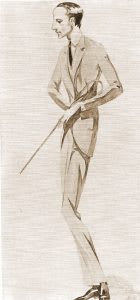
Ismael Nery: Biography and Work: The Fascinating Life of the Modernist Artist
Discover the life and work of Ismael Nery, one of the most fascinating modernist artists in Brazil.
Article Index
We invite you to explore the life and work of Ismael Nery, one of the most fascinating modernist artists in Brazil.
Born in 1900 in Rio de Janeiro, Nery left a lasting artistic legacy marked by his originality and sensitivity.
His work spans various styles, but it is in surrealism that he finds his most profound expression.
Influenced by European movements such as cubism and surrealism, Nery developed a unique language, exploring themes such as spirituality, the unconscious, and human nature.
His painting is characterized by a palette of intense colors and a poetic approach, inviting the viewer to immerse themselves in a world of symbolism and hidden meanings.
Not only a painter, Nery was also a poet and essayist, contributing to Brazilian culture with an artistically and intellectually rich vision.
To further explore the rich landscape of Brazilian modernism, consider another pivotal figure: Biography of Candido Portinari: From Academia to Historic Mural Paintings
By exploring the life and work of Ismael Nery, we are invited to delve into a universe of beauty, mystery, and reflection.
Ismael Nery was an important Brazilian artist who was heavily influenced by expressionism, surrealism, and cubism.
Discussing this great artist is to reveal what few know, but whose importance to the history of Brazilian visual art is immense.
Ismael Nery: BIOGRAPHY
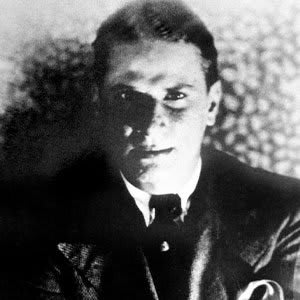
Ismael Nery was born on October 9, 1900, in the city of Belém do Pará. His family moved to Rio de Janeiro when he was still a young boy.
It appears that he became interested in art at a young age.
He enrolled in the Escola Nacional de Belas Artes - ENBA, between 1915 and 1916, but did not adapt to the academic nature of the course.
During this period, he dedicated himself to copying sculptures from ancient Greece and Rome in plaster, and through them, developed an interest in the human figure, a theme that would take up most of his artistic concerns.
At ENBA, he took classes with Henrique Bernadelli, whose encouragement and praise motivated him to continue studying art.
In 1920, he went to Paris to further his studies.
He remained at the Académie Julian for three months, where he was influenced by expressionist works, already with the dramatic personal trait that would mark his work.
In Europe, he came into contact with modernism.
He examined the works of cubist artists such as Pablo Picasso, Georges Braque, André Lhote, and Fernand Léger. During his stay in the old continent, he could get to know a good part of the artistic tradition.
Ismael also showed great interest in German expressionism.
He came into contact with the works of the masters of the Renaissance and began to admire the painting of that period, especially Tintoretto, Paolo Veronese, Michelangelo Buonarroti, and Rafael.
In Italy, he also came into contact with the metaphysical painting of Giorgio de Chirico, whom he demonstrated a special interest in.
Speaking of artists who poured their inner worlds onto canvas, you might also find intriguing: Van Gogh's Self-Portraits
In 1921, already in Brazil, he was honored with the appointment of draftsman in the Topography and Architecture section of the Patrimônio Nacional Directorate, an agency linked to the Ministério da Fazenda.
There, he met the poet Murilo Mendes, one of his great inspirers, responsible for preserving the memory and work of the artist.
The poet friend knew his personality deeply and his "Essentialism", a philosophical system that Nery created.
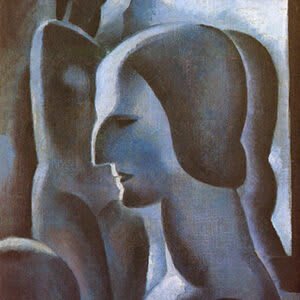
A year later, in 1922, he married the beautiful poet Adalgisa Nery, muse of his main paintings.
For another look into the rich tapestry of Brazilian poetry and its connections to art, consider the work of: Cecília Meireles
In his painting, imaginary scenes and characters emerge.
The relationship between the clear and dark parts is quite marked in his work.
In 1924, his house became a meeting point for Carioca artists and intellectuals.
It was frequented, among others, by Mário Pedrosa, Guignard, Antonio Bento and his great friend and inspirer Murilo Mendes, his partner in poetry
In 1927, Ismael traveled with his family to Europe.
During his stay there, he met important figures of surrealism such as André Breton and Marc Chagall.
This stay in Europe profoundly influenced his way of expressing himself, he began to admire Chagall's work, getting close to the Russian artist.
In 1929, he held his only individual exhibitions in Brazil.
Unfortunately, he did not receive great reception, but he also participated in a collective exhibition in New York, only with Brazilian paintings.
In 1930, he discovered that he had tuberculosis, even ill, he continued to paint.
Ismael expressed all his pain and feelings in his paintings during three years of treatment without prospects of improvement.
Ismael Nery did not win the century's disease.
On April 6, 1934, he died in a Franciscan monastery, confined by tuberculosis. Despite his dedication, he died without ever having sold a painting in his lifetime.
His work was recognized in posthumous tributes after many years, in the Bienal de São Paulo in 1965, when it was exhibited in a special room called Surrealism and Fantastic Art.
In 1966, in the Petite Galerie of the Museu do Louvre and in the Museu de Arte Moderna do Rio de Janeiro - MAM/RJ and also in the Bienal of 1969.
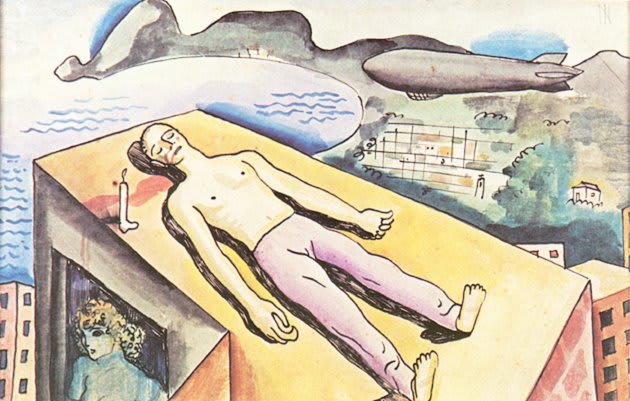
To understand the rest of this journey, continue to our next article: Ismael Nery: Biography and Work: The Artistic Phases and Surrealist Legacy.


