
Jackson Pollock Biography: Illustrated Gallery of His Most Famous Works
Jackson Pollock Biography: Illustrated Gallery of His Most Famous Works
The genius dedicated his soul to painting the ceiling of the world's most famous chapel.
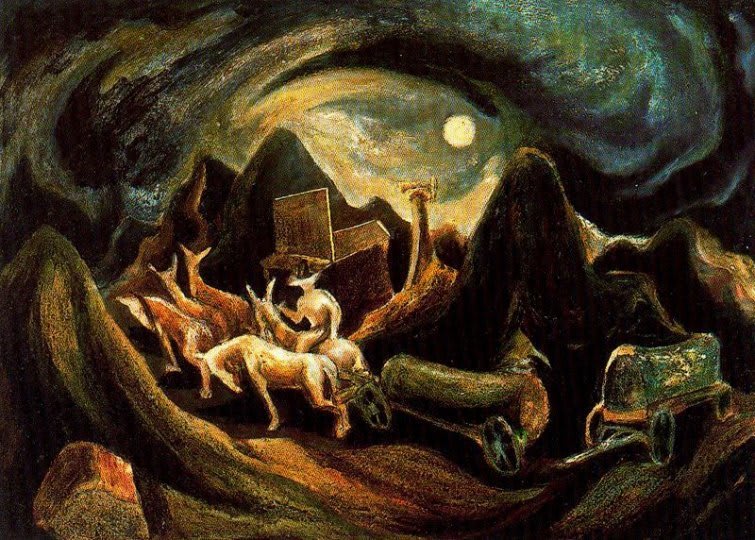
Surprisingly, he took over 4 years to work in almost suffocating conditions.
GALLERY - ILLUSTRATED ART
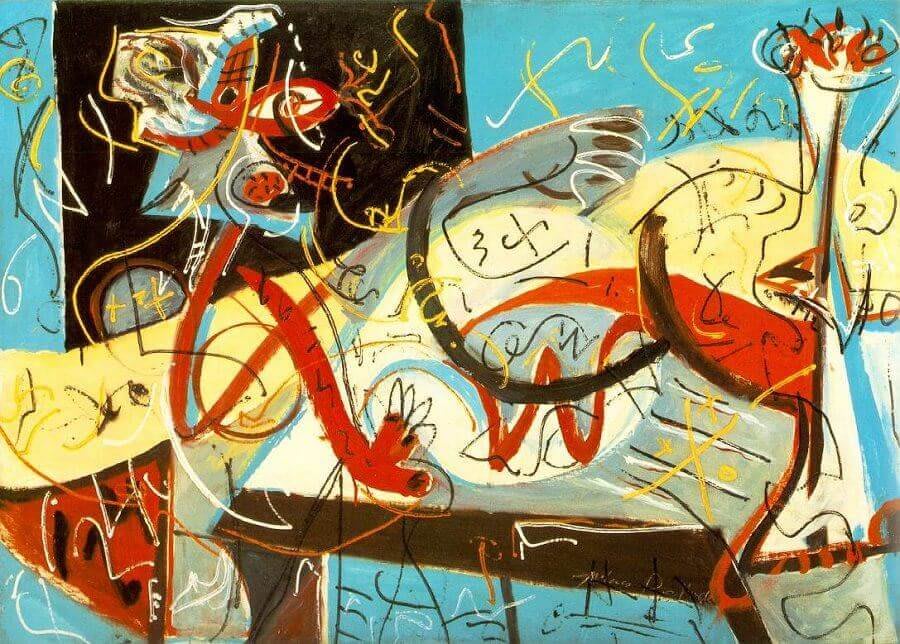
Figure Stenographic - Lee Krasner had a strong influence on Pollock. His admiration for Henri Matisse was widely considered by the artist, which can be seen in this painting.
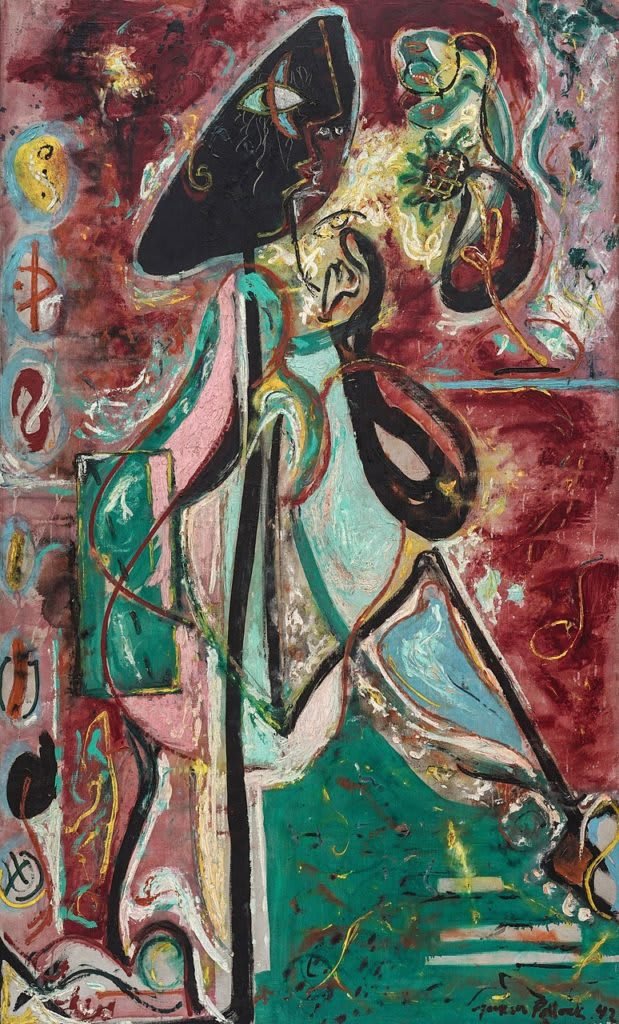
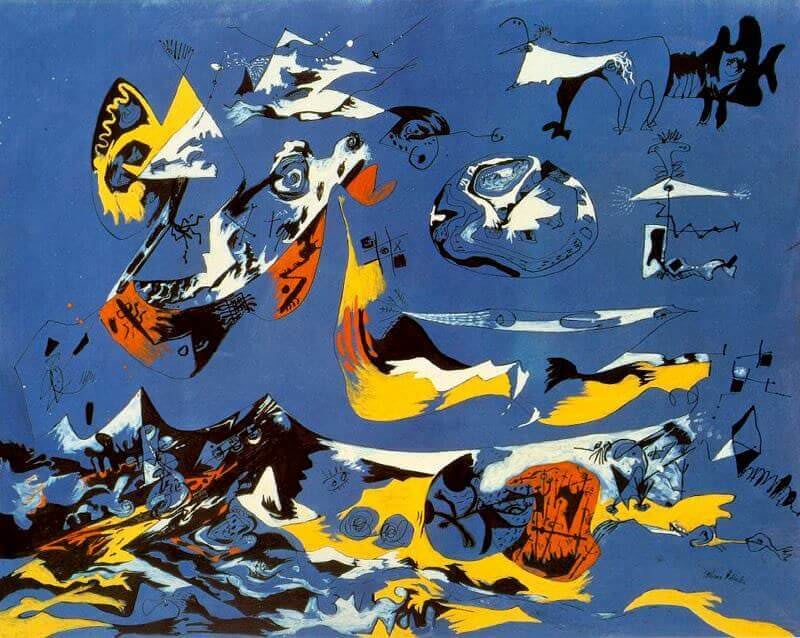
The Woman of the Moon - In his early works, Jackson Pollock received influences from Joan Miró and Pablo Picasso, adhering to the surrealist concept of the unconscious as a source of art. By the late 1930s, Pollock introduced images based on mythological or totemic figures, ideographic signs, and ritual events, which were interpreted as belonging to the buried experiences and cultural memories of the psyche.
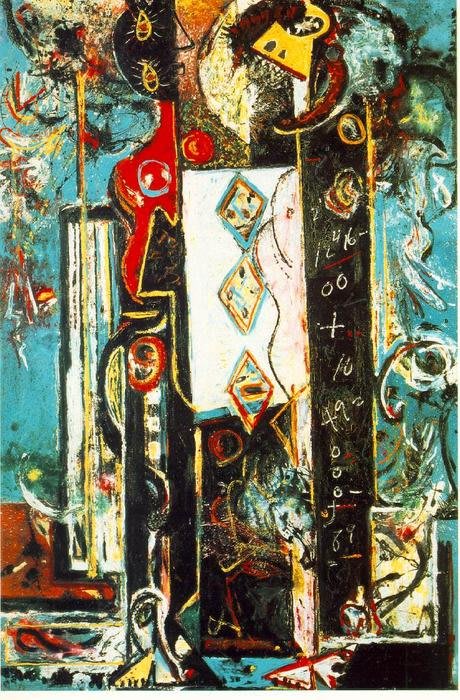
Male and Female - As the title suggests, the work shows a male figure, embodied in the black columnar form on the right, with his mysterious arithmetic graffiti, and a curved female figure on the left, with marvelous feline eyelashes. Standing on tiny triangular feet, both figures are surrounded by splattered and dripped oil paint that enhances the sense of energy inherent in the two vertical forms, foreshadowing Pollock's famous 'dripping' technique that he would develop at the end of the decade.
Moby Dick or, The Whale (1851) is the sixth book by American writer Herman Melville, which tells the epic story of the sea voyage of Captain Ahab in search of the white whale. Pollock shared with Melville not only feelings of paranoia but also a deep concern with tragic violence. Due to these similarities, both projected in their respective forms of art, a 'clear-dark American'. The way Pollock organized his forms in this small mixed-media work approximates the rhythms of the ocean depths. Fish and what appear to be marine inferior forms agitate in the waves, although no white whale is discernible in the painting.
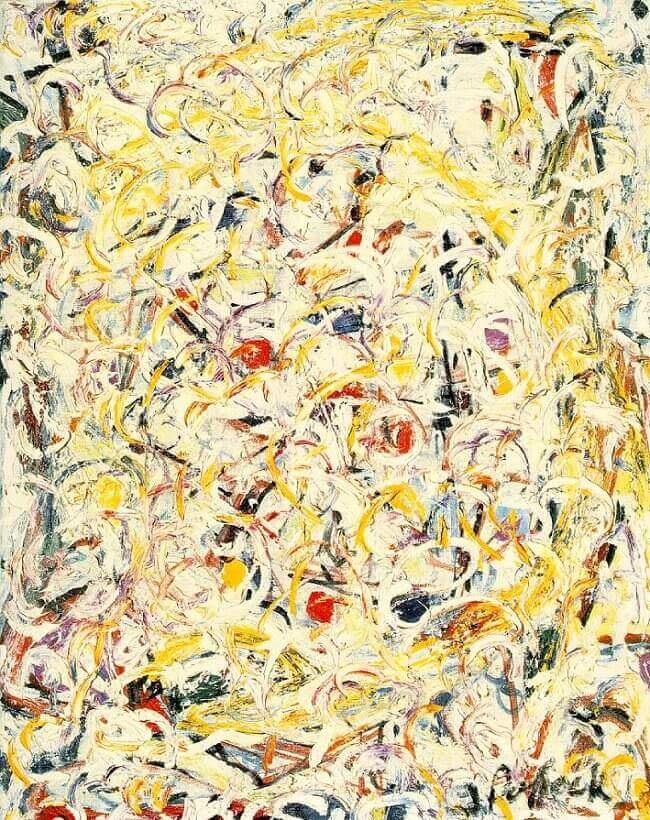
Sparkling Substance - A painting that channeled primary forces into a radically new artistic expression and was the next step for Pollock in dealing with the internal turmoil that led him to paint with his peculiar dripping technique.
Fathom Complete Five - In 1947, we see that Pollock's technique reaches a surface of dripped and splattered paint that conceals the layers of brushstrokes. Many of these paints are applied directly through gestural loops (with the hands), which characterize his unique painting.
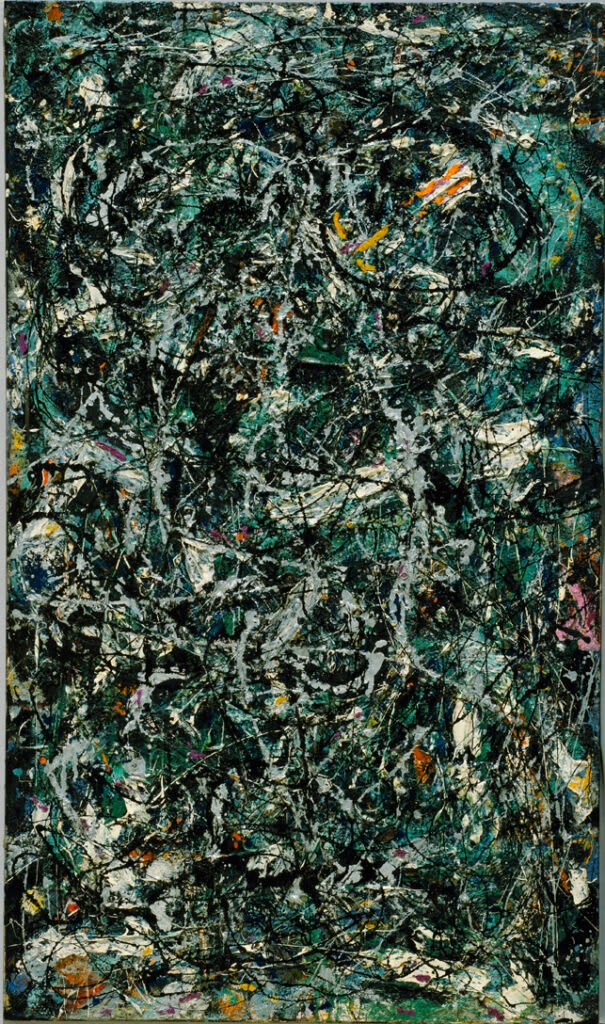
Number 1A, 1948 - Click here to learn more about this important painting
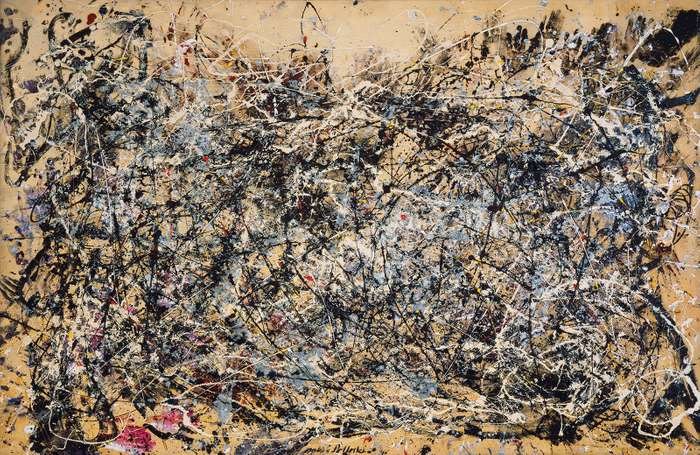
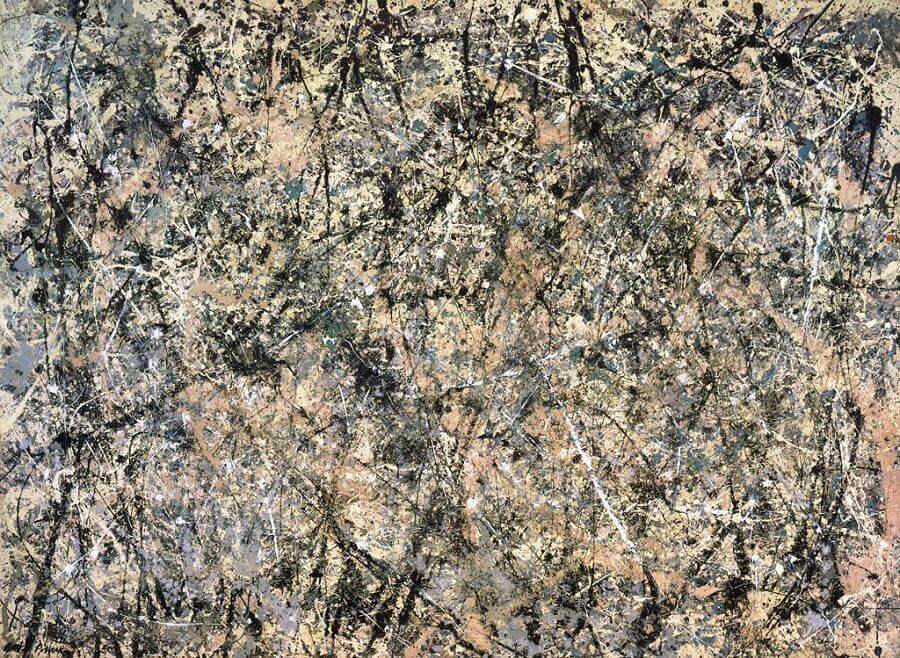
Lavender Mist - For Pollock, who admired the sand paintings of Native American artists, calling webs of colors on his canvases and making them balanced, complete, and lyrical, was almost a ritual act. Like a cave painter, he 'prehistorically' signed this painting with his fingerprints in the top left corner and on the top of the canvas.
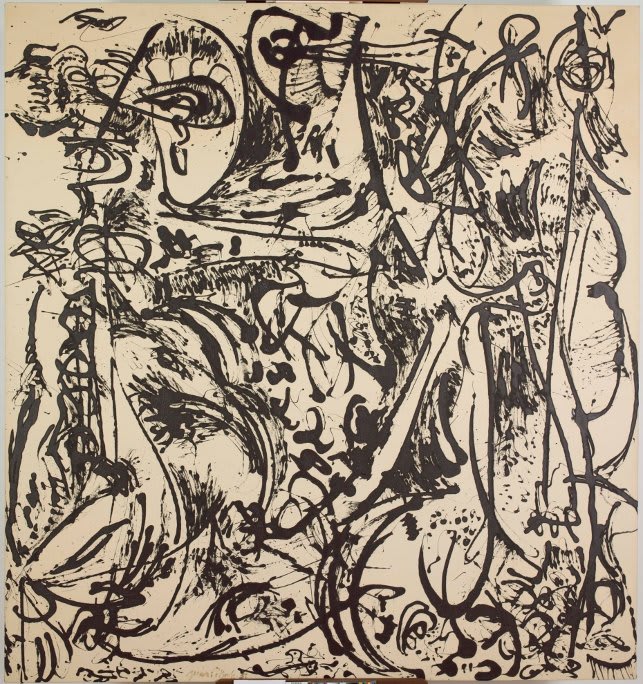
Number 25 - Pollock's fascination and competition with Picasso continued even in the later stages of his career. Here he leaves evident marks of a reinterpretation of the work 'Girl in a Mirror', composition by Pablo Picasso of 1932.
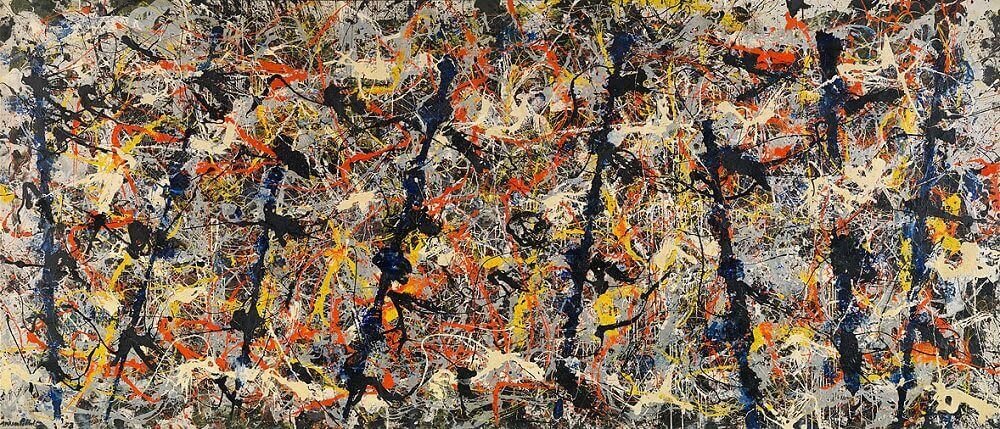
Blue Poles - At the time of the creation of this painting, Pollock preferred not to attribute names to his works, but numbers; as such, the original title was simply 'Number 11' of 1952. In 1954, the new title of Blue Poles was first seen in an exhibition in Sydney, Australia.
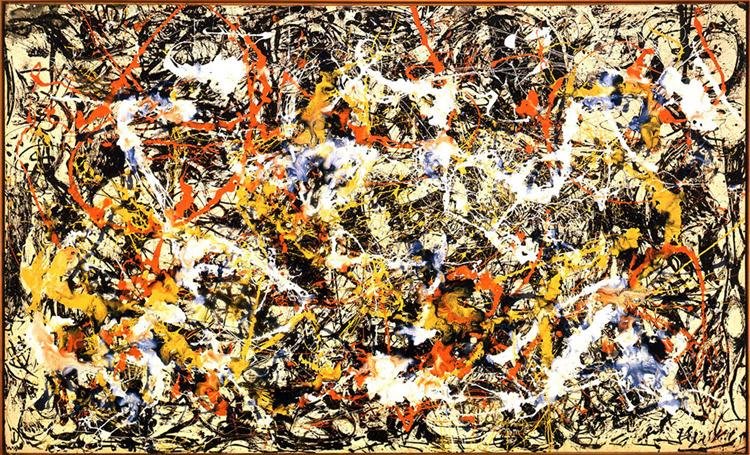
Convergence is one of Pollock's last major works, depicting several eyes without bodies hidden within colorful whirlpools that materialize on the dense and gray ground. It is a dynamic tension between representation and abstraction that, finally, constitutes the core of Pollock's unique work.
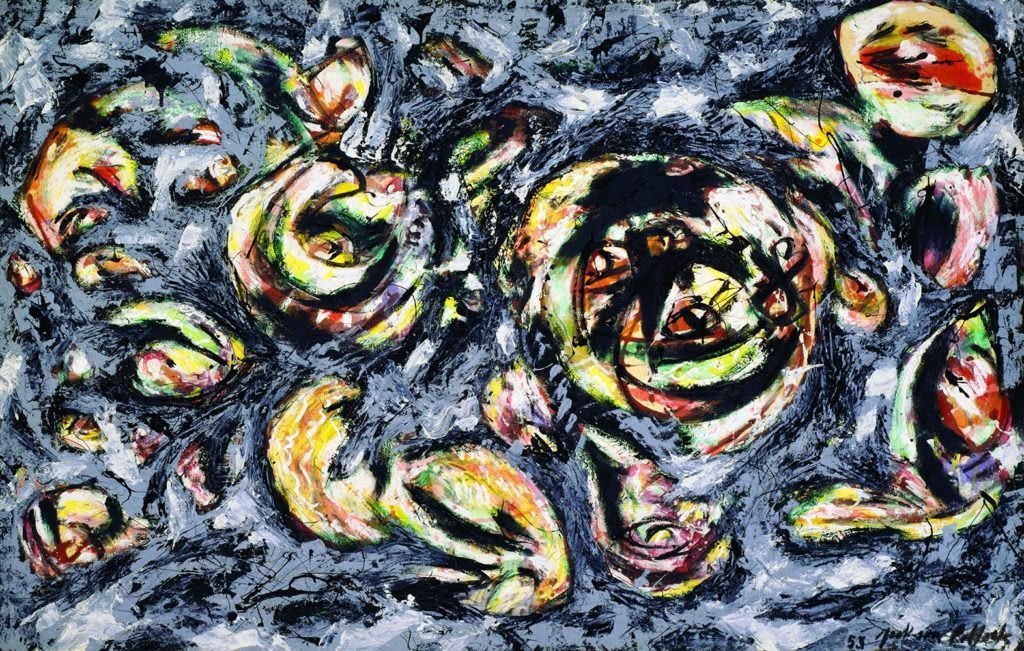
Grey Ocean is one of Pollock's last major works, depicting several eyes without bodies hidden within colorful whirlpools that materialize on the dense and gray ground. It is a dynamic tension between representation and abstraction that, finally, constitutes the core of Pollock's unique work.
The Forest is one of Pollock's last major works, depicting several eyes without bodies hidden within colorful whirlpools that materialize on the dense and gray ground. It is a dynamic tension between representation and abstraction that, finally, constitutes the core of Pollock's unique work.

Jackson Pollock - Pollock's signature on his painting Number 11 of 1952