Maria Martins, the Sculptor of the Tropics
Discover the unique contributions of Maria Martins to modern art and her association with the surrealist movement.
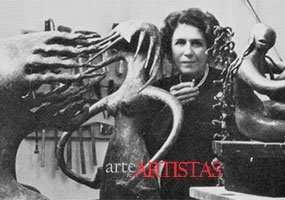
Maria Martins was a Brazilian artist known for her unique and innovative contributions to modern art, being considered one of the leading sculptors in Brazil.
Born Maria de Lourdes Martins Pereira de Souza on August 7, 1894, in Campanha, Minas Gerais, Brazil, she began her artistic career in 1926.
Having been married to the diplomat Carlos Martins Pereira e Souza, the artist lived in various countries. She studied sculpture in Belgium with Jesper Oscar. While residing in the United States between 1939 and 1948, she produced most of her work, achieving recognition in avant-garde circles.
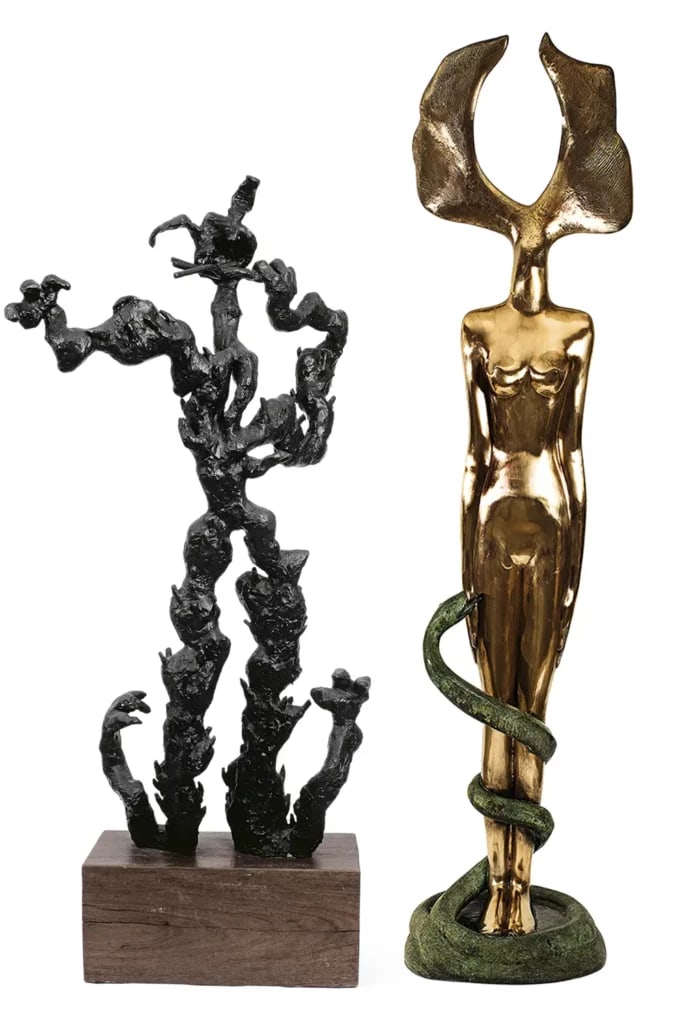
She is particularly recognized for her exploration of surrealism, a movement that emerged at the beginning of the 20th century, whose main characteristics are to represent fantastic and dreamlike images.
The artist associated herself with the surrealist movement through her close relationship with the artist Marcel Duchamp, whom she met in New York City in the 1940s. Her personal and artistic connection greatly influenced her work. Her sculptures often incorporated elements of eroticism and mythology, combining the human form with abstract and imaginative elements.
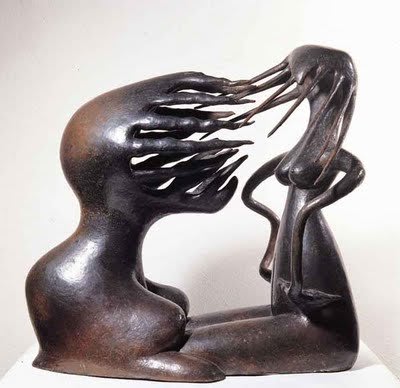
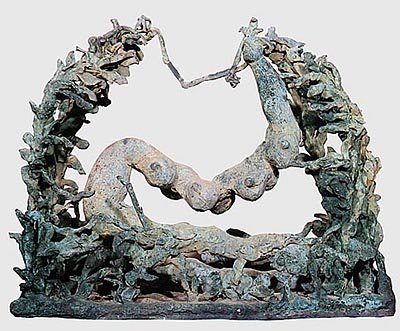
In 1947, the artist participated in the International Surrealist Exhibition, held in Paris and organized by André Breton. Despite her association with surrealism, Martins also drew inspiration from her Brazilian heritage and incorporated elements of Brazilian culture and folklore into her art. The artist sculpted Amazonian legends and created beings inspired by the common vines in tropical forests, eventually evolving into a unique mythology of hybrids, combining elements of nature with human bodies, when explicitly carving female sexuality, with apparent breasts or snakes binding her body.
In 1950, Maria returns definitively to Brazil. The following year, the artist collaborated to organize the 1st São Paulo Art Biennial and also founded the Rio de Janeiro Museum of Modern Art.
In 1956, the artist held her last individual exhibition at the same museum she helped form, the MAM-RJ. Maria Martins passed away in Rio de Janeiro on March 27, 1973, her works were exhibited in galleries and museums around the world. Her work continues to be celebrated for its innovative nature.
After her death, numerous posthumous exhibitions were held, including in 2013 at the Museum of Modern Art in São Paulo (MAM-SP), which held a major individual exhibition titled "Maria Martins - Metamorphoses"; in 2021-2022, the Museum of Art in São Paulo (MASP) held the exhibition "Maria Martins: Imaginative Desire".
Regarding her work, the artist commented: "The world is complicated and sad, it's almost impossible for people to understand each other".
One of her most famous works is the sculpture The Impossible, which presents intertwined forms that combine human and vegetal forms, exemplifying her unique approach to surrealism.
GALLERY