
Piet Mondrian: Biography and Works: Life and Artistic Formation
Piet Mondrian: Biography and Works: Life and Artistic Formation
Article Index
The Dutch painter Piet Mondrian is considered one of the most important artists of the 20th century. He was also a key leader in the development of abstract art, particularly through the movement known as De Stijl (The Style). His most famous paintings use the simplest combinations of straight lines, right angles, primary colors, and black, white, and gray, and possess an extreme formal purity.
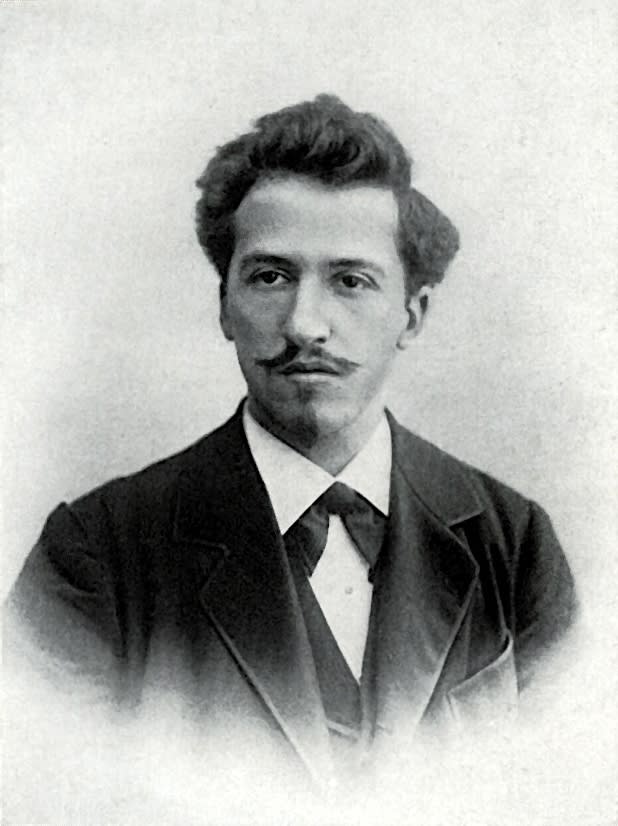
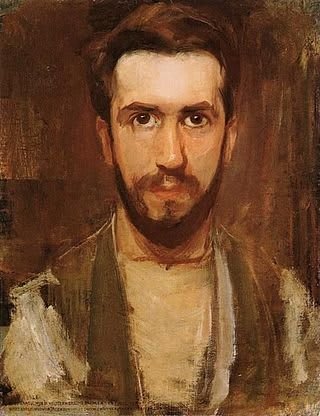
Pieter Cornelis Mondriaan, Jr. was born on March 7, 1872, in Amersfoort, the Netherlands. He was the second of five children in a devoutly Protestant home in central Holland. Art and music were encouraged in his home. His father, Pieter Cornelis Mondriaan, was the director of the local primary school, an amateur artist who gave drawing lessons to his son, while his uncle, Fritz Mondriaan, was a talented artist who taught his nephew to paint.
 Piet Mondrian: Biography and Works" class="wp-image-11344"/>
In 1892, Mondrian enrolled in the Royal Academy of Visual Arts in Amsterdam. His three years of academic training focused on drawing from copies of old masters' paintings. In the following years, he relied on these skills to support himself in the production of scientific drawings and copies of museum paintings, as well as giving private drawing lessons in his studio.
From 1905 onwards, his traditional landscape compositions began to reveal a new sense of drama and light. It was through Jan Toorop, one of the leading artists of Dutch Illuminism, that Mondrian became acquainted with the French post-impressionists. As a result, Mondrian's paintings changed dramatically, incorporating, for example, the bold colors and brushstrokes of Vincent van Gogh and the pointillist technique of Georges Seurat.
Even in these early works, it is evident that Mondrian had a tendency to work in series, focusing on a single subject. Both aspects would be invaluable for the development of his abstract style.
In 1909, he joined the Theosophical Society, a spiritual organization with widespread influence in Europe in the early decades of the 20th century, based on the teachings of Buddhism. For Mondrian, art and philosophy were deeply intertwined. He was a very active writer and theorist, always drawn to spiritual and philosophical studies. Although he later disagreed with some members of the group, Theosophy influenced Mondrian's goal of representing complete and pure harmony, which he expressed through the balance and tension of form and color in his paintings.
In 1912, he moved to Paris, the thriving center of avant-garde art, and became thoroughly familiar with the works of Pablo Picasso, Georges Braque, and others, changing from a representational neo-impressionist style to modern abstractions. Cubism, gave him the necessary structure to distill his landscapes to their sparsest elements of line and form: he used the cubist grid, reducing his images of trees and buildings to a schematic structure.
In 1914, he traveled to the Netherlands to visit his ailing father, when the First World War broke out, and he was unable to return to Paris until 1919. Despite being absent from the art capital, Mondrian continued to develop his style towards pure abstraction. Curved lines gradually disappeared from his paintings, along with all references to objects or nature. During this period, considered crucial in his art, Mondrian and the artist and architect Theo van Doesburg founded the magazine De Stijl (The Style).
Piet Mondrian: BIOGRAPHY
To understand the rest of this journey, continue to our next article: Piet Mondrian: Biography and Works: The De Stijl Movement and Neoplasticism.


