Rembrandt van Rijn: Biography and Works: Gallery of Essential Masterpieces
Rembrandt van Rijn: Biography and Works: Gallery of Essential Masterpieces
Article Index
In 1642, Rembrandt hired Geertghe Dircx, a peasant widow. Her role was to help care for Titus, the artist's son, who was then only nine years old.
Geertghe quickly became Rembrandt's lover. However, this relationship was marked by intense turbulence.
During this period, the artist entered a phase of erratic behavior, accumulating considerable debts. He was harshly criticized by friends, the church, and many of his clients.
Years later, Geertghe would accuse Rembrandt of breach of promise. She claimed the painter had made a marriage proposal that never materialized.
New Loves and the Rise of Hendrickje
Around 1647, a new figure entered Rembrandt's life: Hendrickje Stoffels. Twenty years younger than the artist, she was initially hired as his maid.
Hendrickje was a simple person with a gentle temperament. She brought comfort to Rembrandt and, inevitably, further complicated the painter's already fragile relationship with Geertghe.
Rembrandt's relationship with Hendrickje quickly transcended the professional sphere. From servant, she became a model and, in a short time, a partner in every aspect, living as a wife though without the formal title.
She remained by his side until her death in 1663, at the age of 37. Hendrickje bore Rembrandt two daughters: one died in infancy, while the younger, Cornelia, grew up healthy.
Rembrandt found great support and happiness in Hendrickje and his son Titus, for whom he harbored deep affection. Maturity, it seemed, brought more calm and wisdom to both his personal life and his art.
Decline in Taste and Artistic Solitude
Despite the newfound serenity in his personal life, Rembrandt's Baroque style began to fall out of favor.
Dutch artistic taste was shifting: the public now preferred drama, elegance, vibrant colors, and graceful manners, characteristics present in the work of artists like the Flemish Anthony van Dyck.
Even desperately needing new commissions, Rembrandt refused to compromise his artistic vision. His works became quieter and deeply introspective.
Another factor in his loss of popularity was his continued dedication to biblical themes. By the mid-1640s, few Dutch artists still interpreted the scriptures, and commissions became scarce.
Rembrandt's interest in landscape painting, on the other hand, remained strong for the next two decades.
A series of drawings and etchings demonstrates his keen observation of nature, great compositional originality, and a notable economy of forms.
His etching "View of Amsterdam," for example, would continue to influence various landscape paintings of the era.
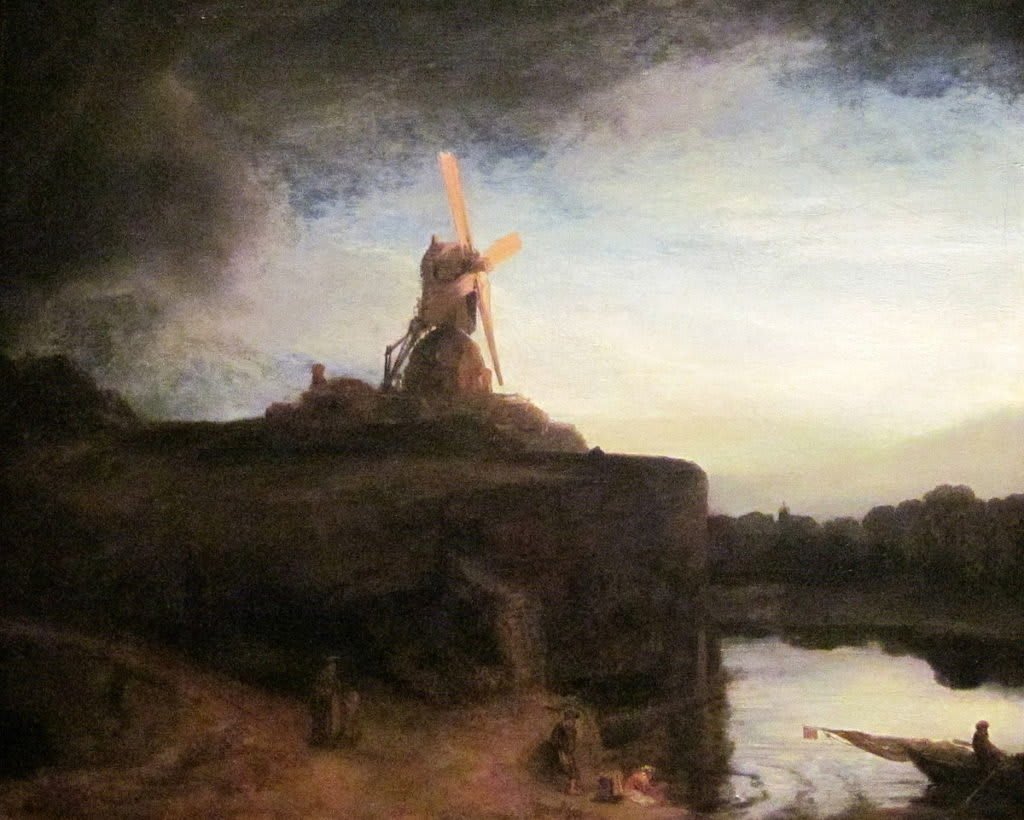
The work "The Mill" was considered by 19th-century art scholars to be one of the Dutch master's greatest creations.
Collectors and critics lauded the dramatic composition of the mill, portrayed against a dark and stormy sky. They attributed the somber atmosphere to Rembrandt's state of mind, as he faced serious financial difficulties during that period.
The Art Genius Faces Bankruptcy
Rembrandt undoubtedly lived beyond his financial means. He offered his own work for sale, seeking to increase profits, and frequently acquired paintings and etchings.
This conduct contributed to an auction of his possessions, organized by the court in 1657. On that occasion, the artist sold most of his most valuable objects.
The list of items included Roman busts, Japanese armor, Asian pieces, mineral collections, various paintings, and a vast collection of other antiquities.
Later, he had to sell his own house. He moved to a more modest residence on the outskirts of Amsterdam, accompanied by Hendrickje and Titus.
But bureaucracy held an unexpected blow:
The Guild of Painters of Amsterdam had introduced a new rule. It stipulated that no one in Rembrandt's financial situation could trade as a painter.
However, an ingenious solution emerged. Hendrickje and Titus established a partnership, creating a new business as art dealers. Rembrandt, then, was hired as an employee by his own family.
Rembrandt lived to see Hendrickje's passing, who died in 1663. The artist himself passed away on October 4, 1669, in Amsterdam.
He was buried as a poor man, in an unmarked grave. Twenty years later, his remains were removed and discarded, a common practice for those who died in poverty at the time.
LEGACY
Considered one of the first artists we might call "modern," Rembrandt possessed a profound understanding of the importance of detail in representing the world around him.
He was renowned for his remarkable ability. Not only did he depict human figures naturally and realistically, but, more importantly, he portrayed feelings, imperfections, and human morality with rare depth.
Rembrandt trained countless painters of his era, all eager to replicate the characteristics that became synonymous with his name.
His many students circulated through his workshops in Leiden and Amsterdam. So great was his influence that it was difficult to distinguish whether someone worked directly in his studio or merely copied his style for clients who desired a "Rembrandt-esque" piece.
His dedication to truth and beauty in everyday life was embraced by other contemporary artists, such as the Spanish painter Diego Velázquez, for example.
His style was reinterpreted by German engravers like Johann Georg Schmidt and Christian Wilhelm Ernst Dietrich. Later, it served as inspiration for painters like Jean Honore Fragonard and Giovanni Battista Tiepolo.
In 1888, Vincent van Gogh wrote to his brother Theo, expressing how much he admired Rembrandt's work, and the master as a man and a Christian.
Van Gogh explained that he also painted directly from life, depicting his subjects with realism and dignity. He described Rembrandt's religious works as "metaphysical magic" and strove to emulate that aspect.
In the 20th century, his influence reached artists like Frank Auerbach and Francis Bacon.
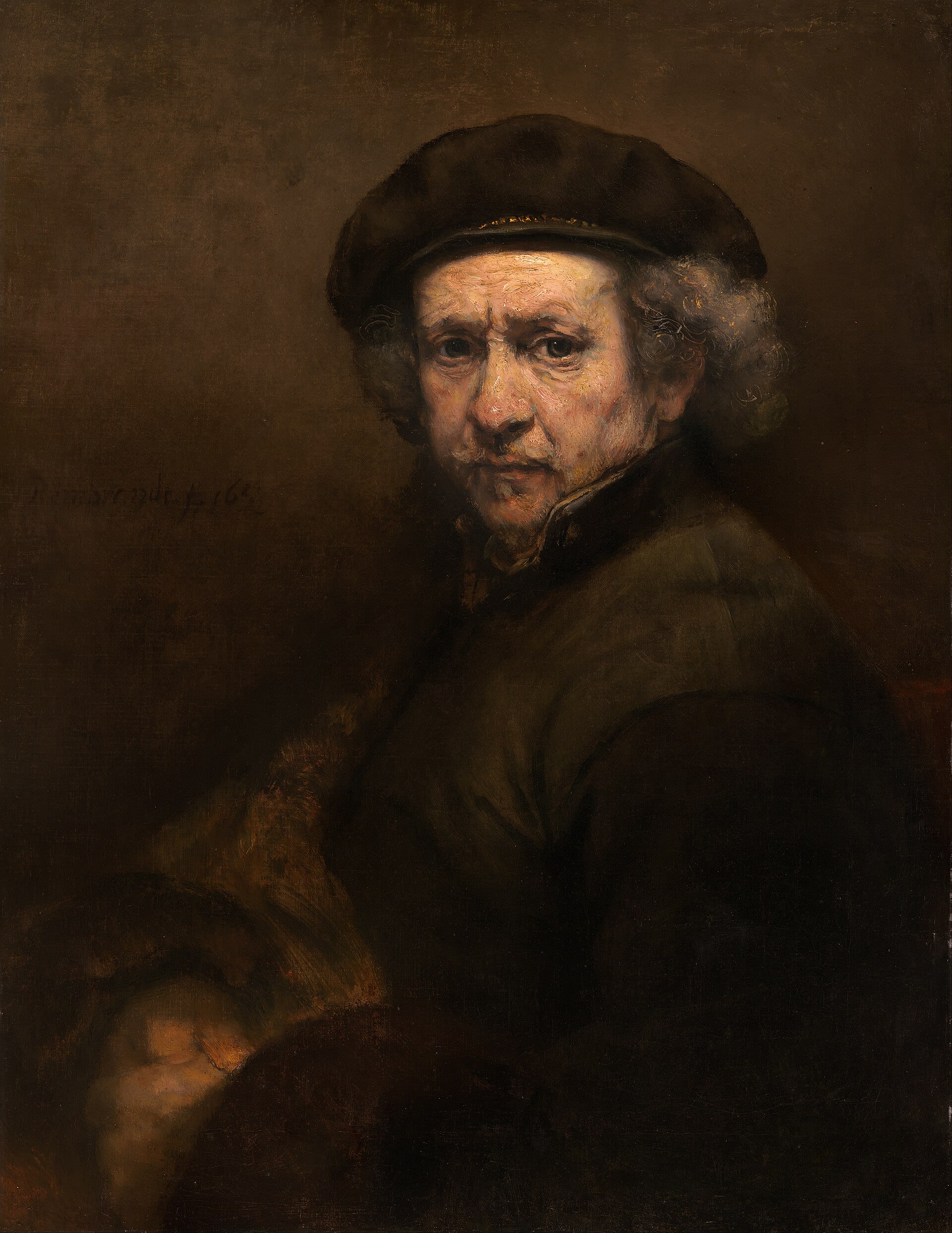
Similar to Rembrandt's late self-portraits, such as the "Self-Portrait with Two Circles" (1665), Bacon's self-portraits are often disturbing and mysterious, revealing a deep connection.
Today, Rembrandt's work remains a crucial pillar in art history. It continues to reflect Dutch grandeur and pictorial excellence.
Artists today still seek inspiration in his exquisite realism, imbuing contemporary works with the indelible and timeless legacy of the great master.
Rembrandt van Rijn: GALLERY
Here, we present a selection of his works, illustrating the artist's evolution and genius throughout his career.
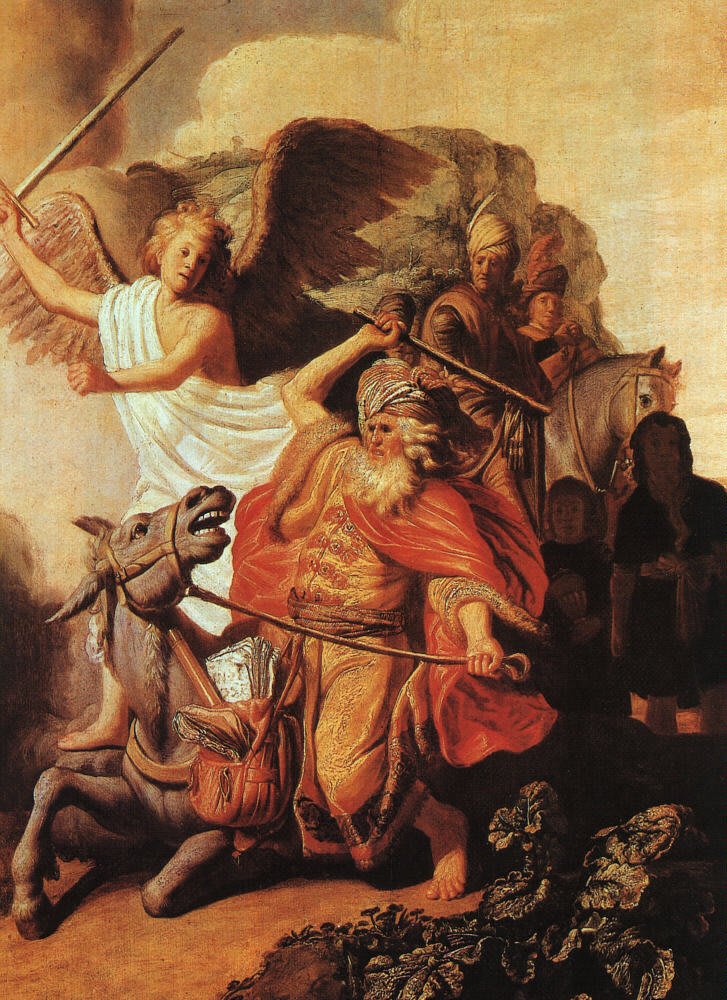
- Balaam and the Ass
This is one of young Rembrandt's earliest works, painted soon after he established himself in Leiden. It is believed that this work is derived from a painting by his master, Pieter Lastman, demonstrating his initial influences.
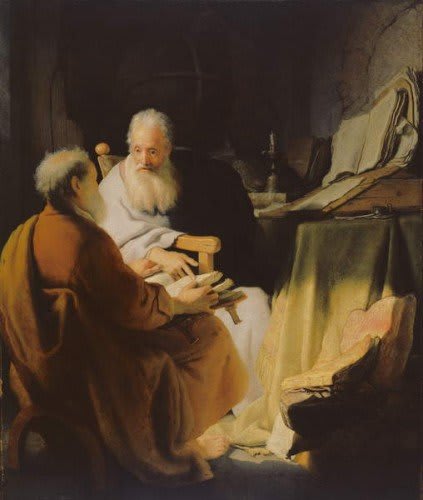
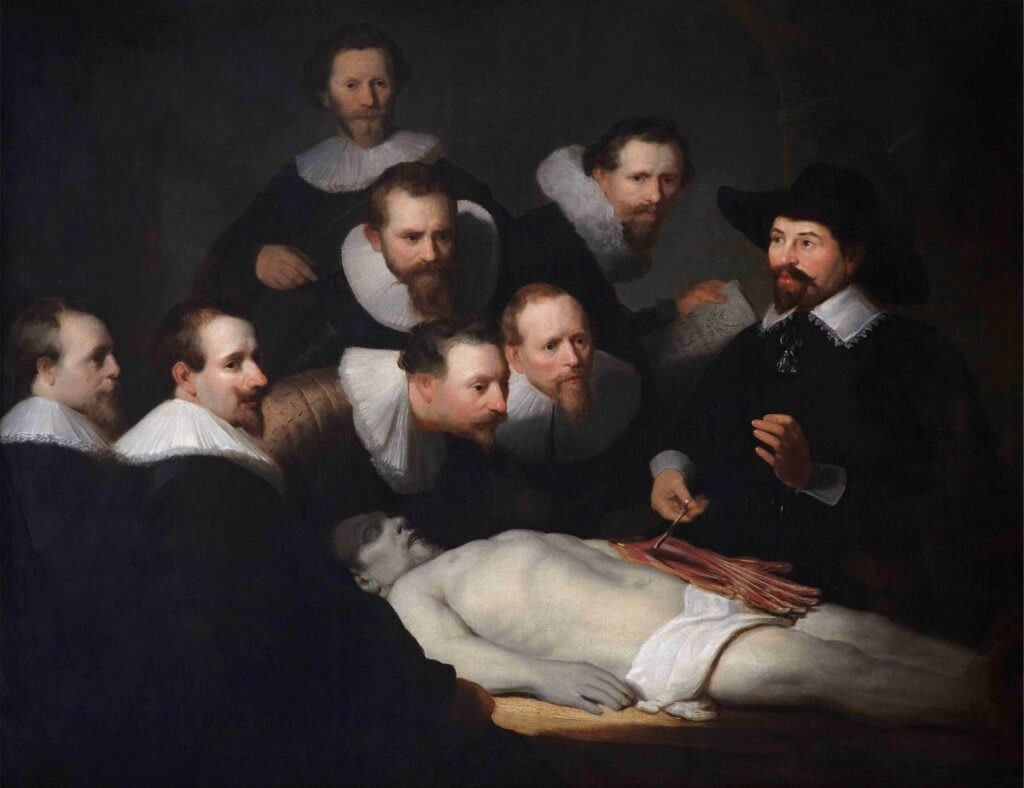
The Anatomy Lesson of Dr. Nicolaes Tulp
This is one of his most famous group portraits. Rembrandt managed to individualize each character through their physiognomies, creating a true dramatic action for this curious and striking scene.
Click here to learn more about this iconic work.
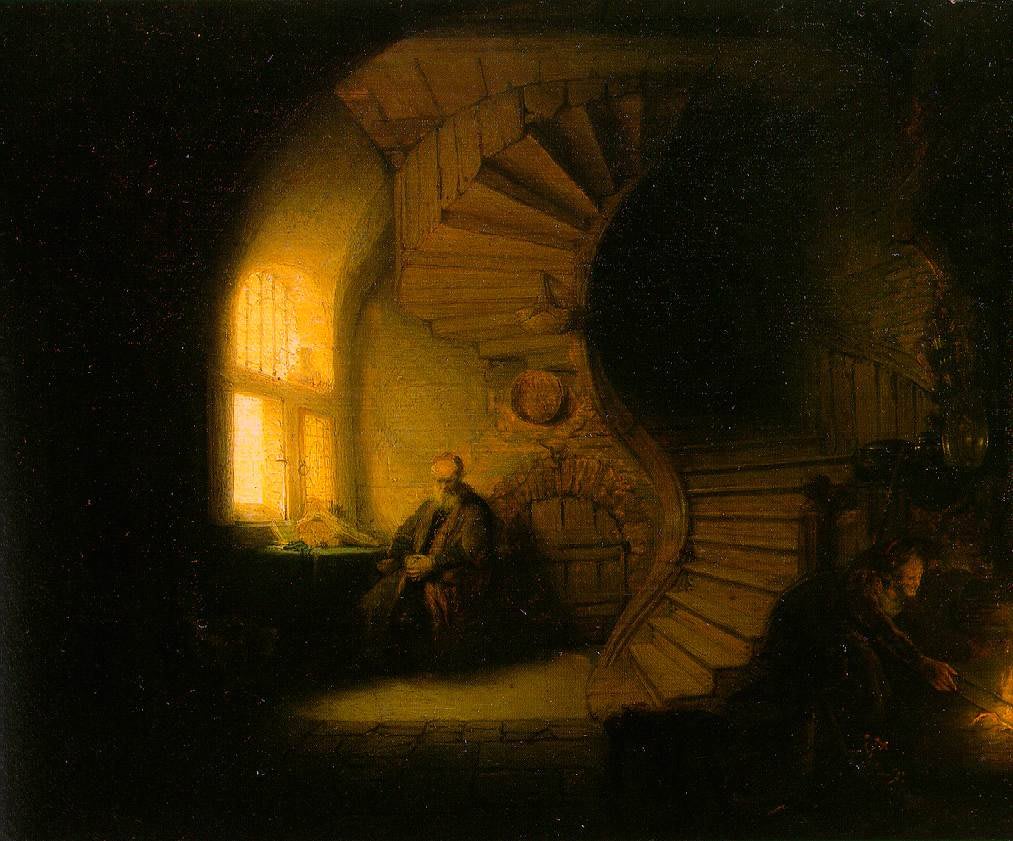
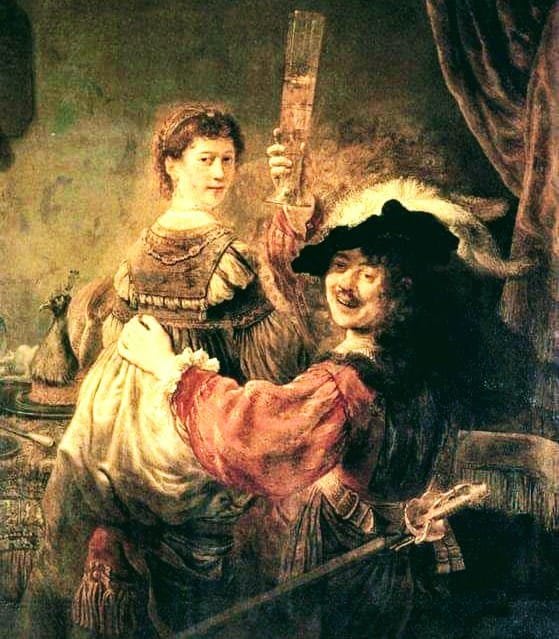
Rembrandt and Saskia
This is one of the rare images of the artist smiling, a moment of genuine happiness. His young wife, Saskia, sits serenely on his lap, while he raises a glass, a clear sign of celebration and shared joy.
The Night Watch
This is, without a doubt, one of his most controversial and revolutionary works. Rembrandt presents a suggestive vision where the individuality of each character integrates into an animated and dramatically cohesive ensemble.
Click here to learn more about this famous painting.
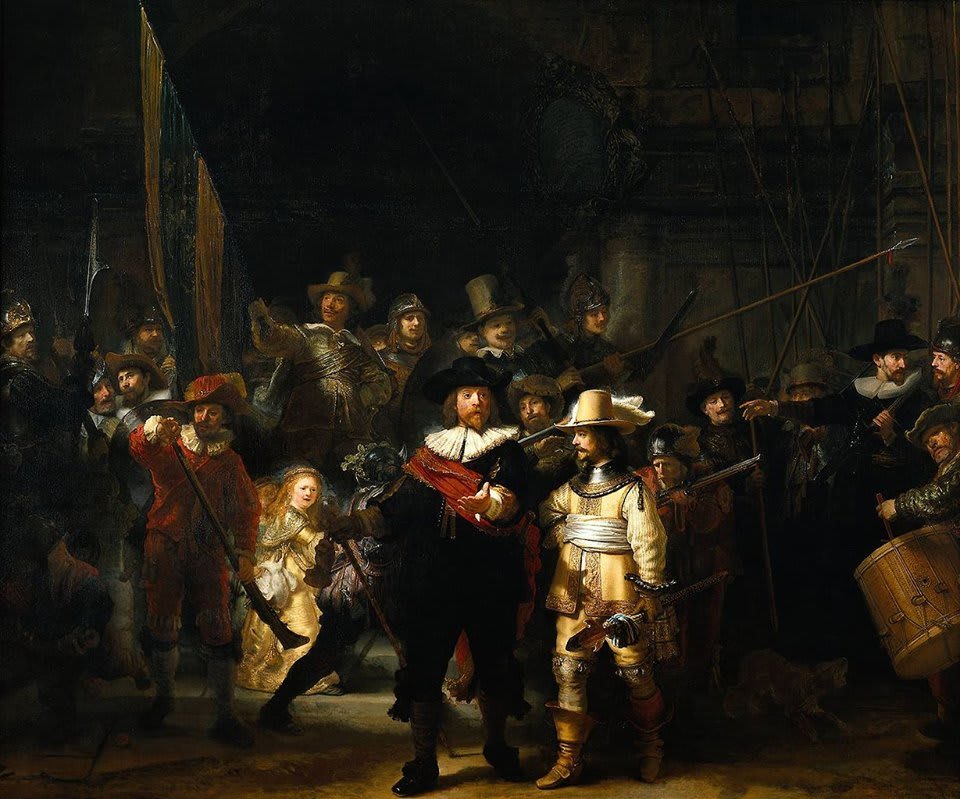
Holy Family with Angels
In this painting, angels announce the arrival of the child Jesus, who is in the foreground with his mother, Mary, holding the Holy Book. Rembrandt focuses the scene's luminosity on these central characters, without forgetting Joseph, the carpenter, who is positioned in a more recessed plane.
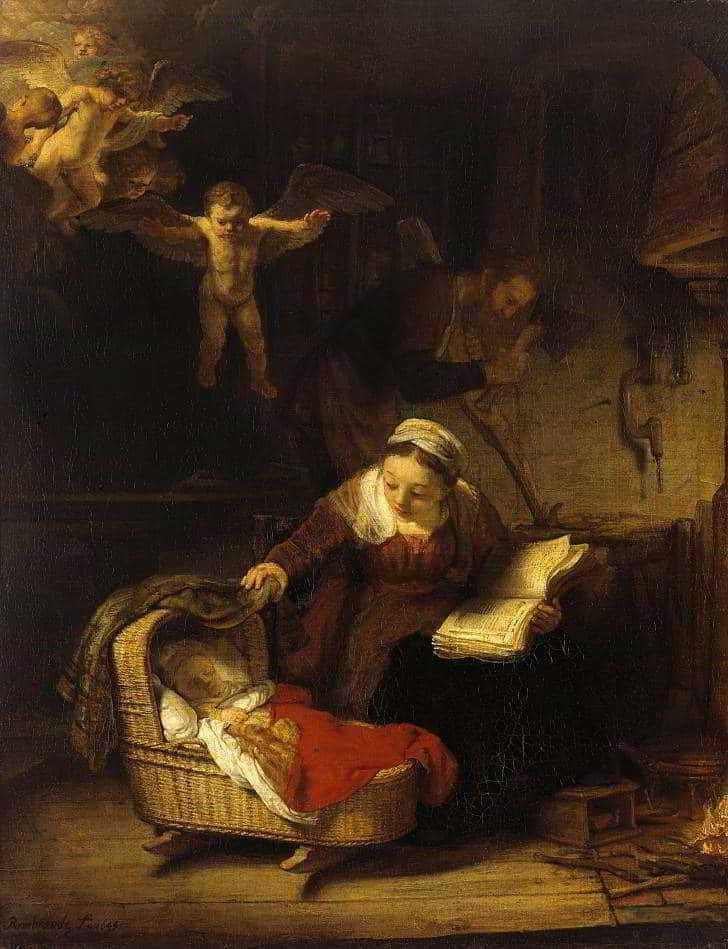
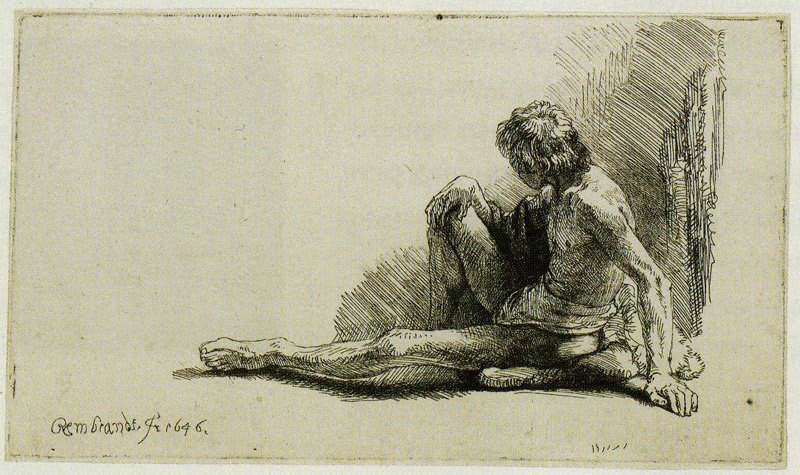
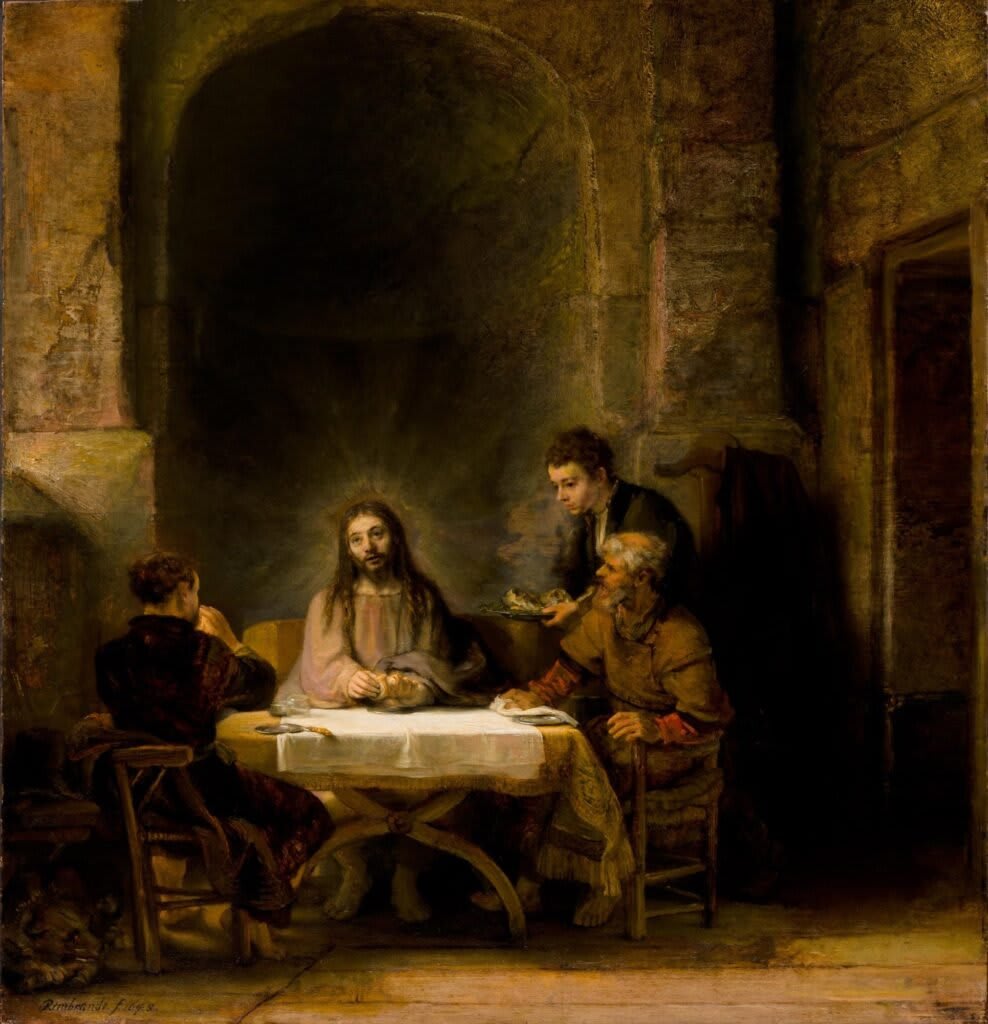
Supper at Emmaus
This was one of the artist's favorite themes. The version in the Louvre is widely considered the most perfect and renowned among all his interpretations.
Here, the pronounced dramatic touch present in his youthful essays transforms into a silent and contemplative introspection, marking the maturity of his style.
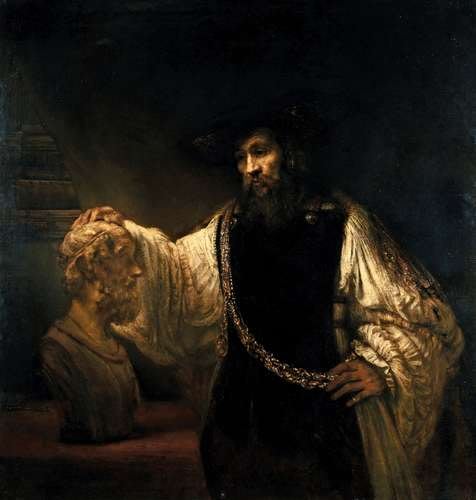
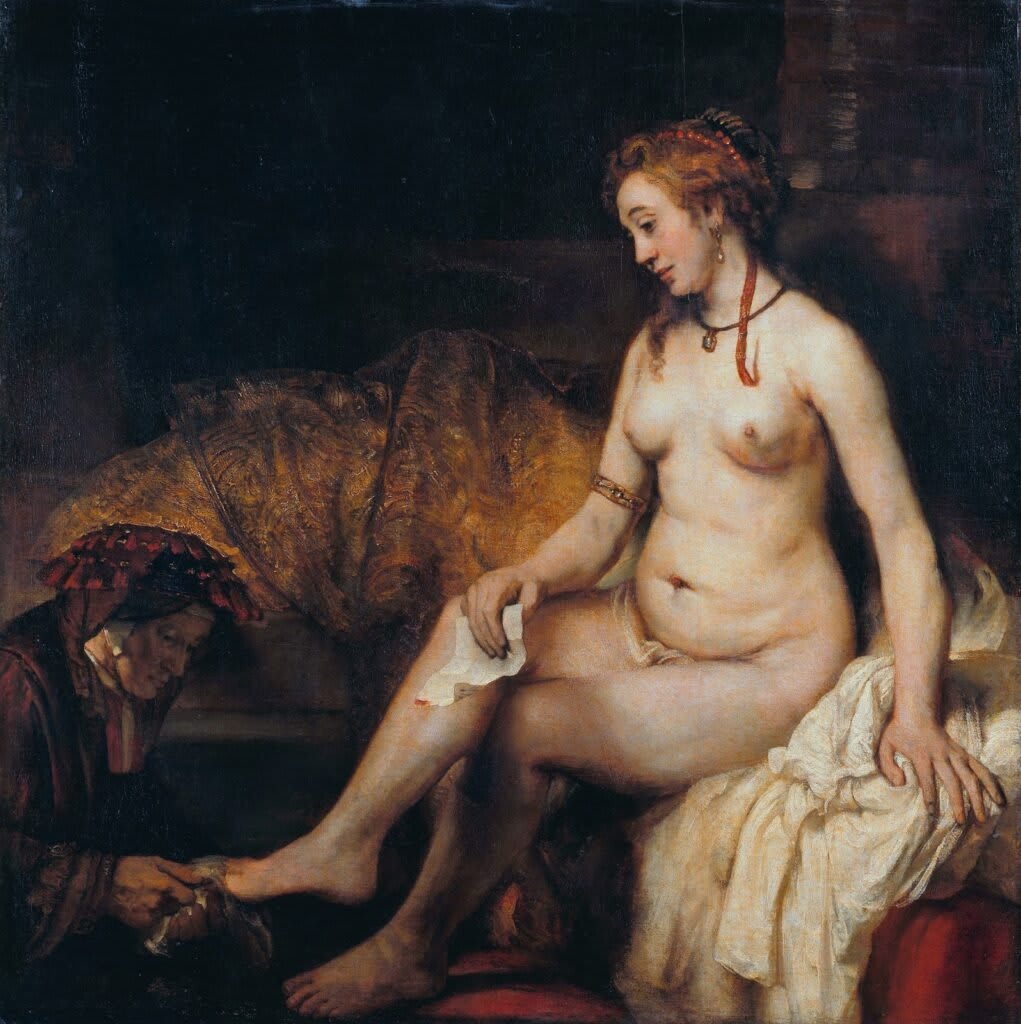
Bathsheba at Her Bath
In this phase, both Rembrandt's historical and religious scenes are translated in clearly anti-heroic terms. The works frequently feature a single character, deep in reflection.
The model for this representation of Bathsheba was his last companion, Hendrickje, adding a personal layer to the work.
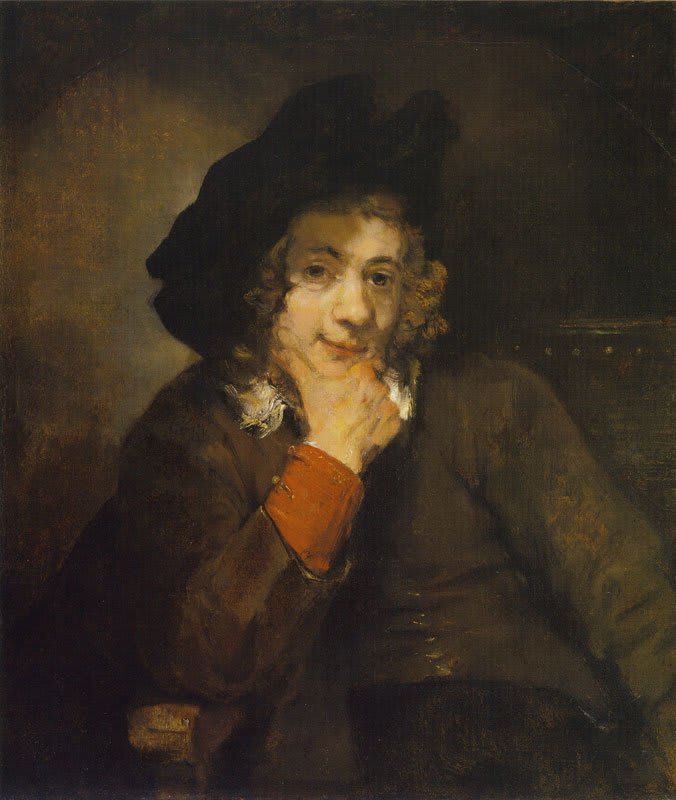
Portrait of Titus
This is one of numerous portraits of his beloved son, Titus. Towards the end of his life, Rembrandt no longer accepted commissions, preferring to dedicate his art to himself and his closest family members.
With advancing age, the artist became increasingly isolated, retreating into a kind of creative retirement, focusing on his personal passions.
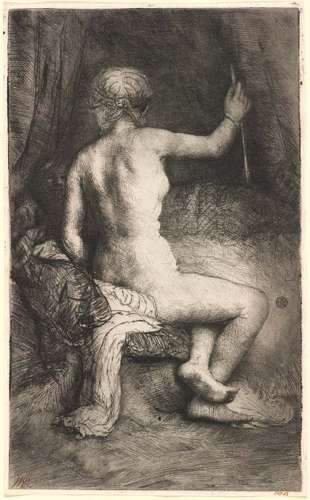
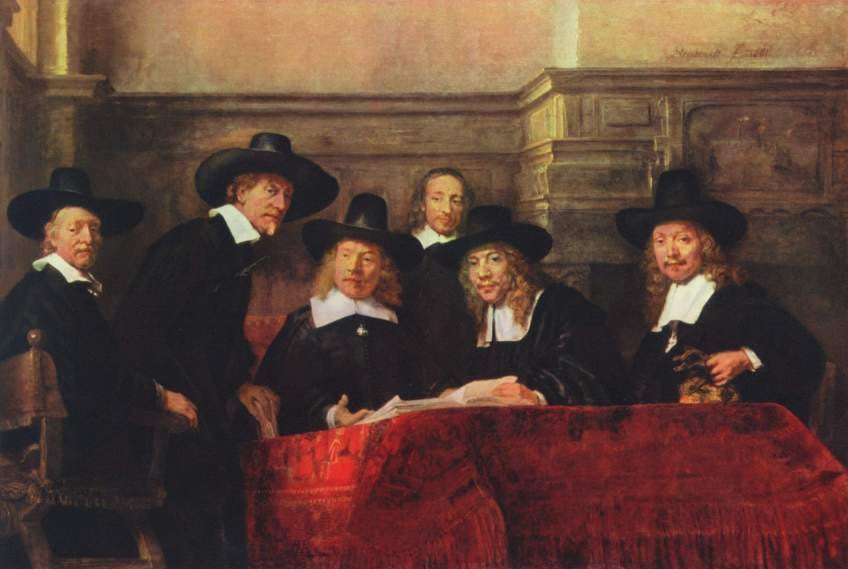
The Syndics of the Drapers' Guild
In this work, Rembrandt transforms simple cloth merchants, seated around a table, into actors in a lively and vigorous scene. Each figure comes to life with unique expressiveness.
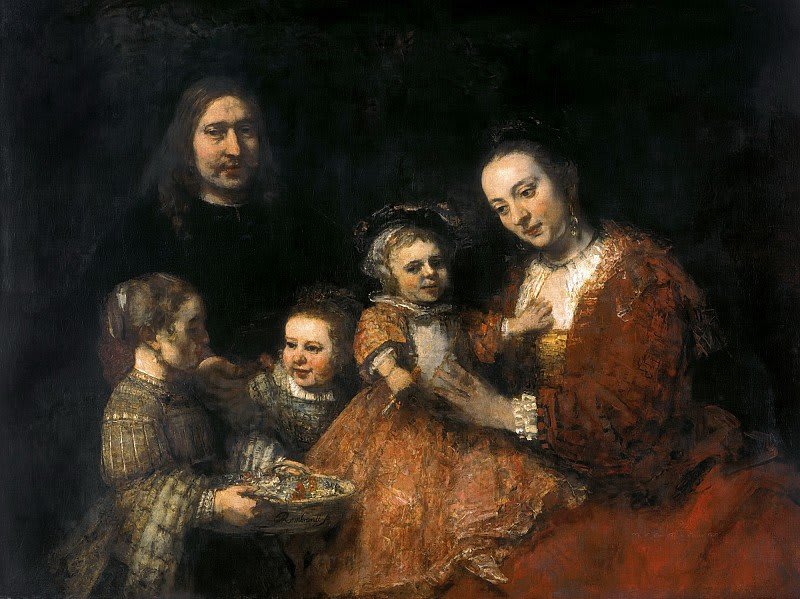
Family Portrait
This beautiful collective portrait was created in the last years of his life. In it, the painter found the tenderest colors and the most welcoming atmosphere, highlighted by the intense light focused on each character, conveying a deep sense of family unity.