The Life and Work of Henri Matisse: Innovations, Legacy and Final Works
Discover the life and work of Henri Matisse, a pioneer of modern art, and explore his innovations, legacy, and final works.
Article Index
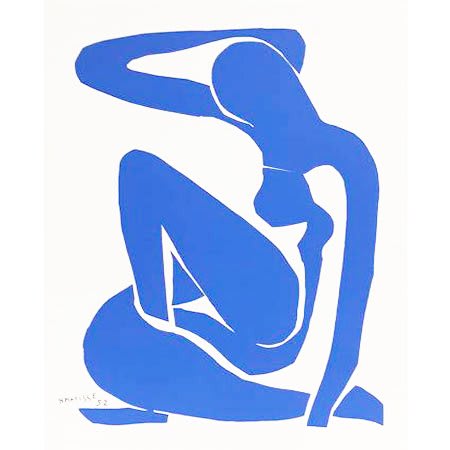
After undergoing a new surgical operation in 1941, with the impossibility of painting, Matisse decided to resort to a new style, employing the technique of collage or decoupage. The traumatic surgery, due to cancer, forced the artist to use a wheelchair.
In A Tristeza do Rei, the artist used the mixed technique (collage and gauche paint). Different shapes are used, where eleven colors are applied. Yellow losangos that may represent leaves or tears. A probable odalisque in green to the left, the king in the center, dressed in black with yellow flower-patterned clothes, holding a violin, an instrument he played, and a black and white ballerina to the right, compose his last biographical self-portrait - 'King Matisse'
“Cutting with scissors, cutting out the bright colors, reminds me of the direct work of sculptors... a scissors is a wonderful tool and the paper I use for my cut-outs is magnificent... working with scissors on this paper is an occupation in which I can lose myself... my pleasure in cutting increases every day! Why didn't I think of this before? I am more and more convinced that with a simple cut-out, one can express the same things as with drawing and painting...“ (Henri Matisse in “Writings and Thoughts on Art”)
Matisse’s shift toward a more distilled form of expression invites a comparison with other masters who dedicated their lives to refining their artistic vision. Biography of Johannes Vermeer: In-Depth Analysis of Masterpieces
His last work was the decoration of the Chapel of the Rosary. Located in Vence in the Provence-Alpes-Côte d'Azur region, France, the chapel was built for the Convent of the Dominican Sisters by the architect Auguste Perret between 1949 and 1951; as it was entirely decorated by Henri Matisse, it also became known as the ‘Chapel Matisse’, where the artist left his mark on the stained glass and tiles.
For Matisse, his work in Vence represented, in his own words, “an art of balance, purity, and tranquility.” As he was very ill, unfortunately, the artist did not participate in its inauguration in 1951, but wrote:
“I did not seek beauty, I sought truth. I humbly present to you the Chapel of the Rosary of the Dominican Sisters of Vence... This work demanded four years of exhausting and assiduous work. It is the result of a lifetime of active life, and I consider it, despite all its imperfections, a masterpiece.”
The creation of such a holistic artistic environment mirrors the ambitious projects undertaken by other visionary creators who redefined their surroundings. Antoni Gaudí: Biography and Work: The Masterpieces that Shaped Barcelona and the World
In 1952, the Museum Henri Matisse was inaugurated in his hometown.
Two months before completing eighty-five years, he died in Nice on November 3, 1954, where he rests in the Cimiez Cemetery.
Exploring the legacy of significant artists reveals how their personal journeys often intersect with broader historical and cultural movements. Biography of Candido Portinari: From Academia to Historic Mural Paintings
GALLERY OF SOME WORKS:
- PINTURES
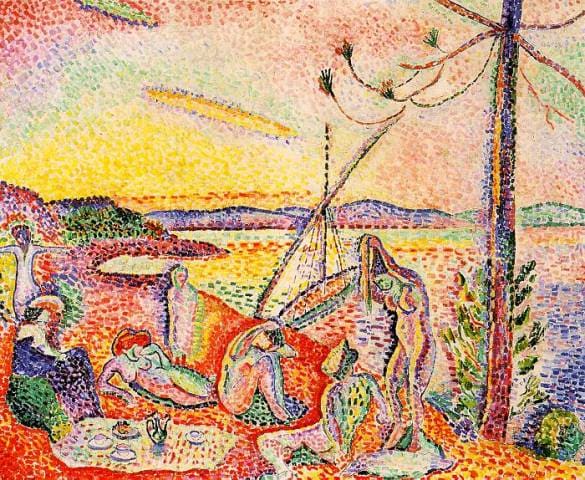
Luxo, Calma e Volúpia - Matisse was inspired to paint this canvas in the pointillism of his friend Paul Signac. It was a foreshadowing of the Fauvism. The painting is also a tribute to Paul Cézanne, in a reference to the Bathers
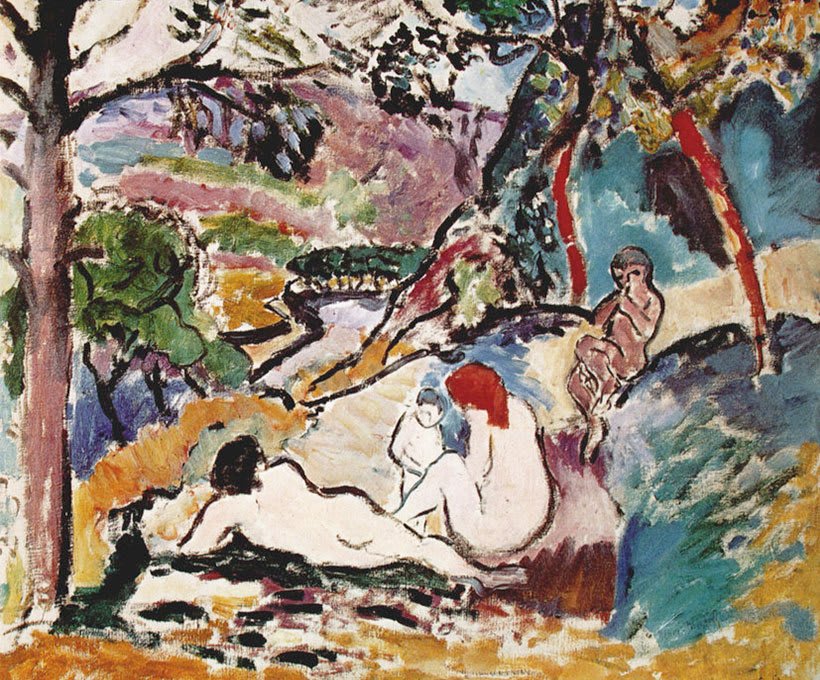
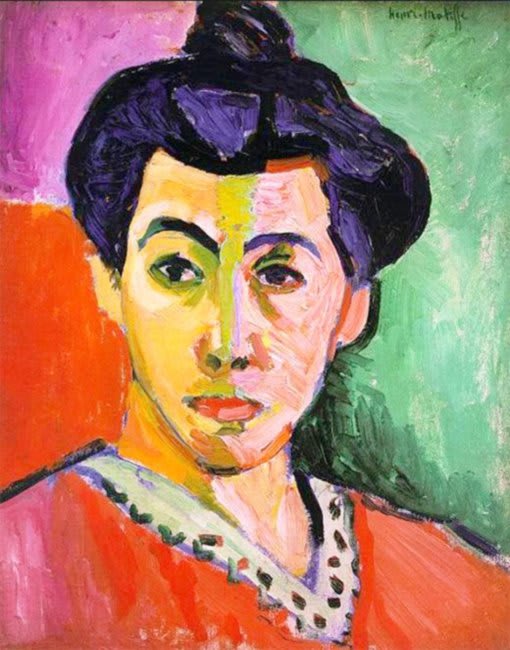
Composed in pure tones, this portrait of Madame Matisse became a reference of the Fauvist movement. Its name comes from the bold green-yellow stripe that, below the blue hair, separates the face vertically into a dark and a light side.
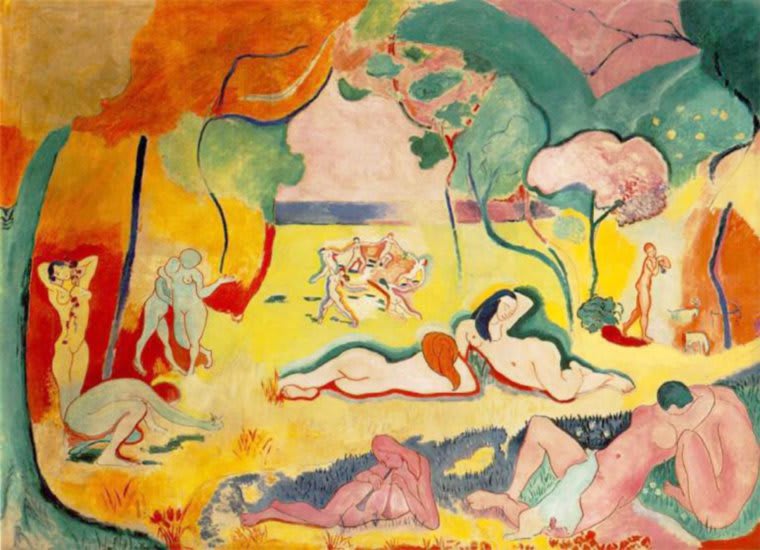
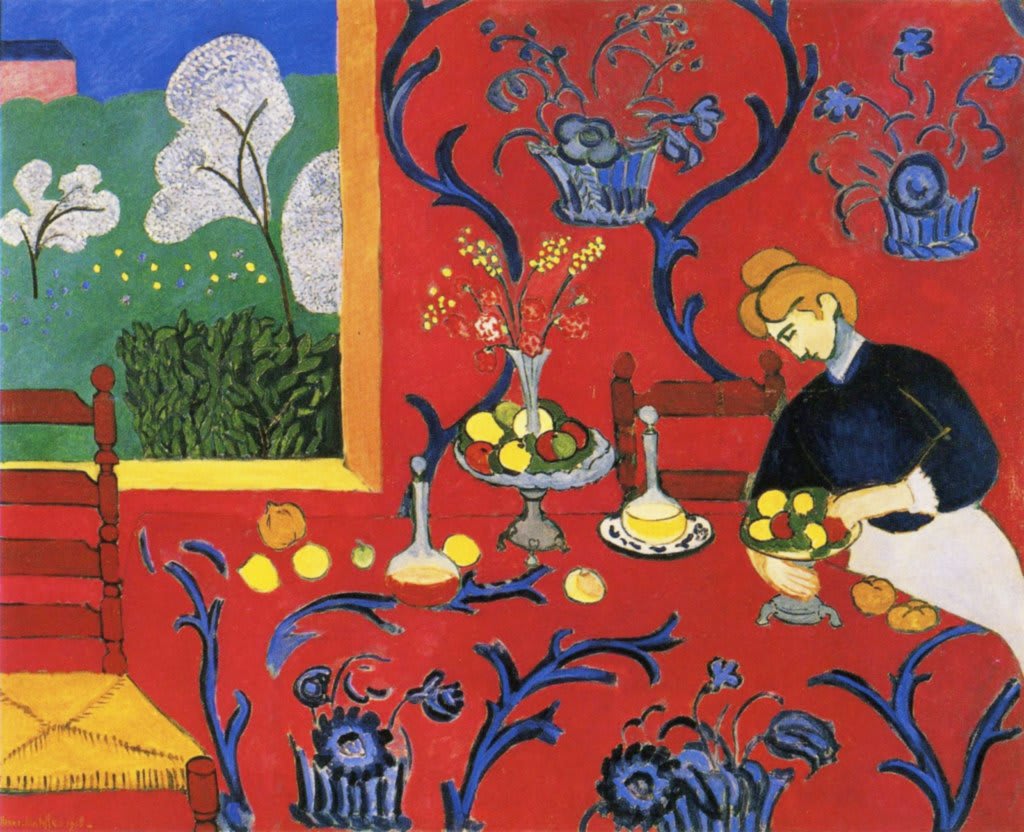
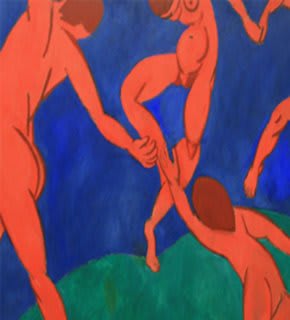
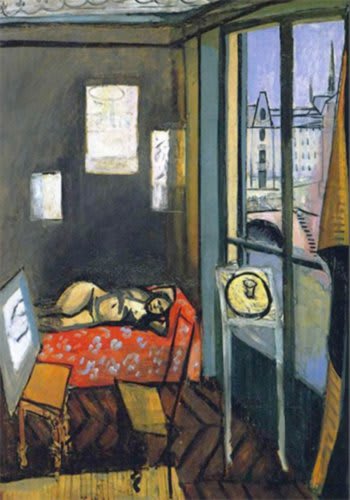
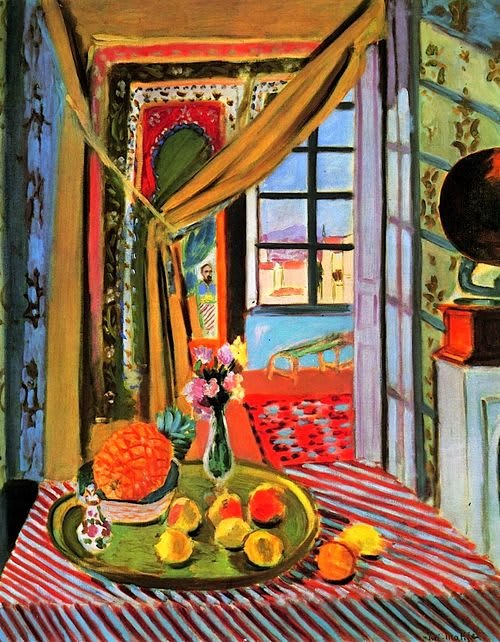
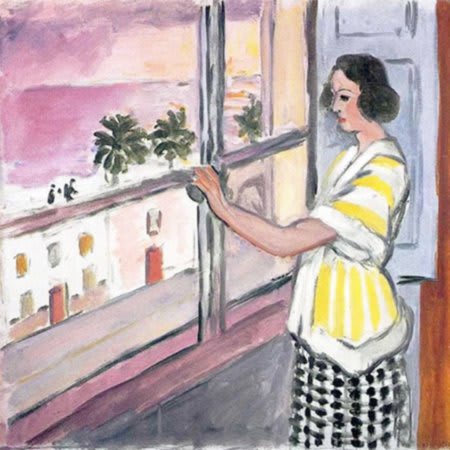
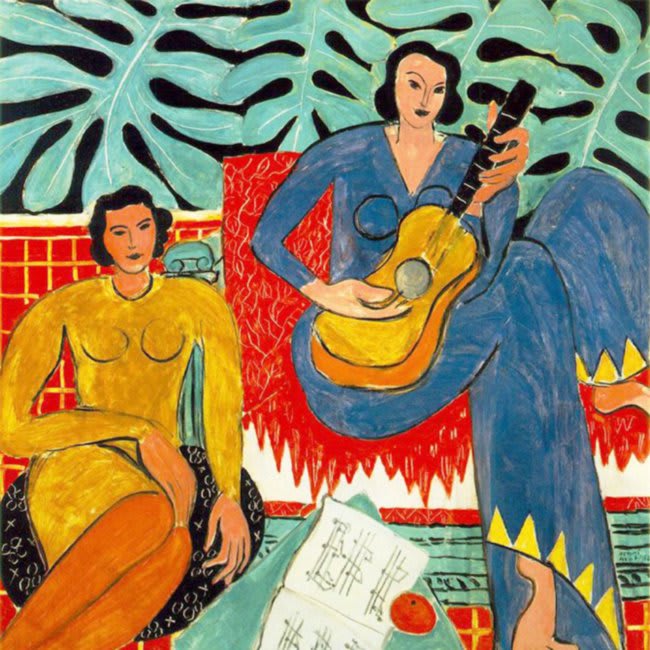
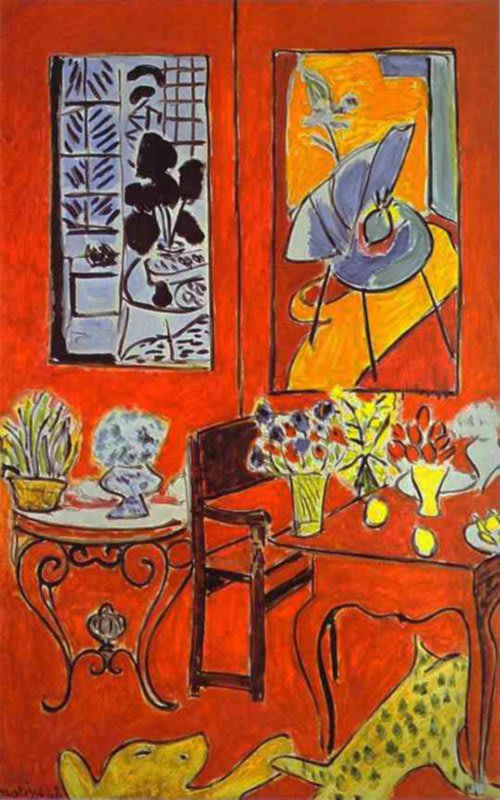
Grande Interior Vermelho - This is one of the last oil paintings made by Matisse, it is the maximum synthesis of his work.
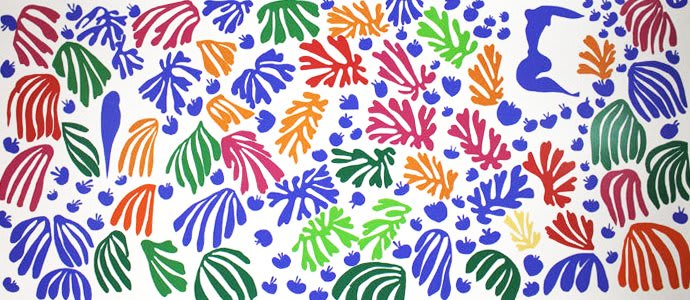
2- CUT-OUT AND COLLAGE - Pertaining to 'Abstract Expressionism', LA PERRUCHE ET LA SIRÈNE - is part of a series of cut-outs and collages initiated by Matisse from 1940, when the artist opted for this method to continue producing and not abandon art in his last years of life. We highlight this, as it is one of the largest examples of works with this technique. The total work contains cut-out shapes in contrasting colors on a white surface.
.... AND THE MOST FAMOUS, 'BLUE NUDE'