William Turner, the Precursor of Impressionism: Notable Works and Style Analysis (Part 2)
William Turner, the Precursor of Impressionism: Notable Works and Style Analysis (Part 2)
Article Index
Turner produced thousands of works throughout his career; approximately 2,000 paintings became the property of private collectors, while another 19,000 consisted of drawings and sketches, and nearly 300 finished and unfinished oil paintings.
Turner dedicated himself to landscape painting with passion, energy, and force, interpreting his themes epically. His loose and diffuse brushstrokes form a swirl of clouds and waves, an inner despair conveyed through nature, one of the basic characteristics of Romanticism.
GALLERY - ANNOTATED ART
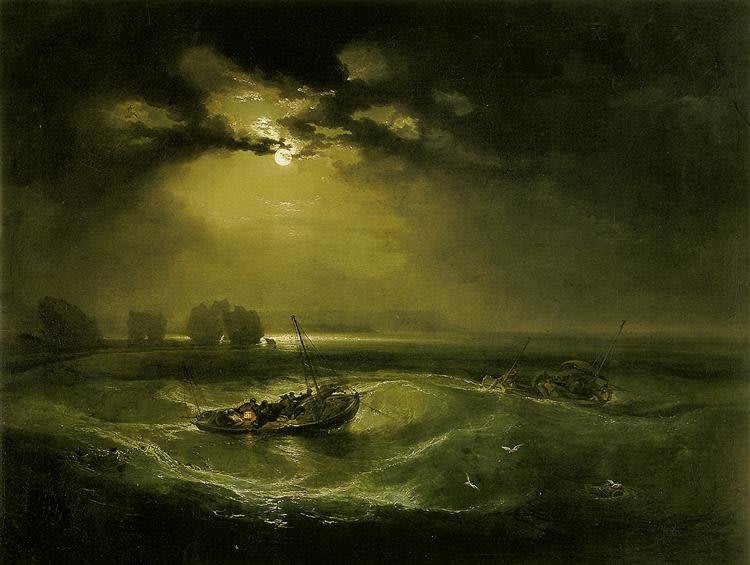
Fishermen at Sea - This is Turner's first oil painting exhibited at the Royal Academy of London, where he depicts a moonlit scene. The sense of nature's overwhelming power is a key theme of the Sublime. The potency of the moonlight contrasts with the delicate vulnerability of the glowing lantern, emphasizing nature's power over humanity and the fate of the fishermen in particular. The silhouettes cut out on the left are the treacherous rocks known as "the Needles" off the Isle of Wight.
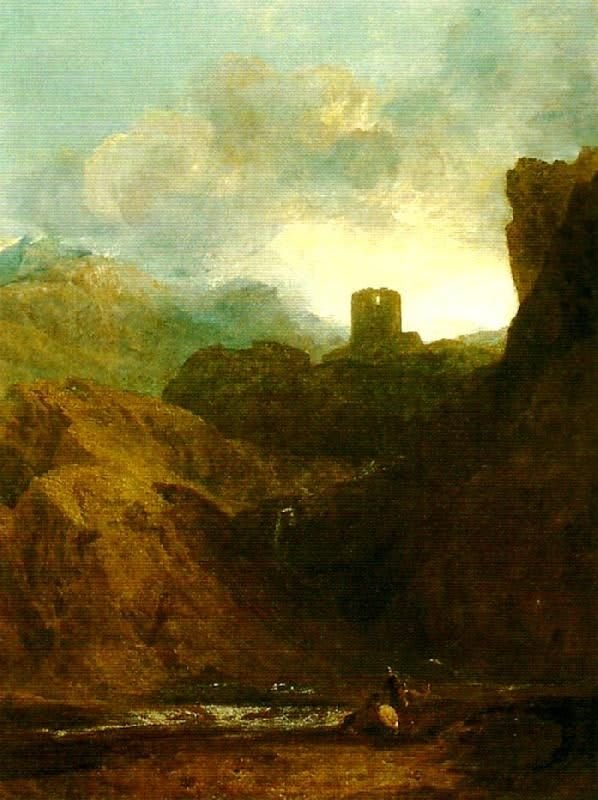
Dolbadern Castle - At 27, Turner became a member of the Royal Academy of Arts. During this period, he created his first painting titled Dolbadern Castle, which was exhibited at the academy to mark his admission. Turner uses a medieval theme: Dolbadern Castle in Snowdonia, where a Welsh prince met his death.
The Shipwreck - Turner was fascinated by themes of shipwrecks, fires, and natural phenomena such as the sun, rain, storms, and fogs.
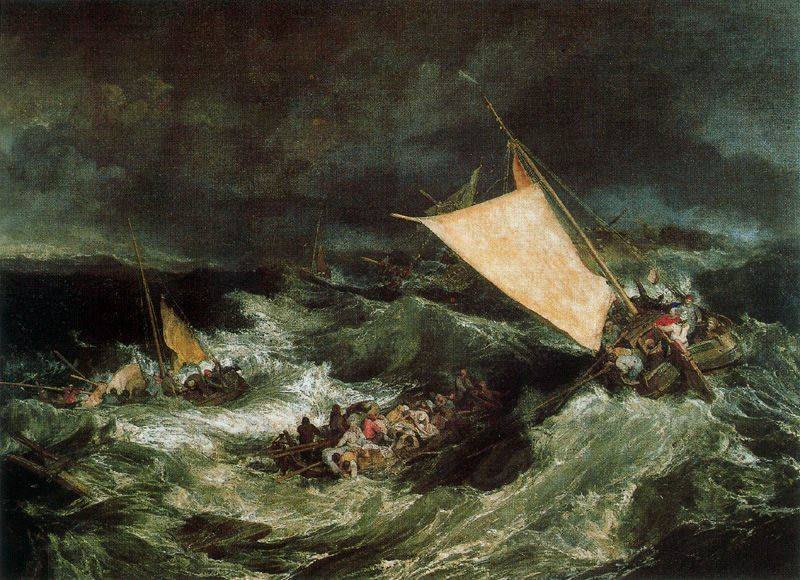
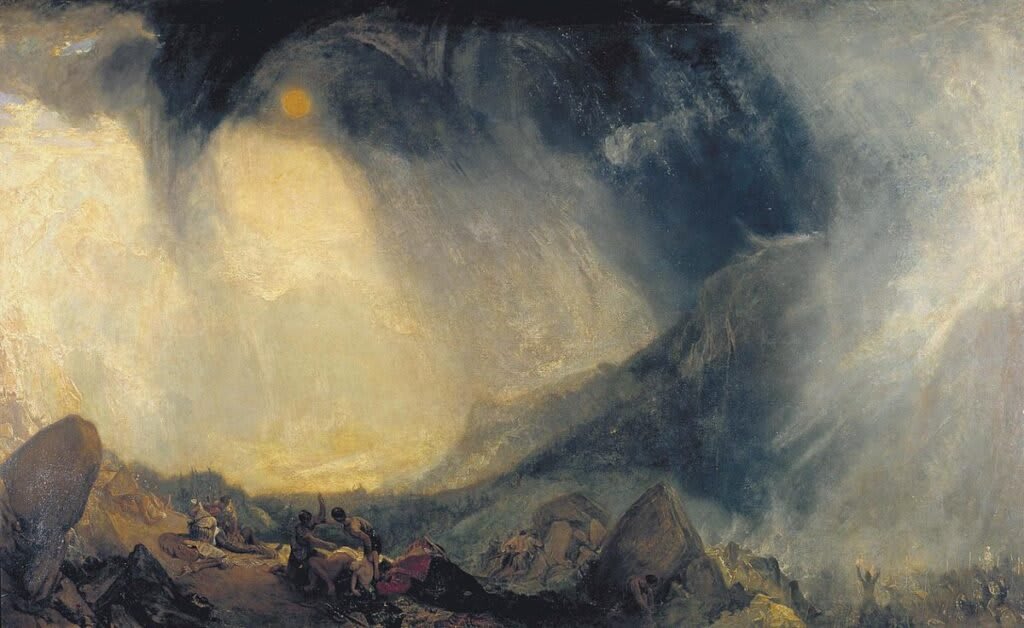
Hannibal's Army Crossing the Alps - While walking with his friend's son, Walter Fawkes, through the fields of Yorkshire, he observed an approaching storm. It is said that Turner pointed to the landscape and stated that he would soon depict that storm in one of his works. It is currently considered one of the main works of the Romantic movement.
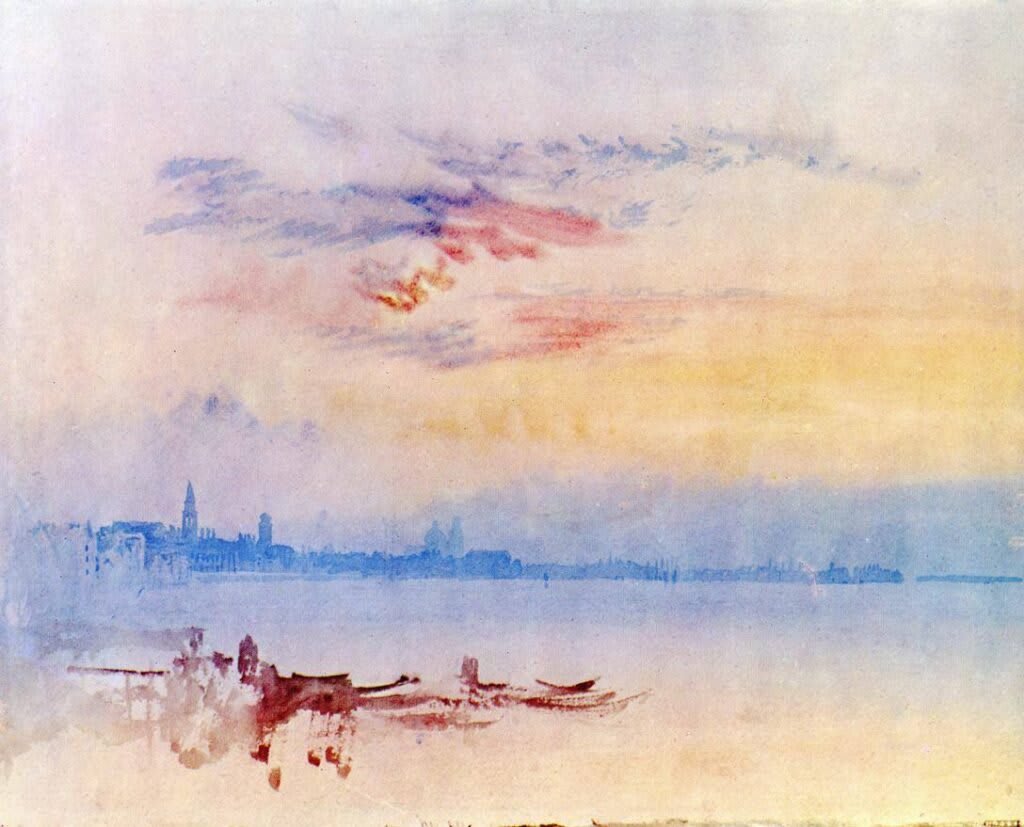
Venice - Venice was Turner's retreat; he adored the place. His works from this period were already being accused of lacking clarity, of excessive abstraction. Turner painted with his fingers, used his nails to scratch the paint, and sanded the canvas with pumice stone. Furthermore, he dedicated himself entirely to his art, with no time for friends or social life.
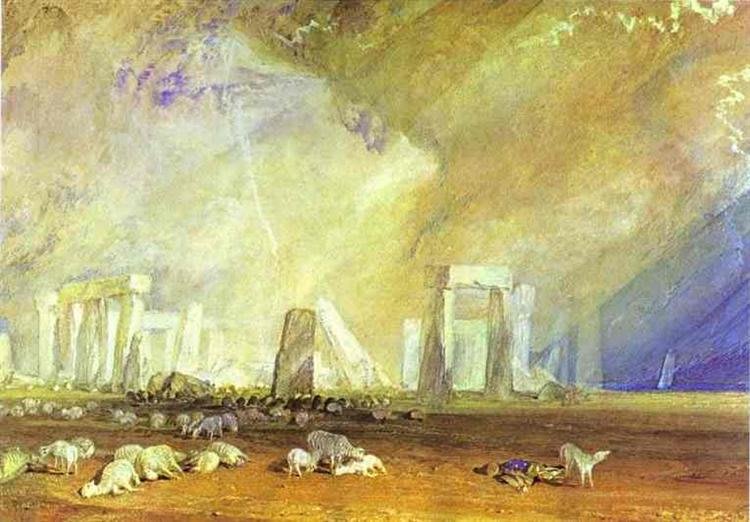
Stonehenge - Turner's celebrated skies also appear in this intriguing image of Stonehenge. Dominant clouds ripple above the ancient stones, while a bolt of lightning strikes from the sky. The shepherd boy on the ground is not sleeping; he has been struck and killed. The painting is considered an important landmark in his career, in which the artist extols "the common man".
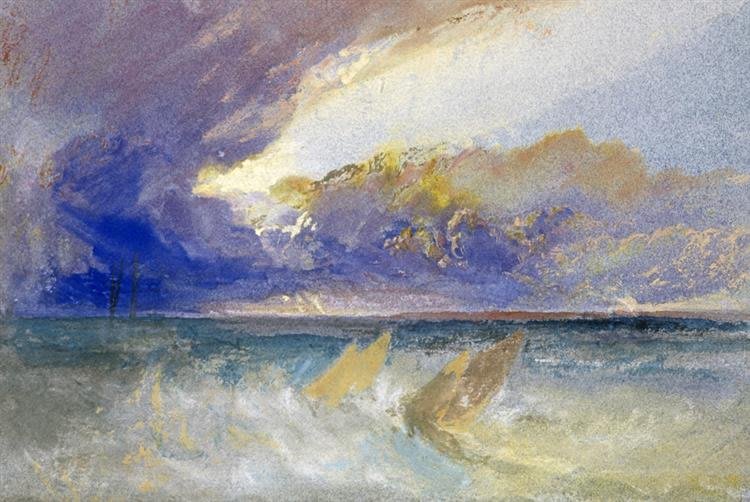
Seascape - The boundaries between sky and earth in his landscapes become increasingly blurred, and topography is sacrificed to make way for color. The effects of light are the undisputed protagonists of his works.
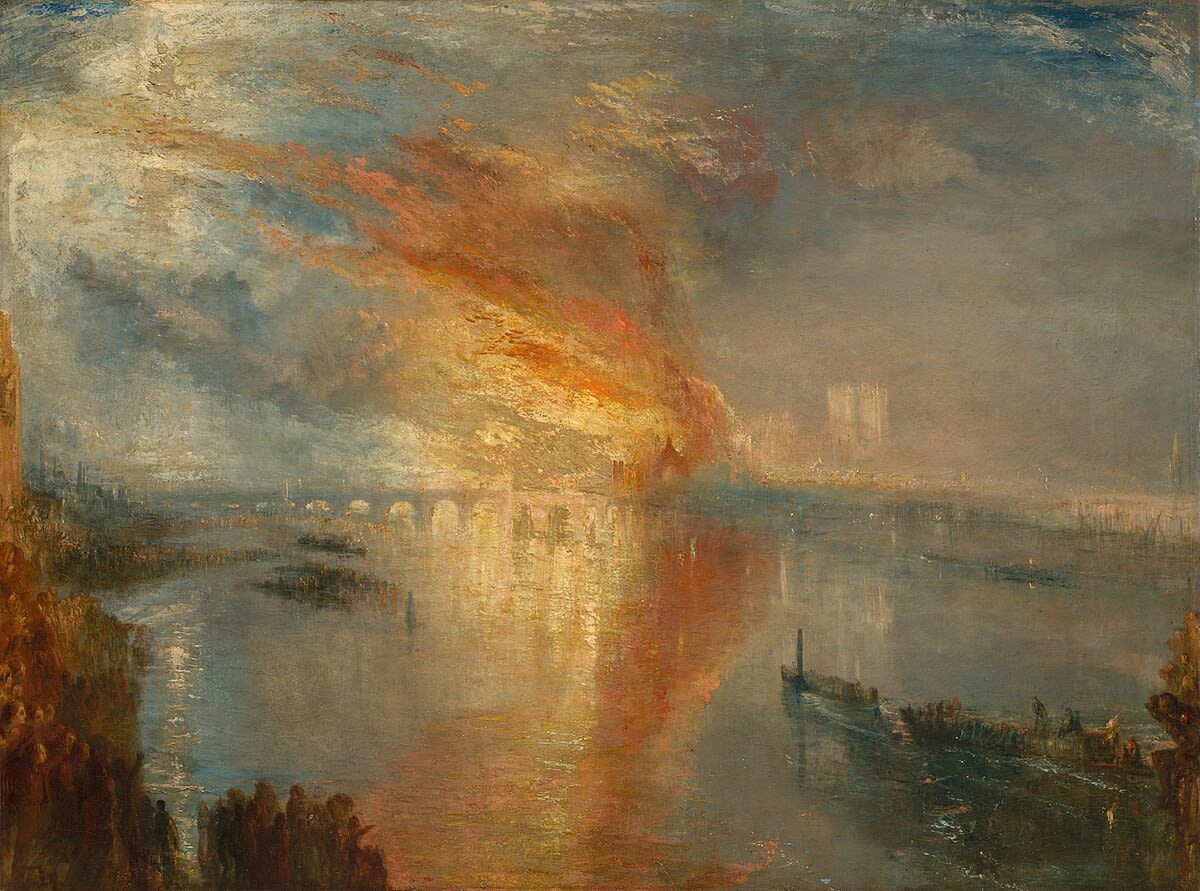
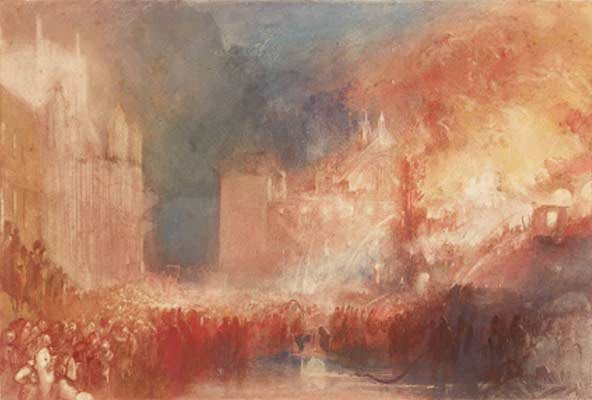
The Burning of the Houses of Parliament - In 1834, a fire engulfed the Houses of Parliament and burned for hours, as Londoners watched the terrible event. Turner made a series of sketches and paintings of the tragedy as seen from the River Thames. In this work, the artist presents a closer view of the fire and those gathered to watch. Turner uses color to convey the magnificent heat and light: both the painting's subject, and the burning building itself, favoring the elemental aspects of the fire, as well as the fire itself, incorporates one of his favorite themes.
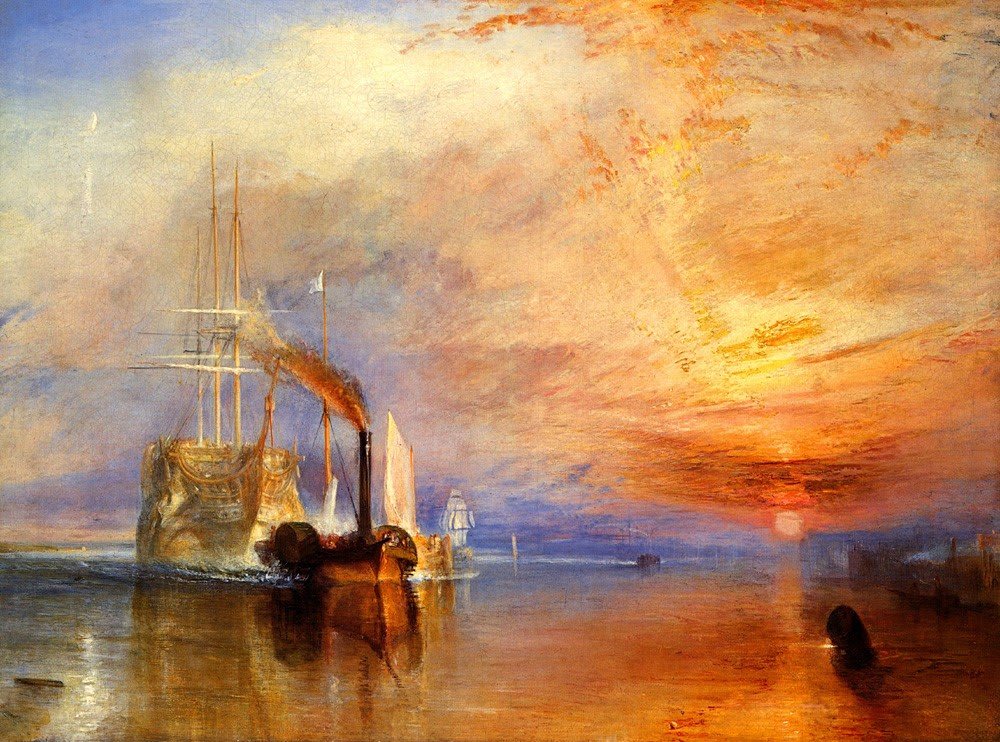
The Fighting Temeraire - The painting depicts an old warship being towed to shore in London. Turner attempts to convey a feeling of loss, of an end.
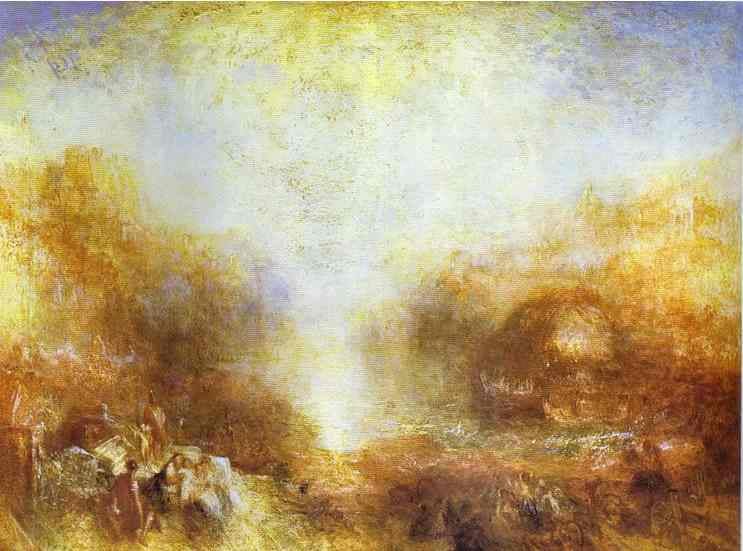
Mercury Sent to Admonish Aeneas - Turner was a pioneer in the study of light, color, and atmosphere. His works served as inspiration for many French Impressionists. However, he always believed it was art's duty to express themes of narrative interest. For this reason, we find mythological, historical, or literary narratives in many of his landscapes.
This, for example, is one of his last paintings where some figures can be identified, such as the Trojan hero Aeneas, standing on the left in his Tyrian purple cloak. The god Mercury, with his wand and winged feet, may not be present, though he is part of the title. Perhaps he has already flown away after delivering a message to Aeneas, as described in Virgil's story.