André Derain
André Derain was a French artist
Article Index
André Derain was a significant French artist who, throughout his career, also explored other forms of art, including sculpture, book illustration, and theater.
He is considered one of the main exponents of the artistic movement known as Fauvism, which emerged in the early 20th century.
Biography
André Derain was born on June 10, 1880, in Chatou, France, in a middle-class family.
He showed a precocious talent for drawing and painting from the age of 15, when he and his friend Le Noe began their artistic studies with Father Jacomin and his sons.
In 1898, he entered the Parisian studio of the Symbolist painter Eugene Carrière.
It was during this period that he met Henri Matisse when the older painter arrived at the same studio.
Derain also met Maurice de Vlaminck shortly after entering Carriere's studio and the two quickly became friends.
Apparently, Derain's parents did not accept their son's friendship with this bohemian anarchist, and he was subsequently banished from his home.
Career
In 1902, he was called up for military service, and although he did not produce many works during this period, he maintained contact with Vlaminck, frequently writing to him about art.
The comments he made about his new stylistic interests were significant in the development of Fauvism, indicating his key role in the movement, independent of Matisse.
In 1905, after completing his military service, he spent the summer working with Matisse in Collioure.
In the same year, he joined Matisse and a group of other artists to exhibit at the Paris Autumn Salon.
Derain also met Picasso in 1907, and the two became friends.
In 1913, Derain returned to his search for esoteric knowledge and began working in what could be called a 'Gothic style', characterized by a mystical use of color and a mix of formal elements from Romanesque, Byzantine, and Cubist art.
In 1914, the artist was again mobilized for military service, where he remained until 1919.
During this period, he continued to work whenever possible.
Upon leaving the army, he began working as a theater set designer and was responsible for designing at least eleven ballets.
In 1928, he received the Carnegie Prize.
In the 1930s, Derain publicly condemned modern art and returned to classical tradition.
In 1935, despite being excluded from the community of avant-garde artists, he was given a retrospective at the Kunsthalle in Bern and included in the Exhibition of Independent Artists in 1937.
Derain had a house in Chambourcy with his wife but continued to paint in his Paris apartment, where he would meet lovers, one of whom had an illegitimate son with him.
At the start of World War II, his house was occupied by the Germans, so he moved to Paris and lived in an apartment he shared with his wife or in the home of his mistress.
The Germans were interested in Derain's classical works, considering them representatives of the prestigious French culture.
In 1953, the artist fell ill, dramatically affecting his vision.
On September 8, 1954, in Garches, France, he died after being run over by a truck.
Gallery - Commented Art
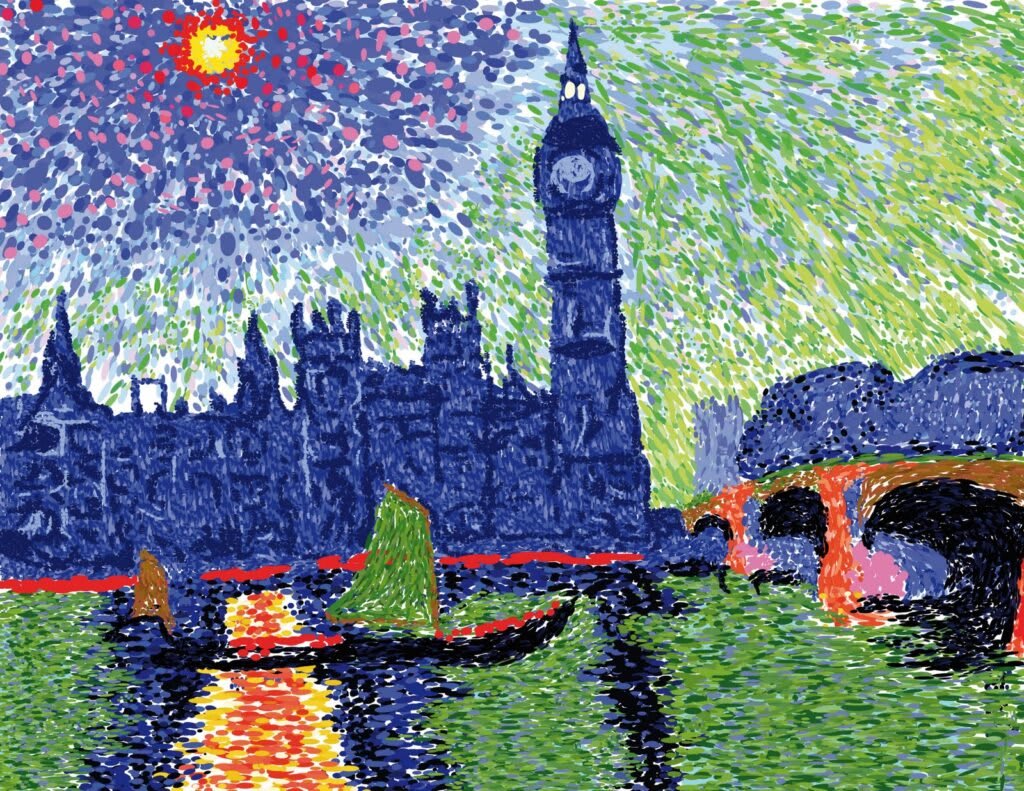
The Houses of Parliament - This painting represents a turning point in Derain's early art, when he began to adopt a colorful palette that would allow him to capture his experience of the landscape.
Although not as bold as his later Fauvist efforts, it represents the initial revolution of color in his work.
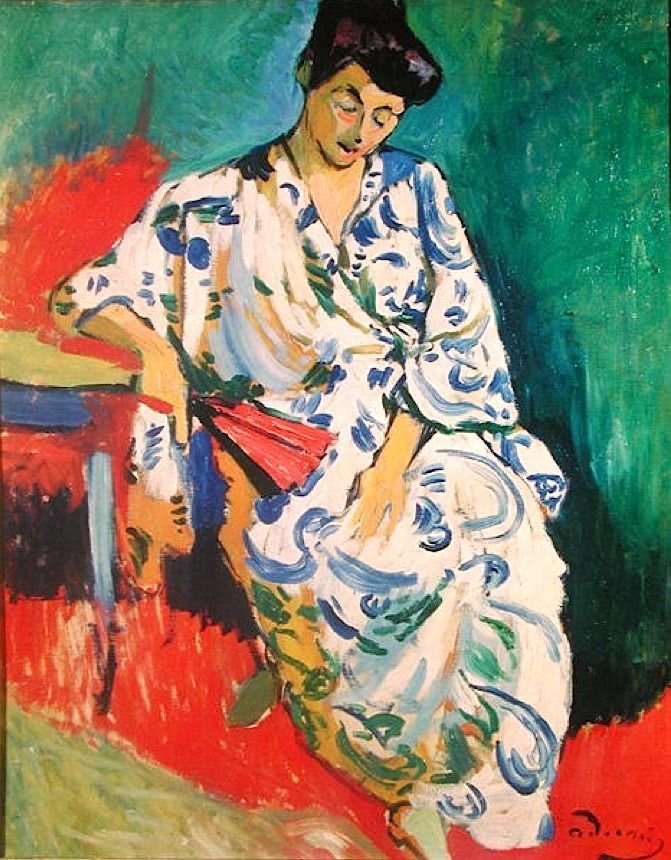
Woman with Fan - This image is additionally significant because the woman depicted is Madame Matisse.
The intimate relationship between Derain and Matisse at this time is indicated by the gentle way he portrays the facial features of his friend's wife, as well as her modest and introspective pose.
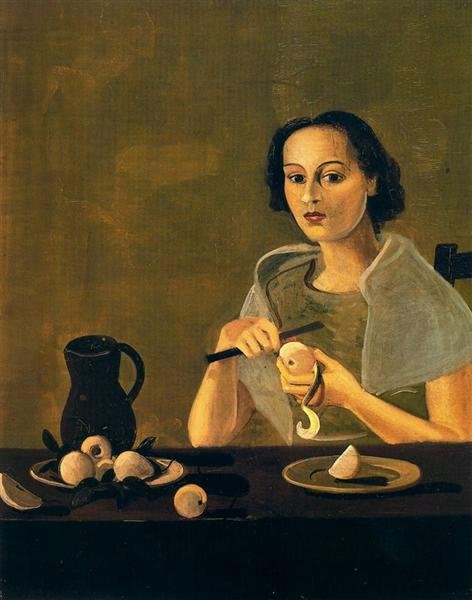
The Girl Cutting an Apple - The discrepancy between his last works and the earlier ones may be explained by his continued effort to find an atemporal art, distinctly distant from any period, and to emphasize the decorative nature of the canvas.
It is questionable whether this attempt served better to his reputation.