
Biography of Diego Rivera: Masterpieces, Murals, and Immortal Legacy (Part 2)
Biography of Diego Rivera: Masterpieces, Murals, and Immortal Legacy (Part 2)
Article Index
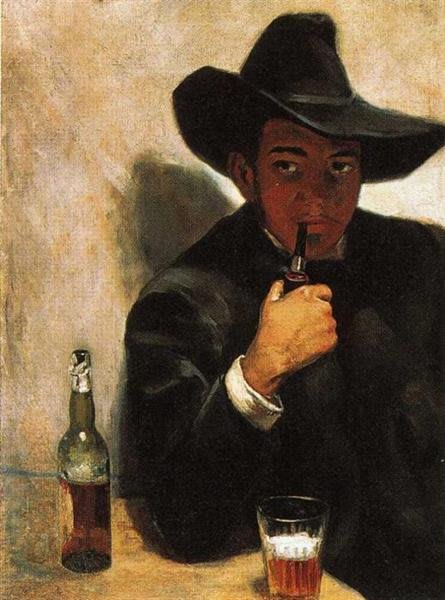
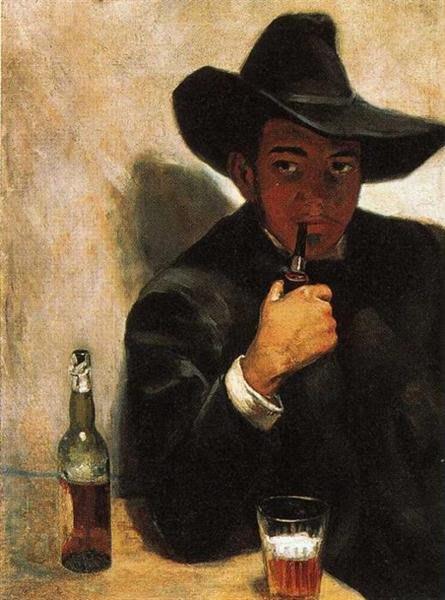
Self-Portrait. Diego Rivera. 1907
Nude with Calla Lilies
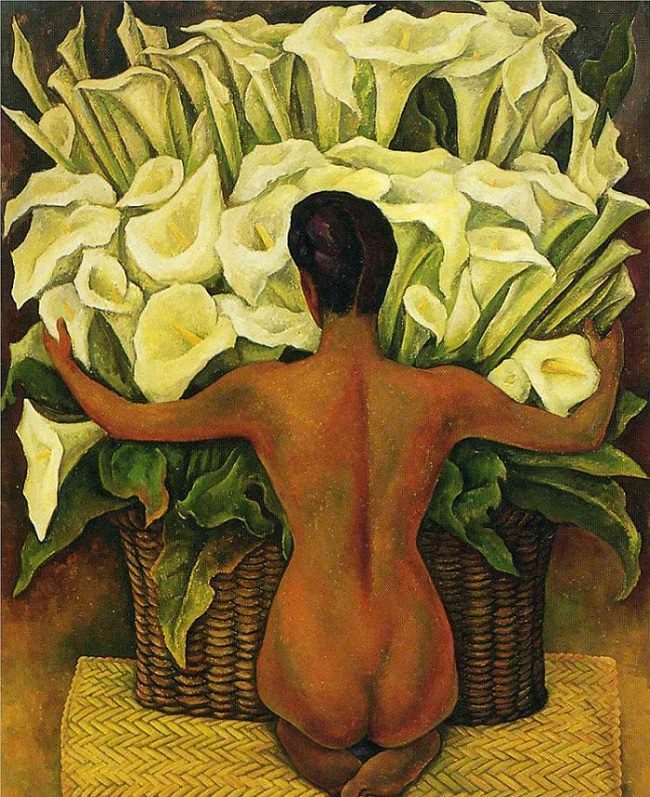
This painting was made shortly after his two large murals for the Instituto Nacional de Cardiología and before the enormous mural Great City of Tenochtitlán.
Rivera, unsurprisingly, is better with more humble subjects and frequently celebrated the relationship between peasants and nature. In this painting, he presents a sensual and sculptural flower - and a typical example of the lush flora of Mexico - was celebrated by Rivera many times, particularly in frescoes depicting peasants with indigenous features carrying bundles or offerings. This one, in particular, he makes a reference to Frida Kahlo, his greatest love.
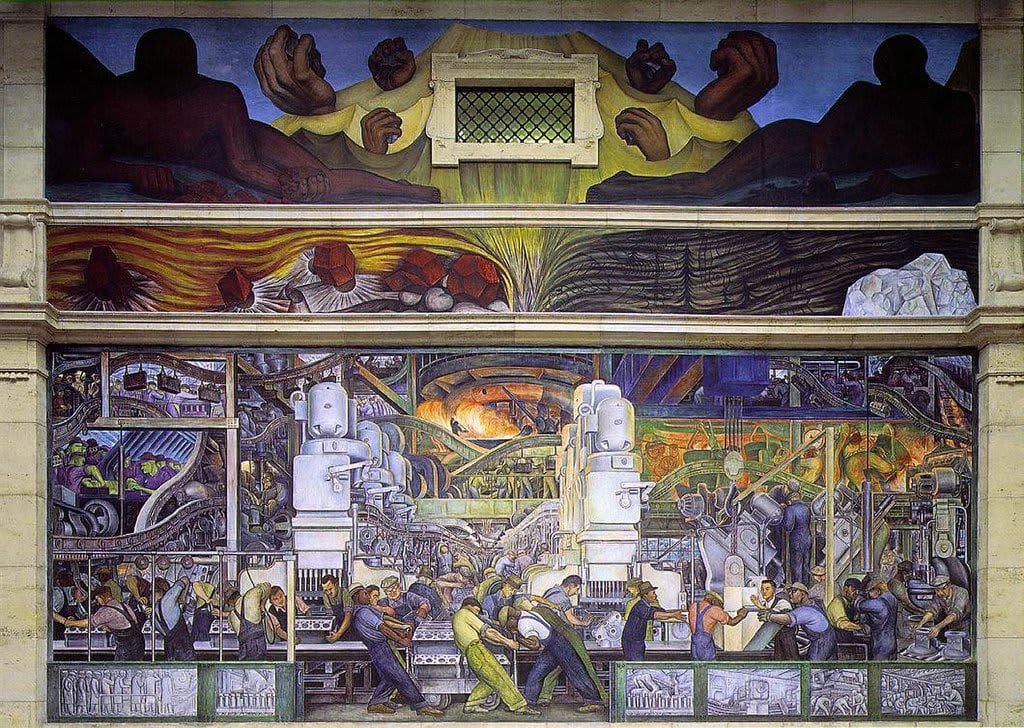
Automotive Industry of Detroit (North Mural)
Commissioned by Edsel Ford and Wilhelm Valentiner, Rivera painted 27 panels with highly allegorical scenes related to the history of Detroit and the development of its industry. The dominant theme is the automotive industry and its place in the city's life. Many panels depict the life and work of workers at the Ford Motor Company. The murals are full of symbolism and address issues such as achieving a balance between the use and abuse of nature and people. And the symbolism of the murals begins with their layout.
The main panel, located on the north wall, relates to darkness or the inner side of reality. In this case, reality is human work represented by the automotive industry workers who build a car. Above the many figures engaged in a variety of tasks are the orange and red of the giant furnace that is exploding. The conveyor belts and assembly lines are attended by the muscular men around the two grinders, which, in turn, direct the viewer's gaze to the back of the composition and to the vitrification furnace; here the steel is melting into molds - the future cars. The art here is more direct and representative.
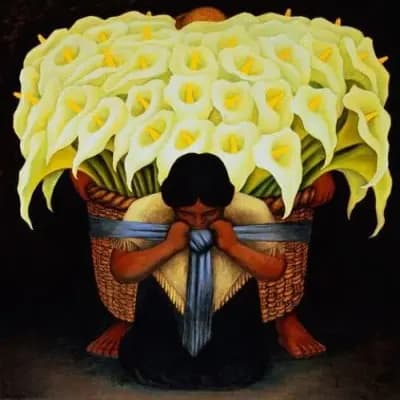
The Flower Carrier
In 1935, Diego Rivera created masterfully "The Flower Carrier" . Like many of the paintings, it transmits simplicity, but exhales much symbolism and a deep meaning. Some believe that the enormous basket attached to the man's back, represents the obstacles of an inexperienced worker in a modern capitalist world.
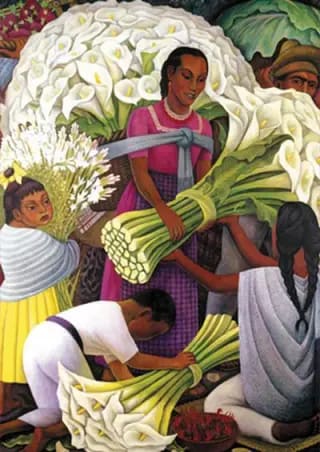
Milk Jugs
The milk jugs so present in Diego Rivera's work, were actually indigenous paintings, as the natives were framed by the enormous milk jug levers that he made with a wonderful game of colors and harmony.
Sunday Afternoon on the Central Alameda
"I bring in this composition, memories of my life, my childhood and my youth .. The characters of the walk dream, some sleep on the benches and others, walk and talk".
- Diego Rivera
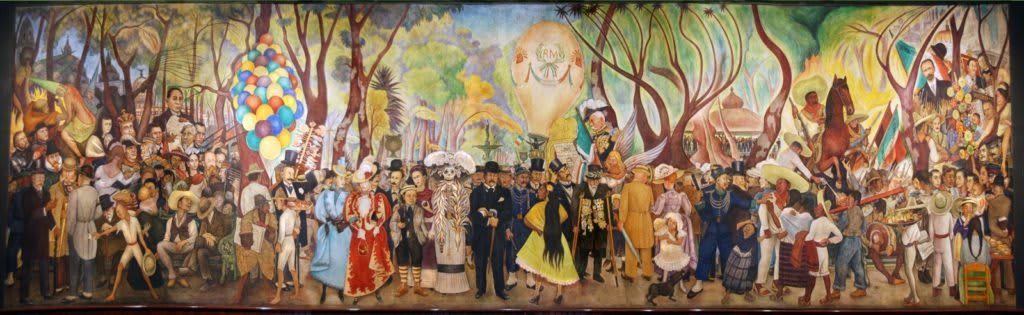
Between July and September 1947, Diego Rivera painted this gigantic mural, with the help of other artists in preparing the wall for the realization of this fresco occupying an area of 4.17m x 15.67m and weighing 35 tons. Three sections compose it:
In the first, the artist represented the conquest and the colonial era. To continue, independence is addressed; foreign interventions, where Antonio López de Santa Anna is observed, handing over the keys of the territories to the American general Winfield Scott. Then, he presents the Reform and the Second Empire.
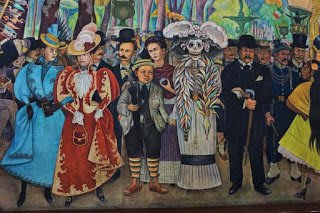
In the central section, held by the hand of death, appears the artist Diego Rivera , dressed as a child whose pockets leave a frog and a snake. Behind, his wife, Frida Kahlo , touching his shoulder in a protective attitude and holding the Ying-Yang. Another relevant character in this composition is José Martí , poet and father of the independence of Cuba. By representing death, the artist presents the fusion between a world and another that has to do with the tradition that Andean cultures celebrate in this period: The Day of the Dead . This custom that survives in many Andean cultures is keeping alive the memory of their dead and honoring them through a ritual in which everyone participates by eating and drinking near the tombs of their loved ones. Perhaps the representation of this character so peculiar - and at the same time so popular - symbolizes the historical memory of the struggle and rebellion of their ancestors against the invaders. In addition, this representation is the artist's tribute to his plastic master José Guadalupe Posada- represented by the side of death - creator of the famous catrin and catrinas .
In the third section, Rivera illustrates the peasant movements and the way the Mexican Revolution developed; depicts farmers attacked and the dream of justice. Modern Mexico is represented by a presidential figure who is being corrupted by religion, women and business. In this section, he appears again as a child eating cake.
The scenery in which all these characters dream is the Central Alameda, an iconic walk in Mexico City that the artist uses to reflect the history of his country.


