
Carnival - Jean Baptiste Debret and its Origin
Carnival - Jean Baptiste Debret and its Origin
Jean Baptiste Debret was an important French artist who lived in Brazil during the 19th century and left a valuable visual record of everyday life in the country.
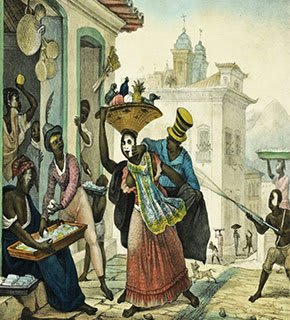
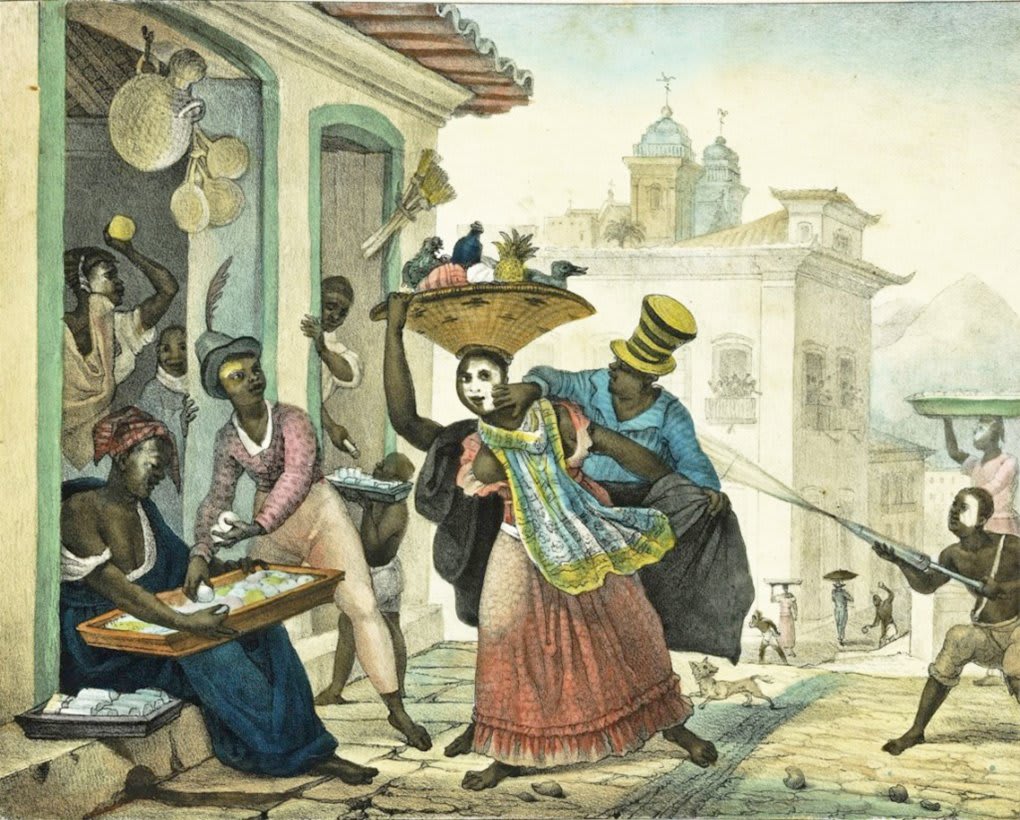
Carnival - Jean Baptiste Debret in this work, he portrayed the Brazilian Carnival as an animated and colorful festival, full of music, dance, and people celebrating in the streets.
Surprisingly, he took more than 4 years working in almost asphyxiating conditions.
Jean-Baptiste Debret, was an important French painter, one of the main members of the French Artistic Mission that was in Brazil to illustrate and record during fifteen years of its stay in the country (1816 to 1831), scenes of everyday life, including Carnival in Rio de Janeiro.
In letters sent to Paris and in the book he wrote later - Viagem pitoresca e histórica ao Brasil - illustrated with 220 engravings in 151 plates, he made detailed descriptions of the events he witnessed.
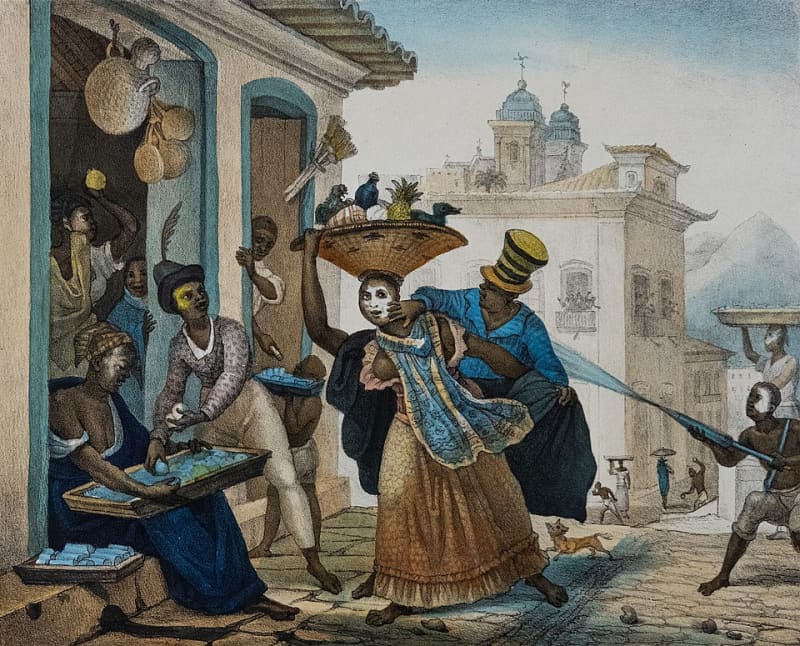
Scene of Carnival. Jean Baptiste Debret. Watercolor on paper (18 x 23 cm). Year: 1823
FOR THOSE WHO DO NOT KNOW THE HISTORY, THIS SCENE OF A NARRATIVE PAINTING, BECOMES VERY DISTANT, CAUSING A CERTAIN STRANGENESS, OF WHAT WE KNOW OF CARNIVAL IN BRAZIL. THE MAIN INTENTION OF THE ARTIST, WAS TO PORTRAY “THE WAR OF LEMONS-OF-SCENT”
This practice with the war of lemons remained for many years, where families could watch this practice from their balconies, the revelry.
ORIGIN OF CARNIVAL
The Entrudo, was the carnival that Debret witnessed and was thus named, probably in the 16th century, was introduced in Brazil by the Portuguese.
The origin emerged in the Middle Ages with a series of games that varied from village to village.
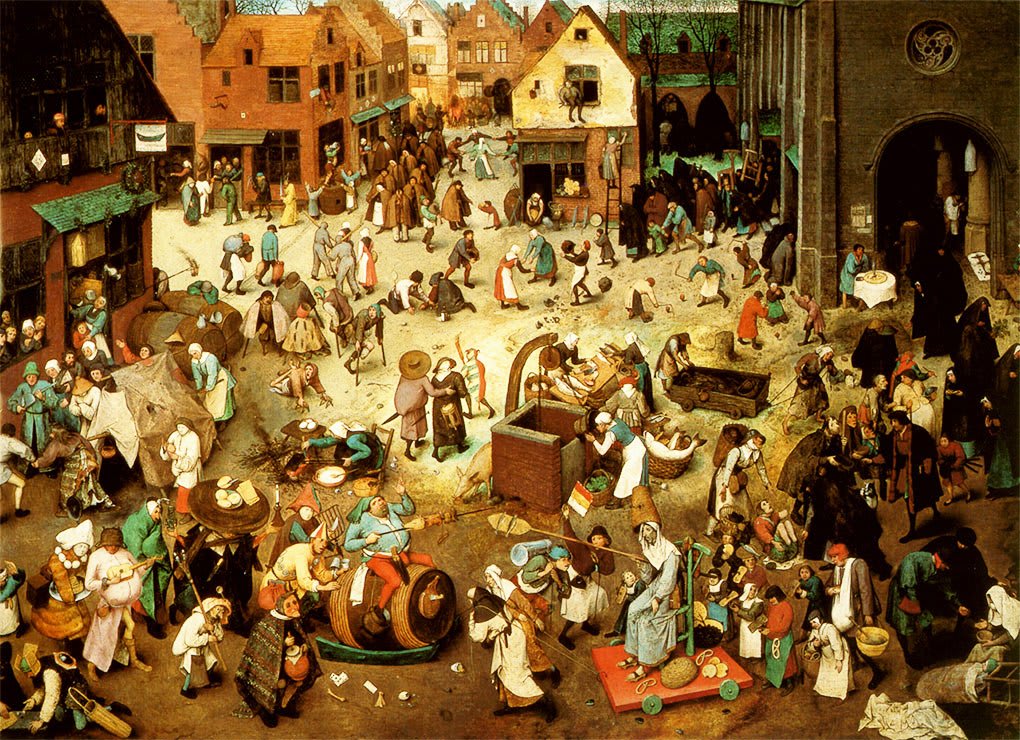
This is one of the oldest and most characteristic works alluding to this popular festival.
THE ENTRUDO IN BRAZIL
The games that involved the entrudo inside the houses in the time of the Brazilian colony, the young people threw between them lemons-of-scent, as we can observe in this painting.
Even Emperor D. Pedro II participated in the game, as reported by the Jornal Gazetinha, of 1882.
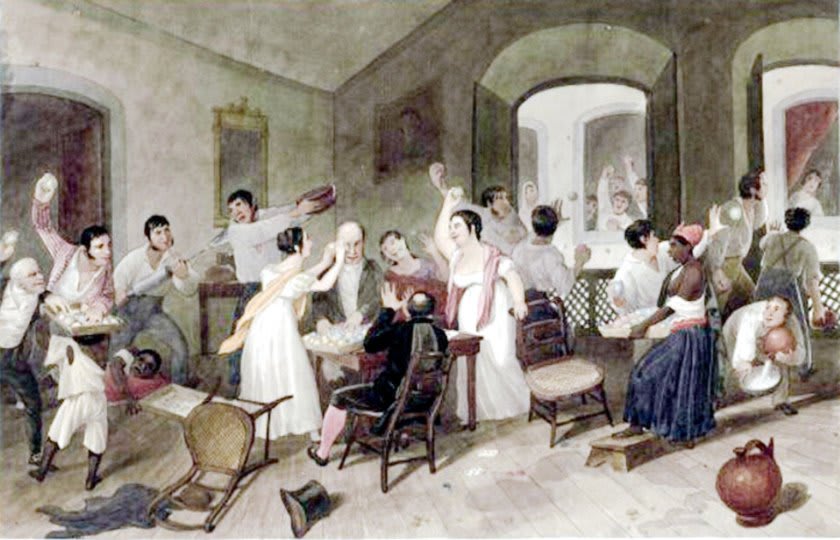
From 1830, these games suffered criticisms from the population, for the danger they offered, thus they were legally prohibited.
From 1840, the Brazilian Carnival suffered influences from the Carnival of Masks of Venice, which separated the entrudo from the ball of masks following the Venetian model.
Private clubs began to organize the Carnival for their members.
Carnival - Jean Baptiste Debret - GALLERY:
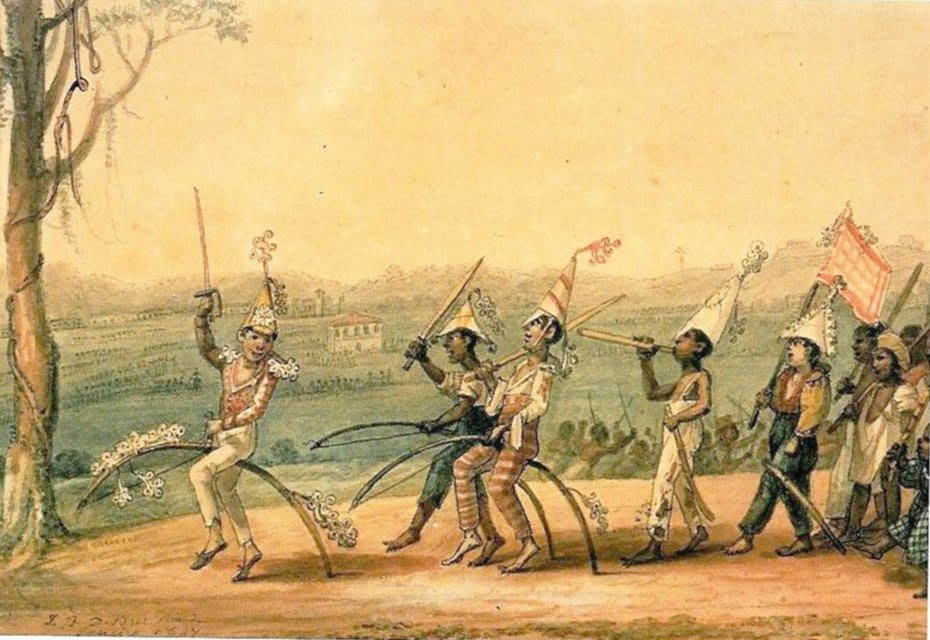
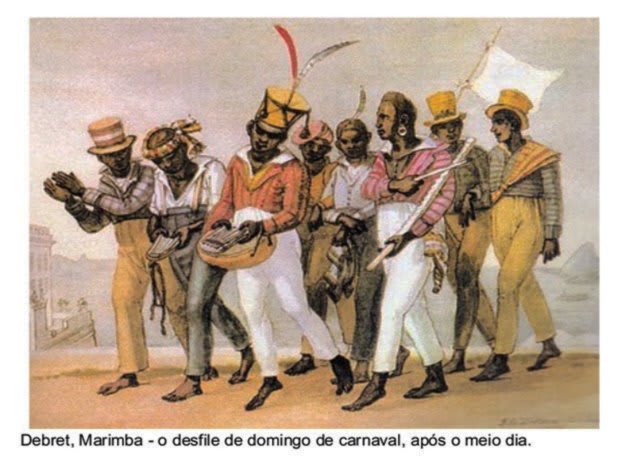
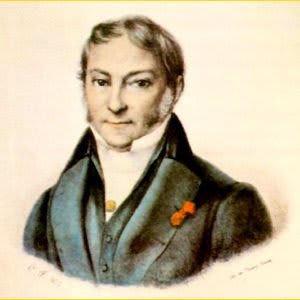
Jean Baptiste Debret was born on April 18, 1768, in Paris, France.
Trained by the Academy of Fine Arts of Paris, he was one of the most important members of the French Artistic Mission to Brazil, led by Joachim Lebreton.
Debret was the official painter of the Empire.
He designed the Brazilian flag.
It was he who created the green with the yellow lozenge that remained on the current republican flag.
He decided to leave Paris due to the defeat of Napoleon Bonaparte and the loss of his only son.
His work portrays everyday life, the process of Brazil's independence, and the first years of the government of Dom Pedro I.
One of his most famous works is a portrait of Dom João VI in real size.
He painted several portraits of the royal family.
He was a teacher in Rio de Janeiro, where he taught at the AIBA (Academy of Fine Arts).
He remained in Brazil from 1816 to 1831.
Thanks to Debret's work, we can know how life was for the Brazilian population in the streets and even in their homes at that time, as this popular manifestation that was the "entrudo".
He was a great draftsman who addressed social issues, highlighting the dignity of blacks and also of Indians that he portrayed.
He died on June 28, 1848, in his hometown, Paris.


