Frida Kahlo's Self-Portraits: Passions, Politics, and the Legacy of an Icon (Part 2)
Frida Kahlo's Self-Portraits: Passions, Politics, and the Legacy of an Icon (Part 2)
Article Index
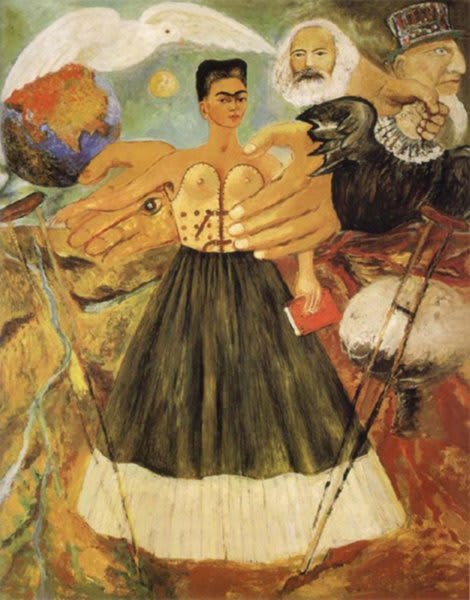
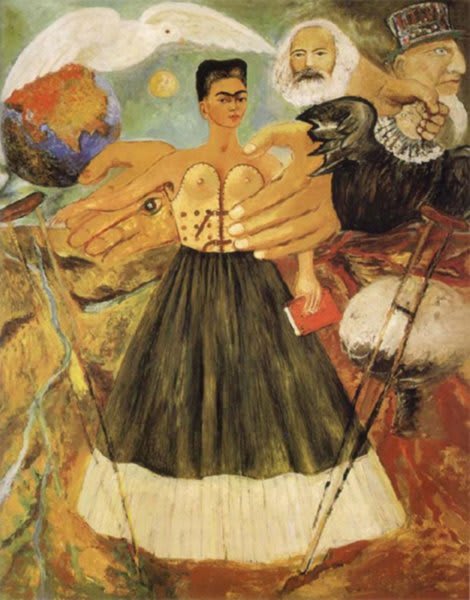
‘Marxism Will Bring Health to the Sick’ , is one of her last paintings.
In the last year of her life, Frida was very debilitated, living on the strength of drugs.
After almost a year without painting, she found it very difficult to move and move around.
With the help of a wheelchair, she returned to her studio with a strap to support her fragile body.
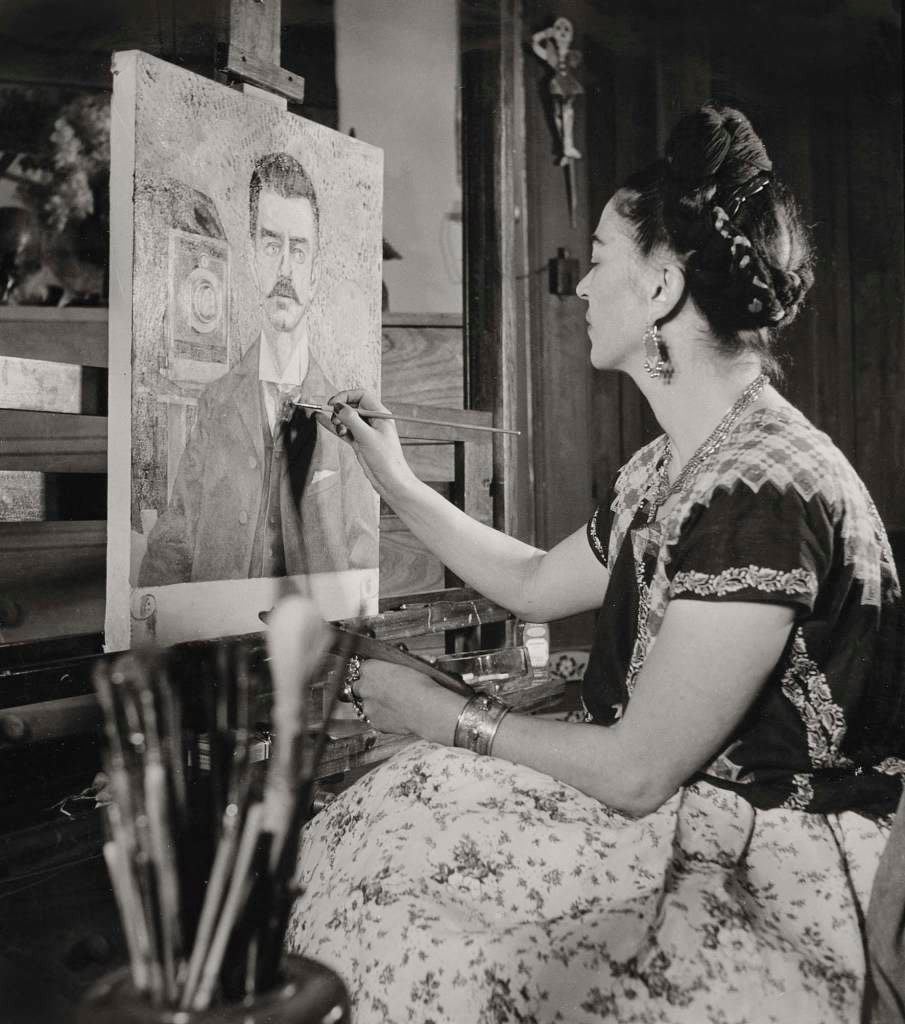
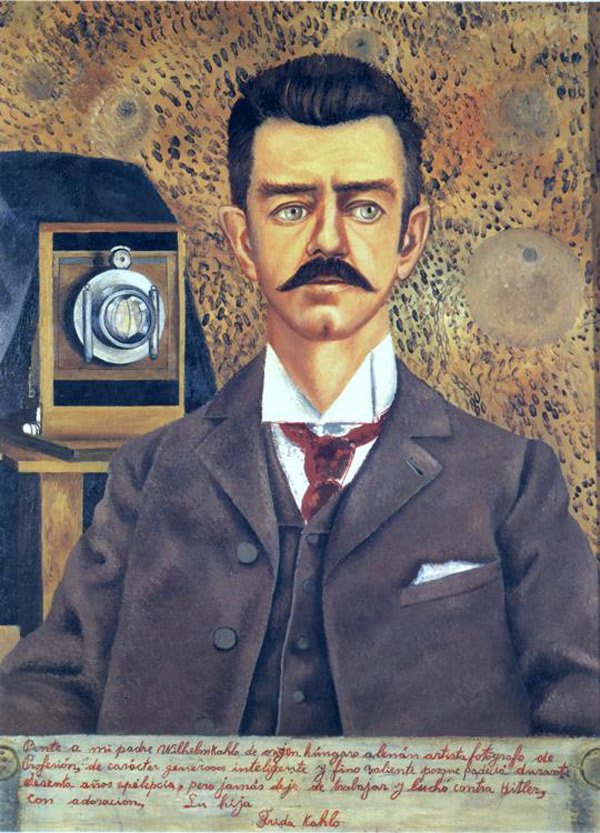
The artist's fixation on self-portraiture has the influence and passion of her father.
The portrait she painted of Guillermo Kahlo is a faceted image of her own personality, and it is said that she painted the complex relationship between photography and painting in the work of both.
Her father was a photographer, and it was undoubtedly her greatest influence. And always encouraged her to paint.
‘My father was for me a great example of tenderness, of work... and above all of understanding of all my problems.’
Just as Frida’s family history shaped her vision, the roots of other masters played a crucial role in their artistic development. Biography of El Greco: The Greek Origins and Journey to European Renaissance
Frida Kahlo's Self-Portraits: GALLERY
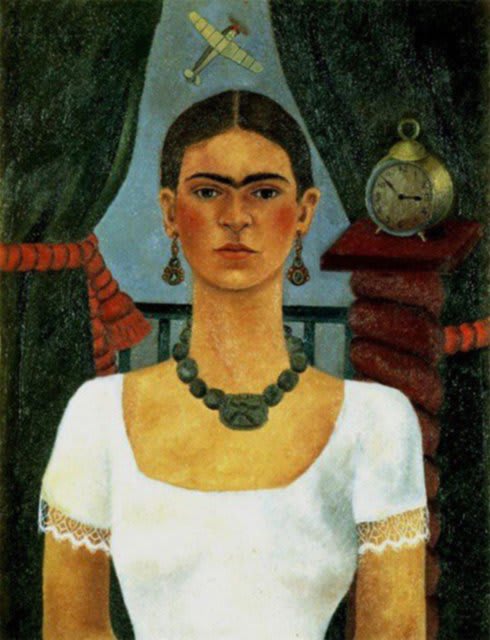
Frida was passionate about colors.
In one of her diaries, the painter explains some meanings and references of colors in her works.
For example, yellow represented madness, fear, and disease, while cobalt blue meant electricity, love, and purity.
About her different clothes, for her they were a personal language and a way to feel better with the disease.
Her preferred style and most represented in her works was the typical Mexican of Tehuantepec.
The women of this region lived in a matriarchal society and actively participated in the Mexican Revolution, which evidenced Frida's political stance (in favor of women's independence and national independence).
This type of clothing allowed her to disguise her leg, a consequence of polio, and her fragile body due to the accident and surgeries.
The way Frida used her identity to redefine her art mirrors the paths of other women who transformed their heritage into a new visual language. Tomie Ohtake - Biography and Art: A Journey from Immigration to Abstraction
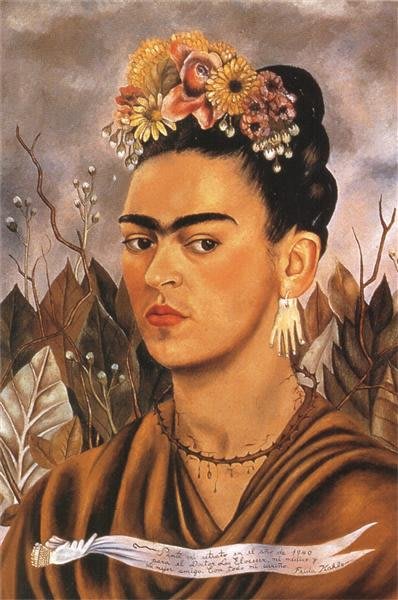
She was also passionate about flowers, perhaps that's why she used them in her hair.
Some of her hairstyles were traditional Tehuanas and others created by herself.
The Mexican liked to wear her hair tied up with braids, colored ribbons, and adorned with roses, daisies, chrysanthemums, and princess necklaces.
She declared: "I paint flowers, so they don't die” – Frida Kahlo
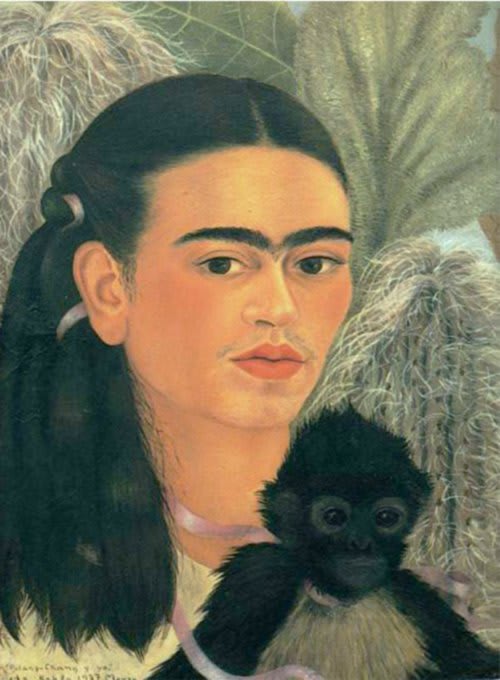
She wrote: ‘The most powerful art in life is to turn pain into a talisman that heals, like a butterfly that renews and blooms in a festival of colors!’ - Frida Kahlo
While Frida focused on her internal world, other figures of her era were also breaking boundaries by turning personal experience into revolutionary form. Biography of Jackson Pollock: From Childhood to Artistic Legacy
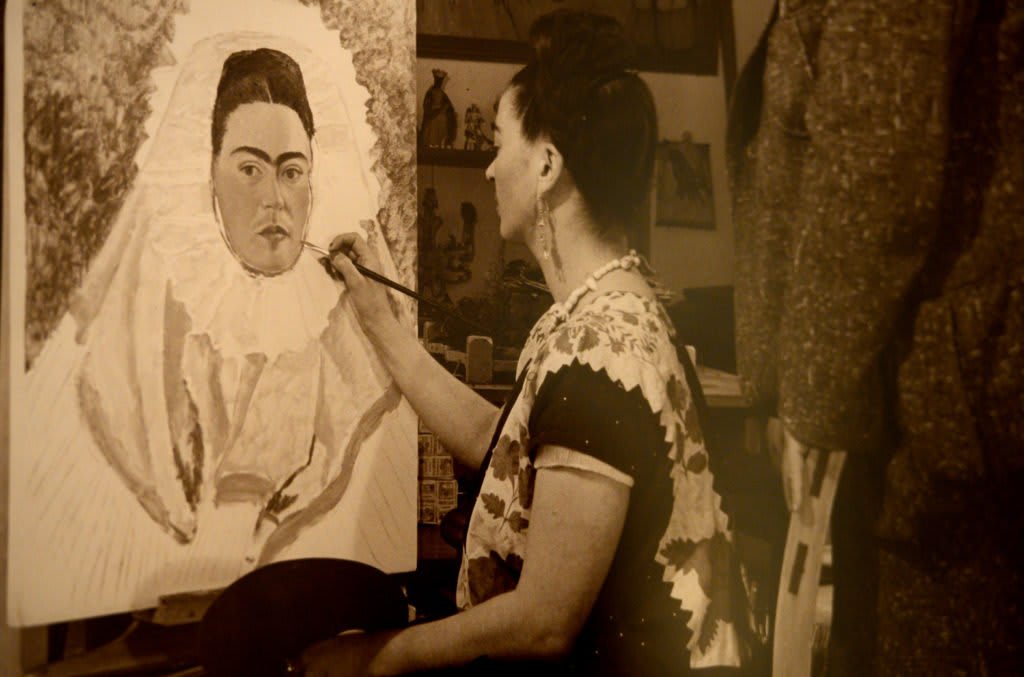
‘I paint myself because I am alone and because I am the subject I know best.’ - Frida Kahlo
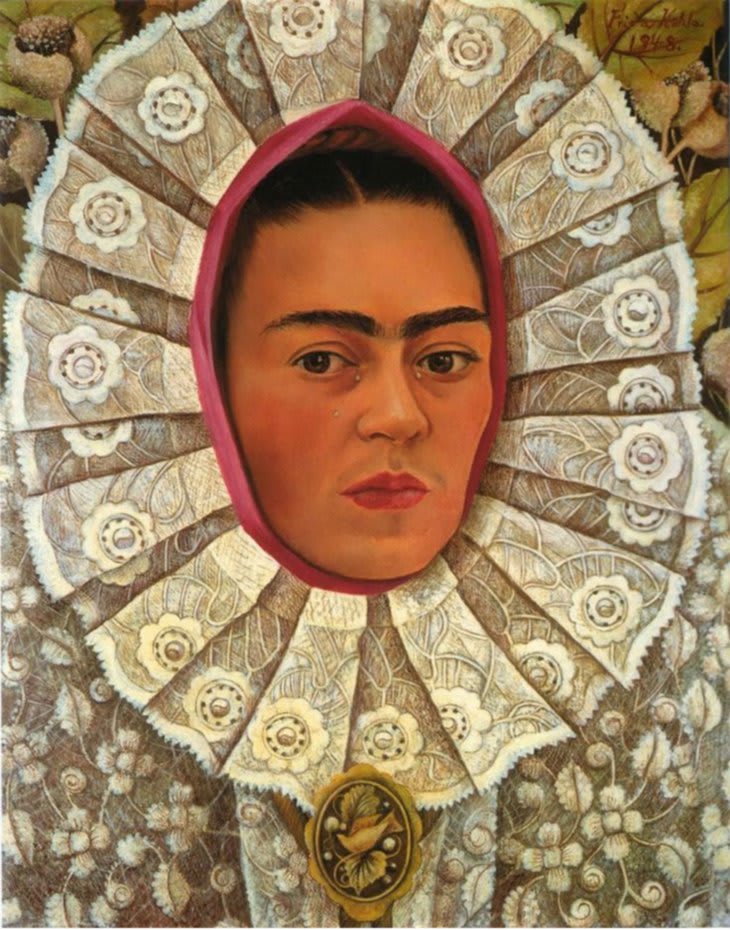
In 1948, Frida's health worsened, and this self-portrait is the only painting she painted that year.
In it, she uses the traditional Tehuana costume that Diego Rivera admired very much.
Her dress is wrapped in a lace collar that occupies the entire space, and she seems to be stuck in it.
Her face seems calm and without emotion, but there are tears in her face.
She wrote: ‘This state of mind is naturally reflected in my self-portraits, it is the exact expression of my emotions.’